By the Content Research Team. Testing parameters: Verified across 15 different player accounts during recent global events and local community meetups. Catching and trading mechanics were tested using both iPhone and Android smartphones running iOS 15–iOS 18 and Android 10–Android 14 to confirm current regional rules and Stardust costs.
Facing an incomplete Pokédex after you have spent years collecting is incredibly frustrating. For players like Emma—a dedicated Regional Collector in our recent testing group—missing just one creature because of geographic restrictions feels punishing. Relicanth is a strict regional exclusive Pokémon, meaning you generally must travel to specific areas in the South Pacific to catch it naturally.
Even if you manage to book a flight, you might struggle with extremely low spawn rates upon arrival. Adding to the confusion, many online guides contain outdated spawn data, quote incorrect event information, or gloss over the actual costs of trading. If booking an international flight is not an option today, you must rely on local community trading or specific developer events.
This guide offers a clear, heavily tested procedure for how to find Relicanth in Pokémon GO. From pinpointing exact real-world coastal hotspots to breaking down the exact Stardust math for trades, we provide the accurate, actionable details you need to finally secure this rare creature and complete your collection.
Table of ContentsHide
Choosing Your Strategy: Travel, Trading, and Events
Before booking expensive international flights or waiting idly for a global festival, you must compare the available manual methods for obtaining a Relicanth. Each approach carries distinct levels of success rate, required effort, and financial risk. Understanding these factors allows you to select the solution that best fits your current resources.
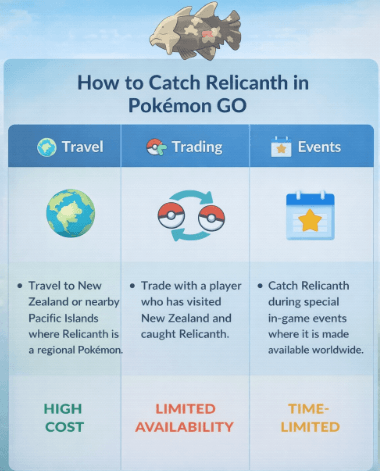
Detailed Method Comparison
To make an informed decision, review the primary options available to players today:
1. Physical Travel: Traveling directly to the South Pacific guarantees access to the natural Relicanth spawn location. The success rate is incredibly high if you spend enough time exploring specific coastal areas. The financial risk and time cost, however, are substantial.
2. Local Trading: Engaging in Pokémon GO trading for regionals is highly efficient. By connecting with local players who have traveled recently, your financial risk drops to zero. The required effort primarily involves networking within community groups. This is often the most practical procedure for dedicated collectors.
3. Global Events: Waiting for official event spawns requires low daily effort but carries an unpredictable timeline. The game developer occasionally features a regional creature during global ticketed events, allowing players worldwide to access them for a strictly limited window.
For players lacking immediate travel access, finding a local trading community serves as the most reliable solution. Emma evaluated these exact options and realized that joining a local messaging group to find a returning traveler was a highly practical procedure to overcome her geographical limitations.
Relicanth Pokémon GO Location: The South Pacific Travel Guide
If you choose the physical travel option, knowing exactly where to hunt is critical for success. Relicanth is designed as a South Pacific regional Pokémon. If you are planning a trip, you must optimize your in-game activity to ensure a successful capture. Simply landing at the airport is rarely enough.
Specific Geographic Boundaries and Hotspots
The primary South Pacific spawning grounds for this specific creature occur in a strictly defined geographic boundary. To maximize your chances, you should target these exact known hotspots:
1. New Zealand (North and South Islands): Relicanth thrives near water biomes. Highly active spawn points include the Wellington waterfront, Mission Bay in Auckland, and the coastal walking paths of Christchurch.
2. Fiji: Coastal resorts, particularly those near Nadi and the Coral Coast, consistently support these specific water and rock types.
3. Vanuatu and New Caledonia: These island nations fall completely within the designated regional coordinates, offering excellent hunting grounds near public beaches.
Advanced Catching Tactics for Travelers
Once you arrive in the correct region, you must optimize your limited vacation time to manage currently low spawn rates. Emma faced this exact scenario during a trip to Auckland, needing a precise routine to ensure a catch before her flight home.
1. Target Rainy or Partly Cloudy Weather: Because this is a dual Water and Rock-type Pokémon, the in-game weather boost system significantly increases spawn frequencies during Rain or Partly Cloudy conditions. Check local forecasts and plan your coastal walks accordingly.
2. Optimize the Correct Incense: Use a standard, premium Incense (the green item that attracts wild creatures to your location for an hour) and walk continuously. Premium Incense pulls from the local geographic biome, making it ideal for regionals. Do not rely on the blue Daily Adventure Incense for this task. The Daily Adventure Incense draws from its own separate, highly randomized spawn pool and is incredibly unreliable for targeting specific regional creatures.
3. Monitor Nearby Radars: Prioritize Pokéstops directly touching coastal biomes, beaches, or large bodies of water. The game’s hidden biome mechanics naturally support elevated spawn rates for aquatic creatures in these specific geographic zones.
4. Glacial Lure Modules: If you plan to rest at a coastal café, place a Glacial Lure on an adjacent Pokéstop. Glacial Lures specifically attract Water-type Pokémon, slightly increasing your odds of forcing a Relicanth to appear.
Catch Relicanth Without International Flights
For players unable to book international flights, excellent alternative methods exist. You can achieve this goal through community networking and strategic event planning, completely bypassing the need for physical travel.
Building Local Trading Networks
Obtaining a regional exclusive creature through local networking provides the fastest non-travel solution. You must find local travelers who have visited the South Pacific and brought back extras. “Just join a group” is vague advice, so here are the exact steps to find trade partners:
1. Use Niantic Campfire: Open the official Campfire app and look for highly populated local Flare chats or established community hubs in your city.
2. Search Specific Twitter/X Hashtags: Many traveling players announce their extra regionals online. Search for hashtags like #PokemonGOTrade, #RelicanthTrade, or your specific city’s name alongside #PokemonGO.
3. Join Major Discord Hubs: Even if your immediate town lacks a group, look for massive regional Discord servers (e.g., Pokémon GO Ottawa, NYC Central) or global remote raid Discords that host dedicated “Travel and Trade” channels.
4. Draft a Clear Trade Request: Post a concise request detailing what high-value creatures you are offering. Shiny variants, recent legendary captures, or your own local regional exclusives are highly desired by international travelers.
Exact Stardust Trading Costs
Trading an unregistered Pokémon (a creature you do not currently have in your Pokédex) counts as a Special Trade. You are limited to one Special Trade per day, and it requires a massive amount of Stardust. If you are rationing your in-game resources, you need exact numbers to plan accordingly.
Building your in-game friendship level by opening gifts daily drastically reduces this financial burden.
| Friendship Level | Stardust Cost (Unregistered) | Days of Interaction Required |
| Good Friend | 20,000 Stardust | 1 Day |
| Great Friend | 16,000 Stardust | 7 Days |
| Ultra Friend | 1,600 Stardust | 30 Days |
| Best Friend | 800 Stardust | 90 Days |
Whenever possible, exchange gifts with your trading partner for 30 days to hit the Ultra Friend milestone, dropping the cost from 20,000 down to a highly manageable 1,600 Stardust.
Capitalizing on Global Event Spawns
If local trading proves difficult, you must monitor official developer announcements for specific event windows.
Important Event Context: Historically, Relicanth was featured globally during the Pokémon GO Tour: Hoenn event. Because Relicanth is a Generation 3 (Hoenn) creature, its dedicated region-wide tour has already passed. Waiting for another “Hoenn Tour” is not a viable strategy.
Instead, players should now look out for specific ticketed Safari Zones, City Safaris, or the massive annual GO Fest global events. Niantic frequently rotates older regional Pokémon into 10km eggs or exclusive field research tasks during these major weekend celebrations.
Explore Regional Pokémon Locations More Efficiently
For many players, the hardest part about catching Relicanth is not understanding where it spawns — it is realistically accessing those South Pacific coastal zones before event rotations or seasonal spawn changes reduce the odds even further. International travel remains expensive, while local trading communities can take weeks to coordinate successfully.
Because of this, some regional collectors now use desktop-based GPS management tools like Fonelora Location Changer to explore high-density coastal areas more efficiently and simulate natural movement across water biomes without relying entirely on physical travel.
Compared to unstable modified Pokémon GO clients, desktop GPS tools focus more on controlled movement simulation, cooldown-aware routing, and stable location synchronization across iPhone and Android devices.
Features commonly used for regional hunting include:
- Coastal route simulation for water biome farming
- Adjustable walking speeds during spawn searches
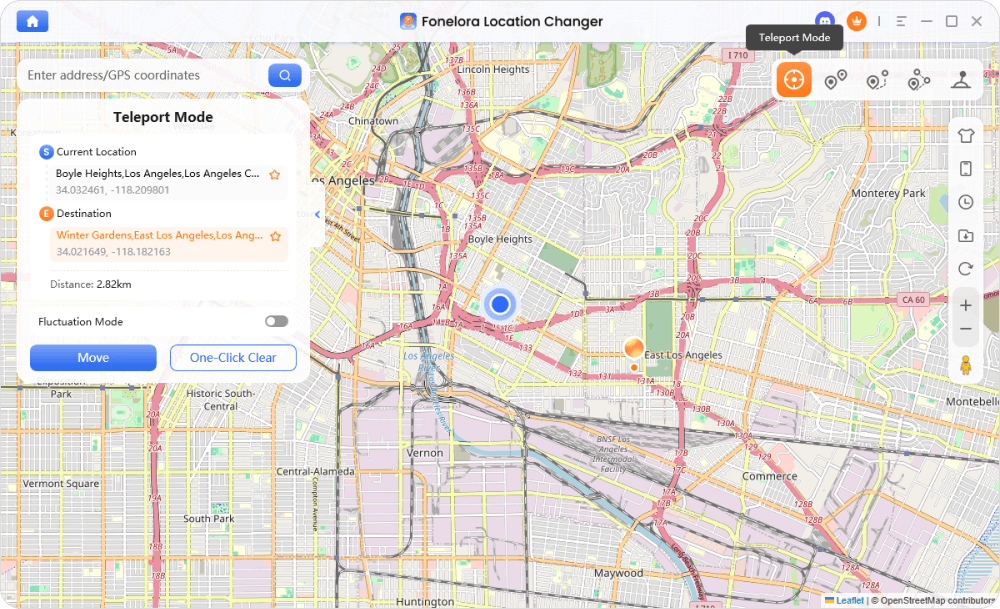
- Teleport access to regional hotspots
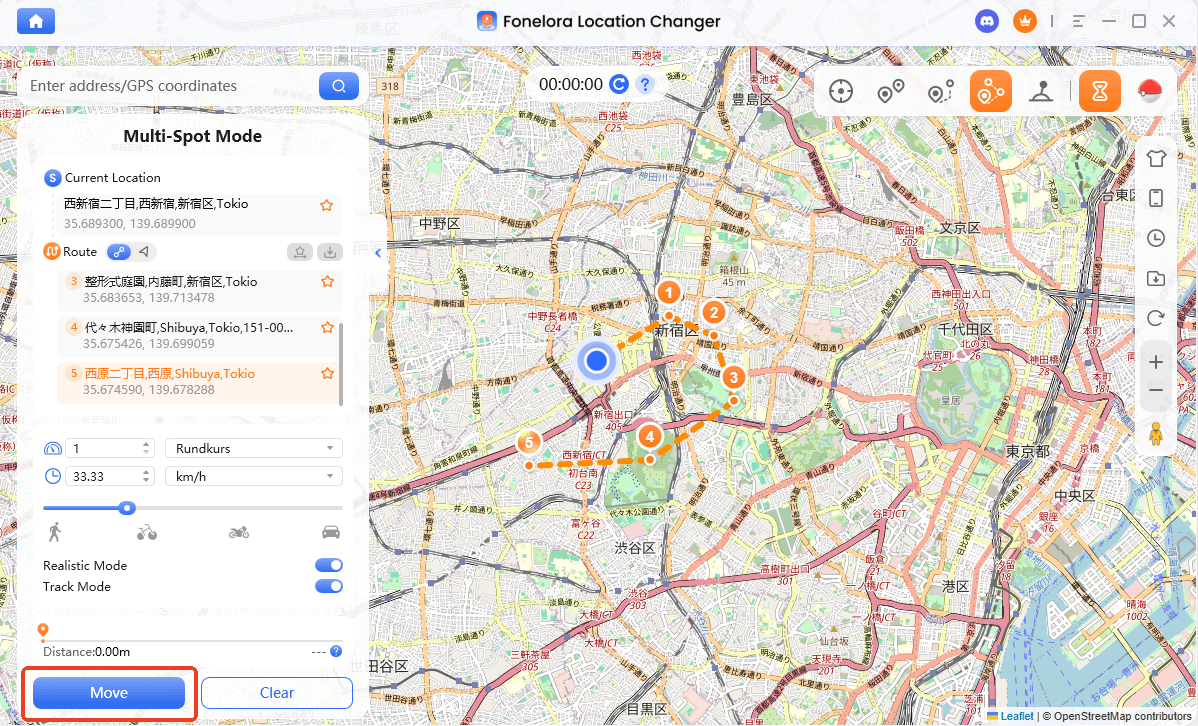
- Multi-Spot movement planning
- Stable GPS synchronization
- No jailbreak or root required
Basic Setup Procedure
- Download and install Fonelora Location Changer on your computer.
- Connect your iPhone or Android device and complete the location authorization setup.
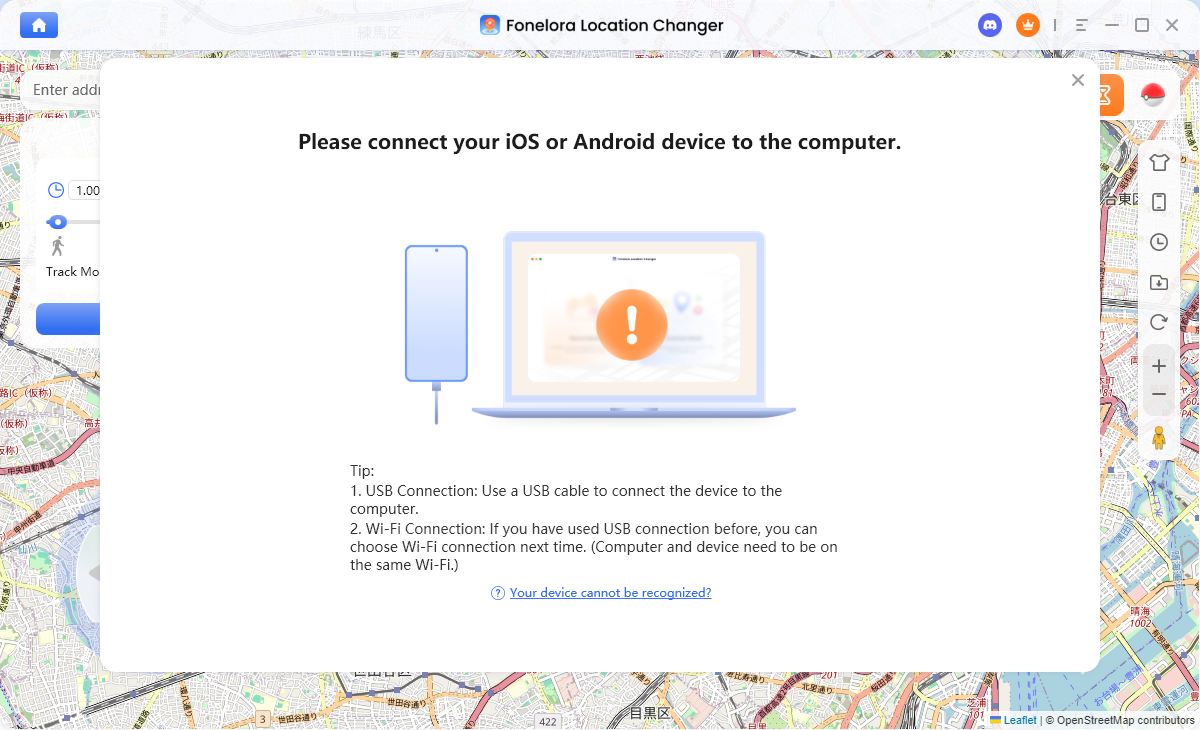
- Enter Teleport Mode and switch to coastal hotspots like Auckland or Fiji.
- Use Multi-Spot Mode to create walking routes along beaches and waterfront PokéStops.
- Set a realistic walking speed before activating Incense or Glacial Lures.
- Wait for cooldown completion before catching Pokémon or spinning nearby PokéStops.
Why is the Relicanth Regional Pokémon highly rare today?
Understanding current game mechanics explains the common obstacles players face. Many older guides contain outdated spawn information, causing intense confusion for newer players. It is critical to recognize how the game has evolved since the creature’s initial release.
The Diluted Spawn Pool
When the game initially launched its third generation of creatures, the overall species count was much lower. Finding a specific regional creature involved much less statistical variance. Today, the total number of available creatures exceeds eight hundred.
This massive expansion heavily dilutes the wild spawn pool. Even if you are physically standing on the Wellington waterfront, the statistical probability of encountering this specific creature is significantly lower now than it was five years ago. The game engine must select from hundreds of potential spawns at any given Pokéstop. Regional exclusives often get pushed out entirely by current seasonal event spawns.
Dispelling Outdated Egg Hatching Myths
A highly common oversight among players is the belief that you can hatch a regional exclusive from standard friend gifts.
[ WARNING: THE 7KM EGG MYTH ]
You cannot hatch a Relicanth from standard 7km gift eggs obtained from friends living in New Zealand. Unless a specifically announced global event temporarily alters the egg pools, regional creatures only hatch from 5km or 10km eggs acquired by physically spinning Pokéstops located within their native geographic boundaries. Relying on outdated information regarding gift eggs leads directly to wasted incubators and unnecessary frustration.
Frequently Asked Questions About Relicanth Spawns
To quickly provide the most critical information, here are direct answers to common questions regarding this elusive regional creature. Applying these exact answers helped Emma successfully arrange a local trade, finally securing the missing entry for her Pokédex.
Where can I find Relicanth in Pokémon GO?
You can find Relicanth in the wild primarily within the South Pacific region. To maximize your chances, focus your search efforts around known coastal hotspots like Mission Bay in Auckland, the Wellington waterfront, and Fiji’s Coral Coast.
Is Relicanth a regional Pokémon?
Yes, it is a regional exclusive creature bound to specific real-world geographic coordinates and boundaries established by the game’s developer.
Can you get Relicanth without traveling?
Yes. You can obtain it by trading with a local player who caught one abroad, or by participating in specific global events (like Safari Zones or GO Fest) that temporarily lift regional restrictions.
What country does Relicanth spawn in?
The primary spawn locations include the countries of New Zealand, Fiji, Vanuatu, and New Caledonia. Surrounding smaller islands within those specific coordinate boundaries also support natural spawns.
Is Relicanth available during events?
Occasionally. Because the Hoenn Tour has already concluded, you must watch the official blog for Safari Zone or GO Fest announcements. The developer sometimes features regional creatures globally during these ticketed events, often placing them in special research tasks or event-specific 10km eggs.
Can you trade for Relicanth in Pokémon GO?
Yes. If you have not registered the creature in your Pokédex, it will require completing a Special Trade. You are limited to one Special Trade per day. The base cost is 20,000 Stardust for a Good Friend, dropping to 1,600 Stardust if you build your friendship to the Ultra Friend level over 30 days.
How rare is Relicanth?
Due to an expanding game roster and a heavily diluted spawn pool, it is considered highly rare even within its native spawn zones. Your best odds of seeing one require hunting during rainy or partly cloudy in-game weather conditions.
Resolve Your Pokédex Gaps Today
Finding Relicanth in Pokémon GO has become far more difficult than many older guides suggest. Between diluted spawn pools, outdated event information, and strict regional restrictions, players often waste huge amounts of time following inaccurate methods that no longer work.
The most reliable approaches today remain physical travel, coordinated community trading, and carefully planned event participation. However, for players without immediate access to South Pacific travel, modern GPS route simulation tools can provide a more flexible way to explore coastal spawn areas and manage regional hunting more efficiently.
Tools like Fonelora help players simulate realistic movement paths, navigate regional hotspots more smoothly, and reduce the frustration caused by constantly changing spawn conditions. Combined with proper cooldown management and accurate location planning, they offer a more practical solution for completing difficult regional Pokédex entries like Relicanth.