Hunger Games Simulator: Create Custom Survival Stories
This guide explains how to create and customize an online Hunger Games-style simulator for group play, focusing on improving user experience, adding custom events, and using reliable platforms to make multiplayer storytelling more engaging and dynamic.
Gathering a group of friends to run a custom survival simulation should be a hilarious, memorable experience. We have all been there: setting up a Discord call, excited to pit our inside jokes and personalities against a game engine, only to end up frustrated. When you face confusing interfaces for first-time users, struggle with limited customization options, or watch the exact same generic text lines repeat endlessly, the excitement drains quickly. Reading dry, predictable outcomes turns a fun social activity into a tedious chore.

We understand how disappointing it is when technical limitations restrict your creativity. Fortunately, a properly configured online hunger games simulator offers a dynamic solution. The true appeal of these simulators lies in their balance between randomness and user control. By relying on tested platforms and mastering custom event inputs, you can transform a basic text setup into an unpredictable, highly engaging narrative. This guide will walk you through building, customizing, and sharing the ultimate multiplayer simulation with your friends.
Best Hunger Games Simulator Tools for Custom Character Outcomes
Finding the right platform requires evaluating how much control the system gives you over the narrative framework. Platforms that allow deeper customization of characters and events consistently generate more engaging and shareable stories. Additionally, a hunger games simulator generator with a well-designed randomness engine creates less predictable and more entertaining outcomes.
Here are the top browser-based platforms that excel in handling custom characters and events:
- BrantSteele Hunger Games Simulator: Widely recognized as the standard for custom player input, this tool allows users to edit up to 48 cast members. You can adjust relationship dynamics, insert custom profile images, and manipulate the automated storytelling logic. Its structured day-and-night cycle provides a highly organized and easy-to-read survival simulation.
- Simublast: Known for a cleaner, modern user interface, Simublast offers an excellent online simulator experience with a built-in event editor. It provides a straightforward method for quick adjustments, allowing users to modify scenarios without navigating complex menus.
- Simulator.link: This browser simulator focuses heavily on custom event creation. You can write your own specific scenarios, dictating exactly how characters interact with the environment, making it a highly adaptable text-based game.
Platform Comparison Matrix
| Simulator Tool | Customization Depth | UI Navigation | Best Used For |
|---|---|---|---|
| BrantSteele | Very High | Intermediate | Extensive custom player input and structured events. |
| Simublast | Medium | Beginner-Friendly | Quick, visually clean survival simulation setups. |
| Simulator.link | High | Intermediate | Writing completely custom text-based game scenarios. |
Choosing the right tool depends entirely on your desired level of detail. If you want a quick setup for game night, Simublast operates efficiently. If your goal is granular control over every aspect of a survival game, BrantSteele provides the necessary framework.
Tuning the Game Randomness Engine for Hilarious Outcomes
To prevent your simulation from feeling stale, you need to rewrite its underlying logic. Most of these platforms rely on a game randomness engine (RNG)—a mathematical system that selects outcomes from a predefined list of events based on assigned probability weights. When you adjust the random event generator, you actively change the frequency of specific actions.
Modifying the automated storytelling engine is how you add inside jokes and specific references, making the scenarios uniquely your own. By editing the text arrays within the game’s settings, you replace generic events with highly targeted group interactions.
If you make every custom event fatal, your simulation will end on Day 1. Balance the pacing by mixing high-stakes combat events with mundane, humorous, or team-building scenarios to ensure the narrative lasts long enough to be entertaining.
Step-by-Step Custom Event Creation
Here is a concrete method to customize your simulation scenarios safely and effectively:
- Access the Event Editor: Navigate to the advanced settings of your chosen platform. Look for tabs labeled “Edit Events” or “Custom Scenarios.”
- Identify Event Categories: Simulators divide events into phases: Bloodbath, Day, Night, and Feast. Select the phase you want to modify first.
- Edit the Syntax: Replace the default text strings with your own custom phrasing. Ensure you keep the bracketed character variables exactly as the engine requires them.
- Adjust the Lethality Rate: Locate the ‘Fatal’ boolean switch. Change it from ‘False’ to ‘True’ for specific custom events to increase the danger level.
- Save and Test: Apply the changes and run a test simulation.
Do not alter or delete the bracketed variables (e.g., [Player1], [Player2]). If you accidentally type [Player 1] with a space when the system requires no space, the engine will fail to pull the character’s name, potentially breaking the simulation for that entire phase.
Concrete Examples of Custom Event Syntax
To help you get started, here are several real examples of custom event text you can input into a simulator like BrantSteele. Notice how the bracketed variables are placed naturally within the sentence:
Humorous Non-Fatal Events (Day Phase):
[Player1] tries to spear a fish with a trident but drops it in the river, much to the amusement of [Player2].
[Player1] and [Player2] form an alliance, bonding over their shared hatred of [Player3].
[Player1] spends the entire day trying to build a shelter, only for it to immediately collapse on [Player2].
Dramatic Fatal Events (Night Phase):
[Player1] accidentally sets their own camp on fire, forcing [Player2] to flee into the dark.
[Player1] successfully ambushes [Player2], eliminating them from the arena.
Overcoming Repetitive Narratives in Text-Based Games
Even the most detailed multiplayer simulation can eventually lose its appeal if the environment remains static. A frequent obstacle for many users is pacing. Reading lines of text relies entirely on your imagination, and if the automated storytelling loops back on itself, the game becomes boring.
To solve this, treat your simulator like a tabletop roleplaying campaign. If you spend an hour entering data, you want the payoff to be worth it. Do not just click “Proceed” rapidly. When playing with friends over a voice call, assign someone to be the “Announcer.” Read the events out loud, react to the betrayals, and allow the group to debate why two specific friends suddenly formed an alliance in the game.
Additionally, visual elements matter. Always take the time to upload custom profile pictures for every character. Seeing a funny photo of your friend right next to text explaining that they “fell out of a tree and sprained an ankle” adds a massive amount of engagement that plain text simply cannot match.
How to Share Simulator Results with Friends on Discord
A major hurdle for players is the difficulty sharing results with others. Because a hunger games simulator generator produces large volumes of text and images, simply copying and pasting often results in unreadable formatting that ruins the immersion.
When a group of friends uses an online simulator as a social activity, standardizing how character outcomes are exported keeps everyone invested. Instead of dumping a massive wall of plain text into your chat, you can present the data cleanly using a few reliable techniques.
Discord Sharing Tutorial: A 3-Step Guide
If you are sharing the simulation in a Discord server, you can use Webhooks to format the text beautifully, mimicking a real automated announcement system.

Step 1: Create the Webhook
Open your Discord Server Settings, navigate to the “Integrations” tab, and select “Webhooks.” Click “New Webhook,” name it something thematic like “Arena Announcer,” and copy the generated URL.
Step 2: Draft the Broadcast
Instead of pasting text directly into Discord, open your web browser and go to a free formatting tool like Discohook. Paste your Webhook URL into the site. Here, you can input the text from your simulation phase and use Discord’s rich embeds to format it. You can assign colors to the messages—for example, making the sidebar red for the Bloodbath phase and blue for the Night phase.
Step 3: Send to Your Server
Once your text is formatted and easy to read, click “Send” on the Discohook site. Your perfectly formatted simulation phase will drop into your Discord channel instantly. This method highlights player deaths and alliances clearly, keeping the group engaged without overwhelming them.
Alternative Sharing Methods
If setting up a webhook feels too complicated, try these alternative methods:
- Scrolling Screenshots: Use native scrolling screenshot features on your mobile device or third-party browser extensions to capture an entire “Day” or “Night” phase in a single, continuous image.
- Markdown Formatting: If pasting directly into chat, use Discord’s built-in Markdown. Place around character names to bold them (
Mark ambushes Sarah), or use blockquotes (>) to emphasize major events. - Summary Graphics: Use basic image editing software to compile the final “Status” screen showing the deceased and surviving characters. Post this visual recap at the end of the game to celebrate the winner.
A More Reliable Uber GPS Spoofing Solution: Fonelora Location Changer
As mentioned earlier, desktop-based tools are generally the most dependable option for modifying GPS location on Uber. Compared to mobile apps that rely on easily detectable “Mock Location” settings, desktop solutions tend to deliver a more stable and consistent signal.
If you’re looking for a simpler and more reliable alternative, Fonelora Location Changer is a solid option to consider.
Instead of relying on basic spoofing techniques, Fonelora changes your device’s GPS location through a computer connection. This approach helps minimize common problems like location jumping (rubber-banding) and reduces the likelihood of immediate detection.
How to Use Fonelora to Change GPS Location on Uber
Follow these simple steps to get started:
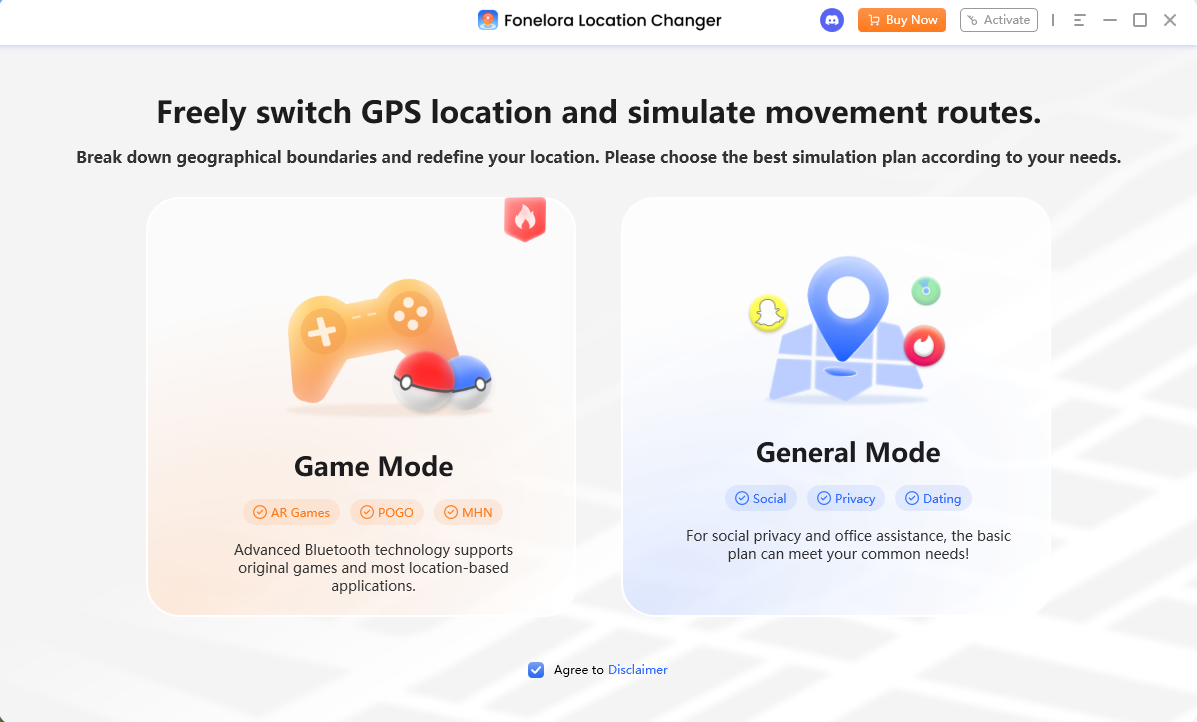
Step 1: Download and Install
Download Fonelora Location Changer from the official website and install it on your computer.
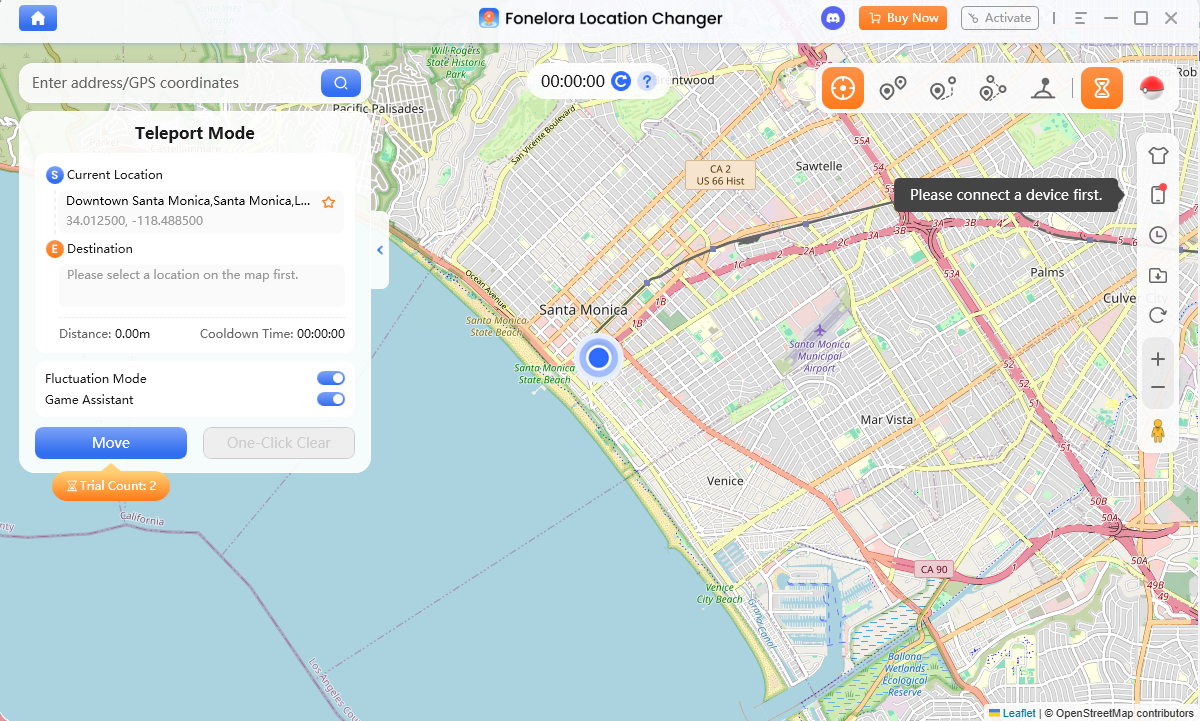
Step 2: Connect Your Device
Connect your iPhone or Android device using a USB cable.
- On iOS: Tap “Trust This Computer” when prompted
- On Android: Enable USB Debugging
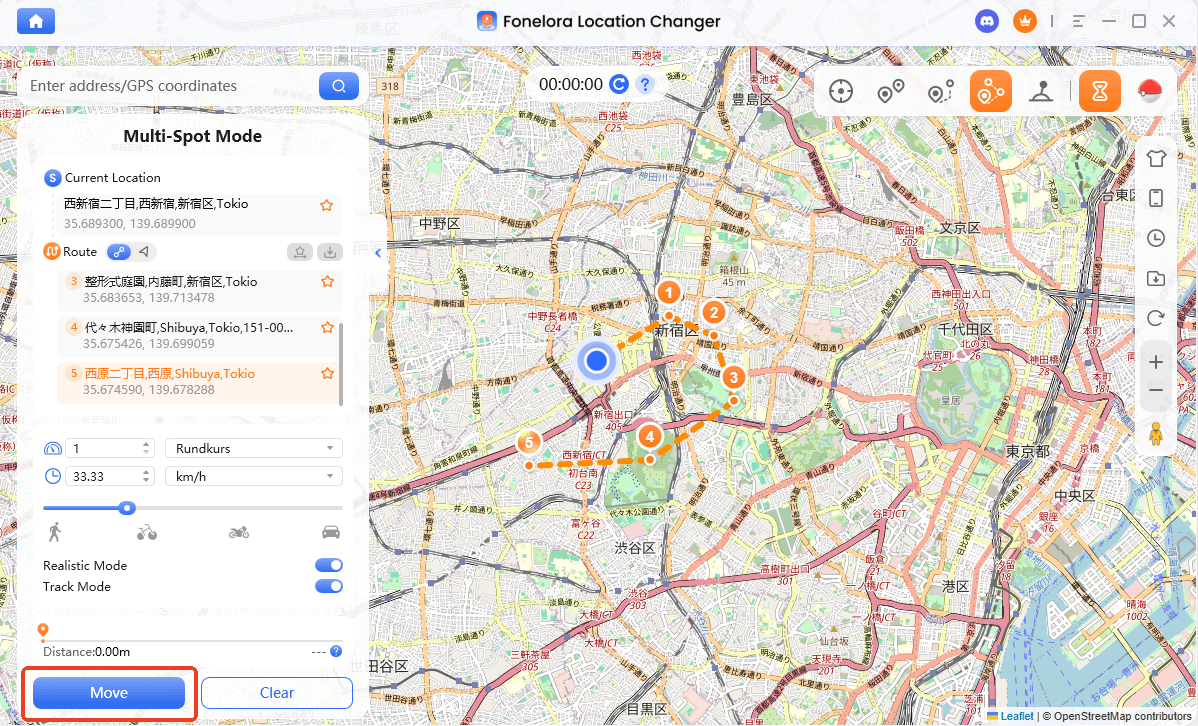
Step 3: Choose a Location
Open the map interface in the software:
- Enter a specific location (such as an airport or busy area)
- Or select a point directly on the map
、
Frequently Asked Questions About Hunger Games Simulators
What is an online hunger games simulator?
It is a text-based automated storytelling program. It generates random survival scenarios, pitting customized virtual characters against each other in a digital arena until only one remains.
Are these tools completely free to use?
Most of these online simulators are completely free to play. You can run customized games without needing to install specialized software, relying entirely on your standard web browser.
How do I stop the game from ending too quickly?
If your game ends too fast, you need to adjust the random event generator. By fine-tuning the lethality rates in the custom event editor—ensuring there are plenty of non-fatal events to balance out the combat—you control the pacing of the entire simulation.
Conclusion
Transitioning from a basic text-based setup to a deeply personalized survival simulation requires the right tools and a bit of preparation. By taking the time to write custom syntax and adjust the randomness engine, you immediately resolve the limited customization options found in standard playthroughs and avoid predictable narratives. Uploading custom images and using tools like Discord Webhooks entirely eliminates the difficulty of sharing results, turning a solo browser game into a vibrant, interactive group experience.
You now have the exact techniques needed to navigate past confusing interfaces and regain complete control over your storytelling scenarios. Gather your friends, draft your custom events, and start generating unique, unforgettable survival stories today.



Joy Taylor is a seasoned technical writer with over a decade of experience in mobile technology. At iMobie, she specializes in producing in-depth content on iOS data recovery, iPhone unlocking solutions, and iOS troubleshooting.
Product-related questions? Contact Our Support Team to Get Quick Solution >
