How to Fix iTunes Stuck on Waiting for Sync to Start
Is iTunes stuck on “Waiting for Sync to Start” when you connect your iPhone or iPad? Check the cable, Trust setting, sync options, software version, and other common causes, plus what to do on Finder or Apple Devices.
If iTunes stays on Waiting for Sync to Start when you try to sync an iPhone or iPad, the problem can come from the USB connection, a missing Trust confirmation, a stalled sync app, outdated software, the content selected for syncing, or a problem inside the iTunes components themselves.
Before troubleshooting, check which app you are actually using. On current Macs, iPhone syncing is handled in Finder. On current Windows systems, Apple Devices may handle iPhone management instead of iTunes. iTunes still applies to Windows computers and older setups where it is installed and used for device syncing.
Quick Answer: Reconnect the iPhone with a working data cable, unlock it and tap Trust if prompted, restart the sync app and both devices, update the software you use for syncing, and recheck the content selected for sync. If you are using Wi-Fi sync, make sure both devices are on the same network. If iTunes itself still appears damaged or repeatedly hangs on the sync stage, an iTunes repair workflow can be the next option.
Are You Using iTunes, Finder, or Apple Devices?
The message “Waiting for Sync to Start” is commonly associated with iTunes, but the current Apple device-management app depends on the computer you use.
| Your Computer | Sync App to Check | What to Know |
| Current Mac | Finder | Modern macOS uses Finder to manage and sync an iPhone or iPad. |
| Current Windows PC with Apple Devices installed | Apple Devices | Apple Devices can manage syncing, backups, updates, and restores. |
| Windows PC still using iTunes | iTunes | The “Waiting for Sync to Start” troubleshooting below applies directly. |
| Older Mac environment | iTunes may still apply | Use the app that currently recognizes and manages the connected device. |
If your iPhone does not appear in the sync app at all, solve the connection or device-detection problem first. If the iPhone appears normally but the sync process hangs on “Waiting for Sync to Start,” continue with the fixes below.
Fix 1. Reconnect the iPhone and Check the USB Cable
A sync cannot start reliably if the computer is losing communication with the iPhone. Begin with the physical connection before changing software settings.
- Disconnect the iPhone or iPad from the computer.
- Check the cable for visible damage.
- Make sure the cable supports data transfer, not charging only.
- Reconnect the device directly to another USB or USB-C port if one is available.
- If you are using a hub, dock, or adapter, temporarily connect the device directly to the computer.
- Open Finder, Apple Devices, or iTunes and check whether the device appears normally.
If the iPhone repeatedly connects and disconnects, try another working data-capable cable before moving to the next fix.
Connection check: A cable can charge an iPhone and still fail to provide a stable data connection. The important requirement for syncing is a reliable data connection.
Fix 2. Unlock the iPhone and Trust the Computer
If the computer is not trusted, device communication may not complete correctly. This is especially important after connecting the iPhone to a computer for the first time, resetting privacy settings, or changing computers.
- Connect the iPhone to the computer.
- Unlock the iPhone with its passcode.
- If a Trust This Computer? prompt appears, tap Trust.
- Enter the device passcode if requested.
- Return to Finder, Apple Devices, or iTunes and check the device again.
- Start the sync one more time.
If no Trust prompt appears but the computer also does not recognize the iPhone correctly, disconnect the cable, restart both devices, and reconnect.
Fix 3. Restart the Sync App, iPhone, and Computer
A stalled sync process does not always mean your library or iPhone is damaged. A temporary process inside iTunes, Finder, Apple Devices, Windows, or macOS may simply be stuck.
Try this sequence:
- Cancel the current sync if the app still responds.
- Quit iTunes, Finder window, or Apple Devices.
- Disconnect the iPhone.
- Restart the iPhone normally.
- Restart the computer.
- Reconnect the iPhone after both devices have fully restarted.
- Open the sync app and try again.
A normal restart is enough for this troubleshooting step. You do not need to force restart the iPhone unless the device itself is frozen or unresponsive.
Fix 4. Update Finder, Apple Devices, or iTunes
The correct update method depends on the software and computer you use.
| Environment | What to Update |
| Mac using Finder | Check for macOS updates. Finder device support is part of macOS. |
| Windows using Apple Devices | Check for an updated version of Apple Devices and applicable Windows updates. |
| Windows using iTunes | Check for an iTunes update through the installation source you use. |
| iPhone or iPad | Go to Settings > General > Software Update and check for an available update. |
After updating, restart the computer and reconnect the iPhone before trying the sync again.
For Mac users: On a modern Mac, do not look for a separate “latest iTunes for Mac” update. Current macOS uses Finder for iPhone device management.
Fix 5. Check What You Selected to Sync
If the device appears normally but iTunes or another sync app hangs when syncing a particular content type, recheck the categories you selected.
For example, if the issue occurs while syncing music:
- Select the connected iPhone in iTunes, Finder, or Apple Devices.
- Open the relevant content category, such as Music, Movies, Photos, or another available section.
- Temporarily disable syncing for the category that appears to trigger the problem.
- Apply the change and complete a test sync.
- If the basic sync works, enable the content category again and retry.
This can help you identify whether the entire device sync is stalled or only one content category is causing the process to stop.
Fix 6. Check iCloud or Sync Library Conflicts
Some types of content may already be managed through iCloud instead of manual computer syncing. This is especially relevant to photos and music.
Before repeatedly changing sync settings, check how the content is currently managed:
- If iCloud Photos manages your photo library, computer photo-sync options may behave differently.
- If Apple Music Sync Library manages your music collection, manual music syncing may not be available in the same way.
- If the sync problem affects only one content type, review that category rather than changing unrelated account settings.
You do not need to cancel an iTunes Match or Apple Music subscription as a general fix for “Waiting for Sync to Start.” First determine whether the problem is specifically related to music syncing.
Use a narrow fix: If photos sync correctly but music does not, troubleshoot music settings. If the entire sync cannot start, focus on connection, Trust, software, and iTunes components first.
Fix 7. If You Use Wi-Fi Sync, Check the Network
If you are syncing through a USB cable, a Wi-Fi problem is not the first thing to troubleshoot. This fix applies specifically when the device is configured to sync over Wi-Fi.
For Wi-Fi syncing:
- Make sure the computer and iPhone are connected to the same local network.
- Confirm that the iPhone is still configured for Wi-Fi syncing in the device-management app.
- Keep both devices awake while testing.
- Temporarily disable VPN or unusual network-routing software if it prevents the devices from seeing each other.
- If Wi-Fi sync still cannot begin, connect the iPhone with a USB cable and test a wired sync.
If USB syncing works normally, the problem is more likely related to Wi-Fi discovery or network configuration than to the iPhone library itself.
Fix 8. Reset All Settings as a Last Resort
If connection, Trust, software, content selection, and restart checks have all failed, you can consider resetting the iPhone’s system settings.
Go to:
Settings > General > Transfer or Reset iPhone > Reset > Reset All Settings
This is not the same as erasing the iPhone. It does not intentionally remove your photos, apps, messages, or other personal content, but it resets system preferences such as network and other settings. You may need to configure some preferences again afterward.
Do not choose Erase All Content and Settings. A factory erase is not an appropriate routine fix for iTunes waiting for a sync to start.
If iTunes Still Waits for Sync to Start: Repair iTunes with AnyFix
If the problem occurs specifically in iTunes and the basic fixes above do not help, AnyFix includes an iTunes Repair mode with a category for iTunes Sync/CDB Errors.
This route is most relevant when:
- the iPhone is detected but iTunes repeatedly stalls when a sync starts;
- restarting iTunes and the computer does not change the behavior;
- the cable and Trust connection appear normal;
- multiple iTunes sync attempts fail at the same stage;
- you suspect iTunes components rather than the iPhone itself are causing the problem.
AnyFix – iTunes Sync Error Repair
- Includes a dedicated iTunes Repair workflow.
- Provides an iTunes Sync/CDB Errors category.
- Can analyze iTunes-related components before starting a repair.
- Provides guided repair steps on a Windows PC or Mac.
How to Repair an iTunes Sync Problem with AnyFix
Step 1. Install and launch AnyFix on the computer, then choose iTunes Repair from the main interface.
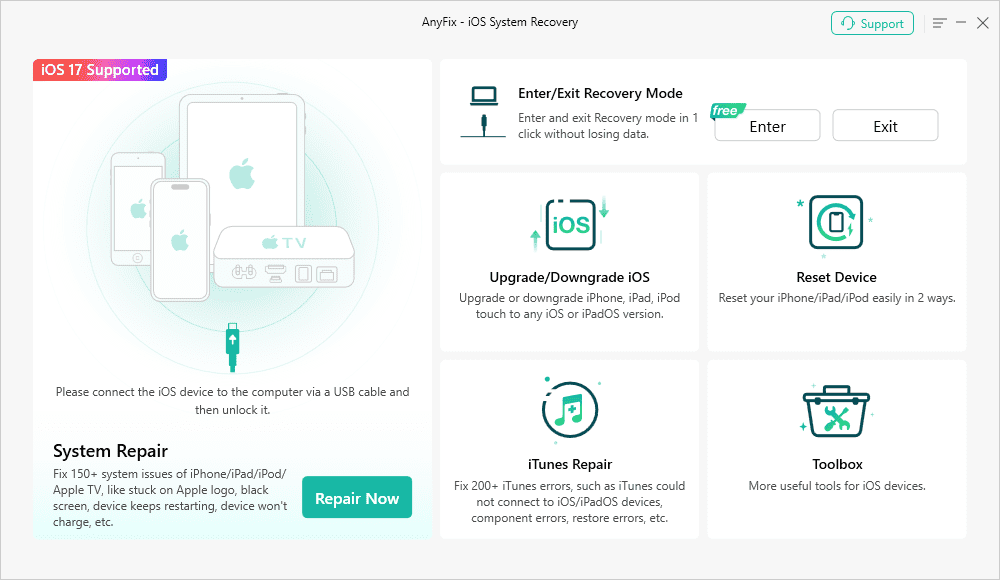
Open the iTunes Repair Workflow
Step 2. Choose the category for iTunes Sync/CDB Errors. If the software requests the connected iOS device for this category, connect the iPhone with a USB cable.
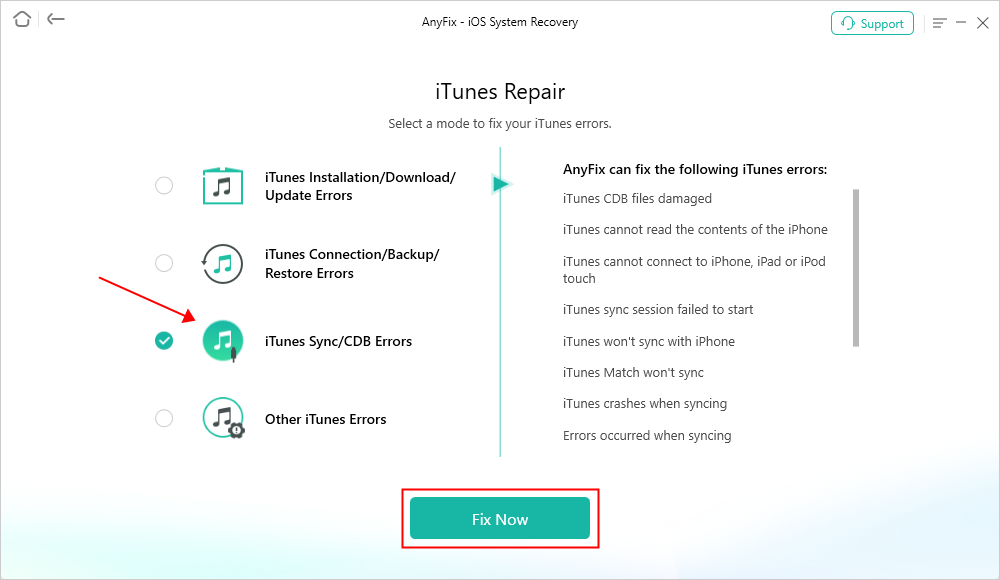
Choose the iTunes Sync Error Category
Step 3. Let AnyFix analyze the applicable iTunes components and review the repair option presented for the detected problem.
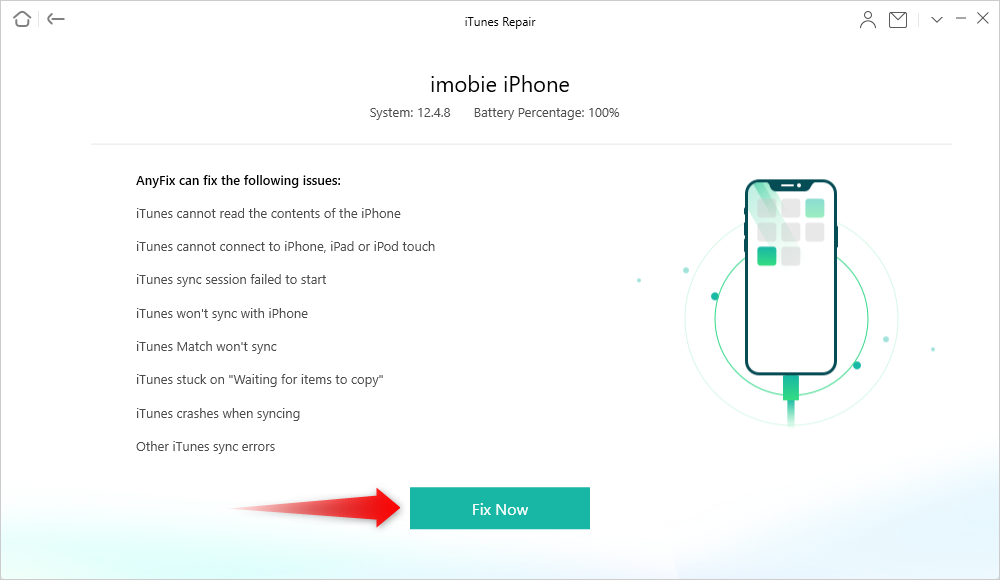
Connect the iPhone When Required
Step 4. Follow the onscreen repair instructions. After the process finishes, reopen iTunes and test the sync again.
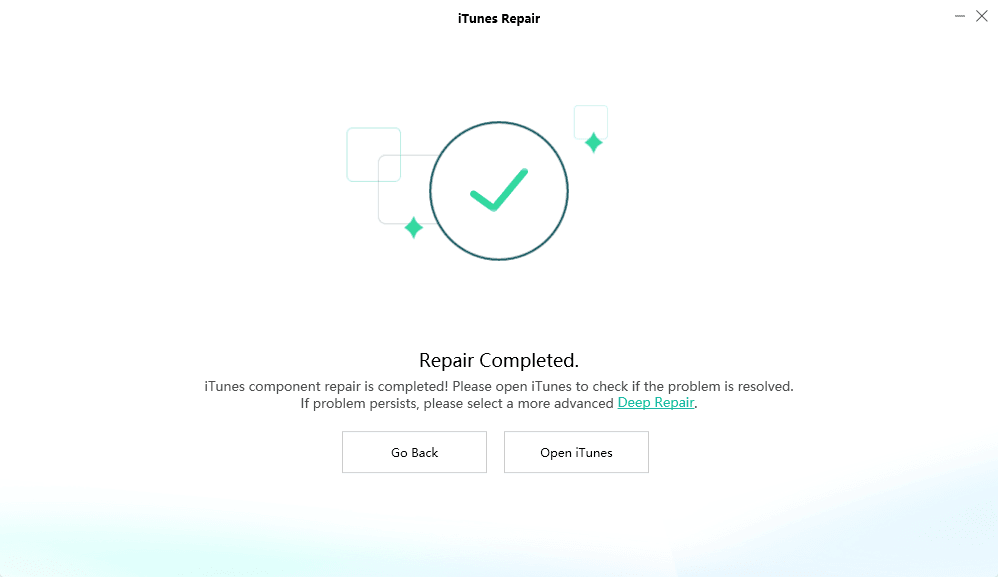
Reopen iTunes After the Repair
Keep the failure state clear: If iTunes displays a specific “sync session failed to start” message instead of remaining on “Waiting for Sync to Start,” that is a related but different sync error and may need a more specific troubleshooting path.
FAQs About iTunes Waiting for Sync to Start
1. Why is iTunes stuck on Waiting for Sync to Start?
Common causes include an unstable USB connection, a Trust problem, a stalled iTunes process, outdated software, a particular content category failing to sync, Wi-Fi sync problems, or damaged iTunes-related components.
2. Why does my iPhone appear in iTunes but not start syncing?
If the device is detected but syncing never begins, restart iTunes and both devices, recheck the content selected for sync, update the software, and test another cable or USB port. If only one type of content fails, troubleshoot that category separately.
3. Does iTunes still sync iPhones on Windows?
iTunes can still be used in Windows environments where it is installed and used for device management. On current Windows systems, Apple Devices may handle iPhone syncing and other device-management tasks instead.
4. What replaced iTunes for iPhone syncing on Mac?
On modern macOS versions, Finder handles iPhone and iPad device management and syncing. If you are troubleshooting a current Mac, look for the connected device in Finder rather than trying to update iTunes.
5. Does Wi-Fi affect iTunes syncing?
Wi-Fi matters when you are specifically using Wi-Fi sync. The computer and iPhone should be on the same network. If you are syncing through USB, focus first on the cable, USB port, Trust permission, and software connection.
6. Will Reset All Settings delete my iPhone data?
Reset All Settings is different from Erase All Content and Settings. It resets system preferences but does not intentionally erase personal content such as your photos, apps, or messages. You may need to configure some settings again afterward.
7. Should I cancel iTunes Match to fix a sync that will not start?
No. Canceling iTunes Match should not be treated as a general fix for a stalled iTunes sync. If the issue affects only music, check whether Sync Library, Apple Music, or another cloud music setting is controlling the library before changing the subscription itself.
8. What if iTunes says “Sync Session Failed to Start”?
That is a specific sync error rather than a sync that simply remains on “Waiting for Sync to Start.” The same connection and restart checks can still help, but you should troubleshoot the explicit sync-session error separately if it continues.
The Bottom Line
When iTunes is stuck on “Waiting for Sync to Start,” begin with low-risk checks: reconnect the iPhone with a data-capable cable, unlock it and confirm Trust, restart the app and both devices, update the software, and verify which content you are trying to sync.
Also make sure you are using the correct device-management app for your computer. Finder handles current Mac syncing, Apple Devices may handle current Windows syncing, and iTunes still applies to Windows and older environments where it remains in use.
If the problem is isolated to iTunes and repeated sync attempts still fail after the normal troubleshooting steps, an iTunes Repair workflow such as AnyFix can be evaluated for the sync-related iTunes components.
More Related Articles



Joy Taylor is a seasoned technical writer with over a decade of experience in mobile technology. At iMobie, she specializes in producing in-depth content on iOS data recovery, iPhone unlocking solutions, and iOS troubleshooting.
Product-related questions? Contact Our Support Team to Get Quick Solution >
