iPhone White Spots on Screen: Diagnosing & Fixing the Issue Fast (2026)
Noticed a white spot on your iPhone screen? Learn how to quickly determine whether it’s a pressure mark, stuck pixel, accessibility feature, or software glitch—and discover the safest fix for your device.
I know the exact moment of panic: you just wrestled your phone out of a tight case, only to discover an unexpected white spot on your iPhone screen. It is glaringly obvious on white backgrounds, restarting the device changes nothing, and you are immediately worried that your display is permanently damaged.
Searching for answers usually adds to the confusion. Some sources claim your hardware is ruined and needs an immediate replacement. Others recommend expensive software repair tools, while a few suggest you might just be looking at a moving accessibility dot. You need a straightforward, safe procedure to figure out exactly what is going on without risking your data or making the damage worse.
Having tested display defects across hundreds of devices—from older LCD models like the iPhone 11 and XR (which frequently show pressure marks) to newer OLED devices like the iPhone 13, 15, and 16 series (prone to stuck pixels)—I can help you pinpoint the issue fast.
This guide delivers a rapid diagnostic to determine if that white spot is physical pressure damage, a stuck pixel, or a software bug. We will help you run safe checks, understand your hardware repair options, and decide whether to monitor the device, book an Apple service appointment, or try a software fix.
Step Zero: Remove Your Case and Screen Protector
Before you do anything else, take off your phone case and your screen protector.
This is the most critical safe check that many people miss. An improperly applied screen protector, or a highly rigid, poorly fitting case, can exert continuous, uneven pressure on the edges of your screen. Over time, this compression squeezes the internal layers of the display together, resulting in a visible pressure mark that looks like a white blob.
If the pressure is relatively new, simply removing the tight case or lifting the glass screen protector might allow the display layers to decompress. Wait a few hours to see if the spot fades. If the blemish remains, proceed to the diagnostic test below.
The 2-Minute Diagnostic: The Screenshot Test
Here is a critical expert tip: the fastest technique to separate a software anomaly from physical hardware damage is the screenshot test.
Many users panic when they see a bright spot on their screen, instantly assuming their underlying display panel is broken. Before you assume the worst, follow this simple procedure:
- Open an app or a blank white webpage where the white patch is clearly visible.
- Press the Side button and Volume Up button simultaneously to take a screenshot.
- Open the Photos app and view the image you just captured.
- Zoom in and pan around the screenshot.
Interpreting Your Results:
- Software Issue: If the white spot appears in the digital screenshot itself and moves across your screen as you zoom or pan the image, you are dealing with a software glitch, a user interface (UI) element, or an accessibility feature.
- Hardware Damage: If the spot does not appear in the digital image, but stays anchored to the exact same physical location on your glass regardless of what app is open or how you zoom, you are looking at physical hardware damage.
🛑 STOP: CRITICAL WARNING
Do not press down hard on the glass to see if you can “massage” the spot out, and avoid playing random “pixel fixer” flashing strobe videos on YouTube. If you have physical hardware damage, pressing on the screen will compress the internal layers further, worsening the pressure mark or permanently damaging the delicate LCD diffuser.
Visible Symptom Diagnostic Table
To help you quickly identify what is happening, compare your screen to this symptom checker:
| Your Symptom | Screenshot Test Result | Likely Root Cause |
|---|---|---|
| Spot moves when zooming/panning | Visible in screenshot | Software Bug, UI Element, or App Overlay |
| Moving dots on the screen edge | Visible in screenshot | Vehicle Motion Cues (Accessibility Feature) |
| Fixed bright patch, hazy/uneven lighting | NOT visible in screenshot | Hardware: Pressure mark / Backlight bleed (LCD displays) |
| Tiny, sharp, pinpoint bright dot | NOT visible in screenshot | Hardware: Stuck Pixel (OLED displays) |
Quick Software Checks: Is It a Bug or an Accessibility Feature?
If your screenshot test confirmed the issue is software-related, the next step is identifying exactly what iOS is rendering on your display. Often, what looks like a system error is actually a built-in feature.
1. Vehicle Motion Cues
A common oversight is confusing a hardware defect with newer iOS accessibility settings. If you notice white dots moving, especially while you are riding in a car or a bus, you are likely seeing Vehicle Motion Cues. This feature places animated dots on the edges of the screen that shift with the motion of the vehicle to reduce passenger motion sickness.
How to disable Vehicle Motion Cues:
- Open the Settings app.
- Tap Accessibility, then select Motion.
- Toggle off Show Vehicle Motion Cues.
2. AssistiveTouch
Another common UI element is the AssistiveTouch dot, which appears as a solid or semi-transparent floating white circle that can be dragged around the edge of your screen.
How to disable AssistiveTouch:
- Go to Settings > Accessibility.
- Tap Touch, then AssistiveTouch.
- Toggle the switch to the off position.
3. Frozen App Overlays
If the dot on your screen is neither of these features, it may be a temporary software glitch or a frozen app overlay. The most effective procedure for clearing a stuck UI element is to force restart your device. Quickly press Volume Up, then Volume Down, and hold the Side button until the Apple logo appears to clear the system’s temporary memory.
Understanding Hardware Damage: Pressure Marks vs. Stuck Pixels
If the white spot failed to appear in your screenshot, the root cause lies within the physical layers of your display. The exact nature of this hardware damage depends on what specific iPhone model you own.
LCD Displays: Backlight Bleed and Pressure Marks
Older devices, like the iPhone XR and iPhone 11, use an LCD panel. These screens rely on a backlight layer to illuminate the pixels from behind. A white spot on an LCD screen is almost always caused by physical pressure damage.
When the phone is dropped, sat on, or squeezed too tightly inside a rigid case, the internal display layers compress. This damages the delicate diffuser film inside the screen, causing the backlight to leak through unevenly. This creates a hazy, bright patch commonly known as backlight bleed.
OLED Displays: Stuck Pixels and Delamination
Newer models, spanning from the iPhone 12 through the iPhone 16 series, feature an OLED panel. Because OLED screens do not rely on a backlight—every individual pixel generates its own independent light—a white spot on an OLED screen is usually a localized defect.
Most often, this manifests as an isolated stuck pixel (a tiny, sharp dot that refuses to change color) or minor screen delamination resulting from a drop or temperature extreme.
Will the white spot spread?
A major concern is whether the blemish will grow and ruin the rest of your screen.
- Stable Spots: If the blemish is a simple stuck pixel on an OLED screen or a minor pressure mark from a case you just removed, it will likely remain stable.
- Expanding Spots: If the spot appeared after liquid exposure, it can worsen over time as trapped moisture slowly diffuses between the screen layers. Similarly, if the pressure originates from an expanding, degraded internal battery pressing up against the logic board and screen, the bright spot will absolutely expand until that dangerous battery is replaced.
Hardware Next Steps: Monitor, Repair, or Replace?
If you have confirmed physical hardware damage, you must decide what makes the most sense for your wallet and your daily usage.
Option 1: Monitor the Blemish
If the spot is tiny, stable, and does not interfere with reading text or viewing photos, the most practical approach is to simply monitor it. It is perfectly safe to continue using a phone with a minor pressure mark.
Option 2: Utilize AppleCare+
If your device recently suffered drop damage or the spot is highly distracting, check your warranty status. Open Settings > General > About to see if you have active AppleCare+ coverage. If you are covered, getting your screen repaired by Apple at a Genius Bar or an Apple Authorized Service Provider is highly affordable. AppleCare+ significantly reduces the out-of-pocket cost and guarantees a genuine display panel, ensuring crucial features like True Tone, Night Shift, and Face ID continue working perfectly. Remember to back up your data to iCloud before handing over your device.
Option 3: The Repair vs. Upgrade Dilemma
If your device is completely out of warranty, you face a tough financial choice. For newer models (like the iPhone 16 or 17), paying out-of-pocket for a genuine screen replacement usually makes sense to extend the life of the phone.
However, if you have an older model—like an iPhone 11 with an out-of-warranty backlight bleed issue—repair costs can sometimes rival the current market value of the device itself. In these cases, trading the phone in (with the display defect noted) and investing that money into a newer device is often the smarter financial decision.
When to Consider System Repair Tools (Severe Software Issues)
Note: If your screenshot test proved you have a physical pressure mark or a stuck pixel, skip this section. No software download can fix physically damaged glass or broken LCD diffusers.
However, if your initial checks revealed that your issue is software-related, but basic restarts are completely failing, you might be facing a deeper system anomaly. Sometimes, visual glitches aren’t just isolated spots; your entire display might flash white, suffer from severe rendering artifacts, or get stuck in a boot loop during an iOS update.
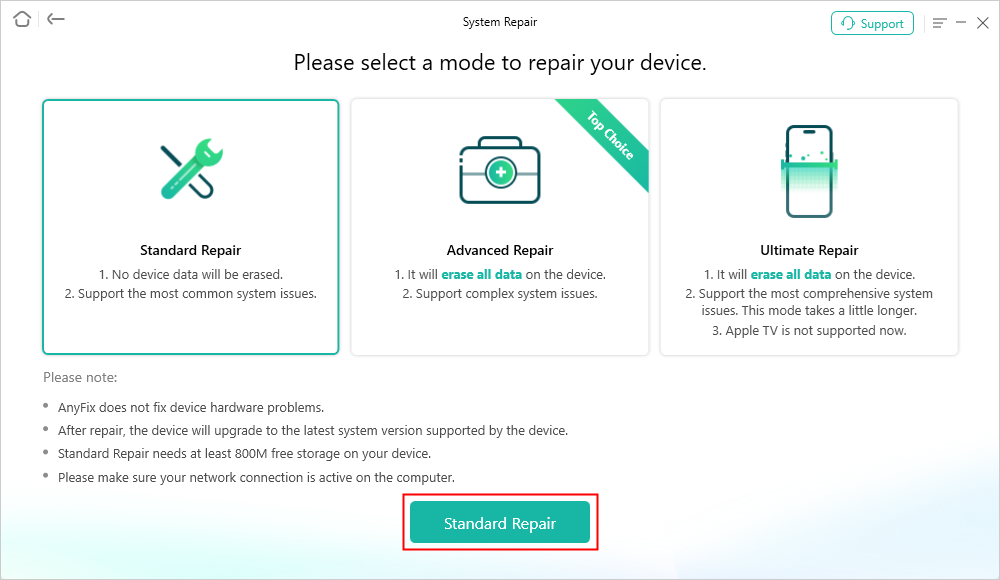
In scenarios where native recovery methods force you into a complete factory reset, AnyFix is a useful utility. AnyFix is a desktop software tool designed as a last-ditch effort for severe iOS system conflicts, boot loops, and deeply corrupted display rendering files.
It offers a dedicated Standard Repair mode that downloads uncorrupted iOS firmware and corrects the broken system code without erasing your personal photos and messages. It is an excellent fallback option when standard updates fail to clear severe software-based screen corruption, though it should be reserved for actual system failures rather than simple accessibility settings.
Free Download for all windows & 100% safe Free Download for all mac & 100% safe
Free Download100% Clean & Safe
Frequently Asked Questions
Can a white spot on my iPhone screen go away by itself?
Generally, no. If the spot is caused by physical pressure damage, a bent display frame, or backlight bleed, it will not disappear on its own. However, if the white marks are due to a software glitch or an accessibility overlay, a force restart or a settings adjustment will clear it immediately.
Did my screen protector or case cause the white spot?
Yes, it is highly possible. An improperly applied screen protector or a poorly fitting, highly rigid phone case can exert continuous, uneven pressure on the edge of the screen. This compresses the internal layers over time, resulting in a visible physical pressure mark.
What is the difference between a dead pixel and a stuck pixel?
A dead pixel appears completely black because the diode is broken and no longer receiving power. A stuck pixel usually appears as a persistent bright dot—often red, green, blue, or white—because it is continuously receiving power but is locked on a single color state.
Is a white spot on my screen a software issue or hardware damage?
The fastest way to find out is to take a screenshot. If the spot shows up in the screenshot image and moves when you pan around, it is a software element. If the spot remains anchored to the physical glass and does not appear in the digital screenshot, it is hardware damage.
Conclusion
Finding a bright white blob on your screen is incredibly frustrating, especially when you fear permanent hardware damage. By starting with the simple screenshot test and removing tight cases, you can instantly cut through the confusion and separate physical defects from easily correctable software glitches.
If the diagnostic points to physical damage, you now have a clear roadmap to weigh the costs of AppleCare+, out-of-pocket repair, or a device upgrade. And if the issue is a software anomaly, checking your accessibility settings or initiating a force restart will usually resolve the blemish in minutes, getting your display back to pristine condition.
Free Download for all windows & 100% safe Free Download for all mac & 100% safe
Free Download100% Clean & Safe



Wanda Norris is a junior author in iMobie specializing in iOS tips and solutions. She keeps a close eye on every iOS update to provide practical, easy-to-understand guides that help users solve problems and master their Apple devices.
Product-related questions? Contact Our Support Team to Get Quick Solution >
