How to Fix Pattern Password Disable on Android
Pattern password disable can lock you out of an Android phone when the pattern is forgotten, entered incorrectly too many times, or no longer accepted by the device. This guide explains what it means, which fixes are safest, when a pattern password disable ZIP file is risky, and when DroidKit may help remove an Android screen lock on supported devices.
Quick Answer: Pattern password disable usually means you cannot unlock your Android phone with the pattern lock. Start with official options such as Samsung screen lock recovery, Google Forgot Pattern on Android 4.4 or lower, or a factory reset if you have backups and account credentials. If manual options do not work, DroidKit can be considered as a tool-assisted option for removing Android screen locks on supported devices. Avoid unknown “pattern password disable ZIP” downloads unless you fully understand the risks.
DroidKit – Remove Android Pattern Lock in Supported Cases
Locked out of your Android phone because the pattern password is disabled or forgotten? DroidKit is designed to help remove Android screen locks, including pattern, PIN, password, fingerprint, and face locks, in supported scenarios. Check device compatibility and data-loss notes before using any screen unlock tool.

Forgetting a lock screen pattern is frustrating, especially when repeated wrong attempts make the phone wait longer before you can try again. Some users search for a pattern password disable ZIP file, while others try Samsung, Google, ADB, or factory reset methods. The safest method depends on your device brand, Android version, backup status, and whether you still know the Google or Samsung account linked to the phone.
This guide focuses on safe, realistic ways to fix pattern password disable on Android. Use these methods only on a phone you own or are authorized to unlock.
Part 1. What Does Pattern Password Disable Mean?
“Pattern password disable” is not a standard Android setting name. In most searches, it refers to a situation where your Android phone pattern lock is disabled, forgotten, or no longer working, leaving you unable to access the device.
Common causes include:
- Forgotten pattern: You no longer remember the pattern used to unlock the phone.
- Too many failed attempts: Android temporarily blocks new attempts after repeated wrong patterns.
- Broken or unresponsive screen: Touch input does not register the pattern correctly.
- Recent lock change: The pattern was changed, but you only remember the old one.
- System or account issue: The phone requires account verification or cannot accept the current screen lock normally.
| Situation | Best First Step | Data Risk |
|---|---|---|
| You recently changed the pattern on a Samsung Galaxy phone | Try Samsung's previous screen lock method if your model and One UI version support it | Low if available |
| Your phone runs Android 4.4 or lower | Try Google Forgot Pattern with the previously synced Google Account | Low if credentials work |
| You cannot use official recovery options | Consider a screen unlock tool or factory reset | Medium to high depending on method |
| You found a pattern password disable ZIP file online | Check risks before using it | High if the file is unknown or device-incompatible |
Part 2. Before You Try: Data, Accounts, and Compatibility
Before trying to remove a pattern lock, check three things: whether you have backed up your data, whether you know the Google or Samsung account on the phone, and whether the method supports your Android version and device model.
- Backups matter: Some unlock or reset methods may erase local data. If your data is backed up to Google, Samsung Cloud, or another service, recovery is easier after reset.
- Account credentials matter: After a factory reset, Android may require the Google Account previously synced on the phone because of Factory Reset Protection.
- Device support matters: Samsung, Google, ADB, and custom recovery methods all have device/version limitations.
- Authorization matters: Only unlock devices you own or are authorized to manage.
Part 3. Remove Android Pattern Lock with DroidKit
If official account recovery is unavailable, a dedicated screen unlock tool can be a practical option. DroidKit's Android Phone Unlocker is designed to help remove Android screen locks, including pattern locks, in supported scenarios.
Use DroidKit when:
- You forgot the Android pattern lock and cannot access the home screen.
- Google Forgot Pattern is not available on your Android version.
- Samsung recovery options do not apply to your model or region.
- You want a guided tool-assisted process instead of advanced ADB or custom recovery methods.
Important: Screen lock removal may affect device data depending on the phone model and unlock method. Check compatibility and data-loss notes before starting.
Step 1. Run DroidKit on your computer and select Screen Unlocker.
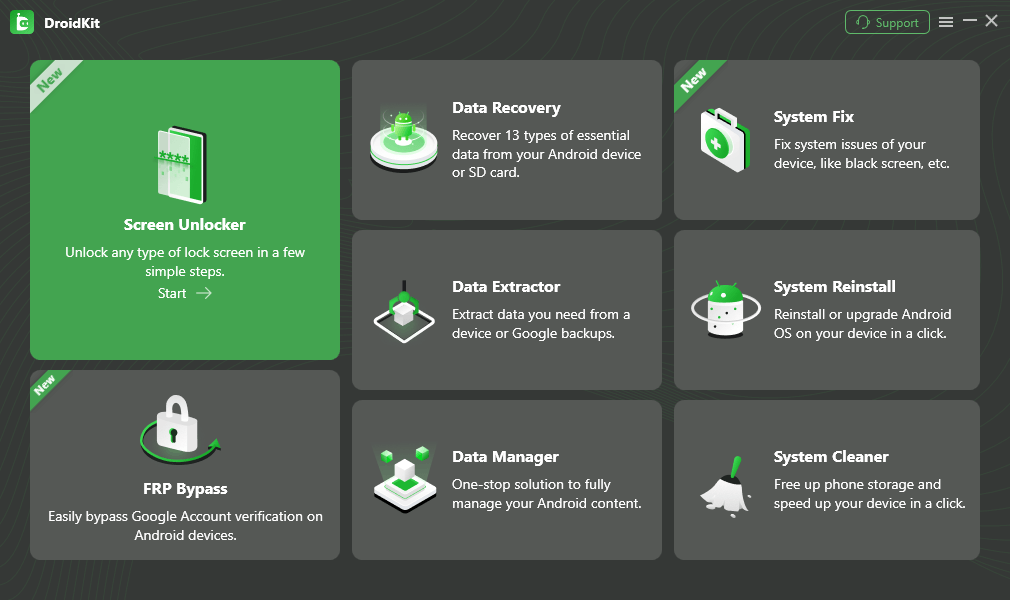
Choose Screen Unlocker
Step 2. Connect your locked Android phone to the computer with a USB cable and click Start.
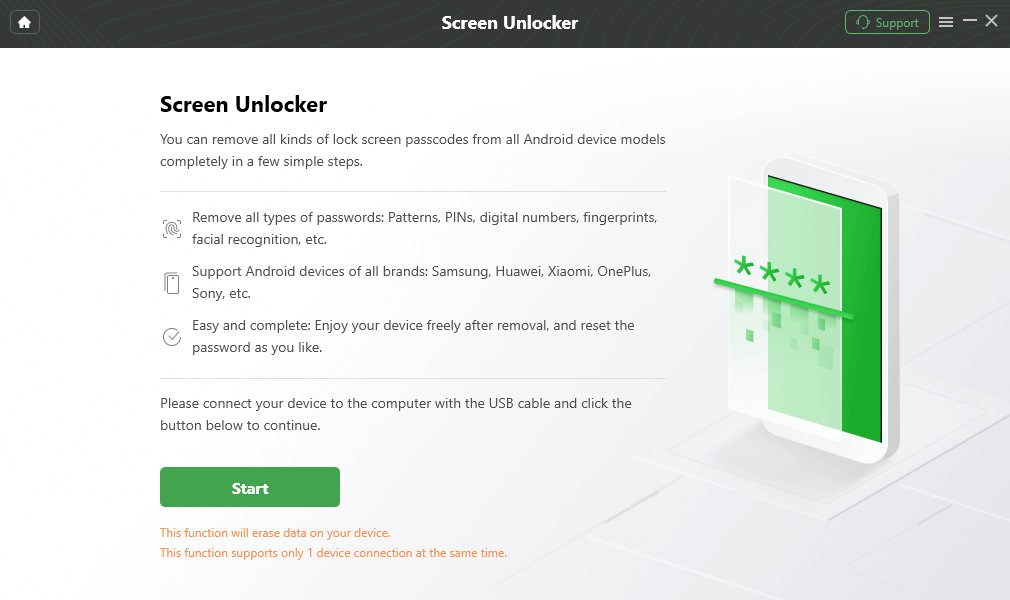
Connect your Locked Phone
Step 3. Wait while DroidKit prepares the device configuration file. Keep the internet connection stable, then click Remove Now.
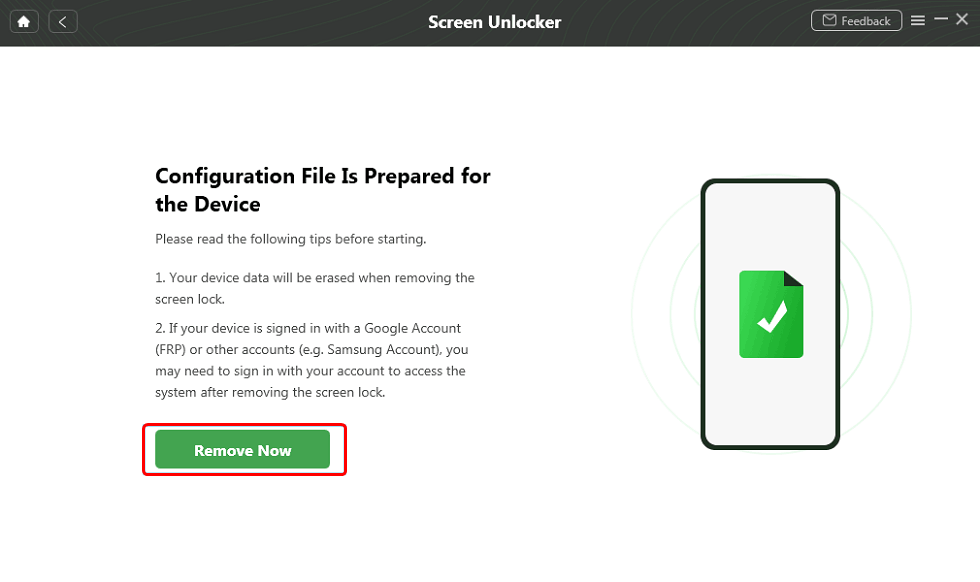
Click Remove Now Button
Step 4. Follow the on-screen instructions to put your Android phone into the required mode.

Put Your Android Phone into Recovery Mode
Step 5. Keep the phone connected while the screen lock removal process runs. After completion, restart and set up your device as instructed.
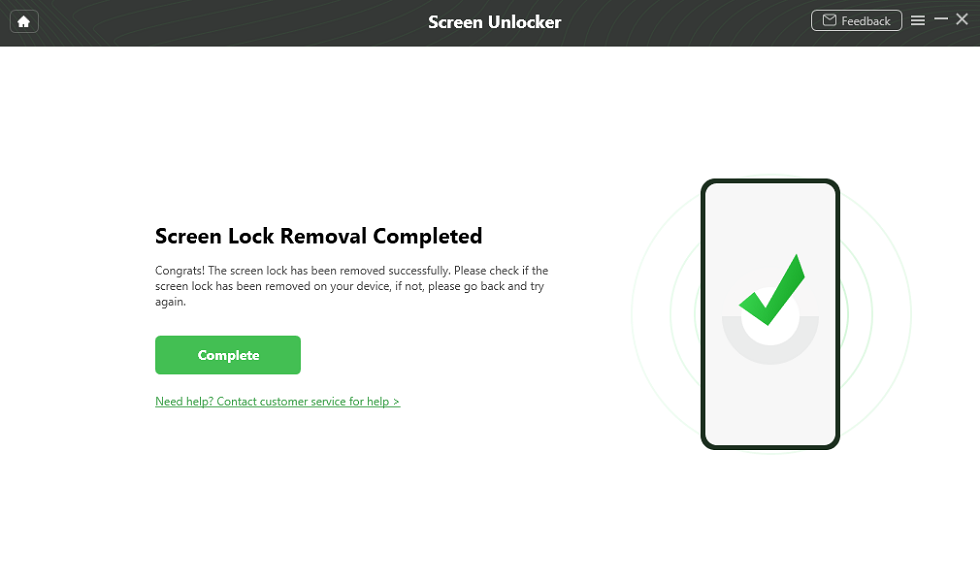
Lock Screen Removal Completed
Part 4. Use Samsung or Google Account Recovery
Official account-based recovery should be checked before advanced or risky methods. These methods are more limited than many older tutorials suggest, so read the conditions carefully.
Option 1. Samsung Screen Lock Recovery
For Samsung Galaxy users, screen lock recovery depends on the model, region, and One UI version. Some Galaxy devices with One UI 6.1 or later may let you unlock the phone with a previous PIN, password, or pattern for a limited time after changing the screen lock. This is useful if you recently changed the pattern and still remember the old one.
General steps may include:
- Enter the wrong pattern several times until the recovery option appears.
- Tap the option to use the previous screen lock method if your device shows it.
- Enter the previous PIN, password, or pattern.
- Create a new screen lock after the phone is unlocked.
Some Samsung support pages also mention SmartThings Find or remote options, but availability can vary by country, device, and whether the option was enabled before the phone was locked. If you do not see an unlock option, check the official Samsung support page for your region or contact Samsung support.
Option 2. Google Forgot Pattern on Android 4.4 or Lower
On Android 4.4 or lower, Google may allow you to reset a forgotten pattern using the Google Account previously added to the device.
- Enter the wrong pattern multiple times until you see Forgot pattern.
- Tap Forgot pattern.
- Sign in with the Google Account username and password previously used on the phone.
- Set a new screen lock.
This method is not available on most modern Android versions. If your phone is newer and you cannot unlock it, Google's official path usually involves erasing the device and setting it up again.
Part 5. Factory Reset the Locked Android Phone
A factory reset can remove the pattern lock, but it usually deletes local data on the phone. Use this method only if you have a backup, accept the data loss risk, and know the Google Account previously synced on the device.
General recovery-mode reset steps vary by brand, but usually follow this pattern:
- Power off the phone.
- Press the required button combination for your device to enter Recovery Mode.
- Select Wipe data/factory reset.
- Confirm the reset and wait for the phone to restart.
- Sign in with the Google Account previously used on the phone if Factory Reset Protection appears.
If the phone contains important files that were not backed up, consider contacting the device manufacturer or a professional service before resetting.
Part 6. Advanced Options: ADB and Pattern Password Disable ZIP
Some users search for ADB commands or a pattern password disable ZIP file to remove Android pattern lock. These methods should be treated as advanced and risky, not as the first choice.
ADB Method
ADB can only help in limited cases. It usually requires USB debugging, prior computer authorization, custom recovery, or root-level access. If those conditions were not set up before the phone was locked, ADB will usually not work. Incorrect commands may also cause system problems, so this method is best left to advanced users.
Pattern Password Disable ZIP File
A pattern password disable ZIP file is usually an unofficial file flashed through custom recovery to remove or modify lock screen files. It may sound like a quick fix, but it has important risks:
- The ZIP file may not match your Android version or device model.
- The file may come from an untrusted source.
- Flashing unknown files can damage the system or expose personal data.
- Custom recovery may not be available on locked or modern devices.
- Even if the lock screen is removed, account verification may still appear after reset or reboot.
For most users, a safer path is to try official recovery first, then use a trusted screen unlock tool or factory reset when necessary.
Part 7. Methods You Should Avoid
Some old tutorials recommend Emergency Call tricks, random APKs, or unknown ZIP files. These methods are not recommended.
- Emergency Call bypass tricks: These were old vulnerability-based tricks and are unreliable on modern Android versions.
- Unknown ZIP downloads: They can contain unsafe or incompatible files.
- Random unlock APKs: Apps cannot usually remove a lock screen after you are already locked out, and unknown APKs may be unsafe.
- Unverified service providers: Avoid sharing account credentials or personal data with untrusted services.
Part 8. FAQ
Q1. What does pattern password disable mean on Android?
Pattern password disable usually means your Android phone cannot be unlocked with the pattern lock normally. This may happen after too many wrong attempts, a forgotten pattern, a broken or unresponsive screen, a recent screen lock change, or a system issue. The right fix depends on your Android version, phone brand, account access, and backup status.
Q2. Can I fix pattern password disable without losing data?
Sometimes, but not always. If your device supports an official recovery option, such as Samsung's previous screen lock method on supported Galaxy models, you may be able to regain access without a full reset. If those options are unavailable, a factory reset or remote erase can remove the lock but usually deletes local data.
Q3. Is a pattern password disable ZIP file safe?
Not always. A pattern password disable ZIP file is usually an unofficial file used with custom recovery to modify or remove lock screen files. It can fail, damage the system, expose your data, or come from an unsafe source. Avoid unknown ZIP downloads and use official recovery options or trusted tools first.
Q4. Does Google Forgot Pattern still work?
Google Forgot Pattern works only on Android 4.4 or lower. On newer Android versions, Google generally directs users who cannot unlock the phone to erase the device and set it up again. You may be able to restore backed-up data after signing in with the Google Account previously used on the phone.
Q5. Can Samsung unlock a forgotten pattern lock?
It depends on the Samsung model, region, One UI version, and whether the recovery option was enabled before the device was locked. Some Galaxy devices with One UI 6.1 or later may allow a previous screen lock method within a limited time after changing the lock. If that is unavailable, Samsung support may recommend a reset.
Q6. Can ADB remove an Android pattern lock?
Only in limited advanced cases. ADB methods usually require USB debugging, prior authorization, custom recovery, or root-level access that must have been prepared before the phone was locked. If those conditions are not met, ADB usually will not help and incorrect commands may cause system problems.
Q7. Should I use the Emergency Call trick to bypass a pattern lock?
No. Emergency Call bypass tricks are outdated, device-specific, and based on old vulnerabilities. They are unreliable on modern Android versions and may create security or legal risks. Use authorized recovery methods, account-based recovery, a factory reset, or a trusted screen unlock tool for a phone you own.
Q8. Will factory reset remove the pattern lock?
Yes, a factory reset usually removes the screen lock, but it also erases local data on the phone. After the reset, Android may still ask for the previously synced Google Account because of Factory Reset Protection. Use this method only on your own device and make sure you know the required account credentials.
The Bottom Line
Pattern password disable can mean a forgotten pattern, too many failed attempts, a device-specific recovery limit, or a risky custom recovery topic such as a pattern password disable ZIP file. Start with official recovery options when available. If those do not work, DroidKit may help remove Android screen locks on supported devices, while a factory reset remains the last resort when data loss is acceptable.



Senior writer of the iMobie team as well as an Apple fan, love to help more users solve various types of iOS & Android-related issues.
Product-related questions? Contact Our Support Team to Get Quick Solution >
