How to Remove Activation Lock without Previous Owner [5 Ways]
To remove Activation Lock without the previous owner, you can try DNS bypass, passcode-based options, or contact Apple Support. For a more restriction-free solution, AnyUnlock offers a reliable way to bypass Activation Lock without an Apple ID or password.
User Case: Remove lock without previous owner
I have an older iPad from my niece, I lent it to my mom so she could watch our stream from church because she wasn’t able to go. She’s dead now and I don’t know how or who used password or apple id. Is there anyway anyone can help me.?
If an iPhone or iPad shows Activation Lock or iPhone Locked to Owner, it is still linked to an Apple Account through Find My. If you are trying to learn how to remove Activation Lock on iPhone without Apple ID and password, the correct method depends on what proof or access you still have: the device passcode, contact with the previous owner, valid proof of purchase, or a compatible third-party bypass workflow for a device you own or are authorized to use.
Before trying anything, confirm that the device is legitimately yours. Apple specifically advises buyers not to take ownership of a used iPhone or iPad that is still protected by Activation Lock until the previous owner removes it from their account.
What Is Activation Lock & Why iPhone Locked to Owner?
Activation Lock is part of Apple’s Find My security system. When Find My is turned on, Apple links the device to the owner’s Apple Account on its activation servers. The Apple Account password is normally required before someone can turn off Find My, erase and reactivate the device, or use it with another account. On iOS or iPadOS 15 and later, a protected used device may show iPhone Locked to Owner during setup.
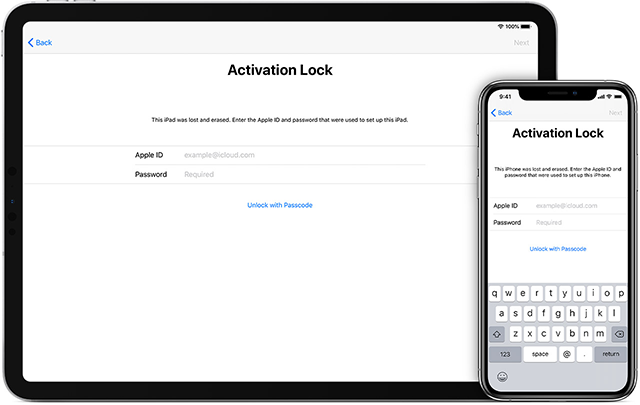
Activation Lock / iPhone Locked to Owner Screen
Before You Choose a Method
| Your Situation | Best First Option | What You Need |
| It is your Apple Account, but you forgot the password | Recover the Apple Account/password | Account recovery information |
| You know the previous device passcode and “Unlock with Passcode” appears | Use the device passcode | Previous device passcode |
| The previous owner is reachable but not physically present | Ask them to remove the device remotely | The previous owner signs in to Find My/iCloud.com |
| You cannot reach the previous owner but have valid proof of purchase | Start an Apple Activation Lock support request | Proof of purchase accepted by Apple |
| The account holder has died | Use Apple’s deceased-account / legal-document process | Required legal documentation varies by country or region |
| You own the device but none of the official routes apply | Check a compatible third-party bypass option carefully | Supported model/iOS and acceptance of feature limitations |
What Does NOT Remove Activation Lock?
- Factory reset alone: Erasing or restoring the iPhone does not remove the account link that causes Activation Lock.
- Finder/iTunes restore alone: The device can still ask for the linked Apple Account during activation.
- Changing the SIM card: Activation Lock is tied to the Apple Account/device relationship, not the SIM.
- MDM bypass: Remote Management/MDM and Activation Lock are different security mechanisms.
- DNS workaround: Legacy DNS methods may provide limited access on some old setups, but they are not equivalent to removing Activation Lock from Apple’s servers.
The five methods below keep the original article structure, but each applies to a different situation. Start with the official ownership-based options whenever they are available.
#1. Remove Activation Lock Without Previous Owner via AnyUnlock
If the official account, passcode, previous-owner, and Apple-support routes are not available, and the iPhone or iPad is yours or you are authorized to use it, AnyUnlock provides an Activation Lock bypass workflow for supported devices.
Check compatibility before downloading or paying. AnyUnlock’s current technical guidance separates newer no-jailbreak workflows from some older-device workflows that may require jailbreak and can have feature limitations. Device model, iOS/iPadOS version, and Windows/macOS can change the exact process.
What to check before using AnyUnlock:
- Your exact iPhone/iPad model and iOS/iPadOS version are currently supported.
- Whether your device follows a no-jailbreak or jailbreak-required workflow.
- Whether cellular calls/data, FaceTime, iMessage, iCloud sign-in, or iTunes/Finder use will be limited after bypass on your specific workflow.
- Whether an erase, reset, or system update can cause Activation Lock to appear again.
- Whether the free download is only for compatibility checking and a paid license is required for the full bypass.
Install AnyUnlock on Windows or macOS only after you confirm that your device fits the current Activation Lock compatibility information.
Free Download * 100% Clean & Safe
Important: The screenshots below show an AnyUnlock workflow, but the exact screens can differ by device generation and iOS version. Follow the current software prompts rather than forcing an older sequence onto an unsupported device.
Steps for Windows Owners:
Step 1. Launch AnyUnlock – iPhone Password Unlocker on your computer > Click the Bypass iCloud Activation Lock on the main screen.
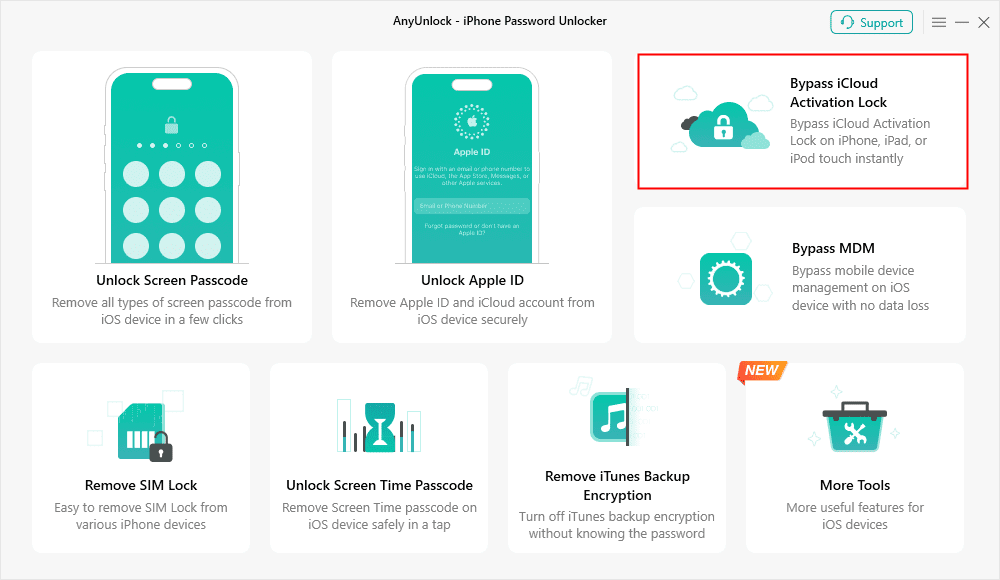
Click on Start Now to Bypass iCloud Activation Lock
Step 2. Connect your iPhone to the computer with a USB cable > Check the device information and read the Terms of Use. Click the Start Now button to initiate the process.
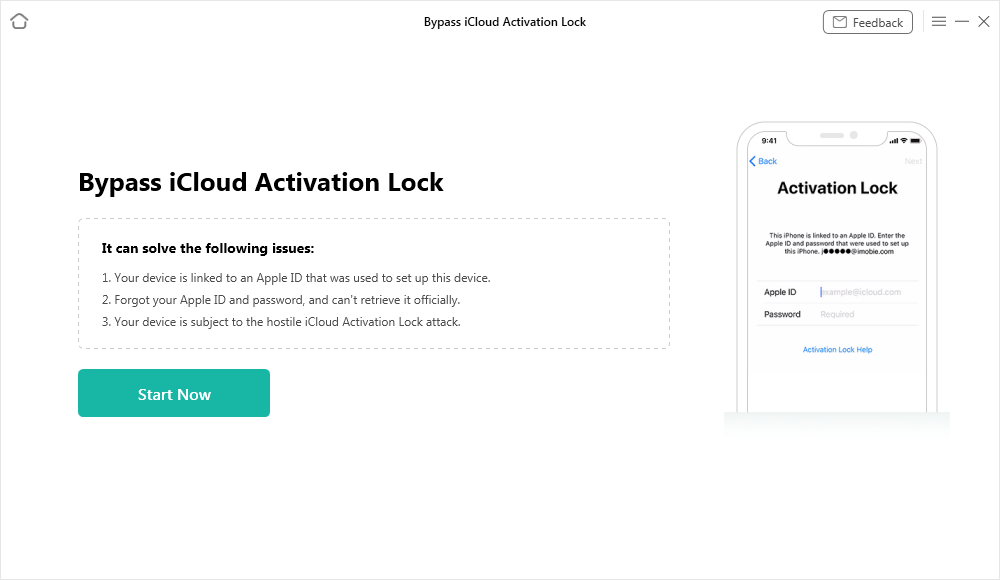
Connect Your iOS Device to the Computer
Step 3. Confirm your device information and disconnect your device from Wi-Fi and turn off cellular data > Tap on the Bypass Now.
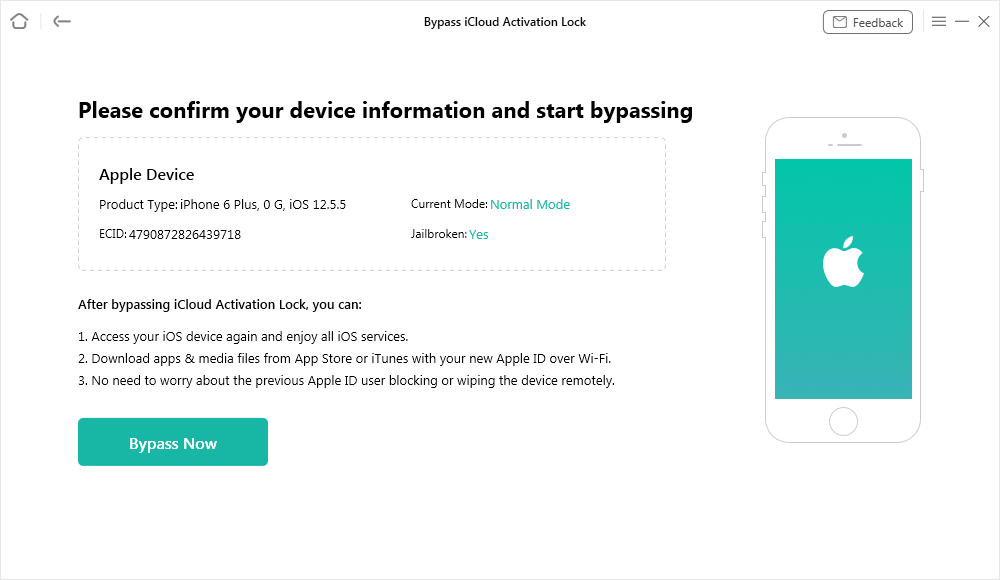
Confirm Your Device Information and Start Bypassing
Step 4. Now, AnyUnlock is bypassing iCloud Activation Lock, and please wait for a moment.
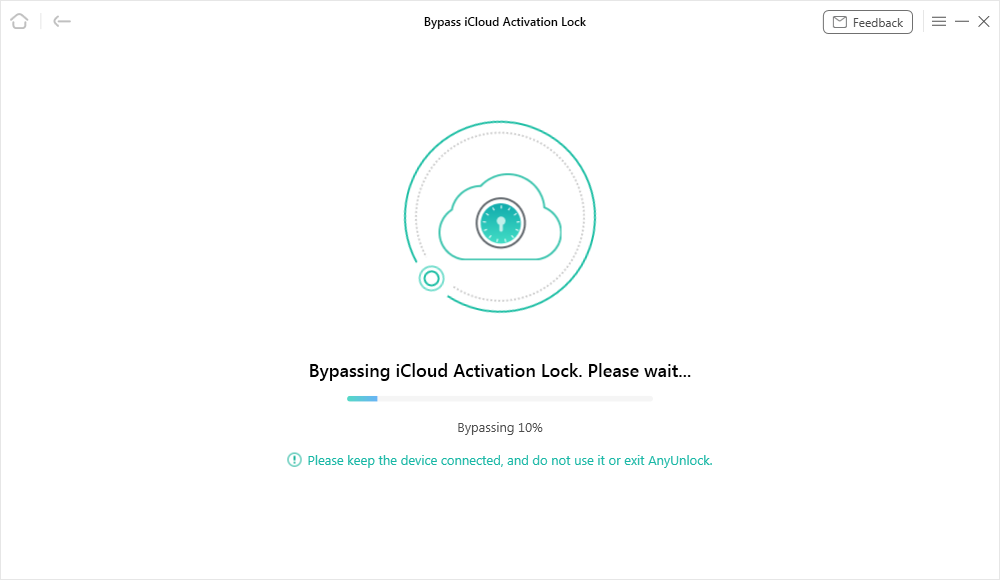
Bypassing iCloud Activation Lock
Step 5. When the iCloud Activation Lock is bypassed successfully, you can see the page below.
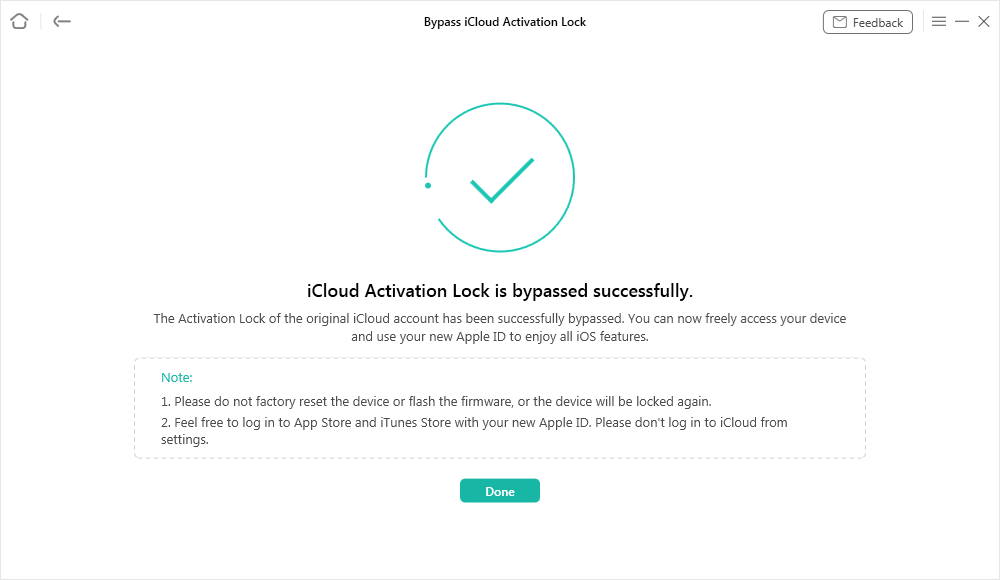
iCloud Activation Lock Is Bypassed Successfully
Steps for Mac Owners:
Step 1. Free download AnyUnlock on your Mac > Connect your iPhone with Mac > Choose Bypass iCloud Activation Lock and Start Now to get started.
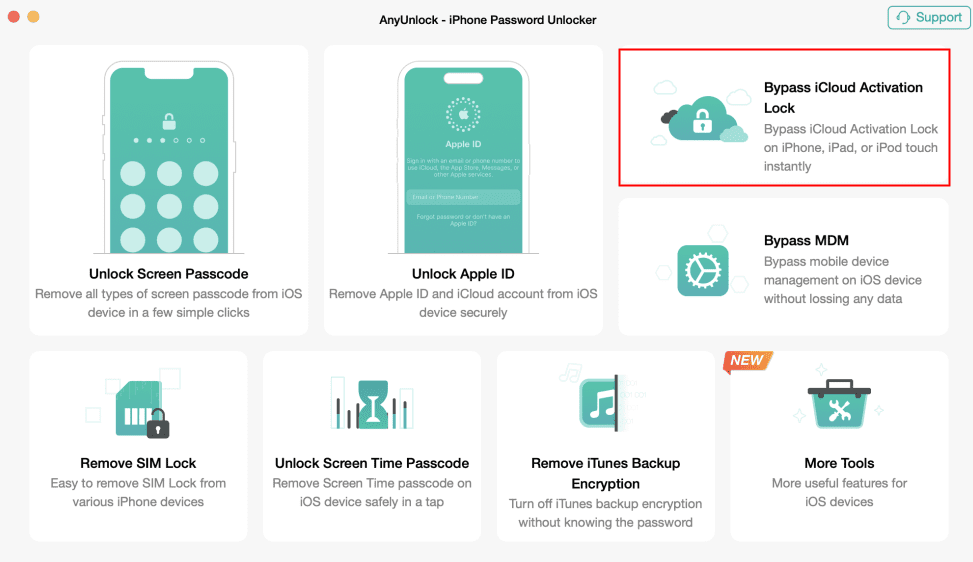
Choose Bypass iCloud Activation Lock
Step 2. Follow the current AnyUnlock instructions for your detected device. Some older supported devices may require a jailbreak/DFU workflow, while current guidance lists no-jailbreak workflows for many newer models and iOS versions. If the software shows a jailbreak step, read the Terms of Use and the listed feature limitations before continuing.
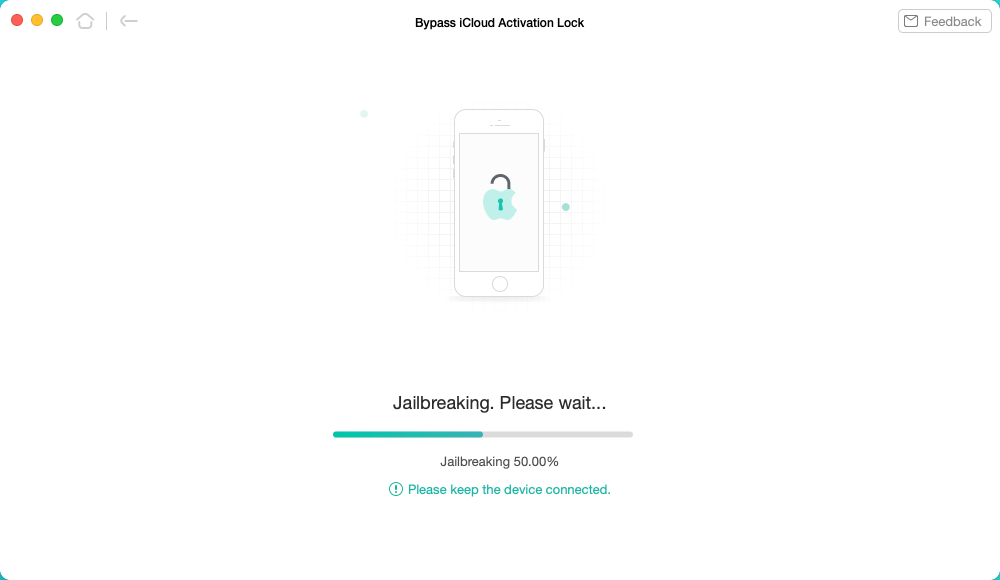
Start to Jailbreak Your Device
Once the iOS device has been jailbroken successfully, some functions will not be available. The jailbreak will disable cell phone call making, cellular data use, FaceTime calls making, and iMessage sending, etc.
Any reset or upgrade processing will lock this iOS device again.
Step 3. Once the device has been jailbroken, confirm your device information and tap on Bypass Now.
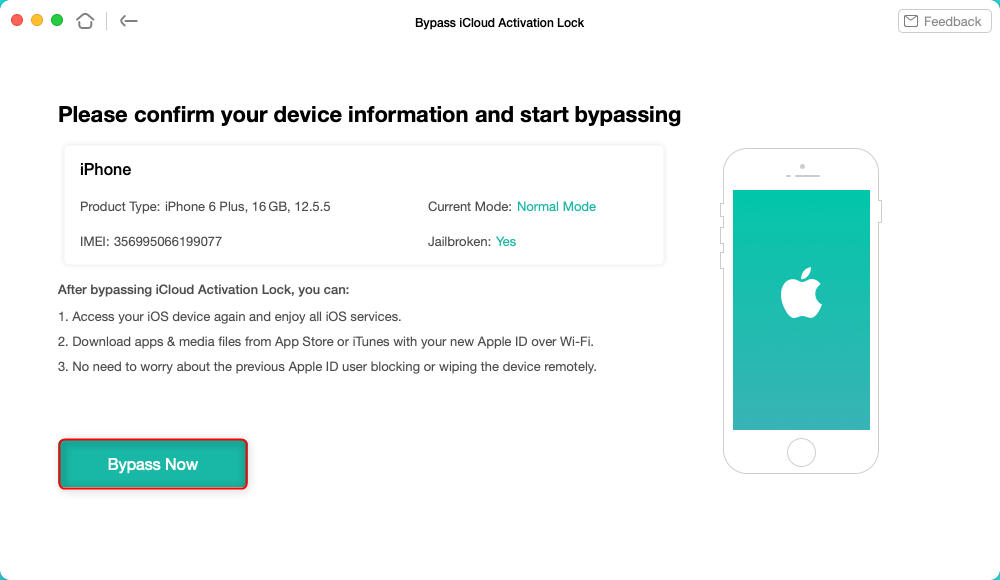
Tap on Bypass Now to Start Bypassing
Step 4. Then, it will bypass the Activation Lock automatically. Do not disconnect your device until it restarts. Wait a minute, and you will see bypassed successfully page.
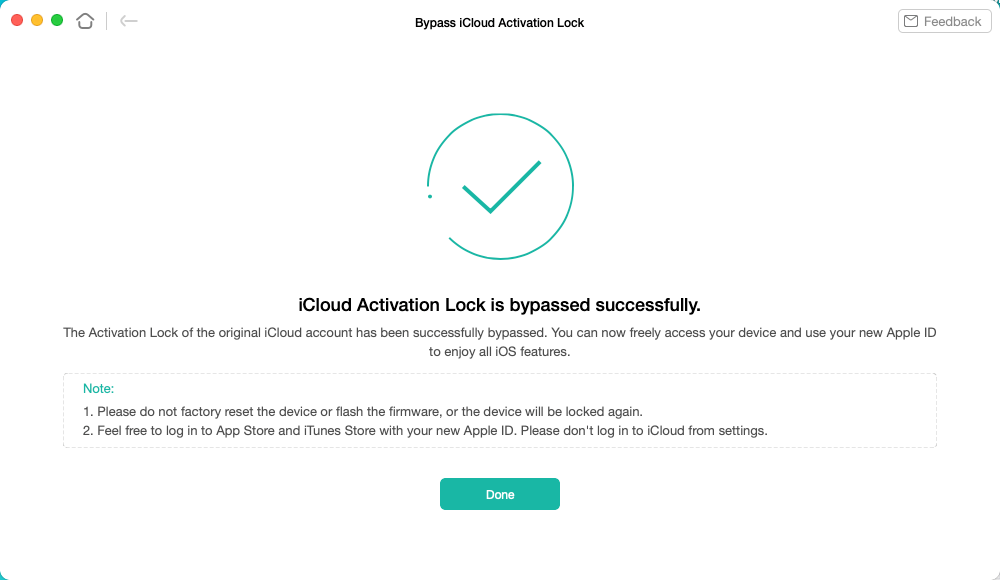
iCloud Activation Lock Is Bypassed Successfully
Now, you can enter your iPhone again, using App Store and iTunes Store as you need.
After the iPad/iPhone is locked to owner bypass, please DO NOT log into iCloud from the Settings on your iPhone or iPad, or factory reset your device, which will lock the device again.
Video Tutorial on How to Remove Activation Lock Without Previous Owner
Free Download * 100% Clean & Safe
#2. Remove Activation Lock Without Previous Owner via DNS Bypass
DNS bypass is a legacy workaround rather than a true Activation Lock removal method. Older guides used custom DNS servers during Wi-Fi setup to reach limited web-style functions without completing normal activation. It does not remove the device from the previous owner’s Apple Account, does not provide normal iPhone functionality, and is unreliable on modern iOS/iPadOS versions.
If you see old DNS-bypass instructions online, treat them as historical troubleshooting information rather than a full unlock solution. For a used device, the preferred free options are still: recover your own Apple Account, use the device passcode when Apple offers that option, ask the previous owner to remove the device remotely, or use Apple’s support process when you have valid ownership documentation.
Why we do not recommend DNS as a primary method: it does not remove Activation Lock from Apple’s activation servers and can leave the device with only partial functionality.
#3. Remove Activation Lock with Previous Device Passcode
Apple’s current Activation Lock guidance says the onscreen removal process may accept either the Apple Account credentials used to set up the device or the device passcode. If your Activation Lock screen offers Unlock with Passcode / Use Device Passcode, and you legitimately know the previous passcode, this is an official option that does not require the Apple Account password.
Step 1. On the Activation Lock screen, tap “Unlock with Passcode.”
Step 2. From the pop-up options, select “Use Device Passcode.”
Step 3. Enter the correct screen passcode previously used on the device.
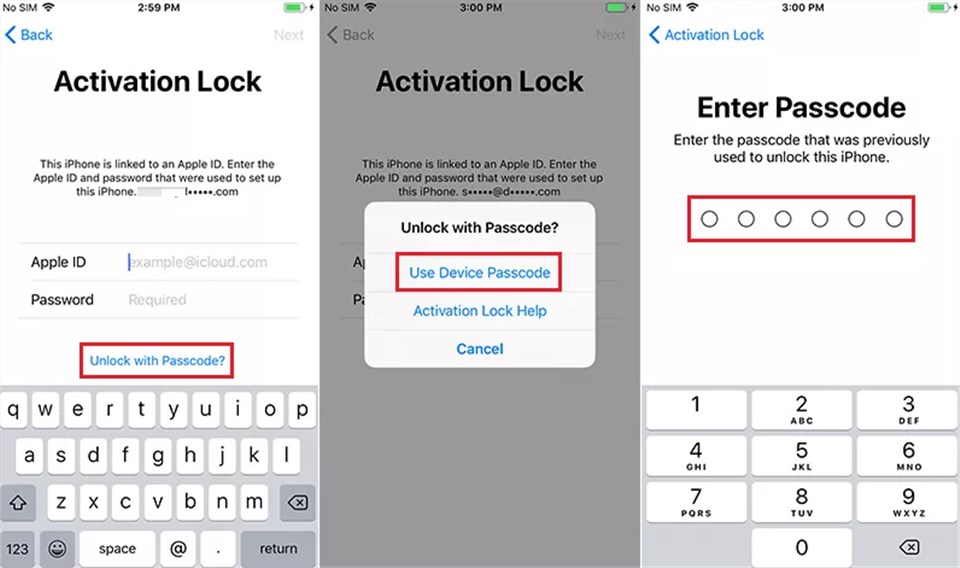
Step 4. Once verified, the Activation Lock will be removed instantly.
Step 5. Proceed with the setup process and sign in using your own Apple ID.
#4. Use iCloud Web to Remove iPhone Locked to Owner
The previous owner does not need to be physically present. If you can contact them, ask them to remove the iPhone or iPad from their Apple Account remotely. Apple recommends this route for a used device that is still linked to the seller’s account.
The previous owner should do the following from their own account:
Step 1. Go to iCloud.com/find and sign in to the Apple Account linked to the device.
Step 2. Select the iPhone or iPad in Find Devices.
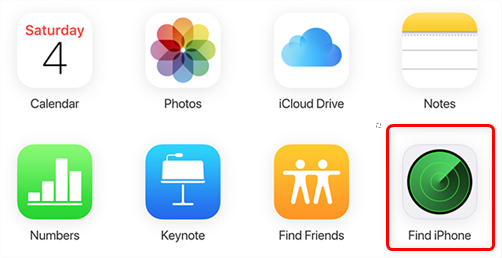
Find the Device in iCloud
Step 3. Follow Apple’s current Remove This Device / erase-and-remove workflow shown for that device. If the device must be erased first, complete the erase and then remove it from Find My.
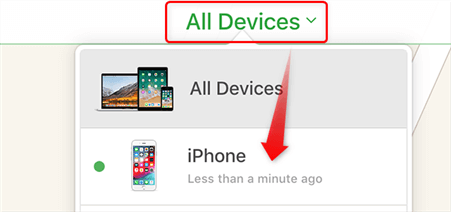
Select the iPhone
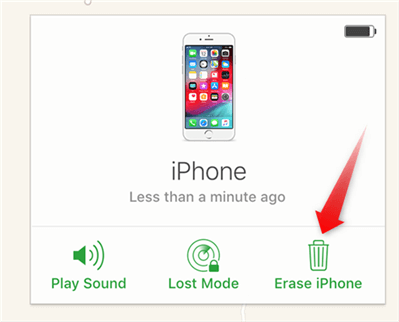
Remove the Device from the Previous Owner’s Account
Note: Ask the previous owner to do this themselves. Do not ask them to send you their Apple Account password or two-factor authentication code. After Apple shows the device as removed from the previous account, restart it and continue setup with your own Apple Account.
#5. Contact Apple Support to Remove iPhone Locked to Owner
If you cannot access the linked Apple Account or previous owner but you have valid proof of purchase, Apple currently provides an Activation Lock support request route. Approval is not automatic: Apple reviews the ownership documentation and decides whether it can assist.

Apple Activation Lock Support
Prepare the purchase documentation Apple requests for your region. The document should clearly establish legitimate ownership of the device. Requirements can vary, so use Apple’s current Activation Lock support page rather than relying on an old checklist.
If the Previous Owner Has Died
Apple has a separate process for a deceased family member’s Apple Account. Depending on the country or region, Apple can require a death certificate, a Legacy Contact access key, a court order, or other legal documentation. Apple states that it may also be able to help remove Activation Lock from a deceased family member’s device, but the device must be erased and restored before it can be used with another Apple Account.
Bonus Tip. How to Avoid Stuck on the Activation Lock Screen
The best prevention is to remove the device from the old Apple Account before ownership changes. If you are selling, gifting, or trading in your own iPhone/iPad, sign out properly and turn off Find My as part of Apple’s transfer process. Turning off Find My disables Activation Lock for that device, but it does not mean the device can never be protected by other passwords or security features in the future.
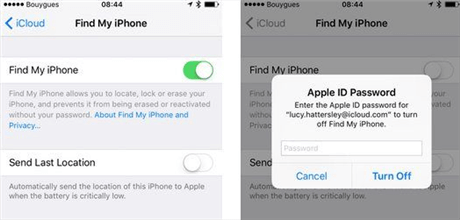
Turn Off Find My Before Transferring Your Own Device
If this is your own active device and you know the Apple Account password:
Step 1. Go to Settings and tap your name.
Step 2. Choose Find My > Find My iPhone.
Step 3. Turn off Find My iPhone and authenticate with your Apple Account as requested.
For a used device, do not pay until the seller has removed Activation Lock and the device reaches the Hello/setup screen without asking for the previous owner’s account.
FAQs About How to Remove Activation Lock Without Previous Owner
Q1. How to remove Activation Lock on iPhone without Apple ID and password?
Start with the ownership-based options that do not require the Apple Account password: use the previous device passcode if Apple offers that option, ask the previous owner to remove the device remotely, or submit an Apple Activation Lock support request if you have valid proof of purchase. If none of those routes apply and the device is legitimately yours, check whether a third-party bypass tool supports your exact model and iOS version and understand its limitations first.
Q2. Can you factory reset an iPhone that is locked to owner?
You can erase or restore the device, but a factory reset alone does not remove Activation Lock. If the device remains linked to the previous owner’s Apple Account, it can ask for that account again during activation.
Q3. How to remove Activation Lock without previous owner for free?
The best free routes are official ones when they apply: recover your own Apple Account, use the device passcode when the Activation Lock screen offers that option, or ask the previous owner to remove the device remotely. Legacy DNS workarounds are not a full Activation Lock removal and should not be treated as equivalent to an official unlock.
Q4. Can the previous owner remove Activation Lock remotely?
Yes. Apple allows the previous owner to use Find My/iCloud.com to remove Activation Lock on a device they already sold or gave away. They do not need physical access to the iPhone or iPad.
Q5. Can Apple remove Activation Lock without the previous owner?
Apple provides an Activation Lock support request for people who have valid proof of purchase. Apple reviews the documentation and decides whether it can help. For a deceased family member’s account, Apple has a separate legal-document/Legacy Contact process.
Q6. How to remove Activation Lock on Apple Watch without previous owner?
The same ownership principle applies: the watch should be removed from the linked owner’s Apple Account, or you should follow Apple’s support route with appropriate ownership documentation. This article focuses on iPhone and iPad, so use Apple’s current Apple Watch Activation Lock instructions for the exact steps.
Q7. How to remove Activation Lock without previous owner on iPad?
Use the same decision order as iPhone: device passcode when available, previous-owner remote removal, Apple support with valid ownership documentation, and only then evaluate a compatible third-party bypass for an iPad you own or are authorized to use.
The Bottom Line
If you need to remove Activation Lock without the previous owner’s Apple Account password, use the method that matches your ownership evidence. The cleanest routes are the device passcode when Apple offers it, remote removal by the previous owner, or Apple’s Activation Lock support process with valid documentation. A third-party bypass such as AnyUnlock should be treated as a compatibility-dependent option for an authorized device, not as a substitute for proving ownership or as a guaranteed permanent server-side removal.
AnyUnlock – Remove iPhone Locked to Owner
AnyUnlock provides an Activation Lock bypass workflow for supported iPhone/iPad models when the official account or owner-assisted routes are unavailable. Check your exact device/iOS compatibility and post-bypass limitations before purchasing or starting the process.
Free Download100% Clean & Safe
Free Download100% Clean & Safe
Free Download* 100% Clean & Safe



Joy Taylor is a seasoned technical writer with over a decade of experience in mobile technology. At iMobie, she specializes in producing in-depth content on iOS data recovery, iPhone unlocking solutions, and iOS troubleshooting.
Product-related questions? Contact Our Support Team to Get Quick Solution >
