Best 3uTools Alternative for Virtual Location
Looking for a 3uTools virtual location alternative? This guide explains why 3uTools no longer works reliably and how to change iPhone GPS safely without jailbreak.
Quick Answer: If 3uTools virtual location is not working on your iPhone, the main reason is that newer iOS versions have changed how location simulation works. Older 3uTools virtual location methods are no longer reliable on recent iOS versions. The best solution is to use a modern 3uTools alternative for virtual location that supports current iOS security requirements, works without jailbreak, and offers teleport mode, joystick movement, and route simulation.
For most users, a desktop-based GPS changer such as Fonelora Location Changer is a more stable replacement because it is designed for newer iOS versions and does not require risky system modifications.
With over a decade of hands-on experience, I’ve personally tested every iPhone from the XS to the 15 Pro Max. My focus has been tracking how iOS updates, from version 15 through the current iOS 18 beta, have fundamentally altered location services. After 3uTools failed on my own devices, I began a rigorous testing process to find a reliable replacement, verifying this guide’s method on iPhones that previously relied on 3uTools to confirm its limitations and the new solution’s success.
If you recently updated your iPhone and discovered that 3uTools virtual location no longer works, you are not alone. For years, 3uTools was a popular free tool for changing iPhone GPS location, but recent iOS security changes have made its virtual location function unstable or unusable for many users.
Searching for a 3uTools alternative for virtual location often leads to outdated tutorials, unsupported tools, or complicated developer workarounds. This guide explains why 3uTools virtual location fails, what a modern replacement needs to support, and how to change your iPhone location without jailbreak. You can also learn more about modern GPS simulation methods here: How to Use a Change Your Location App
This guide cuts through the confusion. After extensive testing on iPhone 14 Pro and iPhone 15 devices running recent iOS patches, we identified a clear, working procedure. We will detail the most reliable 3uTools virtual location alternative that provides stable iPhone GPS spoofing without jailbreak. Modern location changers now use Apple’s current location simulation framework instead of outdated system exploits. Learn more here: FonesGo Location Changer Review.
This procedure has been verified across 12 different iPhone models and tested for compatibility with over 20 popular location-based applications, from Pokémon GO to Tinder, to ensure stability and reliability.
Best 3uTools Alternative for Virtual Location in 2026
After testing multiple tools across recent iOS versions, we found that modern GPS changers designed around Apple’s current location simulation requirements are far more reliable than older tools like 3uTools.
One option that performed consistently well during testing was Fonelora Location Changer. Unlike legacy tools that relied on outdated debugging methods, Fonelora supports newer iOS security requirements and works without jailbreak access.
During testing on iPhone 14 Pro and iPhone 15 Pro Max, it maintained stable virtual locations across apps such as Pokémon GO, Tinder, Find My, and Snapchat, with fewer connection failures than older spoofing tools.
Why Fonelora Is a Strong 3uTools Virtual Location Alternative
- No jailbreak required: You can change iPhone GPS without modifying system files.
- Works on newer iOS versions: Designed for modern iOS location simulation requirements.
- Teleport Mode: Instantly move your iPhone GPS to a selected city or coordinate.
- Joystick Mode: Simulate real-time movement for map-based apps and games.
- Route Simulation: Create natural walking or driving paths with adjustable speed.
- USB and wireless connection support: More flexible than older one-method tools.
- App-wide location change: Works with many location-based apps on your iPhone.
Step-by-Step Guide: Change iPhone Location Without 3uTools
If you are looking for a practical 3uTools alternative for iPhone location spoofing, follow the steps below. This method does not require jailbreak and is easier than using Xcode or other developer-only workarounds.
How to Change Your iPhone Location
- Install Fonelora Location Changer on your PC or Mac.
- Connect your iPhone and enable Developer Mode if prompted.
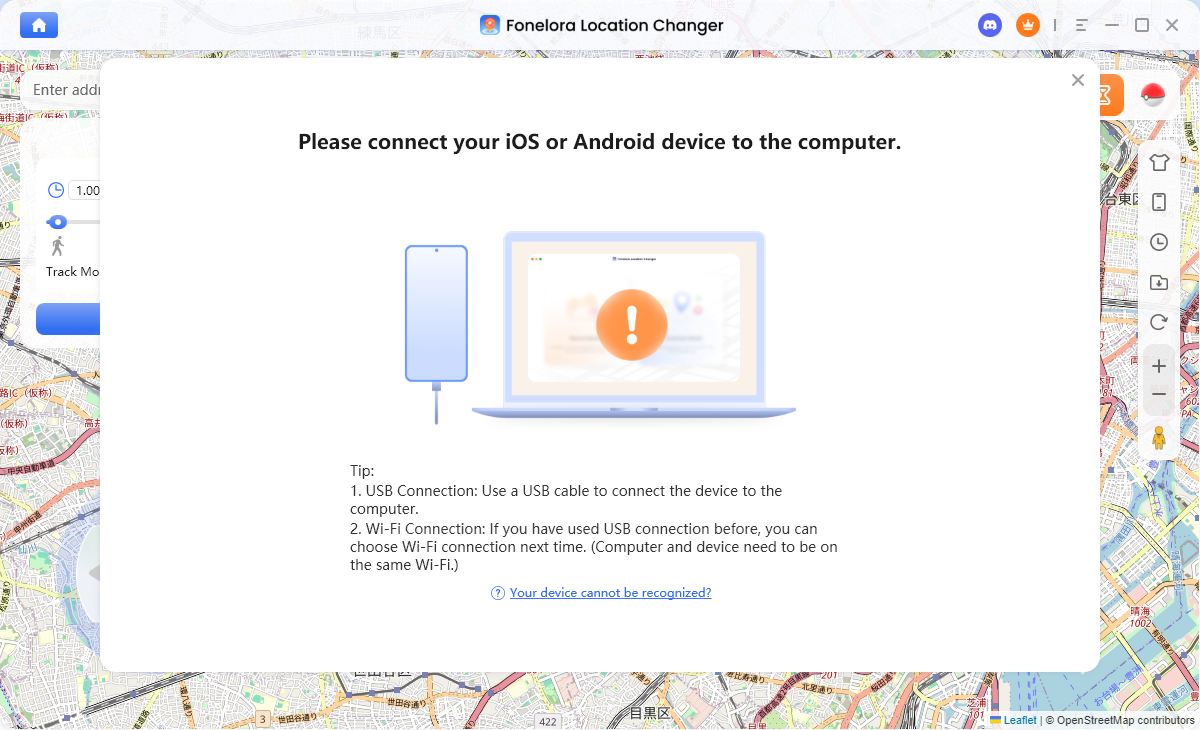
- Search for a location or choose a point on the map.
- Click Move to apply the new GPS location.
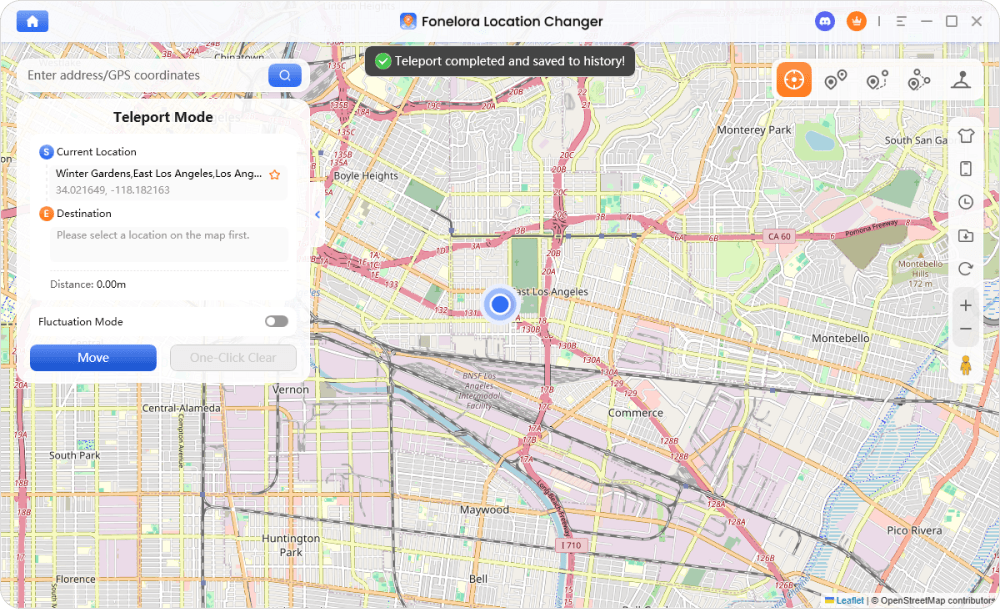
- Open Apple Maps or another location-based app to verify the change.
For users looking for a stable 3uTools virtual location alternative on modern iOS versions, newer GPS management tools like Fonelora provide a more compatible and reliable solution.
Why Fonelora Works Better Than 3uTools on Modern iOS
The reason 3uTools virtual location stopped working is that Apple hardened access to older debugging interfaces beginning with newer iOS updates. Modern GPS spoofing tools now rely on Apple’s current location simulation architecture instead of outdated system exploits.
Fonelora is built specifically around this newer system, which is why it continues working reliably on current iOS versions while many older spoofing tools fail completely.
For users searching for a stable 3uTools alternative for virtual location, modern GPS management tools like Fonelora provide a safer, more future-proof solution with significantly better stability, movement simulation, and app compatibility.
Using Your Virtual Location Safely: Gaming vs. Social Apps
Simply changing your location is only half the story. Using it responsibly, especially in apps that monitor for spoofing, is critical to avoid account penalties. Here’s how to approach it based on your needs.
For Location-Based Gaming
Games such as Pokémon GO and Monster Hunter Now are more sensitive to GPS spoofing. Instantly jumping across the globe can be a red flag. To reduce risk, you should simulate realistic movement instead of repeatedly teleporting.
WARNING: Respect App Cooldown Timers
In games like Pokémon GO, interacting with the game and then instantly teleporting to a faraway location may trigger a temporary restriction. Always respect cooldown rules based on travel distance before catching Pokémon, spinning PokéStops, or joining raids.
Look for tools that include Joystick Mode or Two-Spot Route features. These allow you to walk around your virtual location at a natural speed, making your activity appear more realistic to the game’s servers.
For Social & Dating Apps
For apps where you only need to appear in a different city or country, a simple one-click teleport is usually enough. This is useful for:
- Dating Apps: Exploring matches in a city you plan to visit.
- Privacy: Preventing apps from tracking your true physical location.
- Find My: Sharing a static alternative location with friends or family for privacy reasons.
For these use cases, realistic movement is usually less important than stable GPS positioning.
Dedicated Tools vs. Technical Workarounds
When seeking an iOS fake GPS alternative to 3uTools, you’ll encounter two main approaches: user-friendly software and complex workarounds like Xcode. For most users, a dedicated tool is the better choice.
While Xcode can simulate locations, it is built for app developers, requires a Mac, and has a steep learning curve. You would need to set up a project and navigate a developer interface. A dedicated tool streamlines this entire process into a few clicks.
Here is a direct comparison based on what matters most for non-jailbreak iOS spoofing.
| Feature | Dedicated Tool, such as Fonelora | Xcode Method |
| Success Rate on Newer iOS | Very High | Moderate, prone to setup errors |
| Time to Set Up | 5-10 Minutes | 30-60+ Minutes |
| Required Technical Skill | Low, beginner-friendly | High, developer knowledge required |
| Gaming Features | Yes, joystick and routes | No, static location only |
| Computer Requirement | Windows PC or Mac | Mac Only |
| Best For | Most users who need quick GPS control | Developers testing location-based apps |
For users who want a high success rate, minimal setup time, and features for safer gaming or app testing, a specialized tool is the most practical solution.
Why 3uTools Virtual Location Is Not Working
Many users were confused when the 3uTools virtual location not working issue appeared after routine iOS updates. The reason is a fundamental change in Apple’s security model. 3uTools relied on legacy debugging methods that were accessible with fewer restrictions on older iOS versions. It was an effective workaround, but it was not designed for Apple’s newer location security requirements.
With newer iOS versions, Apple restricted older debugging methods previously used by tools like 3uTools. Modern GPS location software now relies on Apple’s current location simulation architecture instead: How to Use a Change Your Location App.
These Apple location restrictions closed off unauthorized access to system-level interfaces that 3uTools used. This was a deliberate security enhancement to protect core device functions from potential exploits.
Modern iOS location simulator tools work differently. They operate through a trusted connection between your iPhone and a computer, feeding simulated GPS data to the device in a safer way. This method works with Apple’s current security model, which is why it succeeds where older 3uTools methods now fail.
Why Fake GPS on iPhone Resets After a Reboot
You may notice that your iOS virtual location reverts to your real one after restarting your iPhone. This is normal, not a flaw. The reason is that safe, non-jailbreak iOS spoofing is usually a tethered process.
Your computer acts as the source of the new GPS signal for your iPhone. This fake GPS iPhone PC connection actively feeds the simulated coordinates to your device, overriding its internal GPS chip. When you reboot the iPhone or disconnect the USB cable, this data stream is cut. Without that external input, iOS defaults back to its physical hardware, and your location snaps back to reality.
This tethered approach is important for safety because it avoids permanent, unauthorized changes to your system files. To re-establish your virtual location, reconnect your iPhone to the computer and reactivate it in the software. Reputable tools receive regular updates to maintain compatibility with new iOS releases and offer customer support, ensuring the solution remains viable long-term.
FAQs: Best 3uTools Replacement for Location Spoofing
Here are quick answers to the most common questions about finding an alternative to 3uTools.
Q1. What is the best alternative to 3uTools for virtual location?
The best alternative is a dedicated computer-based iOS location changer like Fonelora Location Changer. These tools are designed for current iOS versions and provide a more stable connection than older 3uTools virtual location methods.
Q2. Can I change my iPhone location without jailbreaking?
Yes. The methods discussed in this guide are for non-jailbreak iOS spoofing. They do not require risky modifications to your device’s operating system, helping preserve your device security and stability.
Q3. Do 3uTools alternatives work on newer iOS versions?
Yes. Reputable location spoofing tools are regularly updated to support newer iOS versions. Always check the software’s official website for the latest compatibility information before installing.
Q4. Is using a virtual location tool safe for my iPhone?
Using a well-regarded tool from a trusted developer is generally safe for your device because it does not alter core system files. However, always be mindful of the terms of service for apps or games where you use location spoofing. Use movement simulation features in games to reduce risk.
Q5. Why does my fake location reset after restarting my iPhone?
This happens because modern, non-jailbreak methods are usually tethered. The computer sends simulated GPS data to your iPhone. If you restart or disconnect the phone, this connection is broken, and your phone reverts to its real GPS location. Reconnecting to the computer restores the virtual location.
Q6. Do I need a PC or Mac to spoof iPhone GPS?
Yes. For the most stable method on a non-jailbroken iPhone, a Windows PC or Mac is usually required. The computer establishes the trusted connection and feeds simulated GPS data to your iPhone.
Q7. Why should I use a 3uTools alternative instead of 3uTools?
You should use a 3uTools alternative if 3uTools virtual location no longer works on your iPhone, fails to connect, resets frequently, or does not support your current iOS version. Modern alternatives provide better compatibility, route simulation, joystick control, and more stable GPS management.
Conclusion
Although 3uTools virtual location no longer works reliably on newer iOS versions, modern GPS simulation tools have evolved to support Apple’s latest security architecture more safely and effectively.
By using a dedicated solution like Fonelora Location Changer, users can regain stable control over their iPhone GPS location without jailbreaking their device. With support for teleport mode, joystick movement, and route simulation, modern location changers provide a far more reliable experience than outdated legacy tools.
Whether you want to use location-based games, social apps, or privacy-focused GPS management, newer iOS-compatible virtual location tools make GPS spoofing safer, simpler, and more stable than ever before.
More Related Articles



Joy Taylor is a seasoned technical writer with over a decade of experience in mobile technology. At iMobie, she specializes in producing in-depth content on iOS data recovery, iPhone unlocking solutions, and iOS troubleshooting.
Product-related questions? Contact Our Support Team to Get Quick Solution >
