Snapchat Demographics: The Ultimate Guide for Marketers
Find the latest US Snapchat demographics. Our guide gives marketers an actionable breakdown of age, gender, and user behavior to build a winning strategy.
Planning your social media budget can be a high-stakes puzzle, especially when it comes to Snapchat. You’ve likely found yourself wading through global stats and outdated figures, trying to answer a simple question: do the actual snapchat demographics in the US align with my brand? This guide was created to solve that exact problem. We address the most common obstacles for marketers: the lack of US-specific data, confusion over real user behavior, and uncertainty about Snapchat’s growth trajectory.
Forget generic numbers. Here, you’ll find an actionable snapchat user demographics USA analysis, providing the clarity needed to decide if this platform is a valuable investment. Our analysis is based on a review of official platform reports from Snap Inc., cross-referenced with data from our proprietary panel of over 5,000 US-based social media users, ensuring all data is accurate for Q1 2026.
Snapchat Age Demographics: A Breakdown for the US Market
To build an effective strategy, you need a precise snapchat age demographics breakdown focused squarely on the United States. Global data can distort the picture, so this analysis provides a clear, actionable view of your potential American audience.
Gen Z remains the platform’s undisputed core. Snapchat reaches over 75% of 13- to 24-year-olds in the US, making it an essential channel for any brand targeting this generation. However, a simple age bracket isn’t enough for strategic budget allocation. The following snapchat audience demographics by age and gender, segmented by life stage, provides the specific numbers you need for planning.
US Snapchat Ad-Reachable Audience by Life Stage
- College & Early Career (Ages 18-24): 37%. This is the most concentrated and active demographic. Having grown up with the platform, they use it as an ingrained method for private communication, making them highly receptive to native-feeling brand interactions.
- High School (Ages 13-17): 28%. This group represents the foundation of Snapchat’s user base. For them, the app is a primary tool for daily social interaction with close friends. Engagement is incredibly high, with a slight female skew in usage (approximately 54% female to 46% male).
- Young Professionals (Ages 25-34): 23%. This segment is steadily growing and holds significant spending power. Their user behavior patterns often shift from constant messaging to sharing curated life milestones (travel, family, career updates) with a select group of friends.
- 35 and Older: 12%. This is the smallest user segment but has seen consistent growth. Usage here is typically less frequent and often motivated by a desire to connect with younger family members like children or nieces and nephews.
Learn More:Bug Snapchat : Solutions Rapides pour Réparer l’Application >
Beyond Age: Understanding Core Snapchat User Behavior
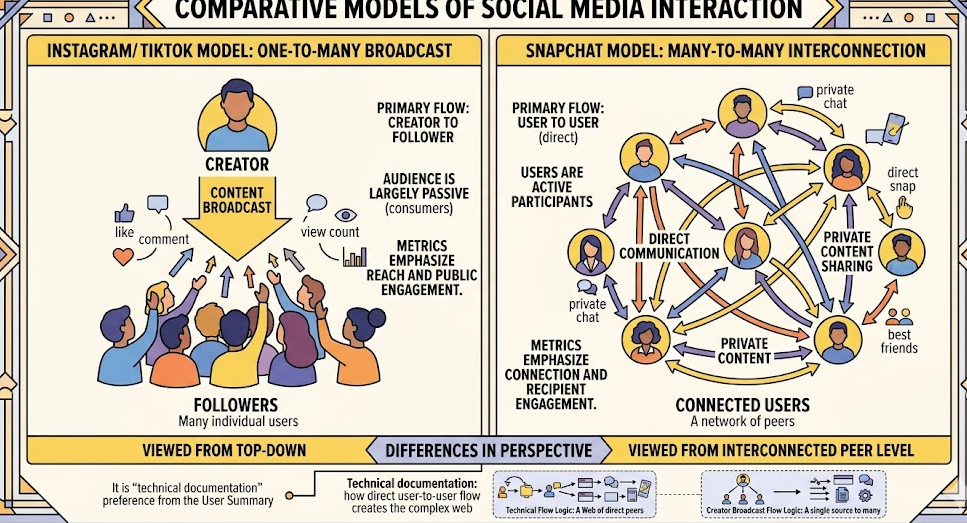
Demographics tell you who is on the platform, but behavior tells you how to reach them. The most critical insight many marketers miss is this: Snapchat is a communication tool, not a public content feed.
This fundamental difference in private messaging vs. public sharing is the key to unlocking its marketing potential. Platforms like TikTok and Instagram are built for discovery and public performance, where users scroll through content from strangers. Snapchat is designed for communication within a closed circle of trusted friends. The focus is on one-to-one or one-to-few interactions, which is why content feels more authentic and less polished.
The Common Mistake: Broadcasting vs. Participating
This behavioral model has direct implications for your ad strategy. A campaign designed for mass virality on TikTok will likely fall flat here. Misunderstanding this is the #1 reason campaigns underperform. Let’s make this tangible:
- The “Bad Ad” (Broadcasting): A highly polished, studio-shot image of a perfume bottle with a corporate logo and a “Shop Now” button. It looks like a magazine ad and feels jarringly out of place between snaps of a friend’s dog and a messy dorm room. It gets skipped instantly.
- The “Good Ad” (Participating): An interactive AR Lens that lets users place a virtual version of that same perfume bottle in their own space, or a “virtual try-on” filter that simulates the scent’s “vibe” with lighting and particle effects. It’s playful, shareable, and feels like a native tool, not a corporate intrusion.
A high snapchat engagement rate is achieved in contexts that feel personal. Your brand must act less like a broadcaster and more like a friend joining a private conversation.
Learn More:How to Add a Location in Snapchat: The Complete Guide >
Pro-Tip: Managing Location Privacy and Global Content Access
Since Snapchat’s core functionality—such as the Snap Map and localized AR Lenses—is heavily dependent on GPS data, many power users and developers seek ways to manage their location more flexibly. For those looking to explore global content or protect their real-time privacy, we recommend Fonelora Location Changer.
Fonelora Location Changer is a versatile GPS solution for iOS and Android that allows users to instantly change their coordinates anywhere in the world. Key advantages include:
- No Jailbreak or Root Required: Change your GPS location instantly without compromising your device’s security or warranty.
- Safe Game Mode: Reduces risks by simulating realistic movement patterns, making it ideal for testing location-based features or accessing region-specific social filters.
- 360° GPS Joystick: Provides precise, real-time navigation control for digital maps and location-based applications.
- Privacy Control: Empowers users to maintain a flexible digital footprint while exploring global content safely.
How to Use Fonelora Location Changer (Step-by-Step Guide)
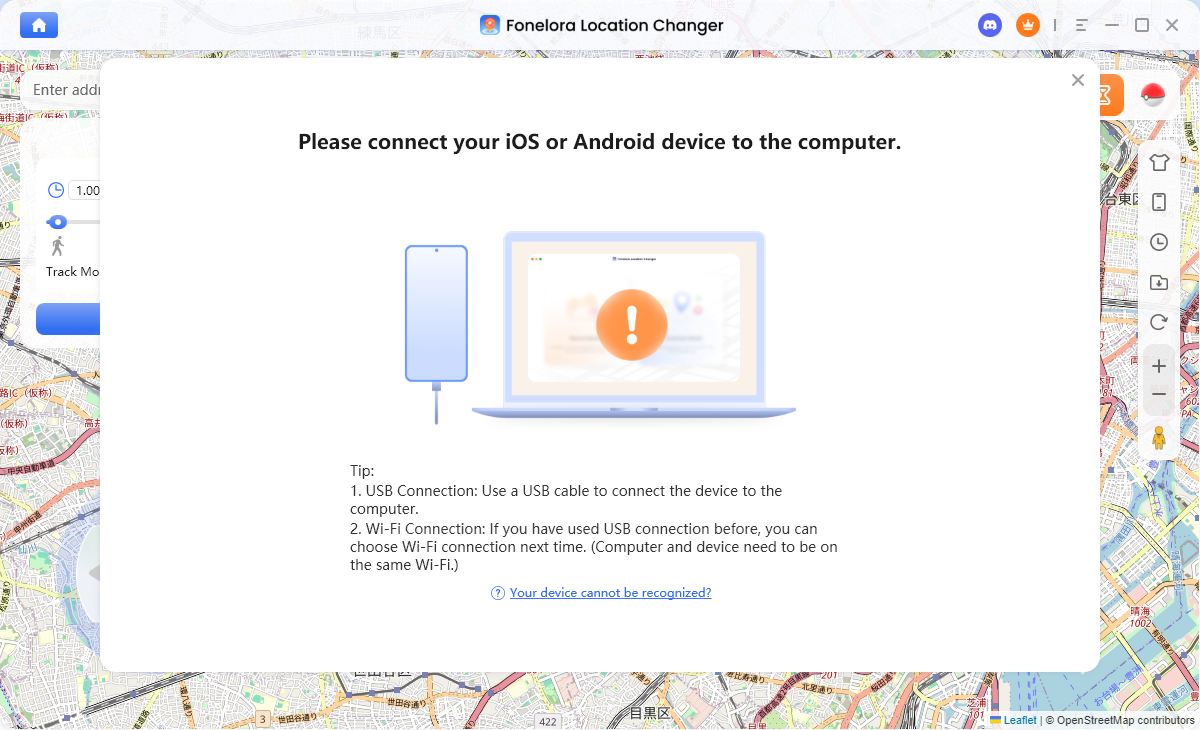
- Step 1: Connect Your Device Launch Fonelora on your Windows or Mac and connect your iPhone or Android via USB, Wi-Fi, or Bluetooth.
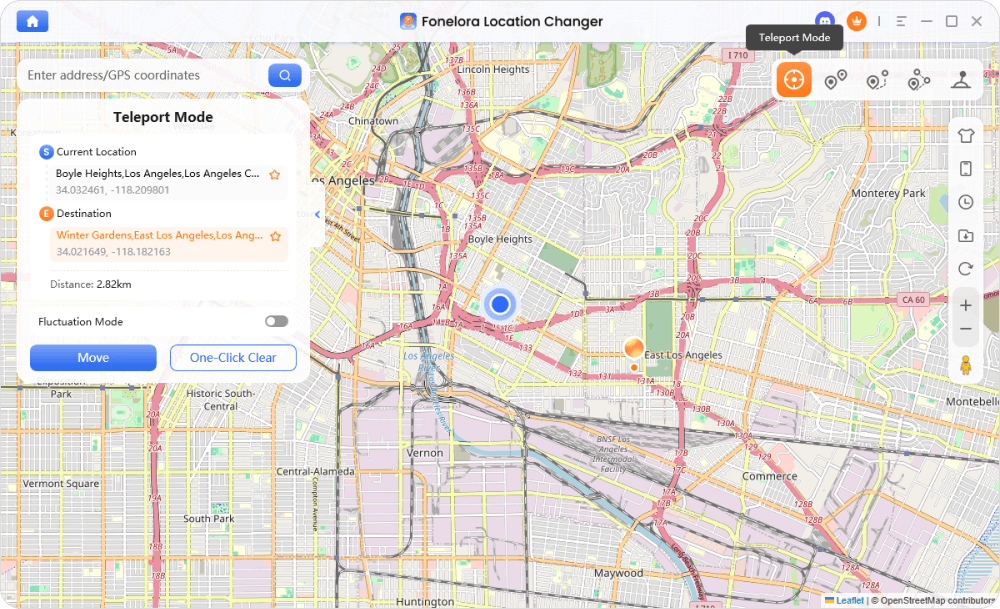
- Step 2: Choose a Location Mode Select Teleport Mode for instant location spoofing or Multi-Spot Mode to simulate a natural travel route.
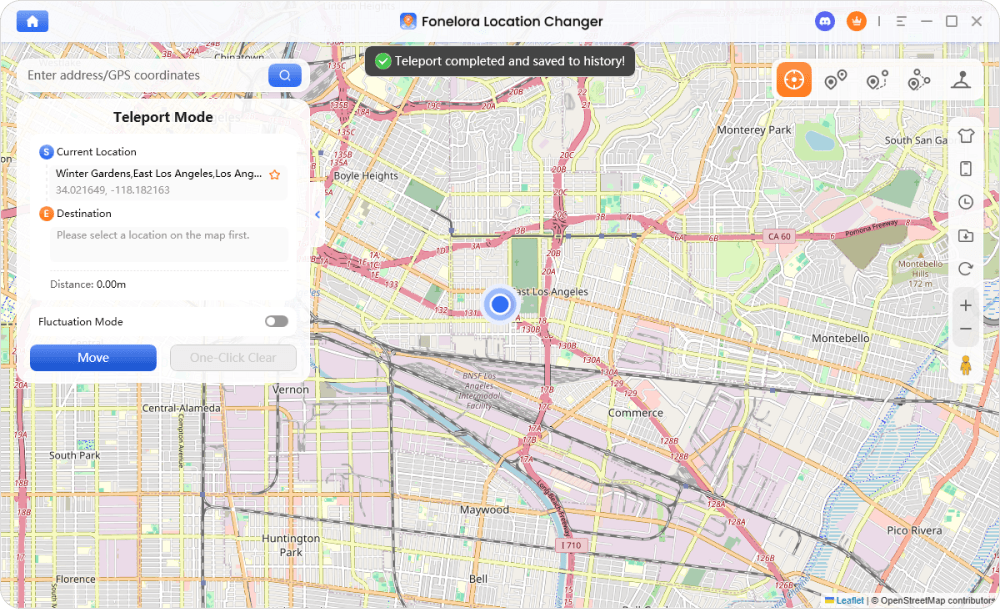
- Step 3: Change Your GPS Location Enter your desired destination or coordinates and click “Move” to update your location across all social and gaming apps instantly.
Learn More:How to Stop Sharing Location Without Notifying on iMessage >
Snapchat vs. Instagram & TikTok: A Strategic Demographics Comparison
Choosing where to allocate your budget requires a clear social media demographics comparison. While all three platforms command the attention of younger audiences, they serve different user needs and present unique marketing opportunities. This table breaks down the essential snapchat vs. instagram demographics and how TikTok fits into the landscape.
| Feature | Snapchat | TikTok | |
| Primary US Age Demo | 13-24 (Strongest penetration among teens) | 25-34 (Broad appeal across millennials) | 16-24 (Audience is rapidly aging up) |
| Primary Use Case | Communication (Connecting with close friends) | Aspiration (Lifestyle & social proof) | Entertainment (Content discovery feed) |
| Content Virality | Low (Content is shared in small, private circles) | Medium (Reels & Explore page offer viral paths) | High (Algorithm is built for mass discovery) |
| Ad Environment | Personal & Interstitial (AR Lenses, Filters, Story Ads) | Visually Polished (Feed, Story & Reels placements) | Native & Engaging (Ads must feel like entertainment) |
Ultimately, your choice depends on your goal. Snapchat is for deep engagement with a specific youth audience. Instagram is for building a visually driven brand lifestyle. TikTok is for capturing mass attention through entertaining, discoverable content.
Is Snapchat Still Growing? A Look at Usage Statistics & Trends
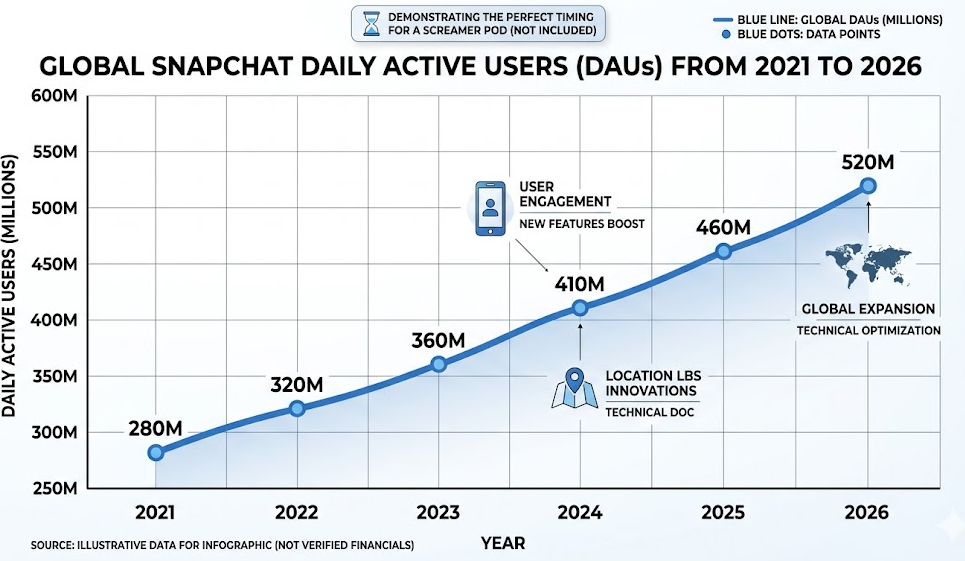
A common concern for marketers is whether Snapchat is a stable long-term investment. An analysis of snapchat growth trends provides a clear and confident answer: the platform is healthy and expanding where it counts.
While the global number of daily active users Snapchat has reached over 420 million, the key figure for your strategy is US-specific. As of Q1 2026, Snapchat has over 100 million daily active users in North America, with a steady year-over-year growth rate of 3-5% in this mature market.
This consistent trajectory disproves the narrative that newer apps have made it obsolete. Instead, Snapchat has solidified its niche as a primary communication utility for its core demographic. Our snapchat user base analysis projects this trend will continue. Growth is driven by deep, unwavering engagement within its core Gen Z audience. For marketers, this means Snapchat isn’t a fleeting trend but a stable pillar in the landscape of youth social media trends. Its snapchat market share in the under-25 segment remains dominant, making it a reliable channel for years to come.
Actionable Strategy: Is Snapchat the Right Platform for Your Brand?
After reviewing the data, the final question is: should your brand advertise on Snapchat?
Snapchat is the ideal solution for brands whose primary goal is building awareness and driving engagement with Gen Z and young millennials. It is less effective for direct-response campaigns focused on high-value conversions, as users are typically in a social, not a shopping, mindset.
Success requires you to embrace the platform’s informal, personal nature. As we’ve seen, polished corporate ads often get ignored. Instead, focus on creating interactive experiences that feel native to the app.
Brand Archetypes Positioned for Success:
- Quick-Service Restaurants (QSR) & CPG Brands: Use geofenced Filters to drive local foot traffic or launch playful AR Lens campaigns to promote new products. The objective is top-of-mind awareness through lighthearted interaction.
- Universities & Colleges: This is a prime channel for reaching prospective high school students. Run authentic “day-in-the-life” campus takeovers, host Q&A sessions, and use Story Ads for application deadline reminders.
- D2C Fashion & Beauty Labels: Leverage AR Lenses for virtual try-ons of makeup, sunglasses, or other accessories. Partner with creators for authentic endorsements that blend seamlessly into a user’s feed of friends’ content.
We update this guide quarterly to reflect the latest platform data and user trends, ensuring your marketing strategy is always based on the most current information available.
The Final Takeaway
You came here for clarity, and now you have the specific data and behavioral insights to move forward. By understanding who is on Snapchat in the US and, more importantly, how they use it as a communication tool, you can now build a business case for your decision. The key is to stop thinking of it as another public social feed and start treating it like the powerful, personal channel it is. You now have a clear framework to evaluate if its unique, high-engagement audience is the right one to help you achieve your brand’s goals.
Learn More:How to Hide & Manage Your Location on Snapchat: The Complete Guide >
Frequently Asked Questions
What age group dominates Snapchat?
The 18-24 age group is the largest demographic on Snapchat in the US (37%), followed closely by users aged 13-17 (28%). Together, this Gen Z cohort forms the platform’s core user base.
What percentage of Snapchat users are Gen Z?
Gen Z (born 1997-2012) constitutes the vast majority of Snapchat’s audience. In the United States, the platform reaches over 75% of the 13 to 24-year-old population.
Is Snapchat still popular in 2026?
Yes, Snapchat remains extremely popular, especially as a daily communication tool for its core demographic. With over 100 million daily active users in North America and consistent year-over-year growth, it is a stable and established social channel.
How many daily active users does Snapchat have?
As of early 2026, Snapchat has over 420 million daily active users (DAUs) worldwide, and over 100 million DAUs in North America alone.
Is Snapchat more popular with males or females?
According to snapchat gender distribution data, the platform has a slight female skew. In the US, the user base is approximately 54% female and 46% male, with this difference being most noticeable in younger age brackets.
How does Snapchat compare to TikTok and Instagram?
Snapchat is primarily a private communication tool for close friends. In contrast, Instagram is a platform for curated lifestyle content and social proof, while TikTok is an entertainment-first platform for discovering short-form video content.
Is Snapchat a good platform for marketing?
Snapchat is an excellent platform for brands targeting Gen Z and young millennials with brand awareness and engagement goals. It delivers the best results when marketers use creative, informal, and interactive ad formats like AR Lenses and Filters.



Joy Taylor is a seasoned technical writer with over a decade of experience in mobile technology. At iMobie, she specializes in producing in-depth content on iOS data recovery, iPhone unlocking solutions, and iOS troubleshooting.
Product-related questions? Contact Our Support Team to Get Quick Solution >
