I learned this the hard way. During a recent raid hour, my buddy Kevin and I wanted to swap our high-attack Shadow Mewtwos. We had both grinded Giovanni encounters, but our Individual Values (IVs) were terrible. We thought we could just trade them to reroll the stats and dominate the local gym scene. We stood next to each other, opened the trade window, tapped the shadow filter, and immediately got hit with a server error.
It is incredibly defeating to catch a rare, dark-aura legendary and realize its stats are permanently locked to your account. As competitive players, we constantly want to build the ultimate roster. Finding out your prized catch cannot be swapped is a major letdown.
In this 2025 guide, we are looking at exactly how the game’s servers handle these restricted creatures. We will explain exactly why Niantic enforces these shadow bans, break down the actual math behind shadow damage, and show you what you actually need to do to build a top-tier competitive roster without wasting your Stardust.
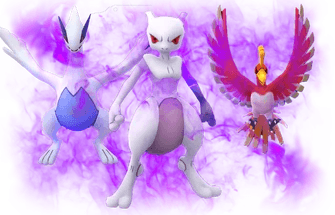
Table of ContentsHide
Why Can’t You Trade Shadow Pokémon?
If you ask anyone in your local Discord group if you can trade a shadow Pokémon, the immediate answer is a hard no. The game’s code explicitly blocks you from selecting these dark-aura creatures on the exchange screen. If you attempt to tap on one, the system grays it out.
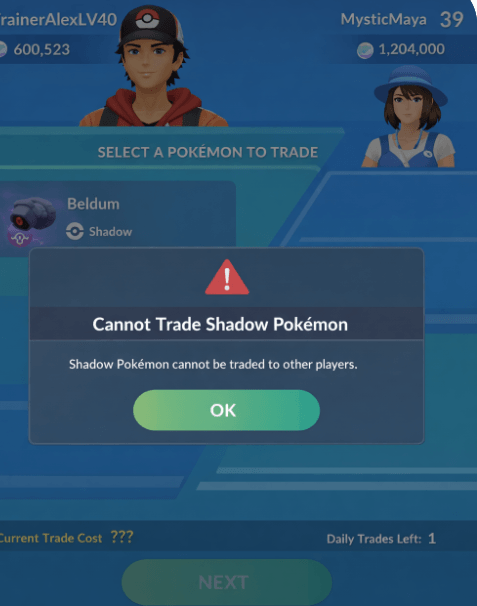
To understand why this block exists, you have to look at game balance and developer intent. Shadow creatures are intentionally restricted from trading to maintain competitive integrity. The developers want to preserve the challenge of acquiring high-quality battle assets through manual, daily gameplay rather than simple player-to-player handoffs.
If Niantic allowed players to swap these creatures freely, obtaining a perfect 100% IV (Hundo) shadow attacker would become entirely trivial. Players could repeatedly swap caught creatures with “Best Friends” to trigger “Lucky Trades,” which guarantee a high 12/12/12 stat floor. By enforcing strict trade rules, Niantic ensures that the most powerful attackers remain locked behind an active Player versus Environment (PvE) effort. The developers occasionally adjust mechanics during special events; however, shadow trading has never been officially enabled, and there are no signs of that changing in 2025.
Decision Guide: Farming vs. Purified Pokémon Trade
Once you accept that direct exchanges are impossible, you face a critical resource management choice. You must decide between manually farming grunt encounters or using the purification feature to execute a purified exchange. This decision heavily impacts your Stardust reserves and your overall competitive lineup.
To make an informed choice, consider the comparison below.
| Evaluation Criteria | Manual Shadow Farming | Purified Pokemon Trade |
| Success Rate | Guaranteed capture, but stats (IVs) are entirely random and cannot be rerolled. | Allows for Lucky Trades, establishing a minimum stat floor of 12/12/12. |
| Time Cost | High. Requires hunting down Poké Stops or waiting for balloons daily. | Low. Exchanging a purified creature takes only minutes with a local friend. |
| Gameplay Skill | High. Requires optimized counters to defeat Team GO Rocket leaders. | Low. Only requires sufficient Stardust and friendship levels. |
| Safety Risk | Low resource risk, but high time investment. | High resource risk. Costs Stardust and Candy to purify, plus Special Trade costs. |
Choosing the right method depends strictly on your immediate goals. Competitive players typically prefer the manual farming method to retain the serious damage output of the shadow variants. Conversely, players who simply want high-IV non-shadow variants for Master League or Mega Evolutions often choose to purify their captures for local swapping.
The Pokémon Go Purification Mechanic: A Working Procedure
If you simply want to give a duplicate legendary to a friend or help someone complete their Pokédex, you must use the purification mechanic to bypass the standard server restriction. Purifying a creature removes its shadow status, replaces the dark aura with a white glow, and immediately makes it eligible for the exchange system.
Before you do this, you need to understand exactly how trading affects stats.
Do not purify a high-IV shadow simply to give a friend a “strong” attacker. Trading completely scrambles a Pokémon’s Individual Values (IVs) based on your friendship level. When you purify a shadow, it gains a +2 bonus to its Attack, Defense, and HP. However, that bonus is completely wiped out and randomized the second the trade goes through. Only trade purified Pokémon if you are triggering a guaranteed Lucky Trade, or if your friend just wants the Pokédex entry. If a new player blindly purifies and trades a legendary, they will waste 20,000 Stardust and potentially ruin an amazing Pokémon.
How to Purify and Exchange Your Pokémon Safely
Follow this exact procedure to prepare your creature for another player, keeping the stat reroll warning in mind:
1. Access Your Storage: Open your main storage menu and select the specific shadow creature you intend to give away.
2. Apply Purification: Tap the “Purify” button. This action costs a specific amount of Stardust and Candy. Common species require 1,000 to 3,000 Stardust, whereas rare and legendary species require up to 20,000 Stardust.
3. Confirm Stat Changes: Confirm the action. The creature will instantly jump to Level 25 automatically.
4. Start the Exchange: Open your friend list, ensure you are within local distance range, and open the trade window.
5. Pay the Special Trade Cost: Exchanging a purified creature counts as a Special Trade. If your friend does not already have that specific purified form registered in their Pokédex, the Stardust tax is massive. At “Good Friend” status, this costs 1,000,000 Stardust. At “Best Friend” status, the cost drops to 40,000 Stardust. Plan your resources accordingly.
Building Strong Teams: Team Rocket Shadow Pokémon
Because direct shadow exchanges are strictly forbidden, competitive players must adopt manual strategies to assemble their teams. To bypass the locked stats, you must focus entirely on farming Team Rocket encounters. This is the only legitimate way to build your raid squads in 2025.
Mastering the Rocket Radar Procedure
Building a dominant roster requires a systematic approach to hunting. Follow these steps to maximize your encounter rates:
- Farm Grunts Daily: Defeat six standard grunts at invaded Pokestops or in daily balloons. Each victory awards a Mysterious Component. Collecting six components automatically assembles a Rocket Radar. Pay close attention to the grunt’s opening dialogue; this text indicates exactly which elemental type they will use in battle.
- Target Specific Encounters: Focus your daily efforts on grunts offering top-tier meta attackers. For instance, the prompt “Roar! …How’d that sound?” indicates a Dragon-type encounter, which often yields highly desirable species like Bagon or Dratini.
- Defeat Rocket Leaders: Equip your assembled Rocket Radar to locate Cliff, Sierra, or Arlo. Defeating these leaders provides opportunities to catch shiny shadow variants and creatures that generally possess higher baseline stat potential.
- The Frustration Timeline: Newly caught shadow creatures are stuck with the charged attack “Frustration.” You cannot remove this move on a random Tuesday. You must wait for specific seasonal Team GO Rocket Takeover events. These events happen roughly once every three months (typically once per GO Battle League season). Your best strategy is to hoard your top-tier shadow catches, tag them in your storage, and set a calendar reminder for the next Takeover event. During this brief window, you can apply a Charged TM (Technical Machine) to replace Frustration with a highly effective battle move.
This procedure requires patience and daily application. However, it remains the only proven technique to acquire optimal shadow attackers for your account.
Expanding Your Hunting Ground in Low-Density Areas
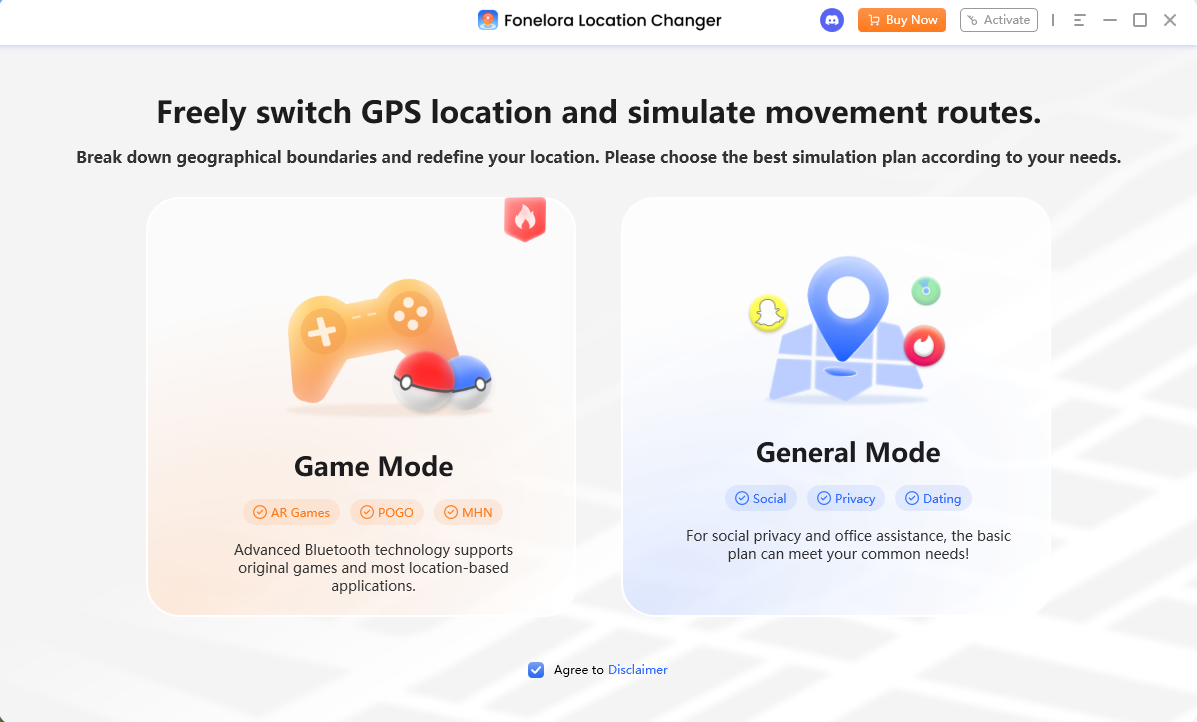
For players living in rural environments or regions with sparse PokéStop distributions, completing six grunt battles a day can be a monumental challenge. To overcome these geographical bottlenecks, some advanced players utilize desktop-based simulation tools like Fonelora Location Changer.
By connecting your smartphone to a PC or Mac, Fonelora Location Changer allows you to virtually navigate to higher-density urban hubs where Rocket invasions are constant. The software includes built-in customized cooldown timers and adjustable joystick parameters designed to mimic natural human walking speeds, helping players farm components and encounter Leaders without physical regional restrictions.
Understanding Shadow Pokémon Mechanics for PvP and Raids
To truly understand why players are so determined to ask about shadow trades, you must examine the underlying mechanics. These restricted variants possess an intrinsic mathematical modifier that drastically alters their performance in raids and the GO Battle League (GBL).
The Attack Bonus and Defense Penalty
Every shadow creature receives a flat 20% bonus to its Fast and Charged attack damage. At the exact same time, they suffer a 20% reduction in their defensive stat. This trade-off turns them into extreme “glass cannons.” They output incredibly serious damage but faint much faster than standard variants.
For high-level PvE raiding, this raw damage output is irreplaceable. In raid scenarios, racing against the countdown timer is your primary obstacle. A team composed entirely of shadow attackers will output significantly more Damage Per Second (DPS) than a team of standard or purified counterparts.
Let’s look at a practical example. If you are fighting a Raid Boss weak to Ice-type moves, a Shadow Mamoswine will tear through the boss’s health bar significantly faster than a regular Mamoswine. Even if the standard variant survives a few seconds longer, the sheer burst damage of the shadow variant ensures you beat the countdown timer and earn more Premier Balls at the end of the raid.
Because of the strict bans on shadow exchanges, optimizing your roster requires careful investment. You must selectively spend your Stardust to power up only the variants with the best appraisal stats. Interestingly, a shadow attacker with a 0/0/0 IV spread will often outperform a perfect 100% IV standard variant simply due to the massive 20% damage multiplier. This mechanical advantage explains exactly why competitive players spend millions of resources maximizing these specific assets.
Managing Trade Restrictions for Collectors
Not every player focuses on maximizing raid damage output. For collectors, the primary goal is completing every single Pokédex entry, including the unique purified and shadow categories. Navigating the game’s strict limitations requires a highly organized storage strategy.
Collectors also face another major hurdle: Shadow Shinies cannot be traded either. If you encounter a rare shiny shadow from a Leader, it is permanently locked to your account. You cannot swap it with a friend who missed the event. Managing these untradable forms safely means setting up systems to avoid accidentally transferring rare catches.
1. Establish a Tagging System: Create custom tags in your inventory labeled “Shadow Keepers,” “Wait for Takeover,” and “Ready to Purify.” Applying these tags prevents accidental transfers during mass storage cleanups.
2. Track Event Exclusives: Pay close attention to special event mechanics. Grunts frequently drop rare, event-themed shadow creatures that wear costumes. Since you cannot receive these from friends later, you must prioritize catching them immediately during the active event window.
3. Coordinate Special Exchanges: If you purify a creature specifically to give it to a collector friend, coordinate the exchange days in advance. Ensure both accounts have enough Stardust to cover the transaction, especially if you are not Best Friends in the game yet.
Organizing your assets prevents accidental resource waste and ensures you never lose an untradable masterpiece.
Frequently Asked Questions
Navigating the rules of this mobile game can be difficult for newer players. Below are direct, factual answers to the most common user queries regarding these specific restrictions.
Can you trade shadow Pokémon in Pokémon Go?
No. The game’s programming explicitly prevents players from selecting these specific creatures on the exchange screen. The system will issue an error prompt or gray out the Pokémon if you attempt to add them to a trade.
Why can’t shadow Pokémon be traded?
They are blocked to maintain overall game balance. The developers want to preserve the challenge of acquiring high-tier attackers through manual gameplay. Allowing exchanges would make it too easy to reroll stats and obtain perfect attackers through guaranteed Lucky Trades.
Can purified Pokémon be traded?
Yes. Once you spend the required Stardust and Candy to apply the purification mechanic, the creature loses its dark aura and immediately becomes eligible for standard and special exchanges. Keep in mind that doing this will completely reroll its IVs based on your friendship level.
Are shadow Pokémon stronger in battles?
Yes. They receive a 20% mathematical boost to their attack damage. However, they also suffer a 20% penalty to their defense, meaning they hit harder but faint faster in combat scenarios.
How do you get shadow Pokémon with good IVs?
You must manually farm Team GO Rocket grunts and leaders. Engaging in daily battles and catching them repeatedly is the only proven method to roll for high appraisal stats.
Does trading remove shadow status?
No, because you cannot place them in the trade window at all. You must manually purify them in your own storage menu first.
Will Pokémon Go allow shadow trading in the future?
There are currently no official announcements from Niantic indicating this policy will change in 2025 or beyond. The restriction has remained firm since the feature originally launched.
Conclusion
Finding out that shadow Pokémon cannot be traded between players is definitely disappointing. However, understanding the reasoning behind these server-side restrictions empowers you to adjust your strategy. You no longer need to risk ruining a legendary by purifying it just to see its stats get completely scrambled in a trade.
By embracing the manual grind—whether through local exploration or by utilizing advanced desktop solutions like Fonelora Location Changer to bridge geographic gaps—you can secure top-tier attackers that actually perform in raids and the GO Battle League. Equip your Rocket Radar, wait for the next seasonal Takeover event to remove Frustration, and start powering up your best catches. Open your app, optimize your farming routine, and build a formidable team that dominates every local gym.


Hot Topics
