For Daniel, a dedicated Completionist Trainer, staring at a grayed-out Pokédex felt incredibly frustrating. He had nearly every creature, yet elusive entries like Kangaskhan and Mr. Mime remained stubbornly blank. The core obstacle is obvious: regional Pokémon only spawn in specific geographic areas around the world. Buying an expensive international plane ticket just to catch a digital monster isn’t realistic for most of us. Plus, Niantic constantly updates the game—adding new generations, rotating limited-time spawns, and shifting borders—which means many older guides are hopelessly outdated.
Fortunately, you can complete your collection right from home. By understanding how the game’s spawn mechanics work, tracking global events with the right third-party apps, and navigating the local trading grind safely, anyone can secure those missing international catches. This guide breaks down exactly how to do it.
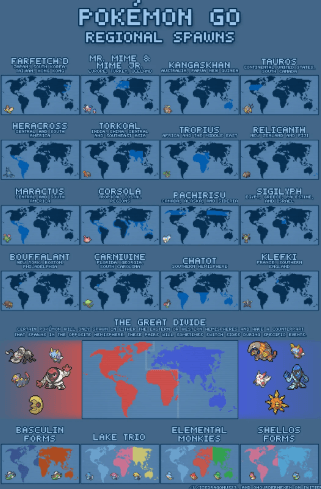
Table of ContentsHide
Decision-Making Guide: Choosing Your Catching Strategy
Selecting the most efficient strategy for acquiring a region-exclusive Pokémon requires evaluating your available resources. Players typically choose between manual methods, such as international travel and local community networking, or community tool solutions, such as verified event trackers and remote raid applications.
Evaluating these options depends on four key criteria: Success Rate, Time Cost, Technical Skill, and Safety Risk.
Although manual travel offers a guaranteed success rate for securing a regional Pokémon—provided you are physically within the correct geographic boundary—the time cost and financial investment remain exceptionally high. Conversely, applying verified community tools like Niantic’s Campfire app for local coordination and Poké Genie for remote raids provides a highly efficient alternative. These tools monitor global rotations and connect you with the right players seamlessly.
Strategy Comparison Breakdown
| Strategy | Success Rate | Time Cost | Required Tools | Safety Risk |
| Manual International Travel | High | Extremely High | Passport, Funds | Low |
| Local Community Trading | Medium | Medium | Campfire, Discord | Low |
| Remote Event Tracking | High | Low | LeekDuck, Poké Genie | Low |
By weighing these factors, you can determine the most logical approach to securing your missing entries. For players prioritizing efficiency and avoiding expensive travel, tracking global events and coordinating local trades present the best return on investment.
Catching a Pokémon GO Region Exclusive Pokémon Without Traveling
Daniel’s breakthrough moment arrived when he realized he could complete his Pokédex without a single flight. Instead of stressing over international travel, he shifted his focus to Pokémon GO global events, remote raids, and strategic local trading.
Here is a critical pro-tip that fundamentally changes how you should approach missing entries: Regional Pokémon are designed to encourage exploration and trading in Pokémon GO. Although most remain locked to specific geographic regions, Niantic occasionally releases them globally during special events, raids, or eggs, allowing players to temporarily obtain them without international travel.
To succeed, you must consistently monitor the regional rotation calendar. During major events like Pokémon GO Tour or Safari Zone global tie-ins, region-locked species often hatch from 7km eggs or appear in remote raids worldwide.
⚠️ GOLDEN RULE: 7km Eggs and Global Events
7km egg regionals only happen during explicitly announced global events. Hatching a 7km egg received from a friend in Japan on a random Tuesday will only give you standard egg pool Pokémon. You must wait for Niantic to officially announce a regional egg event before incubating.
Step-by-Step Procedure for Event Catching
1. Monitor Trusted Trackers: Do not rely solely on the in-game news feed. Bookmark reliable community resources like LeekDuck or The Silph Road archives to see exact, current event schedules and egg pool changes.
2. Stockpile Resources & Use Remote Raid Apps: Accumulate Super Incubators and Remote Raid Passes before major seasonal shifts. When regional Ultra Beasts or standard regionals hit global raids, you will need a third-party app like Poké Genie to successfully match with international lobbies and secure the catch.
3. Coordinate Internationally for Gifts: Add international friends using trusted online friend-code directories. Receiving gifts from players in other regions during specific, announced 7km egg events is a proven method to hatch regional spawns.
Explore Different Pokémon GO Regions with Fonelora Location Changer
While global events and local trading are the most reliable ways to obtain region-exclusive Pokémon, some players prefer to explore different in-game locations without traveling long distances.
Fonelora Location Changer makes it easy to change your device’s GPS location on both iPhone and Android without jailbreak or root access. This allows you to virtually explore different regions and view location-based content from around the world.
How to Change Your Pokémon GO Location with Fonelora Location Changer
Step 1. Download and install Fonelora Location Changer on your computer, then connect your iPhone or Android device.
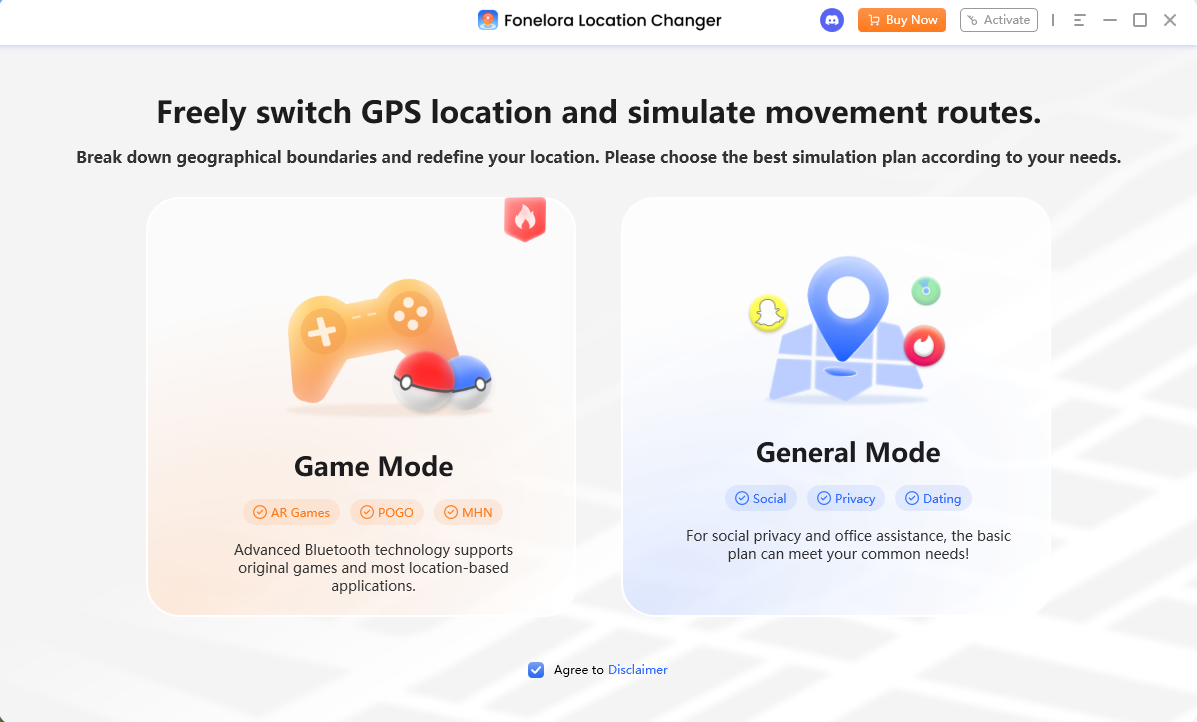
Step 2. Launch the program and select Modify Location mode.
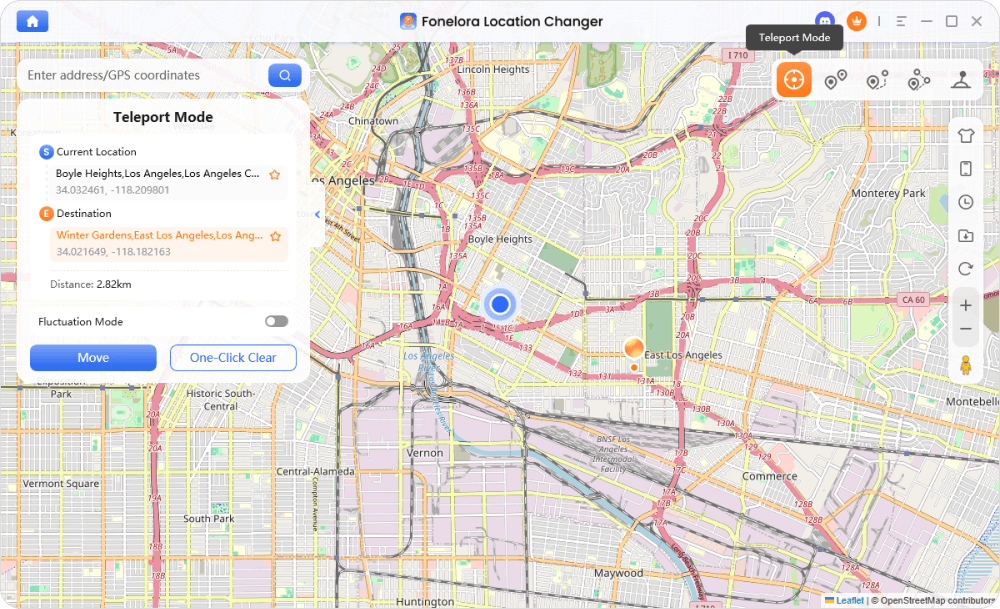
Step 3. Enter a city, landmark, or GPS coordinate associated with the region you want to explore.
Step 4. Click Move to update your device’s virtual location.
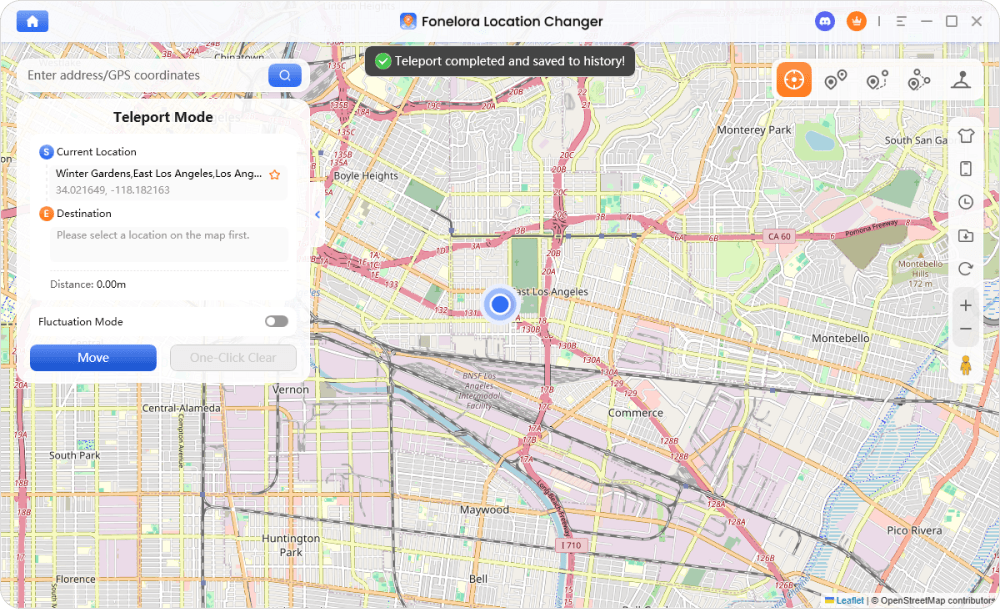
Step 5. Open Pokémon GO and check the nearby Pokémon, PokéStops, Gyms, and regional content available in that area.
In addition to changing locations instantly, Fonelora Location Changer also supports route simulation and customizable movement speeds, making it a convenient tool for exploring location-based experiences across different regions.
Current 2026 Global Event Rotations
To avoid wasting time, you need to know what is happening right now. In the 2025 seasonal structure, Niantic frequently rotates specific regional pairs and Ultra Beasts. For example, during seasonal shifts, you will often see Hemisphere-locked Pokémon like Celesteela and Kartana swap places for a brief period in Tier 5 raids.
Similarly, regional variants like Furfrou trims (which require you to physically be in a region to change their form) or regional Oricorio styles are frequently featured during the annual Valentine’s Day or Festival of Colors events. Always check your event tracker at the start of a new three-month in-game season to see which region-locked creatures have been temporarily unleashed globally.
The Updated 2026 Pokémon GO Regional List
Navigating the complex mechanics of regional spawns requires accurate, up-to-date data. Because the regional list expands with every new generation, relying on older data causes severe frustration. Below is a structured, comprehensive breakdown of the continent-exclusive Pokémon organized by generation, including newer forms and Ultra Beasts.
Generation 1 & 2 Exclusives
- Tauros: North America
- This method only works if your phone’s USB debugging is enabled before.
- This method is relatively time-consuming.
- Mr. Mime: Europe (Mime Jr. is also exclusive to 5km eggs obtained in Europe)
- Kangaskhan: Oceania
- Farfetch’d: East Asia
- Heracross: Latin America, South Florida, Texas
- Corsola: Tropical coastal areas globally (between latitudes 31N and 26S)
Generation 3 & 4 Exclusives
- Volbeat / Illumise: Europe, Asia, Oceania / Americas, Africa
- Torkoal: South Asia
- Zangoose / Seviper: Europe, Asia, Oceania / Americas, Africa (These frequently swap locations).
- Relicanth: New Zealand and surrounding islands
- Pachirisu: Northern Canada, Alaska, Russia
- Chatot: Southern Hemisphere
- Carnivine: Southeast United States, Bahamas
- Shellos: West Sea (Pink) in the Western Hemisphere; East Sea (Blue) in the Eastern Hemisphere.
Generation 5 & 6 Exclusives
- Pansage / Pansear / Panpour: Asia-Pacific / Europe, Middle East, Africa / Americas
- Throh / Sawk: Americas, Africa / Europe, Asia, Oceania
- Basculin: Blue-Striped (Western Hemisphere) / Red-Striped (Eastern Hemisphere)
- Maractus: Southern United States, Mexico, Central America, South America
- Sigilyph: Egypt, Greece, Israel
- Sigilyph: Egypt, Greece, Israel
- Bouffalant: New York City and surrounding mid-Atlantic regions
- Heatmor / Durant: Western Hemisphere / Eastern Hemisphere
- Hawlucha: Mexico
- Klefki: France and immediately adjacent borders
Generation 7, 9, and Special Forms (Updated for 2025)
- Oricorio: Pom-Pom (Americas), Pa’u (African, Asian, Pacific Islands), Baile (Europe, Middle East, Africa), Sensu (Asia-Pacific).
- Comfey: Hawaii
- Flabébé: Yellow (Americas), Blue (Asia-Pacific), Red (Europe, Middle East, Africa).
- Ultra Beasts: Celesteela (Southern Hemisphere) / Kartana (Northern Hemisphere). Blacephalon (Western Hemisphere) / Stakataka (Eastern Hemisphere).
- Paldean Tauros (Gen 9): Combat Breed (Global), Blaze Breed (Americas), Aqua Breed (Europe, Middle East, Africa).
Using a reliable tracking resource ensures you know exactly where these creatures appear. Keep this list accessible to cross-reference against current in-game events.
Pro Strategies to Trade Regional Pokémon Safely
When global events are inactive, learning how to trade becomes your primary solution. Connecting with local players who have traveled internationally is a highly effective procedure for securing missing Pokédex entries.
⚠️ MASSIVE WARNING: The 100-Meter Trading Limit
You cannot trade Pokémon over long distances. To execute any trade in Pokémon GO, you and the other player must be physically within 100 meters of each other. A newer player might waste weeks building a friendship with someone in Japan, only to realize they cannot actually trade with them unless one of them physically travels.
Furthermore, trading unregistered regionals qualifies as a “Special Trade.” This mechanic requires a significant Stardust investment and is strictly limited to one transaction per day per account.
Trading Stardust Cost Breakdown for Unregistered Pokémon
| Friendship Level | Days of Interaction Required | Stardust Cost |
| Good Friend | 1 Day | 1,000,000 |
| Great Friend | 7 Days | 800,000 |
| Ultra Friend | 30 Days | 80,000 |
| Best Friend | 90 Days | 40,000 |
Steps for Safe and Efficient Local Trading
12. Locate Local Communities: Download Niantic’s Campfire app or join established local Discord servers tailored to your city. Look for specific trading channels dedicated to international catches.
2. Wait for Lucky Friends (Pro-Tip): Trading a Pokémon completely rerolls its stats (IVs). If you spend 1,000,000 Stardust on a regional, it could turn into a useless 0-star Pokémon. Instead, interact with a “Best Friend” locally until you trigger “Lucky Friend” status. This guarantees the traded regional will have high stats and cost half the Stardust to power up.
3. Coordinate Safe Meetups: Always arrange in-person trades in well-lit, public locations during daylight hours, such as parks or coffee shops during active Community Day events.
Daniel used these exact community trading methods to secure his Mr. Mime. By finding a local player on Campfire who recently visited Europe and exchanging gifts for 30 days, he minimized his Stardust costs and safely completed the transaction in a public park.
Understanding Pokémon GO Location Exclusive Mechanics
To fully grasp how a location exclusive functions, you must understand the underlying technical architecture of the game. Niantic relies on the S2 cell system, a mathematical map division tool that overlays the globe with varying levels of geometric shapes.
Every regional creature is hard-coded to spawn only within specific S2 cells. When a regional boundary is defined—such as the line dividing Shellos (West Sea) and Shellos (East Sea)—the game uses these rigid cell borders rather than exact political country lines. This system explains why players near borders sometimes catch unexpected regionals just outside a designated country.
Older tracking methods frequently fail because they rely on outdated cellular map data. When Niantic introduces new generations, they often recalibrate these S2 cell assignments. Consequently, a previously reliable spawn zone might shift entirely overnight. Attempting to guess spawn boundaries based on old guides is highly inefficient. Stick to confirmed trading protocols and current event trackers to ensure you operate with the most accurate geographic information available.
Frequently Asked Questions About Pokémon GO Rare Regionals
What are regional Pokémon in Pokémon GO?
Regional Pokémon are specific species programmed to spawn exclusively within designated geographic boundaries in the real world. They will not appear in the wild outside of their coded S2 cells.
Which Pokémon are region-exclusive?
Dozens of species are region-locked across all generations. This includes Generation 1 classics like Tauros (North America), Gen 7 Ultra Beasts like Kartana (Northern Hemisphere), and Paldean forms like the Aqua Breed Tauros (Europe/Africa).
Can you get regional Pokémon without traveling?
Yes. You can acquire them through local, in-person trading (within 100 meters) with players who have traveled internationally, or by participating in global events where Niantic temporarily lifts geographic restrictions.
Do regional Pokémon rotate in Pokémon GO?
Yes. Certain pairs, such as Solrock and Lunatone, Zangoose and Seviper, or the regional Ultra Beasts, experience rotations based on in-game seasons or special event updates.
How can I trade for regional Pokémon?
You must meet another player in person (within 100 meters). If the Pokémon is unregistered in your Pokédex, it counts as a Special Trade and requires a substantial amount of Stardust, making friendship leveling essential.
Are regional Pokémon available during events?
Yes. During massive events like Pokémon GO Tour or global Safari Zones, select regionals frequently become available worldwide via 7km eggs, Incense spawns, or remote raids.
What is the rarest regional Pokémon?
The rarest regionals are typically those confined to the smallest geographic areas, such as Sigilyph (Egypt, Greece, and Israel), Comfey (Hawaii), or Bouffalant (strictly limited to New York City and its immediate surroundings).
Conclusion
Completing your Pokédex doesn’t necessarily require international travel. By taking advantage of global events, remote raids, community trading, and reliable resources such as LeekDuck, Poké Genie, and Campfire, you can steadily collect region-exclusive Pokémon and fill those missing entries without leaving home.
Because regional spawns and event rotations change frequently, staying informed is essential. Keeping track of Niantic’s latest announcements and community event calendars can help you avoid missing limited-time opportunities and rare regional releases.
For trainers who want to explore Pokémon GO content in different parts of the world more conveniently, Fonelora Location Changer can also be a useful tool. It allows you to change your device’s GPS location on iPhone and Android without jailbreak or root access, making it easier to explore location-based content, discover new areas, and experience different in-game regions from home.
No matter which strategy you choose, consistency is the key to completing your collection. Stay connected with your local Pokémon GO community, monitor upcoming events, and take advantage of every opportunity to add new regional Pokémon to your Pokédex.


Hot Topics
