How to Sign Out of Google on Android, iPhone and Computer [2026]
Want to sign out of Google on Android, iPhone, Gmail, or Chrome? This guide explains the safest ways to log out, remove a Google Account from one device, and remotely sign out from a lost or old device.
If you use Google services on a phone or computer, signing out can mean different things. On a computer, you can sign out of Gmail or Chrome directly. On Android and iPhone, Google apps usually do not offer a simple one-tap “Sign out” button; to fully sign out of the Gmail app, you remove the Google Account from the device or from the app.
Quick answer: To sign out of Google on Android, open Gmail, tap your profile picture, choose Manage accounts on this device , select your Google Account, and tap Remove account . This signs you out of Google apps on that phone, but it does not delete your Google Account.
Before You Sign Out: What Will Happen?
Removing a Google Account from a phone is not the same as deleting the account itself. The account still exists online, but synced data connected with that account is removed from the device.
| Action | What it does | Best for |
|---|---|---|
| Sign out of Gmail on computer | Ends your Gmail browser session | Shared or public computers |
| Sign out of Chrome | Signs your Google Account out of Chrome and can pause sync | Chrome users who do not want account data synced |
| Remove Google Account from Android/iPhone | Signs you out of Google apps on that device | Selling, giving away, or securing a phone |
| Remote sign-out | Signs a selected device or session out from your Google Account | Lost, stolen, old, or unknown devices |
Can You Sign Out of Google on Android Without Removing the Account?
In most Google mobile apps, no. For the Gmail app on Android, Google says the way to sign out is to remove the Google Account from the app. This also signs you out of other Google apps on the same device, such as Maps and YouTube.
If you do not want to remove the account, consider these lighter options instead:
- Turn off Gmail sync: useful when you only want to stop new emails from syncing.
- Switch to another Google Account: useful when you have multiple accounts on one device.
- Turn off Gmail notifications: useful when you only want fewer alerts.
These options do not fully sign you out. They only reduce syncing, notifications, or account visibility in a specific app.
How to Sign Out of Google on Android
There are two common ways to sign out of a Google Account on Android: remove it from the Gmail app or remove it from Android system settings. The exact menu names can vary by Android version and phone brand.
Method 1. Remove Your Google Account from the Gmail App
Use this method if your main question is how to sign out of Gmail on Android.
- Open the Gmail app on your Android phone or tablet.
- Tap your profile picture in the top-right corner.
- Tap Manage accounts on this device .
- Choose the Google Account you want to sign out of.
- Tap Remove account and confirm.
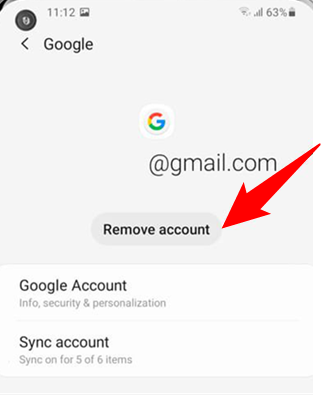
Remove Google Account from Android Phone
After the account is removed, you will be signed out of Google apps on that device. Your Google Account and online data are not deleted.
Method 2. Remove Your Google Account from Android Settings
You can also remove the account from the Settings app. This is often the better route before selling, giving away, or handing your Android phone to someone else.
- Open the Settings app on your Android device.
- Tap Passwords & accounts . On some devices, this may appear as Users & accounts , Manage accounts , or Password, passkeys & accounts .
- Under Accounts, choose the Google Account you want to remove.
- Tap Remove account .
- Confirm with your screen lock if Android asks for it.
Note: If this is the only Google Account on the phone, Android may ask for the device PIN, pattern, or password before removing it.
How to Sign Out of Google on iPhone or iPad
On iPhone and iPad, signing out of Gmail also means removing the Google Account from the Gmail app. This does not delete your Google Account.
- Open the Gmail app on your iPhone or iPad.
- Tap your profile picture in the top-right corner.
- Tap Manage accounts on this device .
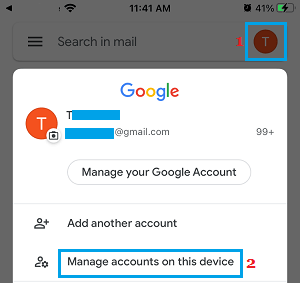
Select Manage Accounts on This Device
- Choose Remove from this device .
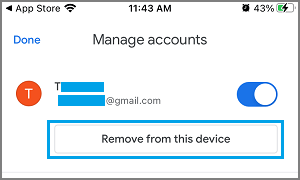
Select Remove from This Device
- Tap Remove to confirm.
If you use several Google apps on your iPhone, removing the account from one Google app may also affect access in other Google apps on that device.
How to Sign Out of Google on a Computer
On a computer, the best method depends on where you are signed in: Gmail in a browser, Chrome, or another Google service.
Method 1. Sign Out of Gmail in a Browser
- Open Gmail in your browser.
- Click your profile picture in the top-right corner.
- Click Sign out . If you use multiple accounts, choose Sign out of all accounts .
This only signs you out of the current browser session. If you use another browser or device, you may still be signed in there.
Method 2. Sign Out of Chrome
- Open Chrome on your computer.
- Click your profile picture in the top-right corner.
- Choose Sign out of Chrome .
If Chrome sync is turned on, you can also open the sync settings and turn sync off. This signs you out of Google services in Chrome and pauses syncing until you sign in again.
How to Remotely Sign Out of Google on a Lost or Old Device
If you left your Google Account signed in on a lost phone, old laptop, public computer, or a device you no longer use, you can sign out remotely from your Google Account security page.
- Open a browser and go to your Google Account Security page .
- Find Your devices and choose Manage all devices .
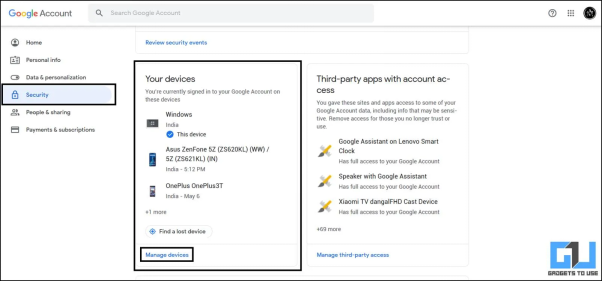
Choose Manage Devices Button
- Select the device or session you want to sign out of.
- Click Sign out and confirm.
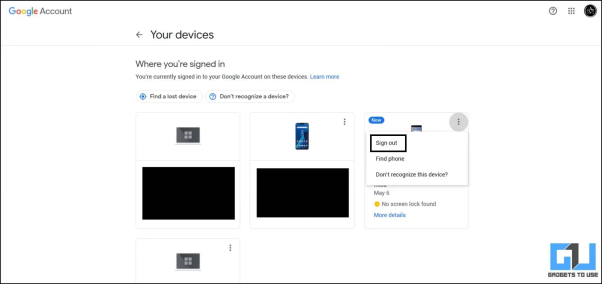
Select the Sign Out Option
If you see multiple sessions for the same device, review them carefully. To block access completely, sign out of every session you do not recognize.
Sign Out vs. Remove Account vs. Delete Account
These terms are often mixed up, but they are not the same.
| Term | Meaning | Does it delete your Google Account? |
|---|---|---|
| Sign out | Ends an active Google session in a browser, app, or device | No |
| Remove account from device | Removes account access and synced data from that phone, tablet, or app | No |
| Delete Google Account | Permanently deletes the Google Account and its associated data from Google services | Yes |
What If You Cannot Remove the Google Account from Android?
If Android asks for the device PIN, pattern, or password, enter the current screen lock to confirm account removal. If the phone was factory reset and now asks for Google verification, that is a different issue called Factory Reset Protection, or FRP.
For FRP-related cases, read: How to Bypass Google Account Verification After Reset . Only try FRP solutions on a device you own or are authorized to manage.
Final Words
To sign out of Google on Android or iPhone, you usually need to remove the Google Account from the device or app. This signs you out of Google apps on that device but does not delete your Google Account. On a computer, you can sign out from Gmail or Chrome directly. For lost, old, or unknown devices, use your Google Account security page to remotely sign out of the device or session.
FAQs About Signing Out of Google
Can I sign out of Google on Android without removing the account?
In most Google mobile apps, including Gmail, you cannot fully sign out without removing the Google Account from the device. If you only want fewer notifications or less syncing, you can turn off Gmail sync, switch accounts, or disable app notifications instead.
Does removing a Google Account from Android delete the account?
No. Removing a Google Account from an Android phone only removes that account and its synced data from that device. Your Google Account still exists, and you can sign in again on the same device or another device.
What happens when I remove a Google Account from my Android phone?
You will be signed out of Google apps on that phone, such as Gmail, YouTube, Maps, and Play Store. Synced email, contacts, calendar events, and settings associated with that account are removed from the phone, but they remain in your Google Account online.
How do I sign out of Google on a lost or old device?
Open your Google Account in a browser, go to Security, choose Manage all devices under Your devices, select the device or session, and click Sign out. If several sessions appear for one device, review and sign out of each session you do not recognize.
How do I sign out of Gmail on a computer?
Open Gmail in a browser, click your profile image in the top-right corner, and choose Sign out. If you use multiple accounts, choose Sign out of all accounts.
How do I sign out of Chrome on a computer?
Open Chrome, select your profile image in the top-right corner, and choose Sign out of Chrome. If sync is turned on, you can also open the Sync settings and turn sync off, which signs you out of Google services in Chrome.
Is signing out of Google the same as bypassing Google verification after reset?
No. Signing out or removing an account is a normal account-management action. Google verification after reset, also called FRP, appears after a factory reset and is a different lock-protection scenario.
Related Articles
- How to Remove Previously Synced Google Account from Android
- How to Bypass Google Account Verification After Reset
- How to Bypass FRP Lock with DroidKit
Stuck on Google Verification After Reset?
If you reset an Android phone and cannot pass the Google verification screen, this is different from simply signing out of Google. DroidKit includes an FRP Bypass feature for supported Android devices. Check current compatibility before you try it.
- For Google verification / FRP lock after factory reset.
- Designed for supported Android devices and system versions.
- Use only on devices you own or are authorized to manage.



Senior writer of the iMobie team as well as an Apple fan, love to help more users solve various types of iOS & Android-related issues.
Product-related questions? Contact Our Support Team to Get Quick Solution >
