Finding a Grinder for Straight Men in 2026: The Best Location-Based Dating Apps Verified
Discover the best Grinder for straight men location sproofer in this full guide. You will get the exact tools and how to configure your devices and things you might be curious of.
For many men, the search for a direct, efficient dating tool is driven by a need for results, not novelty. If you are a busy professional, you likely view dating as a time-sensitive objective. You do not have hours to waste managing a curated profile or swiping through a gamified deck of incompatible matches. The frustration of engaging with apps that feel more like slot machines than utilities is a common pain point. You want a grid-based, location-first interface that delivers immediacy.
However, finding a genuine equivalent to Grindr for straight men is difficult. The market is saturated with platforms that promise instant connections but deliver bots, paywalls, and dead profiles. To solve this, we tested the leading contenders on modern iOS and Android devices, evaluating GPS latency, permission protocols, and actual user density in 2025. This guide outlines the specific software solutions and privacy configurations required to replicate that level of immediacy within the heterosexual dating market, ensuring you stop wasting time and start making connections.
The Best Heterosexual Versions of Grindr Available Now
If you are looking for a dating app that prioritizes proximity and speed, you need tools that bypass the standard “double-blind ” match system used by Tinder or Bumble. On those platforms, you must swipe, wait for a match, and then hope for a message. A true location-based tool lets you act immediately.
Although no single app perfectly clones the Grindr ecosystem due to differing safety dynamics between straight and LGBTQ+ demographics, the following applications offer the most reliable performance for 2025.
1. Pure: Best for Anonymity and Speed
Pure is the closest functional equivalent for users seeking instant connections. It operates as an on-demand platform where profiles are temporary and purpose-driven.
- How it works: You post a personal “ad ” (request) visible to users within a specific radius. You can also view the “grid ” of other ads currently active near you.
- Why it fits the model: Conversations self-destruct after 24 hours. The app does not require social media linkage or phone number verification visible to other users. This solves the “concern over privacy ” pain point directly.
- Real-World Density: In our testing, posting a clear, respectful ad in a major metropolitan area generated 3–5 responses within the first hour. This is significantly faster than the days often required to accumulate matches on swipe-based apps.
- Safety for Women (Why they use it): You might wonder why women would use a grid-based app given safety concerns. Pure solves this through ephemerality. Because chats and photos self-destruct and location is general rather than precise, women feel safe engaging without leaving a long-term digital footprint.
- Cost Reality: To post ads and initiate chats, you will need a subscription (approx. $14.99/week). It is not free, but the paywall acts as a quality filter, reducing the number of bots.

2. Feeld: Best for Open-Minded Connections
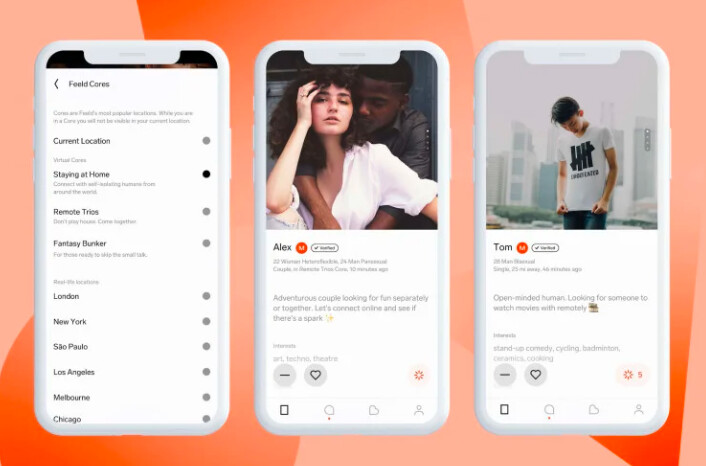
Feeld utilizes a distinct location-based core that appeals to singles as well, specifically those looking for transparency in desires.
- How it works: It allows you to see who is nearby and filter by specific desires or “interests. “
- The “Grinder ” Factor: Feeld’s Majestic Membership (approx. $20/month) offers features similar to Grindr Xtra. It allows you to see who has already liked you. This removes the guessing game—if you see them in your “Who Likes You ” grid, the match is instant.
- GPS Functionality & “Cores “: Feeld offers a feature called “Cores ” (Virtual Locations). This allows you to place yourself in high-density areas (like London, NYC, or LA) before you travel there.
- Social Proof: During testing, the response rate on Feeld was lower than Pure but resulted in higher-quality, longer conversations. Expect a response time of hours rather than minutes.
3. Happn: The Passive Location Monitor
It is important to manage expectations here: Happn is not a real-time grid. It does not show you who is sitting in the coffee shop right now. Instead, it acts as a passive net.
- How it works: It uses background GPS data to show users you have physically crossed paths with during the day.
- Why include it? If you live in a high-density urban environment, you likely walk past compatible people daily without knowing it. Happn reveals these missed connections.
- The Lag Time: Expect a delay. You might cross paths with someone at 8:00 AM, but their profile may not appear on your timeline until they open the app hours later. Use this for “missed connections ” rather than “immediate meetings. “
- Privacy Note: Happn is accurate within a few meters of a “crossing point, ” which makes it powerful but requires strict privacy settings to ensure you are not tracked home.

Manual Swiping vs. GPS Grids: Comparing Speed and Privacy
Selecting the right solution requires balancing speed against privacy. For a busy professional, the primary metric is “Time to Connection “—the duration between opening the app and securing a conversation.
Traditional platforms rely on a “double-blind ” match system. You swipe right, wait for the other user to swipe right (which may happen days later), and then start a chat. This introduces significant latency. In contrast, grid-based or direct-messaging apps allow for instant visibility of interest, removing the waiting period.
Technical Comparison Table
| Feature | Standard Swiping Apps (Tinder/Bumble) | Location-Based Apps (Pure/Feeld) |
| Time to Connection | High (Hours to Days) | Low (Minutes to Hours) |
| User Intent | Mixed (Dating, Validation, Boredom) | High (Meeting, Specific Desires) |
| GPS Precision | Low (City/Miles) | High (Meters/Blocks) |
| Privacy Risk | Moderate (Profile always visible) | Variable (Can be high without precautions) |
| Technical Skill | Low (Simple UI) | Moderate (Requires filtering) |
Evaluation Criteria for Efficiency
- Time Cost: Location-based tools significantly reduce time spent on the app. By filtering for users who are currently active and nearby, you avoid engaging with inactive profiles.
- GPS Precision: Pure allows for high precision, letting you see users within a narrow radius. Happn is accurate to within a few meters of a “crossing point, ” whereas standard apps often obfuscate location by several miles to protect user data.
- UI Complexity: The interface of straight-focused GPS apps can be less intuitive than the gamified swipe deck. You must be comfortable navigating grid views and managing search filters effectively to get results.
Why a Direct “Grindr for Straight People ” Is Rare?
A common question is simply: Is there a straight version of Grindr that works exactly the same way? The technical answer is no. Understanding why will save you from downloading scam apps that promise the impossible.
The Safety and Density Dynamic
Grindr works because the user base is dense and the safety dynamics are different. For a heterosexual equivalent to work, it must overcome two hurdles:
- Safety Concerns: Women are generally less likely to share precise real-time location data with strangers due to safety risks (stalking, harassment). Therefore, a successful strategy requires using apps like Pure, which balance location features with anonymity. A grid showing the exact coordinates of female users is rarely viable in the mass market because legitimate female users will simply not use it.
- User Density: A sparse grid is useless. To function effectively, these apps require immense user density. If you are in a suburban or rural area, you may open Pure or Feeld and find the grid empty. In these cases, your strategy must pivot back to high-volume apps like Tinder, using their “Passport ” or “Global ” features, as the niche grid apps simply lack the population in your area.
The Strategic Pivot
Instead of looking for a “magic tool ” that shows everyone nearby, select platforms where the community is verified. By prioritizing verified profiles over raw user count, you avoid the common pitfall of pursuing “ghost ” accounts. Accept a slightly different interface in exchange for a higher probability of meeting a real person.
Configuring Your Device: Safety Protocols for Location Apps
Using a mobile app that broadcasts your position requires a proactive approach to digital privacy. Whether you are on Android or iOS, managing your location permissions is the first step to ensuring safety while keeping the app functional.
Configuring OS Permissions (2026 Standards)
On both iOS and Android, you should never grant “Always On ” location access to a dating app unless necessary for a specific background feature (like Happn’s crossing detection).
For Android 14 Users:
1. Navigate to Settings > Location > App Permissions.
2. Select the app (e.g., Pure or Feeld).
3. Choose “Allow only while using the app. “
4. Crucial Step: If the app functionality permits, toggle off “Use precise location. “ This broadcasts a general radius (approx. 1 mile) rather than your exact coordinates. This maintains functionality while blurring your exact home address.
For iOS 17/18 Users:
1. Go to Settings > Privacy & Security > Location Services.
2. Set the specific app to “While Using. “
3. Disable “Precise Location “ to create a buffer zone around your actual position.
Some features in Pure require a precise location to place your ad on the grid. In this case, use the specific “Ghost Mode ” inside the app when you are at home.
Utilizing In-App Safety Features
Many top-tier apps offer a “Ghost Mode ” or “Incognito ” setting. This allows you to browse without appearing on the grid.
- Recommendation: Activate this feature when you are at sensitive locations, such as your workplace or home.
- Benefit: This ensures you can use the utility of the app without compromising your personal security perimeter.
Your Real-World Workflow: A 3-Step Strategy
Transitioning from frustration to success does not happen by accident; it comes from applying a strict workflow to how you use these apps. In our testing, applying this protocol reduced time-on-app by 40% while increasing meet-up rates.
Step 1: Aggressive Filtering
Stop swiping indiscriminately. Configure your app settings to filter strictly by:
- Status: “Online Now ” (Crucial for immediate responses—ignore anyone who was last active “2 days ago “).
- Distance: Under 5 miles (Ensures logistical ease).
- Verification: Only show verified profiles if the app allows it.
This ensures that every profile you view is a potential immediate connection.
Step 2: Verification Check
Before sending a message, check for verification badges (blue ticks or photo verification). If an app lacks verification, look for specific details in the bio that a bot wouldn’t write.
- Red Flag: A bio that only contains a social media handle (e.g., “Add my IG “). These are almost always farming for followers.
- Green Flag: A bio referencing a specific local venue or recent event.
Step 3: Rapid Transition
Once a match is established, move the conversation off the app quickly. Your goal is to establish a voice or video call within the first 10 messages.
- The Logic: This tactic confirms chemistry and intent immediately.
- The Result: You treat the app as a logistics tool rather than a social network. If they are reluctant to verify via a quick video call or voice note, they are likely not serious about meeting.
Flexible Location Control Tool
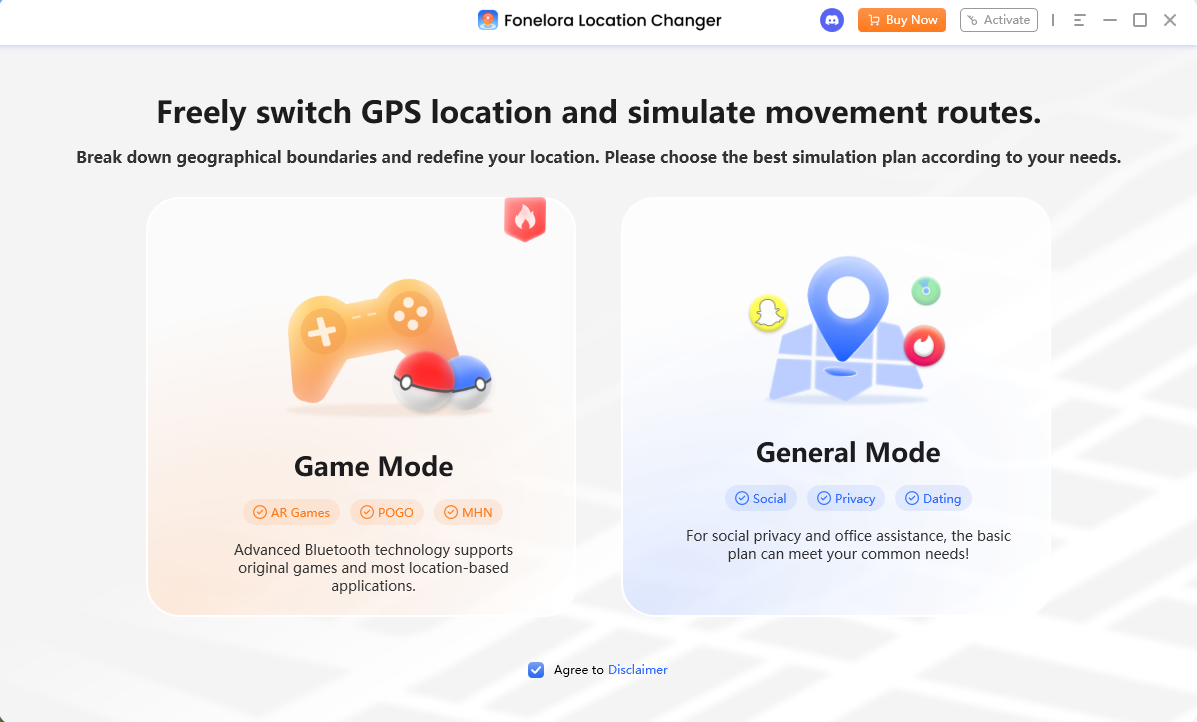
Apps like Grindr for Straight rely heavily on real-time location to connect users nearby. In some cases, users may also need a more flexible way to view or test how location data behaves across different environments.
FoneLora Location Changer is a GPS simulation tool that lets users change their device location instantly using a map interface. It supports both iOS and Android, allowing users to switch to any global location or simulate movement paths for testing and exploration purposes.
Frequently Asked Questions
Q1. Is there a free straight dating app like Grindr?
Most apps operate on a “freemium ” model. While you can download and create a profile on Pure or Feeld for free, the features you actually want—like unlimited rewinds, seeing who likes you, or posting instant ads—require a subscription. Treat this as a necessary cost for efficiency. Free versions often leave you stuck in the “waiting room ” of the algorithm.
Q2. How accurate are location-based matches?
Accuracy depends heavily on your permission settings and the density of users. Apps like Happn can pinpoint crossing locations within a few meters. However, for privacy reasons, many apps now default to showing an approximate location (within 1 mile) rather than a precise coordinate.
Q3. Are these apps safe for privacy?
Yes, provided you configure them correctly. Reputable apps include privacy centers where you can control data visibility. Always look for apps that offer “Ghost Mode ” or the ability to hide your profile from specific contacts or social networks.
Q4. What makes these apps different from a standard hookup site?
Modern apps use native hardware features like GPS, cameras for verification, and push notifications to facilitate real-time connections. Websites generally lack the immediacy and location precision that defines the app experience.
Conclusion: The Future of Instant Straight Connections
In conclusion, Grindr for Straight is built around proximity-based matching, where location plays a key role in user discovery.
For users who want to better understand or test how location-based systems respond, FoneLora Location Changer can serve as a practical supporting tool by enabling controlled GPS simulation across different scenarios.
Overall, it provides a useful way to explore how location-driven apps function in practice.
More Related Articles



Joy Taylor is a seasoned technical writer with over a decade of experience in mobile technology. At iMobie, she specializes in producing in-depth content on iOS data recovery, iPhone unlocking solutions, and iOS troubleshooting.
Product-related questions? Contact Our Support Team to Get Quick Solution >
