How to Spoof Life360 Without Getting Caught (2026)
Looking for a working Life360 spoofer? This guide tests the best fake GPS tools for iPhone and Android, explains why most apps fail, and shows how to spoof your location without getting caught.
Many people search for a Life360 spoofer for one simple reason: they want more privacy without triggering arguments, alerts, or suspicious location changes.
The problem is that most fake GPS apps no longer work reliably in 2026. Many users notice their location suddenly snapping back to the real position, random “Phone Off” warnings appearing inside Life360, or fake movement glitches that make the location look unnatural. In some cases, the spoofed location only works for a few minutes before the app refreshes and exposes the real GPS signal again.
After testing multiple methods on both iPhone and Android devices, desktop-based GPS changers are currently the most stable solution for spoofing Life360 without jailbreak or root. Compared with traditional mobile-only fake GPS apps, they are far less likely to trigger location jumping or sudden resets.
This guide focuses on the practical side of spoofing Life360 successfully. You’ll learn which methods still work on iPhone and Android, why many free fake GPS apps fail, how to stop your location from snapping back, and how to make fake movement appear natural enough to avoid suspicion.

Table of ContentsHide
Quick Answer: What Actually Works in 2026
Most mobile-only fake GPS apps are unstable now. During testing, many free apps failed within 5–10 minutes because Life360 refreshed the real GPS signal in the background. Some apps froze the location completely, while others caused obvious teleporting across the map.
At the moment, desktop GPS changers connected through USB remain the most reliable option. This approach works by modifying the phone’s location data at the system level instead of relying on weak overlay-based fake GPS apps.
The following devices were used during testing:
- iPhone 16 Pro Max (iOS 26)
- Samsung S25 Ultra (Android 16)
- Pixel 9 Pro
- iPhone 14
The biggest difference between desktop tools and traditional fake GPS apps is stability. Most free mobile apps eventually lose control of the GPS signal, which causes rubber-banding or sudden resets. Desktop tools are far less likely to run into this issue.
Recommended Life360 Spoofing Tools That Actually Solve the Problem
If the goal is only to change your Life360 location once, many basic fake GPS apps may seem enough at first. But if you want the location to stay stable, avoid sudden jumps, and make the movement look more natural, a desktop-based GPS changer is usually a better choice.
For this purpose, Fonelora Location Changer is a practical Life360 spoofer for both iPhone and Android users. It lets you change GPS location from a Windows PC or Mac without jailbreak or root, and supports teleport mode, joystick movement, and route simulation. This makes it more suitable for Life360 than simple mobile-only fake GPS apps that often cause location snapping, rubber-banding, or sudden resets.
| Tool | Best For | Main Advantage |
| Fonelora Location Changer | iPhone and Android users who want stable Life360 spoofing | Desktop-based GPS changing, route simulation, joystick movement, no jailbreak or root |
| Tenorshare iAnyGo | Users who want another desktop spoofing option | Route simulation and map-based location changing |
| WooTechy iMoveGo | Users who need joystick movement and flexible control | Useful for making movement look more natural |
| Dr.Fone Virtual Location | Basic one-time location changing | Simple teleport-style location change |
| Free Fake GPS Apps | Short temporary tests | Easy to try, but less stable |
For Life360 specifically, the best tool is not always the one that changes location fastest. The better choice is the one that keeps the location stable and avoids obvious behavior, such as instant long-distance jumps, repeated resets, or a dot that stays perfectly frozen for hours.
That is why Fonelora Location Changer is a better fit than most free mobile-only fake GPS apps. It does not simply place a temporary fake layer over your location. Instead, it helps manage device-level GPS location from a computer, giving you more control over where your location appears, how it moves, and how long it stays stable.
- No jailbreak or root required: Change GPS location on iPhone or Android without modifying the device system.
- Teleport mode: Move your Life360 location to a selected place on the map.
- Joystick movement: Adjust your position manually instead of keeping the location frozen.
- Route simulation: Create a more natural walking or driving route to reduce obvious location jumps.
- Windows and Mac support: Manage the spoofed location from a desktop interface instead of relying on unstable mobile-only apps.
For most users, the safer setup is to choose one desktop tool, test it at home first, simulate a short realistic route, and confirm that Life360 shows the changed location correctly before relying on it for a longer period.
Why Most Life360 Fake GPS Apps Fail
One of the biggest frustrations for users is seeing the fake location work perfectly at first, only for Life360 to suddenly refresh and expose the real position. This usually happens because modern phones prioritize real GPS hardware signals over software-based location overlays.
Many free apps only create a temporary fake layer above the GPS system. Once the operating system refreshes the location data, the phone reverts back to the real coordinates. That’s why users often experience location snapping, random movement glitches, or impossible jumps between locations.
Another common problem is Wi-Fi positioning. Even if the GPS location is fake, nearby Wi-Fi networks can still reveal the device’s real environment. If your GPS says New York while your nearby Wi-Fi routers clearly indicate Chicago, Life360 may detect the mismatch and refresh the real location.
How to Spoof Life360 on iPhone with Fonelora
Spoofing Life360 on iPhone no longer requires jailbreak. With Fonelora Location Changer, you can change your iPhone GPS location through a Windows PC or Mac and apply the new location system-wide.
- Install Fonelora Location Changer on your Windows PC or Mac.
- Connect your iPhone to the computer with a USB cable.
- Unlock the iPhone and tap “Trust This Computer” when prompted.
- Follow the on-screen guide to complete the device connection.
- Select Teleport Mode and search for the location you want Life360 to show.
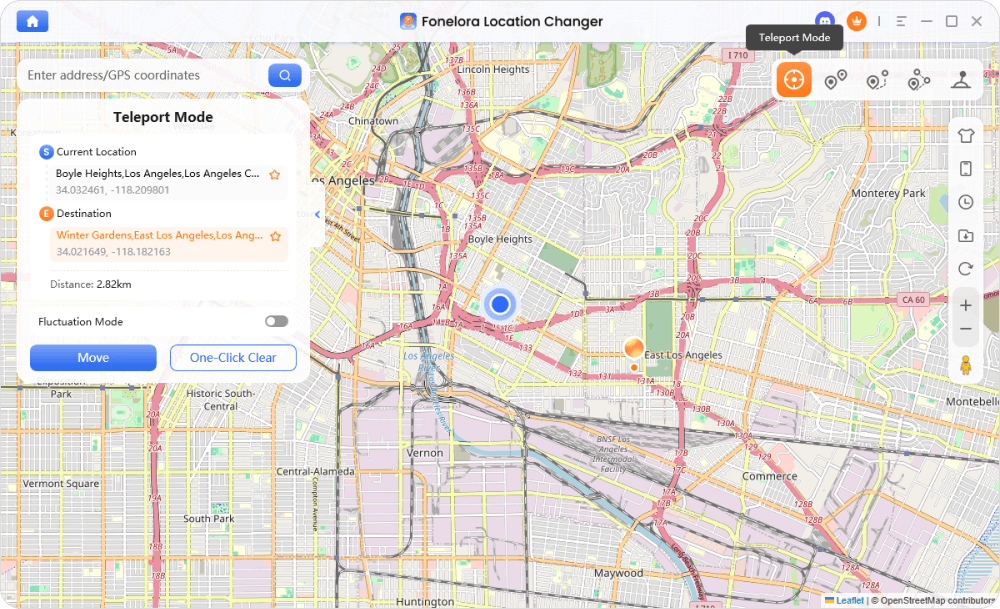
- Apply the virtual location and restart Life360 so the app refreshes the new GPS coordinates.
- Use joystick movement or route simulation if you want the location to appear less static.
In most cases, the fake location remains active until the device is restarted or the location is restored. Before using it for a longer session, test the setup for a short period and make sure Life360 does not snap back to your real position.
How to Spoof Life360 on Android with Fonelora
Android devices usually require one extra setup step before GPS spoofing works correctly. Fonelora Location Changer can also work with Android devices without root, but you may need to enable the required developer settings during the connection process.
- Install Fonelora Location Changer on your Windows PC or Mac.
- Connect your Android device to the computer with a USB cable.
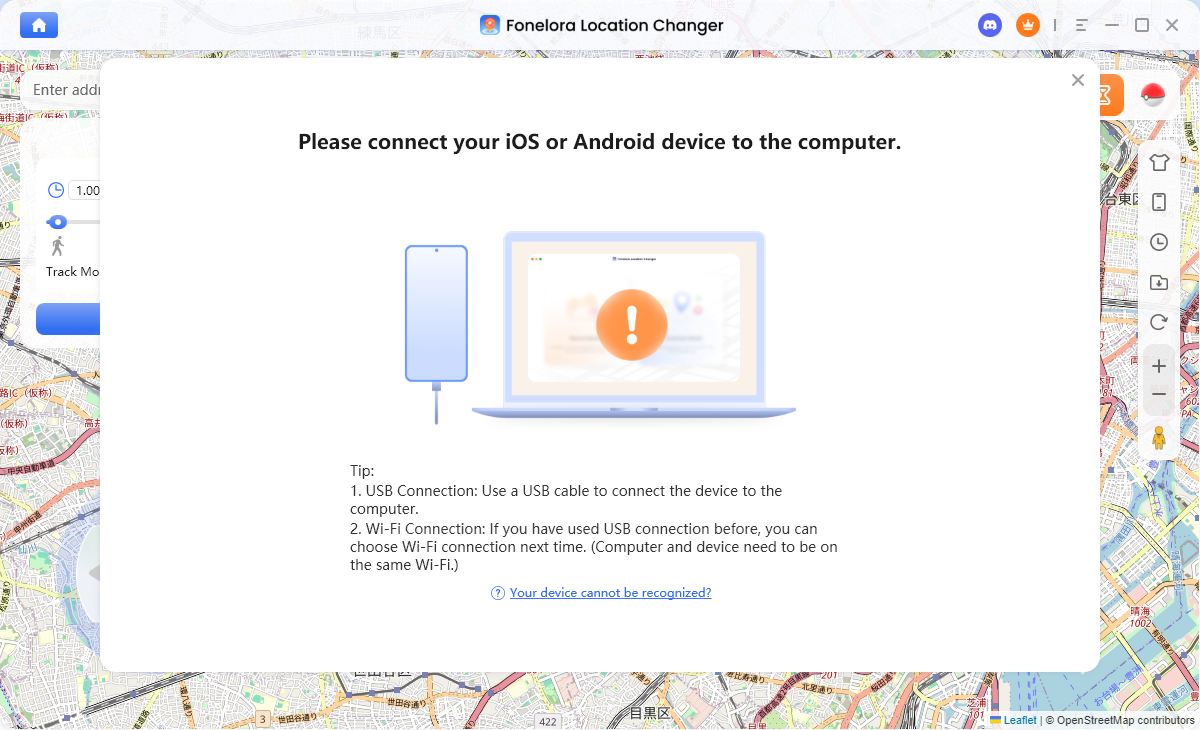
- Follow the on-screen instructions to enable the required permissions, such as Developer Options or USB Debugging if needed.
- Choose the location you want to display in Life360.
- Apply the virtual GPS location and fully restart Life360.
- If the location resets, turn off Wi-Fi and Bluetooth scanning, reconnect the device, and apply the location again.
Android devices vary more than iPhones in terms of GPS behavior. Some models keep the changed location after USB disconnection, while others may reset faster. For better stability, test your setup first, avoid constant location jumps, and simulate realistic movement whenever possible.
How to Avoid Getting Caught on Life360
Most detection problems happen because users spoof unrealistically. The fake location itself is rarely the main issue. Instead, suspicious movement patterns are what usually expose spoofing attempts.
One of the most common mistakes is teleporting across large distances instantly. Jumping 20 miles in a few seconds creates movement that looks physically impossible. Life360 may flag this behavior or make the sudden change obvious to other people inside the Circle.
A safer approach is to simulate realistic movement. Most desktop GPS changers now include walking mode, driving mode, joystick movement, and route simulation. Instead of instantly appearing at a destination, users can simulate a gradual commute with realistic travel speed.
Another extremely important step is disabling Wi-Fi before spoofing. Many users ignore this and then wonder why the fake location keeps resetting. Even with spoofed GPS coordinates, nearby Wi-Fi networks can still reveal the real environment. Turning off Wi-Fi, Bluetooth scanning, and nearby device scanning dramatically improves stability.
Users should also avoid changing locations constantly throughout the day. Staying within one general area and moving gradually appears much more natural than repeatedly jumping across the city.
Why Desktop GPS Changers Work Better
Desktop tools are generally more reliable because they modify location data before apps receive it. This creates fewer location resets, fewer rubber-banding issues, and more stable performance overall.
Many experienced users eventually stop using traditional mobile-only fake GPS apps because the results become increasingly unstable after iOS and Android updates. Desktop-based solutions remain more effective because they interact with the location system more directly.
This difference becomes especially noticeable on newer systems like iOS 26 and Android 16, where many older fake GPS apps struggle to function consistently.
Common Problems and Fixes
If your fake location keeps snapping back to the real position, the first thing to check is Wi-Fi. In many cases, simply disabling Wi-Fi completely solves the issue. Restarting Life360 and reconnecting the USB cable can also improve stability.
Some Android devices reset the fake location shortly after disconnecting USB. During testing, this happened more frequently on Pixel devices than Samsung devices. Users who need maximum consistency should test the spoofing setup carefully before relying on it publicly.
Another issue is movement that looks too perfect. A completely frozen location for ten straight hours can appear suspicious. Simulating small movement occasionally often creates more realistic behavior.
Can Life360 Detect Fake GPS?
Yes, but most detection issues happen because of poor spoofing habits rather than the spoofing software itself.
Life360 may detect unrealistic movement speeds, sudden teleporting, GPS and Wi-Fi mismatches, or repeated location resets. Users who move gradually and disable Wi-Fi typically experience far fewer problems.
Desktop GPS changers are also harder to detect than traditional mobile-only fake GPS apps because the location changes appear more stable at the system level.
Does This Work Without Jailbreak or Root?
Yes. Modern desktop GPS spoofers work on both iPhone and Android devices without requiring jailbreak or root access.
This is one reason desktop tools have become much more popular in recent years. Users can spoof locations without modifying the phone’s operating system or risking warranty and security issues.
FAQ
1. What is the best Life360 spoofer right now?
Desktop-based tools like iAnyGo and iMoveGo are currently among the most stable options for both iPhone and Android.
2. Why does my fake location keep resetting?
This usually happens because Wi-Fi is still enabled or the phone refreshes the real GPS signal. Disabling Wi-Fi often improves stability significantly.
3. Can Life360 detect spoofing?
Yes, especially if the movement looks unrealistic. Instant teleporting and constant location changes are much easier to notice.
4. Does fake GPS work on iPhone?
Yes. Modern desktop GPS changers work on iOS 26 without jailbreak.
5. Are free fake GPS apps reliable?
Most free fake GPS apps become unstable quickly and often trigger rubber-banding or location resets.
Final Thoughts
Most Life360 spoofing failures happen because users rely on outdated mobile-only fake GPS apps that can no longer maintain stable location control on modern devices. These apps often create a temporary fake layer that disappears once the phone refreshes real GPS, Wi-Fi, or system-level location data.
For users who want a more reliable setup in 2026, desktop GPS changers remain the better option. Fonelora Location Changer is a practical Life360 spoofer because it works on iPhone and Android from a Windows PC or Mac, without jailbreak or root, and supports teleport mode, joystick movement, and route simulation.
The key is not only changing your location, but making the result look stable and realistic. Before relying on any spoofed Life360 location, test it at home, avoid instant long-distance jumps, turn off Wi-Fi or Bluetooth scanning if they cause location conflicts, and use route simulation when a frozen dot would look suspicious.
With a desktop-based setup like Fonelora Location Changer, you get more control over how your location appears, how it moves, and how long it stays stable—making it a stronger choice than most free fake GPS apps for Life360.
More Related Articles



Joy Taylor is a seasoned technical writer with over a decade of experience in mobile technology. At iMobie, she specializes in producing in-depth content on iOS data recovery, iPhone unlocking solutions, and iOS troubleshooting.
Product-related questions? Contact Our Support Team to Get Quick Solution >
