Uber Fake GPS Guide (2026): Methods, Risks, and Reality
Discover how to fake locations on Uber. You will get everything you need to know: how-to-fake guide, the recommend ways and the risks behind it.
If you drive for a living, you know the specific frustration of watching a surge zone light up the map just two miles away, only for it to vanish the second you arrive. For earnings-focused users, this isn’t just a minor annoyance; it directly impacts the day’s take-home pay. You aren’t trying to break the system; you just want to level the playing field against an algorithm that often feels like it is positioned against you.
However, finding a working solution is difficult. Most online guides point to outdated tools that lead to immediate account warnings. Whether you are dealing with Uber detecting fake GPS instantly or simply trying to understand why your location keeps snapping back to reality, this guide provides the technical clarity you need. We move beyond marketing hype to explain exactly which methods trigger security protocols and the reality of using Uber fake GPS tools in 2026.
Quick Decision: Why Standard GPS Spoofing Apps Fail
When attempting to spoof location on Uber, the tool you select determines whether you secure a surge ride or receive a warning email. Many drivers, driven by the need for efficiency, begin by downloading free mobile apps from the Google Play Store or Apple App Store. While these are accessible, our testing confirms that standalone mobile apps are currently the highest-risk option available.
Mobile-only spoofers generally rely on the “Mock Location ” developer setting within the Android OS. Uber’s application is programmed to detect when this specific setting is active. If the app sees “Mock Locations ” enabled without a sophisticated masking method (such as root access), it creates an immediate red flag. Most drivers learn this the hard way: their first attempt with a free GPS spoofing app results in an instant “Location Settings ” error within the driver dashboard, locking them out of the platform until the tool is disabled.
Why Uber Detects Simple Spoofing?
Here is a critical insight that most guides miss: Uber does not rely on GPS alone. The platform utilizes a technology called “Sensor Fusion, ” which cross-checks your GPS data with other inputs from your phone to verify reality.
If you have ever tried to use fake gps for uber to jump to a busy airport queue only to be flagged immediately, Sensor Fusion is the culprit. While your GPS said you were moving at 45 mph, your phone’s accelerometer likely indicated you were sitting perfectly still. Uber’s algorithm detects this discrepancy—a physical mismatch between reported location changes and actual device movement.
The Three Pillars of Detection
- Accelerometer Data: If your GPS coordinates show you driving down a highway, but your phone is perfectly flat on a desk, the lack of vibration and G-force changes alerts the system.
- Wi-Fi & Bluetooth Scanning: Uber scans for surrounding Wi-Fi networks. If your uber fake gps coordinates place you in downtown Los Angeles, but your phone detects a Wi-Fi network that Google geolocates to a suburb 20 miles away, the system flags the anomaly.
- Cell Tower Triangulation: Similar to Wi-Fi, if your GPS says one thing but the cell tower you are connected to says another, it creates a “Location Snapping ” event.
Visualizing “Rubber-Banding “
The most common sign that your setup is failing is rubber-banding. This happens when the real GPS signal momentarily overpowers the fake one.
- What it looks like: You are looking at the Uber driver map. Your blue dot is sitting in the surge zone. Suddenly, the dot jitters or snaps back to your actual physical location (e.g., your house) for a split second, then snaps back to the surge zone.
- The Result: That split-second snap is enough for Uber to log a “Location Jump ” event. If this happens multiple times in a minute, your account is flagged.
This is why static spoofing or jumping long distances is highly risky. To the algorithm, it looks physically impossible, leading to a fraud log on your account.
Assessing the Risk: Driver Deactivation vs. Rider Privacy
The consequences of using an uber location tracking spoofer vary drastically depending on whether you are a driver or a rider. For a rider, the risk is generally low; the worst outcome is usually a temporary inability to book a ride or an account warning. However, for drivers, the stakes are financial and severe.
The “Shadowban ” Danger
Uber classifies GPS manipulation as fraud. The first sign of trouble for a driver is often a “Shadowban. ” During a shadowban, the app appears functional, but you stop receiving ride requests, even in busy areas. The algorithm silently isolates your account to monitor for further anomalies.
How to Identify a Shadowban:
- Visual Check: You are sitting directly in the center of a high-dollar surge zone (e.g., $10+).
- Time Check: You have been online and available for 15-20 minutes.
- Result: You receive zero ride requests, while drivers around you (visible on the passenger app) are disappearing as they get booked.
The anxiety of losing a primary income stream often outweighs the potential gain of a few extra dollars from a surge zone. It is vital to understand that Uber’s Terms of Service explicitly forbid the use of any iphone location changer or Android spoofing tool to manipulate ride data. Once a driver account is banned for “Fraudulent Activity, ” appeals are rarely successful because the telemetry data provides Uber with concrete proof of the manipulation.
Platform Specifics: Spoofing on Android vs. iOS
The method for achieving a working uber driver app gps override differs significantly between Android and iOS ecosystems due to how each handles developer permissions.
Android: Root Access Required for Stability
On Android, simply enabling “Mock Locations ” in Developer Options is insufficient for the Driver app. To hide this status, advanced users typically root their device (gain administrative access) and use modules like “Smali Patcher ” or “Magisk. ” These tools mask the fact that mock locations are enabled, allowing the mock location android setup to feed fake data to Uber without triggering the basic security checks. Without rooting, the Uber app almost always detects the developer setting and blocks access.
iOS: Tethering or Hardware Dongles
Apple’s ecosystem is more closed. There is no native “Mock Location ” toggle for users. Consequently, iOS users must rely on the desktop tethering method described earlier (using a computer to inject GPS data) or use hardware dongles (external GPS units that plug into the Lightning/USB-C port). A Jailbreak allows for on-device tweaks similar to Android’s root method, but jailbreaking modern iOS versions (iOS 16/17) is increasingly difficult and compromises the device’s security. For most iOS users, the external hardware method is the only viable iphone location changer option that does not void the warranty.
A More Stable Uber Fake GPS Solution: Fonelora Location Changer
As discussed above, desktop-tethered tools are currently the most reliable method for spoofing GPS on Uber. Compared to mobile apps that rely on detectable “Mock Location” settings, desktop software provides a more stable and less detectable signal .
If you’re looking for a user-friendly and stable alternative, Fonelora Location Changer is worth considering.
Unlike basic spoofing apps, Fonelora works by overriding your device’s GPS externally via a computer connection—helping reduce common issues like rubber-banding and instant detection.
Why Choose Fonelora Location Changer?
Fonelora is designed with both stability and realism in mind, which are critical factors for Uber GPS spoofing:
- One-click GPS location change
- Supports both iOS and Android devices
- No root or jailbreak required
- Built-in movement simulation (essential for avoiding detection)
- Adjustable speed and route planning
- Stable signal to reduce “location snapping” issues
This makes it especially useful for:
- Drivers trying to position themselves near high-demand areas
- Users testing location-based scenarios
- Anyone needing a smoother alternative to mobile spoofing apps
How to Use Fonelora to Fake GPS on Uber
Here’s a simplified step-by-step guide:
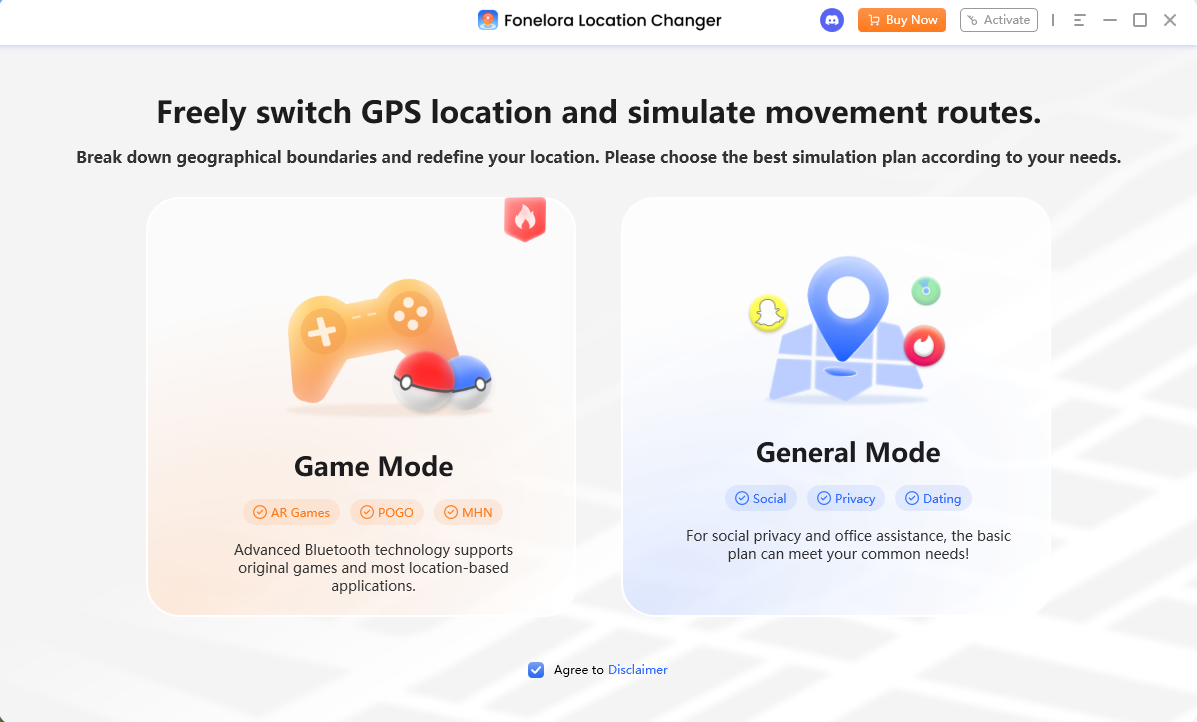
Step 1: Connect Your Device
Download Fonelora Location Changer from its official website and install it on your computer. Use a USB cable to connect your iPhone or Android device.
- Tap “Trust This Computer” on iOS
- Enable USB Debugging on Android
Step 2: Select a Target Location
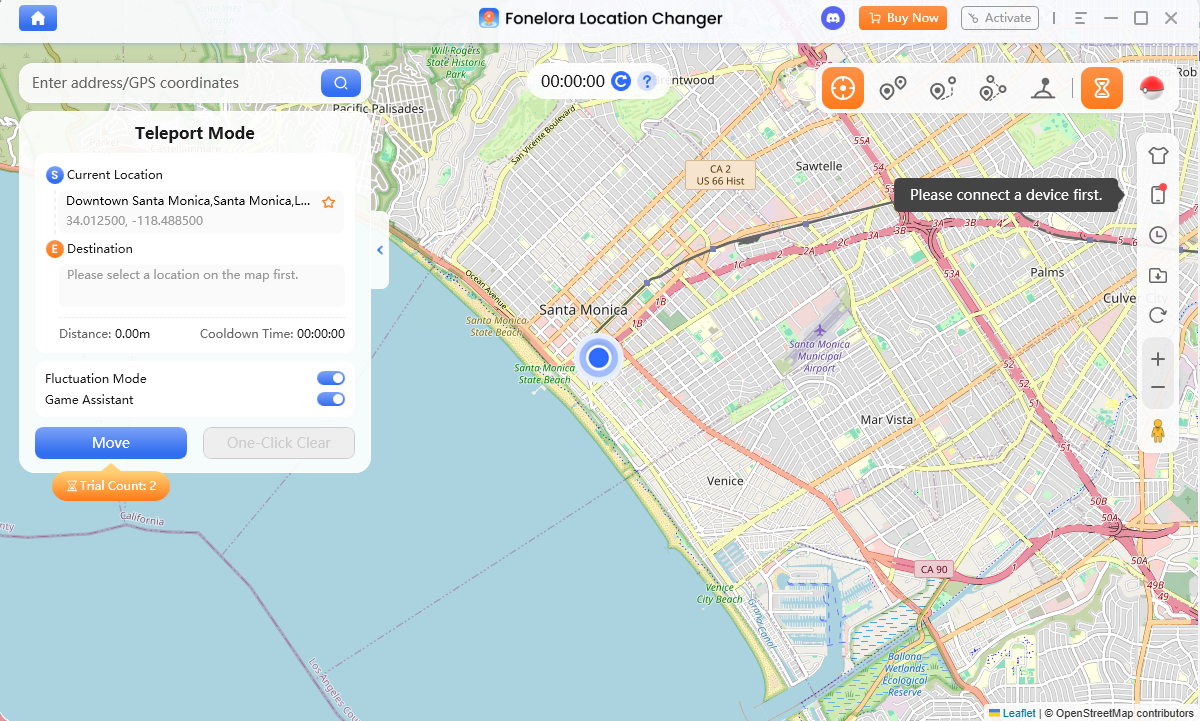
Launch the software and open the map interface:
- Enter a location (e.g., airport, surge zone)
- Or manually click on the map
Step 3: Change Your GPS Location
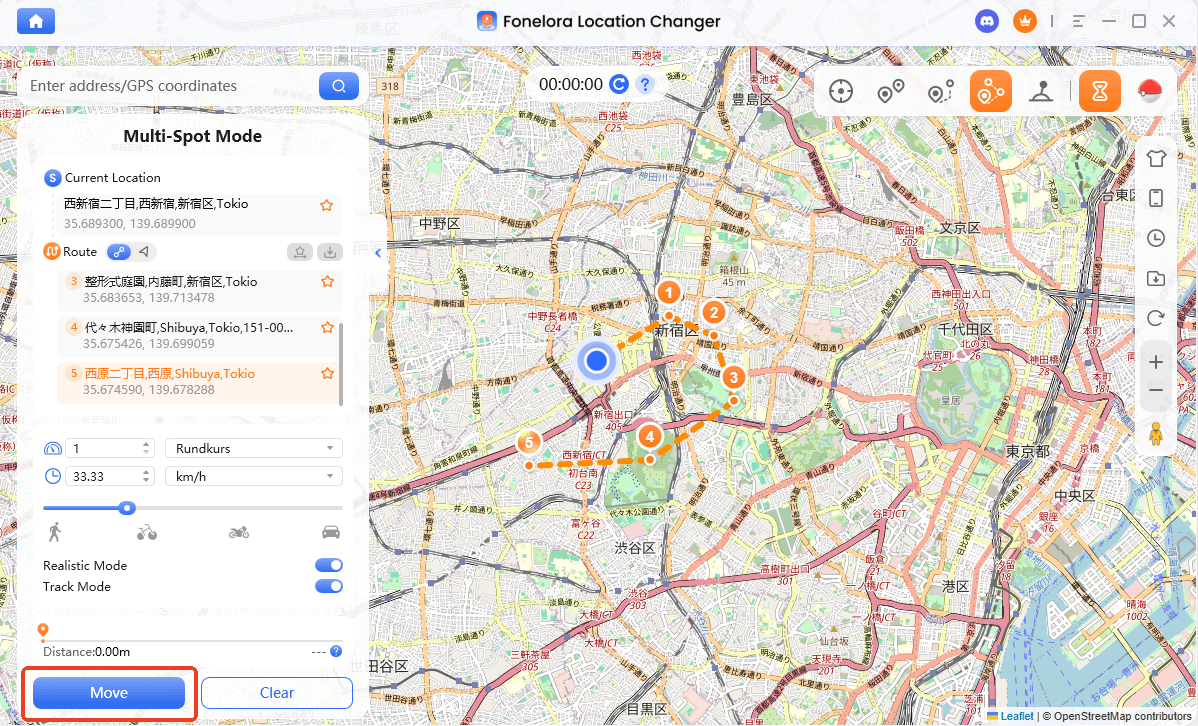
Click “Move” to instantly update your device’s GPS coordinates.
Frequently Asked Questions
Q1. Can you use fake GPS on Uber?
Technically, yes, you can inject fake coordinates. However, using it successfully on the Driver app without detection is extremely difficult due to advanced security measures like Sensor Fusion.
Q2. Does Uber detect GPS spoofing?
Yes. Uber uses sophisticated telemetry to cross-reference GPS data with Wi-Fi signals, cell tower triangulation, and accelerometer data. Mismatches trigger security flags instantly.
Q3. Can Uber drivers get banned for fake location?
Absolutely. GPS manipulation is considered fraud. Consequences range from temporary shadowbans (receiving no rides) to permanent account deactivation.
Q4. Why does Uber not work with fake GPS apps?
The Uber app checks for the “Mock Location ” setting on Android. If it detects this setting is active without being properly masked (via root), it prevents the app from going online to ensure fair play.
Q5. Is there a safe Uber fake GPS method?
No method is 100% safe. Desktop-tethered tools offer lower detection risks than mobile apps, but the risk of a ban remains present if you simulate unrealistic movements or fail to match your physical sensors.
Q6. Does fake GPS work differently on Android vs iPhone?
Yes. Android usually requires rooting to hide mock location settings effectively. iPhone users typically need to tether their device to a computer to override the location externally.
Q7. What happens if Uber detects spoofing?
If detected, you may experience “location snapping ” (where your pin jumps back to your real spot), receive an in-app warning, or face immediate account suspension depending on the severity and frequency of the attempt.
The Bottom Line on Location Spoofing
The decision to use an uber fake gps tool ultimately comes down to sustainability. While you might successfully use a desktop tool like Fonelora Location Changer to appear in a surge zone once, the constant fear of the “Account Notice ” email can make driving stressful rather than profitable. A single mistake—forgetting to match your speed, connecting to the wrong Wi-Fi, or a loose USB cable causing a location snap—could end your driving access permanently.
While these tools exist and can technically function, Uber’s detection technology improves every year. The platform is currently winning the battle against simple spoofing apps. If you are a driver, protect your income source by fully understanding the risks before you experiment. The most effective strategy remains legitimate optimization—learning your city’s natural traffic patterns rather than relying on a digital workaround that could cost you your account.
More Related Articles



Joy Taylor is a seasoned technical writer with over a decade of experience in mobile technology. At iMobie, she specializes in producing in-depth content on iOS data recovery, iPhone unlocking solutions, and iOS troubleshooting.
Product-related questions? Contact Our Support Team to Get Quick Solution >
