Living outside a major city often means staring at an empty map with zero nearby raids and no active lures. If you’re looking to maximize your gameplay, New York City is globally recognized as one of the best places in the world for farming Pokémon. But finding accurate, updated coordinates for 2025 isn’t just about dropping a single pin on a massive map. Serious players need to know exactly where the active clusters are, what time to go, and how to navigate cooldown rules without risking an account ban.
By using verified New York Pokémon GO coordinates for elite areas, utilizing GPX routing, and following strict safety procedures, you can transform your gameplay. We’ve mapped out the exact hotspots, optimal walking routes, and essential safety protocols to help you safely access the highest PokéStop density and farm like a local.
Table of ContentsHide
The Best Pokémon GO Coordinates New York Offers for Elite Farming
To jump straight into the action, you need verified, active locations with proper routing context. Rather than offering a random list of single-pin drops, this section categorizes the top NYC spots by specific gameplay objectives and provides the local insights you need to navigate them effectively.
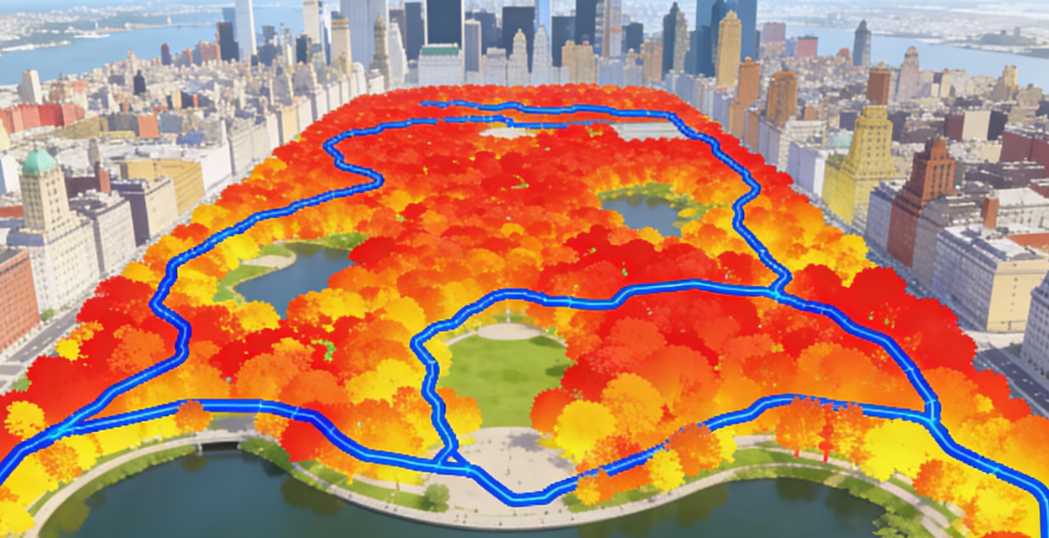
1. Central Park: Nests, GPX Routes, and General Catching
Central Park Coordinates: 40.7826, -73.9656 (General Park Center)
Bethesda Terrace Cluster: 40.7738, -73.9708
Grand Army Plaza Entrance: 40.7644, -73.9731
A single coordinate drop doesn’t do justice to Central Park’s massive 843-acre footprint. If you simply teleport to the center, you might find yourself wandering aimlessly. Central Park is best utilized with a GPX routing path.
The Local Route: Start at the southeast corner near Grand Army Plaza (40.7644, -73.9731). This entrance historically features overlapping stops that are frequently lured. From there, set a walking path north toward Bethesda Terrace (40.7738, -73.9708). This specific corridor boasts incredible spawn diversity, overlapping interactive stops, and continuously rotating nests. It is highly recommended for community days and your daily farming routes.
2. Bryant Park: Stardust Farming and Lure Modules
Bryant Park Coordinates: 40.7536, -73.9832
If your technique involves staying in one central spot and letting Pokémon come to you, Bryant Park is your ideal solution. The enclosed layout of the park means dozens of stops overlap perfectly, making it the premier lure farming spot in the city.
Local Insight & Timing: A common misconception is that these parks are lured 24/7. In reality, lures die down late at night. To maximize your Stardust gains, the optimal time to visit Bryant Park is between 12:00 PM and 6:00 PM EST (New York local time), especially on weekends or during active event windows. During these peak hours, you can pop a Star Piece and comfortably catch hundreds of Pokémon per hour without moving.
3. Times Square: The Hub for 5-Star Raid Battles
Times Square Coordinates: 40.7589, -73.9851
For players focused on high-level Raid Battles, Times Square is unmatched. The sheer volume of pedestrian traffic guarantees that gym lobbies fill up to the maximum 20-player capacity within seconds of a raid hatching, making back-to-back 5-Star raids incredibly easy.
Local Insight & GPS Drift Warning: Playing in Times Square comes with a massive technical caveat: skyscrapers cause severe GPS drift. Your avatar might randomly sprint down the block while you are trying to stay still for a raid. If you are physically there, connect to local Wi-Fi to stabilize your location. If you are playing remotely, tap the gym to enter the lobby, and avoid touching your on-screen joystick until the raid is fully completed to prevent being booted for moving out of range.
4. Brooklyn Bridge Park: Water-Types and Rare Spawns
Brooklyn Bridge Park Coordinates: 40.7022, -73.9965
Located right along the water, this area is fantastic for hunting specific types of Pokémon that rarely appear inland. It is a highly reliable rare Pokémon spawn location, particularly during weather-boosted rainy days or water-themed events, offering a scenic and dense route along the piers.
Expert Technique: The “Farming Trifecta”
A major source of frustration for players is the lack of clear explanations for why certain NYC locations are better for farming than others. Many assume that simply finding a street with a few stops is enough.
However, the true NYC hotspots offer something much more complex. To resolve the confusion about which locations actually have the highest yield, you need to understand the “Farming Trifecta.” The most efficient farming spots combine three non-obvious factors:
- Massive Infrastructure Density: A high concentration of stops allows you to refill your items (PokéBalls, Potions, Revives) continuously while capturing. You never hit a resource drought.
- Community-Sustained Lures: Active local communities place lure modules on these tight clusters during peak afternoon hours. This artificially inflates the spawn rate far beyond the game’s normal algorithm limits.
- High Pedestrian Traffic: Dense foot traffic—not just game traffic—keeps cell-data activity high, which historically correlates with increased wild spawn points in the game’s underlying mapping system. It also guarantees instant 20-person raid lobbies.
By focusing your efforts on these specific areas during optimal hours, you stop wasting time wandering quiet neighborhoods and start executing a highly efficient strategy.
Procedure Comparison: On-Foot Exploration vs. Remote Location Tools
Players looking to access these premium spots typically choose between two methods: traveling to the locations physically or using remote location simulation software (often referred to as spoofing tools). Below is an objective comparison to help you choose the right procedure for your gameplay.
| Feature | On-Foot NYC Exploration | Remote Location Tools |
|---|---|---|
| Success Rate | High for local raids and catching. | High for global event participation. |
| Time Cost | High (requires physical travel). | Low (instant access to coordinates). |
| Technical Skill | Low (simply open the app). | Medium (requires software setup). |
| Safety Risk | Low (standard, intended gameplay). | Medium/High (violates Terms of Service). |
When evaluating remote gameplay, it is critical to understand the associated risks. Physical travel provides a safe, fully intended experience. Conversely, while remote tools offer extreme convenience for rural players, they carry a strict risk of account suspension if you fail to manage your location settings safely .
Pokémon GO Spoofing Cooldown Rules: Navigating Safely
One of the most significant obstacles for players using remote methods is the fear of triggering a soft ban. If you catch a Pokémon in your hometown and immediately teleport to New York, the game’s servers instantly flag the impossible travel time. The penalty is a soft ban: Pokémon will instantly flee, and PokéStops will spin but give zero items.
To eliminate this risk, you must strictly follow the cooldown rules. The cooldown is the mandatory waiting period between your last action at your previous location and your first action at the new coordinates.
Standard Cooldown Time Chart
- 1 to 5 km: 1 to 2 minutes
- 10 to 25 km: 5 to 10 minutes
- 100 km: 30 minutes
- 500 km: 1 hour
- 1000 km: 1.5 hours
- 1500+ km: 2 hours (Maximum Cooldown)
HOW TO CALCULATE DISTANCE AND AVOID SOFT BANS
How do you calculate the exact distance? Do not guess. If you are using modern, reputable location tools (like iAnyGo, AnyTo, or PGSharp), they feature built-in cooldown timers. When you paste in a New York coordinate, the app will automatically calculate the distance from your current location and display a countdown timer.
The Manual Method: If your tool lacks a timer, use a free online coordinate distance calculator.
The Rule: Open your in-game journal. Identify the exact time of your last action (catching, spinning a stop, dropping a defender, or feeding a berry). Add the required cooldown time from the chart above based on the distance to NYC. Do not perform any actions at the new location until that timer hits zero. You can keep the game open and look around, but do not throw a ball or spin a stop until the wait is over. Getting this wrong is the #1 cause of account bans.
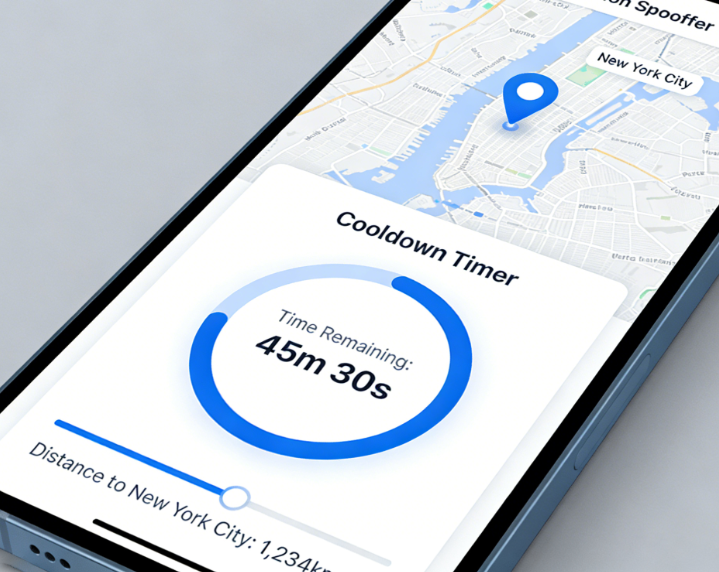
Managing NYC Farming Routes More Efficiently
For players farming high-density areas like Central Park, Bryant Park, or Times Square, movement efficiency and cooldown management become just as important as the coordinates themselves. Poor route planning or unrealistic teleport behavior is one of the most common reasons trainers trigger failed actions or soft bans during long farming sessions.
Because of this, many experienced players now rely on GPS management tools that combine route simulation, joystick movement, and cooldown-aware navigation instead of basic teleport-only systems.
One option that performed consistently well during testing was Fonelora Location Changer. Unlike older emulator-based methods or unstable mock GPS apps, it supports modern iOS and Android devices while providing more flexible movement planning for location-based games.
Key features include:
- GPX-style multi-spot route simulation
- Real-time joystick movement
- Adjustable walking speeds
- GPS teleport mode
- Support for iOS and Android devices
- No jailbreak or root required
- Compatible with Pokémon GO and other GPS-based apps
Basic Setup Process
- Install Fonelora Location Changer on your PC or Mac.
- Connect your mobile device.
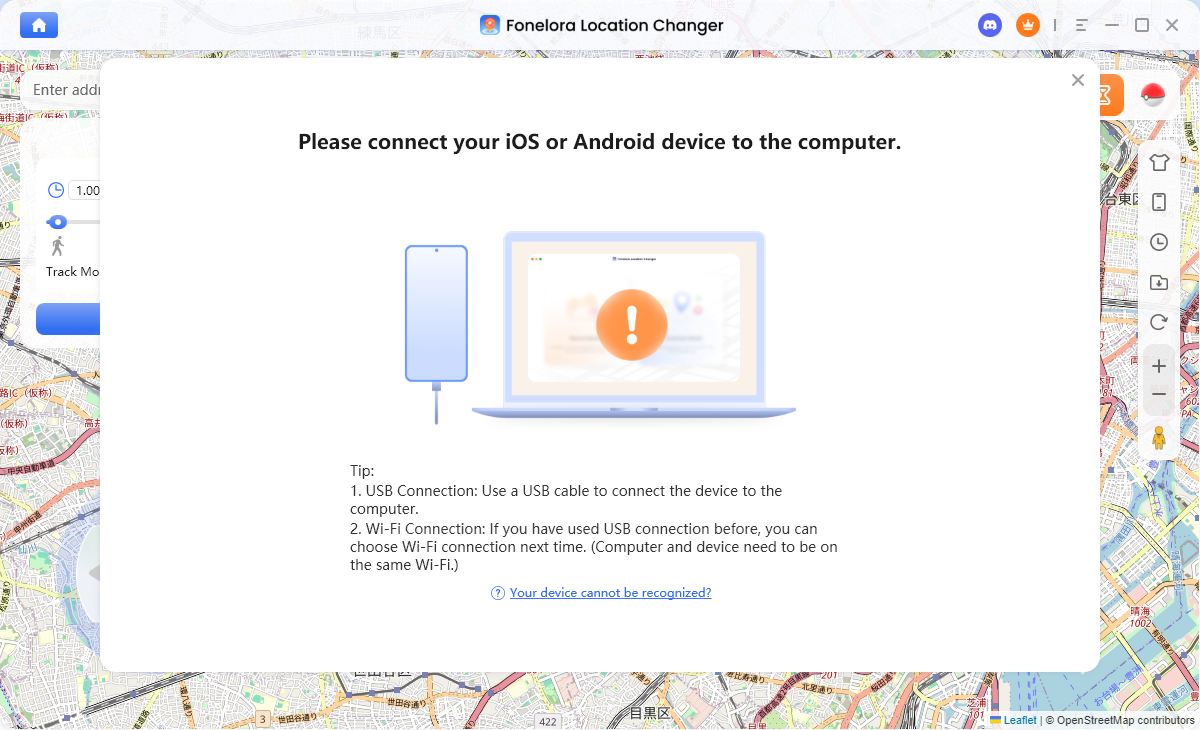
- Select NYC farming coordinates or create a custom walking route.
- Apply the GPS movement simulation.
- Launch Pokémon GO after observing the proper cooldown period.
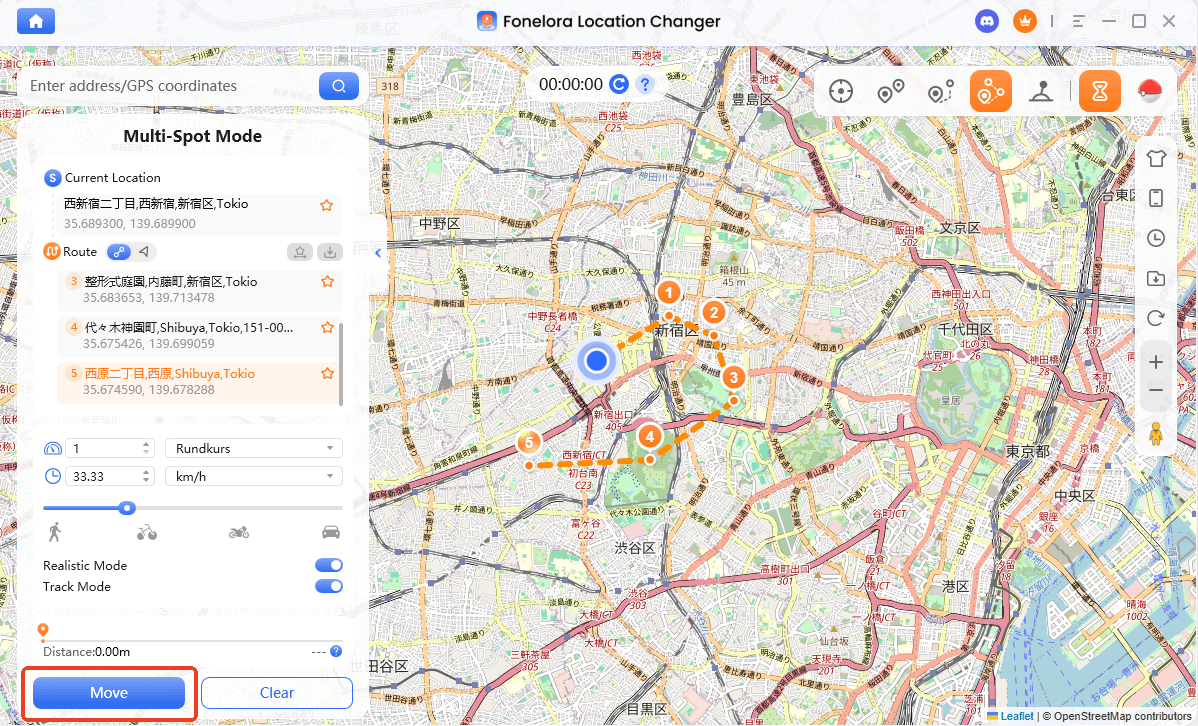
For players managing long farming routes across New York hotspots, modern GPS route management tools can help improve movement efficiency while reducing unnecessary teleport-related risks.
Avoiding the Traps: Why Outdated Coordinate Lists Fail
Players frequently find themselves overwhelmed by scattered information across Reddit and community forums. You might track down a list of popular NYC spots, wait out your 2-hour cooldown, and arrive only to discover an empty map.
This happens because the game environment is dynamic. The developers frequently update the game map, removing outdated stops and shifting Gym locations based on community Wayfarer votes. A highly upvoted Reddit post from 2022 might highlight a massive cluster of stops that simply no longer exists because a sponsored location partnership ended.
Furthermore, community-driven “lure parties” shift based on seasonal events. Following random, unverified lists often leads to dead zones. This is exactly why relying on permanent fixtures of the NYC landscape—like the Bethesda Terrace in Central Park or the enclosed borders of Bryant Park—is the superior strategy. These historic landmarks maintain their dense infrastructure regardless of minor map updates.
Practical FAQ: Real Insights for New York Gameplay
To clear up any remaining confusion about farming in NYC, here are practical answers to the most specific questions players ask.
- What time do raids stop spawning in New York City?
- Raid eggs typically stop hatching around 7:30 PM EST. By 9:30 PM EST, almost all active raids in the city will have concluded for the night. If you are looking to raid in Times Square, ensure you are active between 10:00 AM and 7:00 PM local time.
- Where are the best overlapping nest clusters in Central Park?
- While the park is massive, the two most reliable areas for dense, overlapping nests are Bethesda Terrace (40.7738, -73.9708) and the entrance at Grand Army Plaza (40.7644, -73.9731). Setting a GPX walking route between these two points yields the best results.
- How do modern location apps calculate my cooldown to NYC?
- Premium remote location software now features built-in cooldown logic. When you input New York coordinates, the software reads your last mocked location, calculates the geographical distance, and starts an automatic countdown timer on your screen, removing the need for manual math.
Conclusion and Next Steps
Living far from active Pokémon GO communities can make raids, farming sessions, and event participation feel extremely limited. By using verified New York Pokémon GO coordinates, optimized GPX routes, and proper cooldown management, players can dramatically improve farming efficiency and access some of the most active locations in the game.
However, successful long-distance gameplay depends heavily on realistic movement planning and careful cooldown management. Random teleporting between locations remains one of the most common causes of failed actions and soft bans.
For players looking to manage NYC farming routes more efficiently, tools like Fonelora Location Changer provide flexible joystick movement, route simulation, and GPS management features across modern iPhone and Android devices without requiring jailbreak or root access.
With the right coordinates, movement strategy, and cooldown discipline, you can safely turn New York’s dense Pokémon GO map into one of the most productive farming experiences available.


Hot Topics
