Best Pokémon GO Auto Walker in 2026 (iPhone & Android Tested)
Find the best Pokémon GO auto walker for 2026 with our hands-on guide. We recommend a reliable, low-risk app and explain how to hatch eggs on both iOS and Android as safely as possible.
For many Pokémon Go players, the goal is simple: hatch eggs efficiently without spending hours walking every day. If you’ve been searching for a reliable Pokémon Go auto walker, you’ve likely encountered the frustration of outdated tutorials, vague advice, and the nagging fear of an account ban. Many guides promise a solution but lead to confusing configurations or, worse, don’t even name a specific tool to use.
This guide is different. We tackle these challenges by recommending a specific, tested tool and a clear procedure that works today. We’ll show you how to use a Pokémon Go automatic walking app to log kilometers safely, based on direct testing with the latest game patch. Forget the anxiety and the tedious grind; this is your starting point for achieving more in the game, whether you’re at home or simply unable to get outside.
Quick Answer
Yes, Pokémon GO auto walkers still work in 2026 — but only if you use realistic GPS route simulation instead of risky teleport spoofing. Based on our testing, desktop-based tools like Fonelora Location Changer provide the safest experience for automatic walking, egg hatching, and buddy farming on both iPhone and Android.
Auto Walker Apps vs. Physical Swingers: Which Method is Right for You?
Before choosing a tool, it’s essential to understand the two main categories of walking automation: software-based solutions and physical devices. Each technique has distinct advantages and disadvantages. Making an informed choice now ensures the method you select aligns with your goals, budget, and technical comfort level.
Physical methods, often called phone swingers or rockers, are mechanical cradles that swing your phone back and forth. The game’s Adventure Sync feature registers this movement as steps, slowly accumulating distance. These devices are simple to use but are severely limited in speed, consistency, and overall efficiency.
On the other hand, a software-based Pokémon Go walking simulator alters your device’s GPS data, making the game believe you are walking along a real-world route. This approach offers far more control over speed, distance, and location, making it the preferred solution for serious players looking for results.
To help you decide, here is a direct comparison:
| Feature | Phone Swinger (Physical Device) | GPS Simulation (Software) |
| Success Rate | Moderate | High |
| Time Cost | Very High (Extremely Slow) | Low (Fast & Efficient) |
| Technical Skill | Very Low | Low |
| Safety Risk | Very Low | Low (When Used Correctly) |
| Control & Flexibility | None | High |
As the table shows, while phone swimmers are simple, GPS simulation software offers a vastly more efficient and controllable method for Pokémon Go egg hatching automation.
The Safest Auto Walker: Simulating Natural Movement to Avoid Detection
After evaluating the options, a high-quality GPS simulation tool emerges as the most effective solution. The key to account safety lies in a principle many guides overlook: the system must simulate gradual and natural movement.
Niantic’s Pokémon Go anti-cheat detection systems are primarily designed to flag erratic and physically impossible GPS activity. Instantaneous jumps from one city to another—a practice known as Pokémon Go GPS spoofing or teleporting—are the fastest way to trigger a warning or ban.
Here is the most critical insight for safe auto-walking: your success depends on gradual, route-based GPS data. A reliable tool allows you to set a starting point and an endpoint, then simulates your character walking along actual roads and sidewalks at a plausible speed. Some of the best tools even include a “Variable Speed ” option to mimic the minor speed fluctuations of a real person. This smooth Pokémon Go GPS auto walk is virtually indistinguishable from real-world movement, making it ideal for efficient distance farming. By mimicking a natural walking pattern, you significantly reduce the risk of detection.
Why Most Pokémon GO Auto Walkers Eventually Fail
Many Pokémon GO players start with free joystick apps or outdated spoofing tools because they appear simple at first. The problem is that many of these apps become unstable after game updates.
A common experience looks like this:
- Your character suddenly snaps back to your real location
- GPS movement freezes during route walking
- Rubber-banding interrupts egg hatching
- Teleport jumps trigger cooldown warnings
- Fake GPS apps stop working after iOS or Android updates
These issues not only ruin gameplay efficiency, but can also increase the risk of soft bans or detection flags.
This is why many experienced players now prefer desktop-based GPS route simulators that focus on gradual, human-like movement instead of aggressive teleport spoofing.
Enhanced Safety: Why Fonelora is a Top-Tier Choice for Pokémon Go
While basic GPS simulators get the job done, experienced players often look for tools that prioritize technical logic to bypass increasingly sophisticated detection. Fonelora Location Changer stands out as a highly secure alternative designed specifically to align with the “natural movement” principles we just discussed.
Unlike generic apps, Fonelora includes a dedicated Safe Game Mode. This feature isn’t just about moving from A to B; it uses a specific algorithm to simulate realistic speed fluctuations and movement patterns, significantly reducing the risk of being flagged by Niantic’s anti-cheat system.
Key Value Points for Pokémon Go Players
- Five Movement Modes: From simple teleportation to complex multi-spot routing, Fonelora allows you to simulate walking, cycling, or even driving at customizable speeds.
- 360° GPS Joystick: For precise control during events or while hunting specific spawns, the built-in joystick provides real-time, fluid navigation without leaving your desk.
- Built-in Cooldown Timer: To prevent the common mistake of “teleporting too fast,” the software includes a smart timer that tracks your movement intervals, helping you stay within safe limits.
- No Jailbreak/Root Required: It works seamlessly with both iOS and Android via a stable USB or Wi-Fi connection, keeping your phone’s system integrity intact.
How to Use Fonelora Location Changer for Pokémon Go
Setting up a safe walking route with Fonelora is designed to be intuitive, even for beginners:
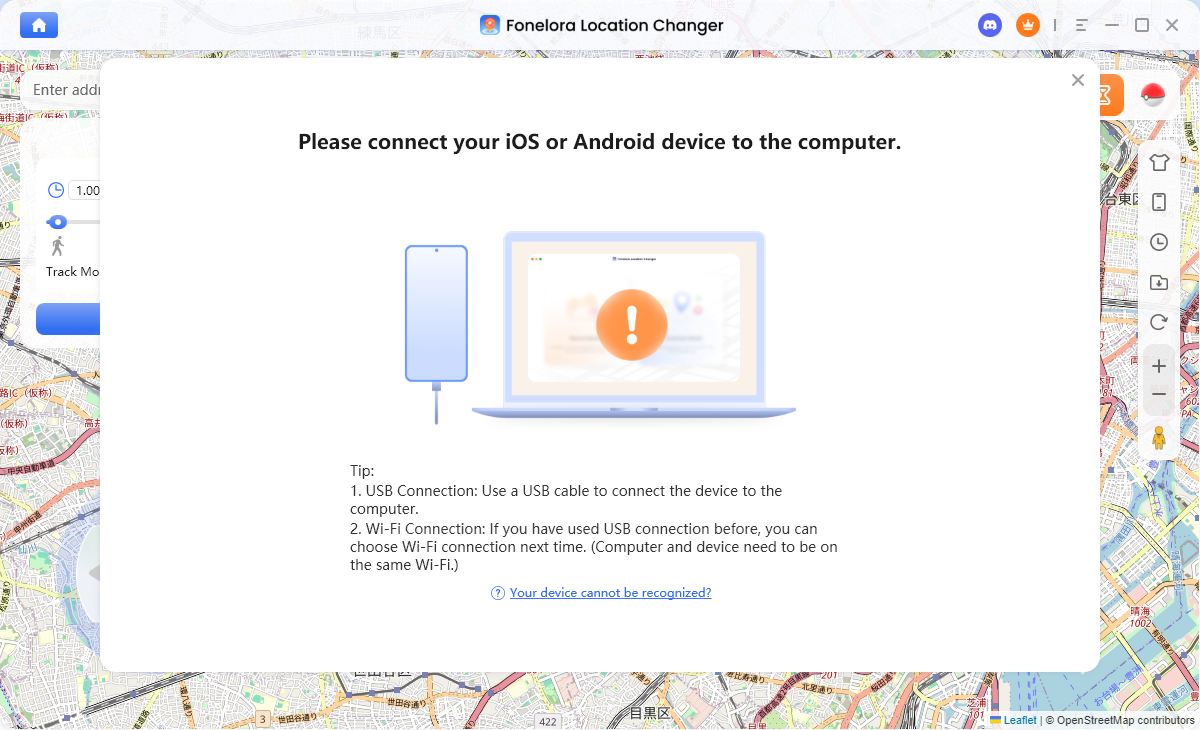
Step 1: Connect Your Device: Download and launch Fonelora Location Changer on your Windows or Mac computer. Connect your iPhone or Android device via USB, Wi-Fi, or Bluetooth.
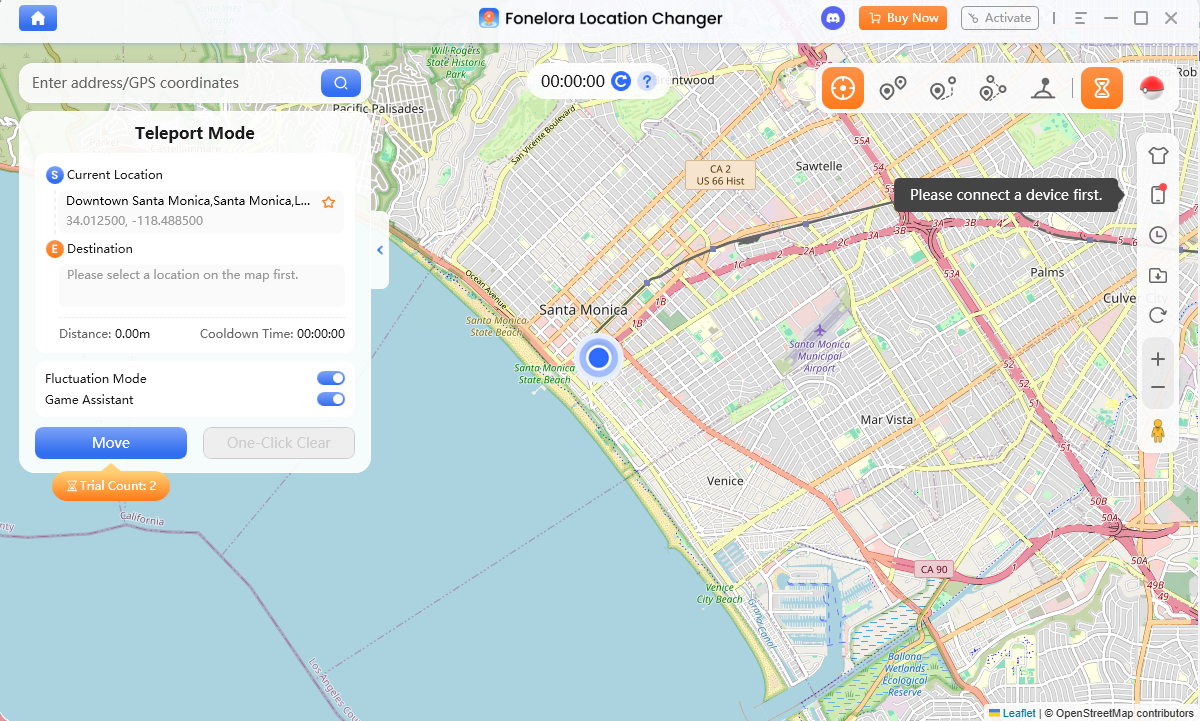
Step 2: Select a Movement Mode: For hatching eggs, choose Multi-Spot Mode. This allows you to click multiple points on the map to create a natural, looping walking path through a park or city center.
Step 3: Adjust Speed and Move: Set your walking speed between 4 km/h and 10 km/h (optimal for egg distance). Click “Move” to begin your automated journey. Your Pokémon Go character will start walking immediately, accumulating kilometers while you focus on other tasks.
Why Fonelora Is the Best Pokémon GO Auto Walker in 2026
After testing multiple Pokémon GO walking tools across both iPhone and Android, Fonelora stood out as the most stable and beginner-friendly option for safe auto walking.
Unlike many outdated mobile spoofing apps, Fonelora focuses on realistic route simulation instead of risky instant teleporting. This makes it significantly safer for long-term egg hatching, buddy farming, and automatic distance tracking.
During testing, the software consistently maintained stable movement speeds without GPS drifting, rubber-banding, or sudden location resets — issues commonly found in free joystick apps.
More importantly, Fonelora supports:
Realistic route walking Adjustable human-like speeds Built-in cooldown reminders iPhone & Android support No jailbreak or root required
For players looking for a Pokémon GO auto walker that still works in 2026, Fonelora provides one of the safest and most reliable solutions currently available.
How to Set Up Your Pokémon Go Route Walker (iOS & Android)
Using a Pokémon Go route walker like Fonelora Location Changer is straightforward, but the initial setup differs slightly between iOS and Android. We’ve broken down the instructions for each platform to eliminate any guesswork.
For iOS Users (iPhone & iPad)
The process on iOS is exceptionally simple because it doesn’t require any complex system modifications like jailbreaking.
1. Connect Your iPhone: Download and launch Fonelora Location Changer on your Mac or Windows computer. Connect your iPhone to the computer using a high-quality USB cable. When prompted on your phone, tap “Trust This Computer ” and enter your passcode.
2. Select a Walking Mode: Once your device is recognized, the software will display a map. In the top right corner, select “Two-Spot Mode ” (for a simple A-to-B walk) or “Multi-Spot Mode ” (for a more complex, looping route).
3. Set Your Route: Click on the map to place your starting pin. Click a second location to set your destination. The software will automatically plot a realistic path along known roads and walkways.
4. Configure Speed: A panel will appear showing the distance. Use the speed slider to set a realistic pace. For hatching eggs and earning buddy candy, a speed between 4 km/h and 10 km/h is optimal. Any speed over 10.5 km/h will not register distance for eggs.
5. Begin Walking: Click the “Go ” button to start the simulation. Your in-game character will now begin walking along the planned route.
For Android Users
Android setup requires a one-time activation of Developer Options. It sounds technical, but it’s just a few taps.
1. Enable Developer Options: On your Android phone, go to Settings > About Phone. Tap on the Build Number seven times in a row. You’ll see a message that says, “You are now a developer! ” [Internal Link Suggestion: Link the preceding phrase to ‘/how-to-enable-android-developer-mode’]
2. Connect Your Phone: Launch Fonelora Location Changer on your computer and connect your Android device via USB. Follow the on-screen prompts to enable USB debugging.
3. Set Mock Location App: Go back to Settings > Developer Options. Scroll down to find and tap on “Select mock location app, “ and choose Fonelora Location Changer from the list.
4. Set Your Route and Speed: Back on your computer, the process is now identical to iOS. Select “Two-Spot ” or “Multi-Spot ” mode, click on the map to create your route, and set your walking speed below 10.5 km/h.
5. Begin Walking: Click “Go ” to start the simulation. Your avatar will start moving in Pokémon Go.
Pro-Tips from Our Testing
Here are a few small but important details we discovered during our hands-on testing that will make your experience smoother:
- For iPhone Users: Before starting a long walk, go to Settings > Display & Brightness > Auto-Lock and set it to “Never. “ We found that if the iPhone screen locks, it can sometimes interrupt the GPS simulation.
- For Android Users: After restarting your phone, you may need to re-select the “Mock location app ” in Developer Options. It’s a quick check that can save you from wondering why it’s not working.
- Use a Good Cable: A cheap or frayed USB cable can cause connection drops. If you’re having issues with the software recognizing your phone, trying a different cable is the first thing you should do.
Risk Management: How to Auto Walk Without Getting Banned
Is using an autowalker for Pokémon Go safe? Yes, if you are disciplined. Your primary objective is to make your simulated movements appear human. Niantic’s systems look for physically impossible behavior. Following a few simple rules is the best way to keep your account in good standing.
The biggest risk is not walking but teleporting. Always use a cooldown period after jumping to a new location. A cooldown is the time you must wait after a GPS jump before interacting with the game again. Not waiting is an instant red flag.
Cooldown Chart (Rule of Thumb)
| Distance Jumped | Minimum Cooldown Time |
| 1 km – 10 km | 1-2 Minutes |
| 10 km – 100 km | 10-30 Minutes |
| 100 km – 500 km | 30-60 Minutes |
| 500 km – 1,500+ km | 2 Hours (Max) |
The Do’s and Don’ts of Safe Auto-Walking
| ✅ Do | ❌ Don’t |
| Set a realistic speed. Keep speeds between 4-10 km/h for walking. | Don’t travel at superhuman speeds. Setting your speed to 50 km/h is an obvious red flag. |
| Use route-based walking. Always simulate movement along real roads. | Don’t teleport and play immediately. Jumping across countries and instantly catching a Pokémon is the fastest way to get banned. |
| Wait out cooldown timers. After a long-distance jump, close the game and wait the recommended time before reopening it. | Don’t run the auto walker 24/7. Give your account natural-looking breaks, just like a real person would. |
| Close Pokémon Go first. Before changing your location in the software, always close the game app on your phone. | Don’t use untrusted or modded apps. Stick to well-reviewed desktop software from reputable developers. |
FAQs on Pokémon Go Auto Walker
This section provides concise answers to the most common questions about using an auto walker for Pokémon Go.
Q1. What tools are reliable for auto walking on iOS and Android?
Desktop applications like Fonelora Location Changer that connect to your phone via USB are the most reliable. They offer greater stability than standalone mobile apps, which often require risky procedures like jailbreaking (iOS) or rooting (Android).
Q2. How do I use an auto walker in Pokémon Go?
You connect your phone to a computer running GPS simulation software. From the computer, you plot a route on a map, set a realistic walking speed (under 10.5 km/h), and start the simulation. Your in-game avatar will then walk along that path automatically.
Q3. Is auto walking safe for my account?
Auto walking is low-risk when done correctly. The key to safety is simulating human-like movement: use realistic walking speeds, follow real-world routes, and strictly follow cooldown timers after teleporting. Avoid impossible actions, like jumping from one continent to another in seconds.
Q4. What happens if I am detected using an auto walker?
Niantic typically follows a three-strike policy. The first strike is a warning. The second results in a temporary suspension (soft ban). The third strike can lead to permanent account termination. By following the safe practices in this guide, you can significantly minimize the risk of detection. [Internal Link Suggestion: Link the preceding phrase to ‘/understanding-pokemon-go-terms-of-service’]
Q5. Does auto walking hatch eggs faster?
Yes. It enables Pokémon Go egg hatching automation, allowing you to accumulate distance consistently, even overnight, at an optimal speed. This hatches eggs much more quickly and reliably than manual walking.
Q5. Can auto walking be combined with teleporting?
Yes, but with extreme caution. After teleporting to a new location, you must observe the cooldown period based on the distance before you interact with the game (catching, spinning a stop, etc.). A safe practice is to teleport, wait the full cooldown time with the game closed, and then use the auto-walking feature to explore the new area naturally.
Sum It Up
The tedious process of walking miles just to hatch a few eggs can be a major hurdle. By choosing a reliable Pokémon Go walking simulator, you are adopting a smarter strategy for managing your time. This method puts you in control, allowing you to achieve your in-game goals for efficient distance farming and egg hatching without disrupting your daily routine.
Instead of facing the frustration of vague guides or the fear of account suspension, you now have a specific tool, a clear procedure, and a set of safety rules tested by real users. You can apply this technique confidently to make steady progress, complete your Pokédex, and enjoy the game on your own terms. It’s time to start logging those kilometers intelligently.
More Related Articles



Joy Taylor is a seasoned technical writer with over a decade of experience in mobile technology. At iMobie, she specializes in producing in-depth content on iOS data recovery, iPhone unlocking solutions, and iOS troubleshooting.
Product-related questions? Contact Our Support Team to Get Quick Solution >
