When Lena, a dedicated player who enjoys completing in-game collections, first discovered the postcard feature, she felt a mix of curiosity and frustration. While opening daily gifts, she realized these postcards were the key to unlocking new regional butterfly patterns, but her understanding of the exact mechanics was limited. Finding friends from all the required geographic regions felt impossible, and the lack of clear guidance on tracking her progress only added to her anxiety.
If you feel like completing this collection is a frustrating ordeal, you are in good company. This guide provides a clear, tested procedure to solve these exact problems. We will explain the mechanics of the gift pinning system, clarify how your encounters evolve, and show you a proven method to safely build a global friend list. By following these steps, you can regain control over your Pokedex and capture every beautiful regional design.
Table of ContentsHide
How to Get Vivillon in Pokemon GO: Mastering the Postcard Method
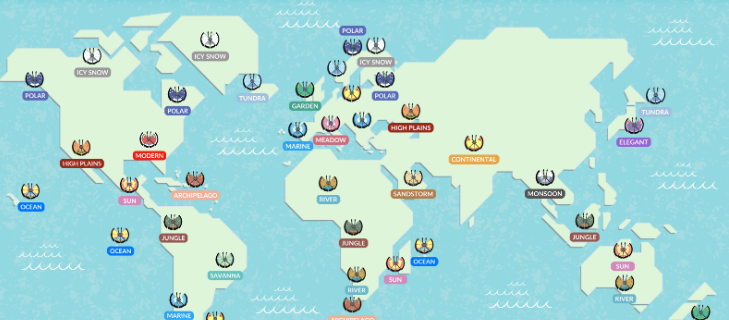
Community researchers and data analysts confirm that the core of this collection is strictly tied to the game’s internal postcard and gift system. Each postcard you receive from a friend contains geolocation data. When you pin a postcard from a specific area, the game registers a point toward a geographic habitat. Accumulating enough points in a specific habitat unlocks a direct encounter with a Scatterbug that is genetically linked to that region.
This mechanical insight was the exact moment of clarity for Lena. Instead of randomly opening her daily gifts, she realized pinning postcards was the optimal solution for filling her missing Pokedex entries.
To trigger your encounters successfully, you must understand the progression math. The requirement for unlocking an encounter resets and increases as you progress through a region’s medal:
1st Encounter: Requires 3 pinned postcards from the region.
2nd Encounter: Requires 9 pinned postcards from the region.
3rd Encounter and Beyond: Requires 15 pinned postcards from the region. This counter resets and continues indefinitely at 15 for all future encounters.
Here is the exact procedure you must follow to apply these points:
1. Navigate to your Friend List: Open the main menu, tap your trainer profile, and swipe to the “Friends” tab to locate a user who has sent you a gift.
2. Select the Gift: Tap the friend’s name to open the gift viewing screen. Do not press the “Open” button immediately.
3. Pin the Postcard: Locate the small pushpin icon next to the postcard image. Tap this icon to save the location to your Postcard Book. The pin will change color to indicate it is saved.
4. Claim Your Items: Once the postcard is successfully pinned, you may proceed to open the gift to collect your standard items (like Pokeballs and potions).
The Crucial Missing Step: Tagging Your Scatterbug Immediately
There is a massive, incredibly frustrating oversight that many players encounter during this process: all Scatterbugs look exactly the same in your Pokemon storage.
If you catch ten Scatterbugs from ten different regions and simply leave them in your inventory, you will have absolutely no way of knowing which one evolves into an Ocean pattern and which evolves into a High Plains pattern.
To avoid this disaster, you must identify your catches immediately. The moment you finish catching a Scatterbug, tap the pen icon next to its name and rename it to its corresponding region (e.g., “Ocean,” “Icy Snow”). Alternatively, you can use the game’s tagging system to create custom color-coded tags for each region. Doing this immediately saves you from wasting hundreds of hard-earned candies on the wrong regional variation later.
Evolving Spewpa: Candy Mechanics and Tracking Progress
Capturing your first regional bug is only the beginning of the collection challenge. Many casual players struggle with uncertainty about how the evolution process works, but the mathematics behind the procedure are straightforward.
The Candy Cost Breakdown
To evolve Spewpa into its final form, you must gather an exact amount of species-specific candy.
| Evolution Stage | Starting Pokemon | Target Pokemon | Candy Required |
| Stage 1 | Scatterbug | Spewpa | 25 Candies |
| Stage 2 | Spewpa | Vivillon | 100 Candies |
| Total Cost | Scatterbug | Vivillon | 125 Candies |
Because you need 125 candies per regional variation—and there are 18 variations in total—you will need a massive 2,250 candies to complete the entire set. To accelerate this procedure, apply a Pinap Berry or Silver Pinap Berry during every single catch screen. This technique doubles your candy output per catch, saving you weeks of grinding.
Tracking Your Regional Progress
To solve the lack of clear guidance on tracking your progress, you must rely on the game’s built-in medal dashboard.
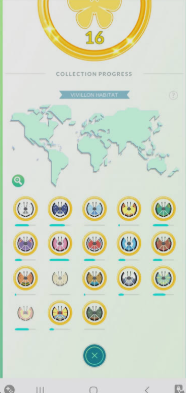
1. Tap your trainer avatar in the bottom-left corner of the map screen.
2. Scroll down to the “Medals” section.
3. Locate and tap the butterfly-shaped Vivillon Collector medal.
This interface displays 18 separate progress bars, showing exactly how many postcards you have pinned for a specific region and the exact number required to trigger your next encounter.
Building a Global Friends System for Postcards
Because completing the collection requires postcards from all over the world, players inevitably face difficulty sourcing gifts from missing geographic regions. Expanding your global network is the single most effective solution.
If you just randomly ask for codes on social media, finding rare regions like Icy Snow or Sandstorm can be exhausting. Below is an objective comparison of the most popular tools, followed by actionable advice on how to use them effectively:
| Networking Tool | Success Rate | Time Cost | Safety / Scam Risk | Best For |
| PokeGenie App | Very High | Low | Very Low | Passively gaining global friends via remote raids. |
| Campfire App (Official) | Moderate | Moderate | Very Low | Safe, first-party local and global networking. |
| Discord Communities | High | Low | Low | Actively searching for specific missing regions. |
| Reddit (r/PokemonGoFriends) | Moderate | High | Low | Bulk adding players quickly, though rare regions are hard to find. |
Actionable Networking Advice: Instead of begging for friend codes on crowded Reddit threads, use an app like PokeGenie to host remote raids. When you host a raid, five players from around the world will add you as a friend to join the battle. After the raid is over, send them a gift. This naturally and effortlessly builds an international friend list without the frustration of hunting down specific region codes.
Complete List of Regions and Visual Patterns
Understanding the exact locations and what the resulting wings look like is essential for completing your collection. The game categorizes the globe into 18 distinct habitats. The geographic origin of the pinned postcard strictly determines the visual appearance of the butterfly you will encounter.
Here is a detailed breakdown of the habitat regions and the corresponding wing colors to guide your networking strategy:
- Archipelago: Earthy brown wings with striking teal and blue bands. Focus your search on players residing in Caribbean nations and South Africa.
- Continental: Striking yellow and black geometric shapes. This common pattern covers large portions of Central Europe and Central Asia.
- Elegant: Rich purple wings with beautiful gold accents. Exclusively tied to postcards originating from Japan.
- Garden: Vibrant green upper wings fading into black. Sourced from the United Kingdom, Ireland, and New Zealand.
- High Plains: Warm orange and sandy brown tones. Extremely common for players networking within the Western United States and Eastern Europe.
- Icy Snow: Crisp, pure white wings. Requires friends located in Northern Canada or Northern Europe (such as Finland).
- Jungle: Deep jungle green with dark brown edges. Sourced from equatorial regions including Colombia, Central Africa, and Indonesia.
- Marine: Deep navy blue with lighter blue accents. Linked to coastal areas around the Mediterranean Sea and Chile.
- Meadow: Soft pinks with delicate floral patterns. Found primarily through postcards sent from France and Italy.
- Modern: A mix of red, white, and blue segments. The most common pattern for players in the Central and Eastern United States.
- Monsoon: Distinctive gray and white pixelated patterns. Sourced from players residing across Southeast Asia.
- Ocean: A highly sought-after red and yellow sunset gradient. Requires postcards from Hawaii or the Galapagos Islands.
- Polar: Cool blue and bright white segments. Covers extremely cold climates like Alaska, Northern Canada, and Sweden.
- River: Flowing patterns of blue, brown, and yellow. Found in regions bordering major river systems, including Egypt, South Africa, and South Australia.
- Sandstorm: Tan and brown desert camouflage. Another incredibly rare pattern, sourced strictly from the Middle East.
- Savanna: Bold yellow and green stripes. Requires networking with players in Brazil and Northern Australia.
- Sun: Bright orange and yellow sunburst designs. Sourced from sunny, arid regions like Mexico and Madagascar.
- Tundra: Frosty cyan and white tones. Linked to postcards from Iceland and Northern Japan.
Troubleshooting the Postcard Collection Mechanic
Even when using a solid strategy, encounters sometimes fail to trigger. Troubleshooting these obstacles requires a thorough understanding of the limits within the gift pinning system.
Daily Personal Pinning Limits
The most frequent error players make is misunderstanding daily storage limits. You can only pin up to three of your own postcards per day to count toward your progression. However, there is absolutely no daily cap on pinning postcards sent to you by friends, as long as you have inventory space in your Postcard Book.
The Pin-and-Unpin Technique
If your Postcard Book becomes full, the game will present an error message and prevent you from saving new gifts. To solve this, you can pin a postcard to register the regional point, and then immediately unpin it. The system will still record the brief pin toward your Vivillon Collector medal. This technique ensures you continue to make progress on your regional encounters without constantly needing to delete old postcards to free up inventory space.
Order of Operations
Finally, you must tap the pin icon before opening the gift. If you open a gift without pinning the postcard first, the gift disappears from your inventory, and you lose the opportunity to apply that location to your progress.
Helpful Tool for Collecting Vivillon Patterns
Collecting every Vivillon pattern can be challenging because different forms are tied to specific geographic regions around the world. For Trainers who want to explore location-based Pokémon GO features more conveniently, FoneLora Location Changer can be a useful tool.
FoneLora Location Changer allows iPhone and Android users to change their GPS location, simulate movement, and explore different virtual regions with just a few clicks. This can help players access a wider variety of location-based Pokémon GO experiences and better understand where different Vivillon patterns originate.
Frequently Asked Questions
To help you master this game mechanic, here are direct, clear answers to the most common questions regarding the collection procedure.
- What is Vivillon in Pokemon GO?
- Vivillon is a unique Bug/Flying-type Pokemon celebrated for its varied wing designs. Its permanent appearance is directly determined by the real-world geographic location of the postcards you save in-game.
- How do you get Vivillon in Pokemon GO?
- You obtain this creature by pinning gifts sent from your friends. This action registers geographic points that unlock an encounter with Scatterbug, its unevolved form, which you catch and later evolve.
- How does the postcard system unlock encounters?
- Vivillon is a unique Bug/Flying-type Pokemon celebrated for its varied wing designs. Its permanent appearance is directly determined by the real-world geographic location of the postcards you save in-game.
Conclusion
Collecting every Vivillon pattern in Pokémon GO is a rewarding challenge that encourages Trainers to connect with players from around the world and explore different regions. By pinning postcards, tracking regional habitats, and staying active in the Pokémon GO community, you can gradually complete your Vivillon collection.
If you’d like a more flexible way to explore location-based Pokémon GO features, FoneLora Location Changer is worth considering. It allows you to customize your virtual location and discover different regional experiences, making your journey toward a complete Vivillon collection even more enjoyable.


Hot Topics
