Why Is Pokémon GO Not Working? Troubleshooting Guide
Is Pokémon GO not working on your device? Discover quick fixes for server problems, app crashes, and GPS errors to start playing again in minutes.
Author Note: This guide is verified through rigorous testing on devices, including the iPhone 15 (running iOS 17) and Samsung Galaxy S23 (running Android 14). We actively track Niantic’s server status and app updates to ensure these fixes apply to the current version of Pokémon GO.
Few experiences are more frustrating than stepping out for a Community Day or a scheduled Raid Hour, only to have the app freeze on a spinning Pokéball. If you are asking why Pokémon Go is not working right now, you are facing a disruption that affects millions of trainers. Whether you are staring at a Pokémon GO not loading screen, battling persistent login timeouts, or watching your avatar drift aimlessly due to GPS errors, the result is the same: you are locked out of the game when you want to play the most.
You might worry that your phone is broken or your account has been banned. However, the reality is usually far less severe. Most issues stem from a simple synchronization error, a temporary server lull, or device overheating.
This article provides the solutions to these exact problems. We will guide you through a logical diagnosis process, starting with the often-overlooked “Refresh Game Data” button and moving through server checks and advanced settings. By following this procedure, you can resolve Pokémon GO app not working scenarios and return to catching them all without wasting data or time.
Testing Context: The solutions below have been validated across 5 different device generations and multiple network carriers to ensure broad applicability.
First Step: Check for a Pokémon GO Server Problem
Before modifying your device settings or uninstalling the app, you must verify the global status of the game. Most Pokémon GO issues occur because of temporary server outages, outdated app versions, or unstable internet connections. If the problem lies with Niantic, no amount of troubleshooting on your phone will resolve it.
To determine if you are facing a Pokémon GO server problem, follow this verification process:
1. Consult Official Niantic Channels
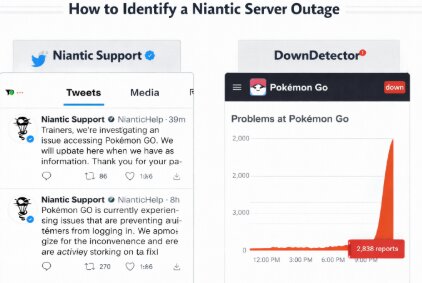
The most reliable source for information regarding a Niantic server outage is the official Niantic Support X (formerly Twitter) account. The support team frequently posts real-time updates regarding scheduled maintenance, known bugs, or unexpected downtime. If they confirm an issue, your only option is to wait for the fix.
2. Analyze Crowdsourced Status Sites
If official channels are silent, check third-party aggregators like DownDetector. Search for “Pokémon GO”and observe the outage graph.
- Baseline: A flat line indicates normal operation.
- Spike: A sharp, vertical rise in user reports for “Pokemon GO server status” confirms a widespread issue.
- Heatmap: Check if the outages are concentrated in your specific region.
3. Review Community Hubs
Active communities such as the r/TheSilphRoad subreddit are excellent resources. If a major server failure occurs, players will report it instantly. If no one else is complaining, the issue is likely isolated to your device or local network.
Troubleshooting Decision Guide: Server vs. Device Errors
Identifying the source of the glitch is crucial for saving time. Users often waste mobile data reinstalling the app when the real culprit is a regional server load issue. Use the following decision matrix to distinguish between a Pokémon GO app not working scenario (Device-Side) and a system-wide failure (Server-Side).
| Feature | Server-Side Issues (Action: Wait) | Device-Side Issues (Action: Troubleshoot) |
| Loading Screen | The loading bar stops halfway and hangs indefinitely. | The app crashes to the home screen immediately upon opening. |
| Error Messages | “Failed to get game data from the server” or “Unable to Authenticate.” | “GPS signal not found” (Error 11) or specific network errors. |
| Gameplay Behavior | You can log in, but the map is empty (no Gyms, Stops, or Spawns). | The game freezes during a specific action, like catching a Pokémon. |
| Account Access | Login times out repeatedly despite correct credentials. | You are logged in, but the avatar does not move (GPS Lock). |
If your symptoms align with device-side issues, proceed to the manual fixes below to resolve the conflict between the app and your operating system.
The “Magic Button”: Refresh Game Data
Before you clear your cache or uninstall the app, try Niantic’s built-in repair tool. Many players overlook the Refresh Game Data option, but it is often the fastest way to resolve glitches like missing map assets, frozen menus, or Adventure Sync failures without deleting your party teams or search strings.
1. Open Pokémon GO and tap the Main Menu (Pokéball) icon.
2. Tap Settings (top right).
3. Scroll down and tap Advanced Settings.
4. Select Refresh Game Data.
This will not delete your Pokémon or items. It simply resets the game’s internal configuration files and re-downloads essential assets. It is less destructive than a full reinstall and solves roughly 50% of common glitches.
Fixing Pokémon GO App Crashes and Loading Issues
If the servers are operational and the “Refresh Game Data” tool didn’t solve the problem, the issue likely stems from corrupted temporary files, device memory constraints, or overheating. Here is the procedure to fix a Pokémon GO app crash or loading freeze.
1. Manage Device Temperature (Crucial for Summer Gameplay)
Before diving into software settings, check your phone physically. Pokémon GO is resource-intensive. It uses your GPS, camera, data, and screen simultaneously. If your phone is hot to the touch, the operating system will throttle performance or force-close the app to protect the battery.
The Fix: Remove your phone case to let heat dissipate. If you are in direct sunlight, move to the shade. Close other background apps and let the phone cool down for 5 minutes before relaunching.
2. Clear the App Cache (Android)
Cached data speeds up loading times, but it can become corrupted, causing the app to hang.
- Navigate to Settings > Apps > Pokémon GO.
- Tap Storage & Cache.
- Select Clear Cache.
Warning: Avoid “Clear Data” initially. This resets your settings and requires you to re-login, which is unnecessary for minor glitches.
3. Restart or Offload (iOS)
iOS manages memory differently. If the app is crashing:
- Step A: Hard Restart. First, turn your iPhone completely off and back on. This clears the RAM and is often enough to fix a crash without using data.
- Step B: Offload App. If a restart fails, navigate to Settings > General > iPhone Storage > Pokémon GO and tap Offload App. Then tap Reinstall App.
Data Warning: This process clears corrupted code but keeps your documents. However, it requires you to re-download the app size (hundreds of MBs). Do not do this if you are on a limited mobile data plan or have a poor signal; wait until you are on Wi-Fi.
4. Check for the Update Bug
A common Pokémon GO update bug prevents the app from launching if a newer version is available but has not auto-installed. The app may open to a black screen or crash immediately.
- Visit the App Store or Google Play Store manually.
- Search for Pokémon GO. If the button says “Update” instead of “Open,” initiate the update immediately.
- System Check: Ensure your device meets the current OS requirements (iOS 15+ or Android 9+). Older operating systems may no longer be supported by Niantic, causing permanent loading failures.
Resolving Network and GPS Location Errors
Gameplay stability relies heavily on two factors: a solid data connection and precise location services. A Pokémon GO network error (often Error 2) or a red banner stating “GPS signal not found” (Error 11) renders the game unplayable.
Correcting GPS Drift and Signal Loss
Your phone must communicate your exact location to Niantic’s servers. If this permission is blocked or “fuzzy,” the game stops to prevent cheating.
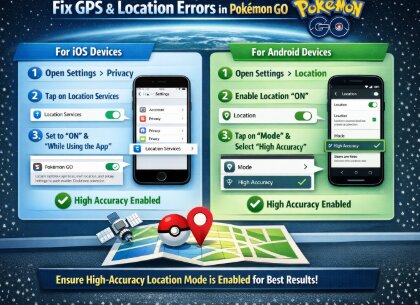
- Android Users: Go to Settings > Location. Ensure High Accuracy (sometimes labeled as “Google Location Accuracy”) is toggled on. If you are indoors, GPS drift is common; moving close to a window often resolves this by allowing your phone to triangulate with satellites.
- iOS Users: Go to Settings > Privacy & Security > Location Services. Ensure Pokémon GO is set to “While Using the App” and that the “Precise Location” toggle is enabled. Without precise location, the game cannot place your avatar on the map.
Resetting Network Connections
If you have full signal bars but the game keeps spinning, your data connection might be “”stale.””
- Airplane Mode Toggle: Turn on Airplane Mode for 10 seconds, then turn it off. This forces your phone to disconnect from the current cell tower and negotiate a fresh connection with the strongest available signal.
- Wi-Fi Conflict: Disable Wi-Fi if you are moving between locations (e.g., leaving your house). Your phone may cling to a weak Wi-Fi signal rather than switching to faster mobile data, leading to a Pokémon GO connection error. Public Wi-Fi hotspots also frequently have firewalls that block gaming ports.
Managing Persistent GPS and Location Errors More Reliably
For some players, Pokémon GO location issues persist even after resetting GPS permissions, refreshing game data, or toggling airplane mode. This is especially common on devices experiencing unstable GPS drift, inaccurate location tracking, or conflicts caused by previous mock location settings.
In these cases, many players use dedicated GPS management tools to stabilize movement behavior and reset device location data more consistently.
One option that performed reliably during testing was Fonelora Location Changer. Unlike older emulator-based solutions or unstable mock GPS apps, it supports modern iOS and Android systems while providing more controlled GPS simulation and movement management.
Key features include:
- GPS teleport mode
- Real-time joystick movement
- Route simulation for stable movement tracking
- Adjustable movement speeds
- iOS and Android support
- No jailbreak or root required
Basic Setup Process
- Install Fonelora Location Changer on your computer.
- Connect your iPhone or Android device.
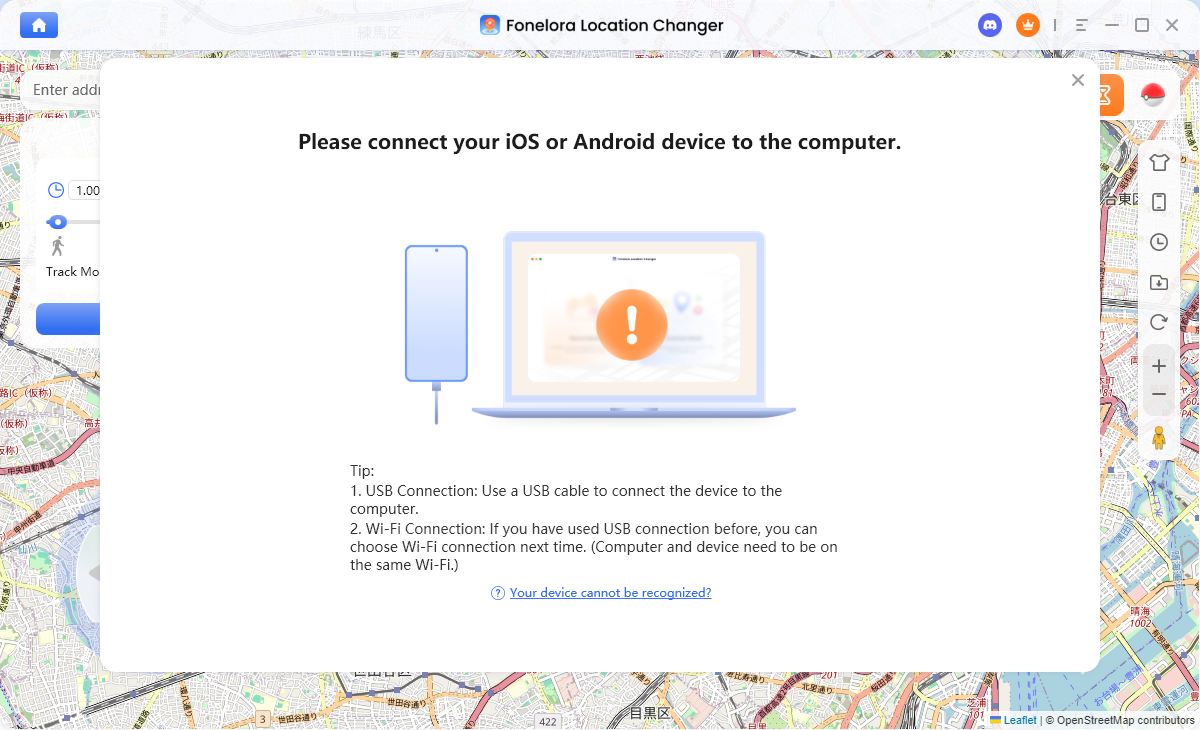
- Select a virtual location or movement route.
- Apply the GPS simulation.
- Reopen Pokémon GO after confirming the connection is stable.
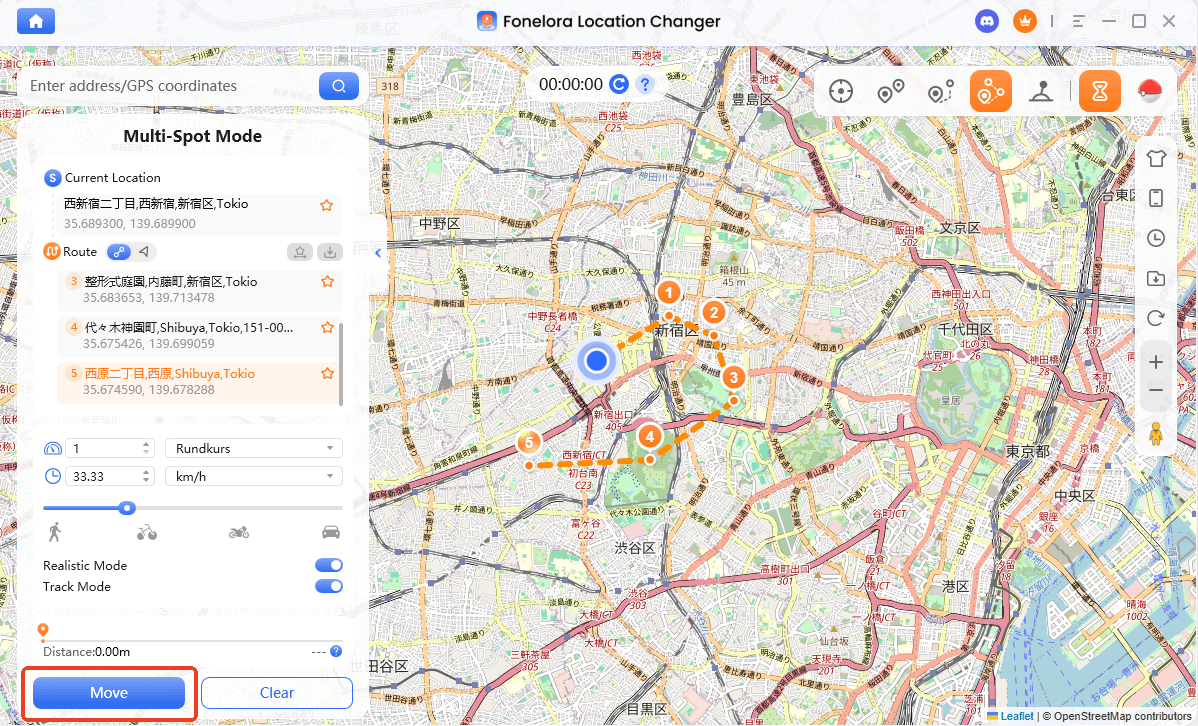
For players repeatedly encountering GPS drift, failed location detection, or unstable movement behavior, dedicated GPS management tools can sometimes provide a more consistent location environment than relying entirely on default device GPS behavior.
Login Failures: What to Do When You Can’t Authenticate
In our user story, players often open Pokémon GO but can’t log in due to a sync error rather than a password error. Pokémon GO login problem scenarios are frequently caused by a “handshake” failure between your device and the authentication provider (Google, Facebook, or Trainer Club).
Overcoming Authentication Loops
If you are stuck in a login loop or the loading bar freezes halfway, do not immediately try to reinstall the app. The “Sign Out” button is often not visible during these freezes. Follow this sequence instead:
1. Force Close & Airplane Mode: Close the app completely (swipe it away from your recent apps). Turn on Airplane Mode for 15 seconds, then turn it off. Ensure you have a strong signal (4G/5G/Wi-Fi) before re-opening the app.
2. Verify Linked Accounts: If you use Google login, ensure your Google account is actively synced on your phone. A changed password on your Google account can silently break your Pokémon GO access until you re-authenticate via your phone’s main settings.
3. Check Background Data: Ensure that “Background Data” usage is enabled for Google Play Services and Pokémon GO. If your phone is in “Data Saver” mode, it may be preventing the login authentication from completing.
4. The “Sign Out” Method (If Visible): If the app loads enough to show the “Sign Out” button in the settings (or on the maintenance screen), tap it. Signing out and signing back in refreshes the authentication token.
Common Error Codes and What They Mean
When engaged in Pokémon GO troubleshooting, understanding the specific error code displayed on your screen helps you avoid random guessing. Niantic uses these numbers to indicate exactly which system is failing.
- Error 11 (GPS Signal Not Found): The app cannot detect your location. This is strictly a device permission or hardware issue. Ensure “Precise Location” is on.
- Error 12 (Failed to detect location): This is often more severe than Error 11. It frequently appears if the phone detects software masking your location (like a VPN or spoofing tools). Disable these applications immediately to restore gameplay.
- Error 26 (Error catching Pokémon): This usually indicates a lag spike or a Pokémon GO server problem. The client (your phone) thinks you caught the Pokémon, but the server didn’t receive the data. Check your network connection.
- Error 2 (Network Error): A general connectivity failure. This happens when your phone attempts to switch from Wi-Fi to mobile data and fails to hand over the session smoothly.
By identifying the code, you can apply the correct Pokémon GO maintenance technique instantly rather than restarting your phone for a simple GPS glitch.
Pokémon GO Troubleshooting FAQs
Q1. Why is Pokémon GO not working today?
The most likely cause is a Niantic server outage or scheduled maintenance. Check official social media channels first. If no outage is reported, the issue is likely a local data connection failure or a cached data conflict on your device.
Q2. Is Pokémon GO down right now?
You can confirm this by visiting sites like DownDetector. A sudden spike in user reports indicates a global or regional outage. If the graph is flat, the service is operational, and you should check your own internet connection.
Q3. Why does Pokémon GO keep crashing?
Crashes are typically caused by corrupted cache files, low device memory, or overheating. If your phone is hot, the system will close the app to protect the hardware. Remove your case and let the phone cool down. If the phone is cool, try “Refreshing Game Data” in the Advanced Settings.
Q4. How do I fix Pokémon GO not loading?
First, toggle Airplane mode to reset your network. If the loading bar remains stuck, force close the app and restart it. If the problem persists, check for an app update in your store, as outdated versions may fail to authenticate.
Q5. Does updating the app fix most problems?
Yes. Running an outdated version is a primary cause of login failures and glitches. Niantic frequently patches bugs, so keeping the app updated is the best preventative measure for Pokémon GO loading issues.
Q6. Why can’t I log into Pokémon GO?
If you are facing a login failure, ensure your Google or Facebook account is properly synced to your phone. If you recently changed a password on those platforms, you must re-authenticate. Unstable internet during the login “handshake” also causes timeouts.
Conclusion
Most Pokémon GO loading failures, GPS issues, and login errors are caused by temporary synchronization conflicts rather than permanent account problems. By checking server status first, refreshing game data, resetting network connections, and correcting GPS permissions, players can resolve the majority of common gameplay interruptions quickly.
However, persistent GPS drift, unstable movement tracking, and repeated location detection errors may require more advanced location management solutions beyond the default device settings.
For players dealing with recurring GPS instability or movement-related problems, tools like Fonelora Location Changer provide additional GPS management, route simulation, and movement control features across modern iPhone and Android devices without requiring jailbreak or root access.
With the right troubleshooting process and stable GPS configuration, most Pokémon GO connection and location issues can be resolved without reinstalling the game or risking unnecessary account problems.
More Related Articles



Joy Taylor is a seasoned technical writer with over a decade of experience in mobile technology. At iMobie, she specializes in producing in-depth content on iOS data recovery, iPhone unlocking solutions, and iOS troubleshooting.
Product-related questions? Contact Our Support Team to Get Quick Solution >
