How Long Does Verizon Keep Text Messages and Deleted Messages?
How long does Verizon keep text messages or deleted message records? Learn the difference between message content, 90-day usage records, Verizon Cloud backups, and ways to recover deleted Verizon texts on Android or iPhone.
If you deleted an important Verizon text, the first thing to understand is that message content, text-message records, and backed-up messages are not the same thing. Verizon does not currently promise that the content of every SMS or MMS will remain on its network for a fixed number of days. However, My Verizon can provide recent messaging activity details, while messages that were synced to Verizon Cloud or saved on your phone may have separate recovery options.
This guide explains how long Verizon keeps different types of text-message information, what changed after Verizon Messages (Message+) was discontinued, and what you can try if the message itself has already disappeared from your phone.
How Long Does Verizon Keep Text Messages?
There is no single retention period that applies to every kind of Verizon text-message information. The answer depends on whether you mean the actual message content, the usage record showing when and where a message was sent, or a copy of the message stored in a backup.
| Type of Information | What May Be Available | Important Limitation |
| SMS/MMS content on Verizon’s network | No fixed consumer-access retention period is currently guaranteed | Verizon’s current messaging terms state that it has no obligation to retain messages and may delete them after delivery |
| My Verizon text records | Up to about 90 days of recent messaging activity | Records show details such as date, time, and phone numbers, not the message body |
| Verizon Cloud synced texts | Eligible Android devices can sync messages to Verizon Cloud | Deleting a message on the device can also delete the cloud copy during the next sync |
| Messages stored on the phone | They may remain until you delete them or the messaging app removes them | Phone storage is separate from Verizon’s network records |
Does Verizon Still Keep Deleted Text Content for 10 Days?
Older Verizon support responses stated that SMS content was typically retained for only a few days and never more than about 10 days. That information is the source of the widely repeated “240 hours” answer.
However, you should not treat 10 days as a current recovery window or guarantee. Verizon’s current Advanced Messaging terms state that Verizon has no obligation to retain messages and deletes delivered messages as part of normal service operation. Content that still exists in network or backup systems may also be preserved when required by lawful process.
If you need message content for a legal matter, contact Verizon or the appropriate legal authority promptly rather than assuming the content will remain available for 10 days.
How Far Back Do Verizon Text Records Go?
For ordinary account access, Verizon support information indicates that My Verizon can display approximately 90 days of text-message activity records. These records can include the date, time, sending or receiving number, and message type.
They do not normally show the words, photos, or other content inside the text. Internet-based services such as iMessage, WhatsApp, Facebook Messenger, and similar apps also do not appear as normal Verizon SMS records because they use data rather than Verizon’s SMS system.
Can Verizon Recover Deleted Text Messages?
For a normal personal account, Verizon should not be treated as a recycle bin for deleted SMS content. Whether you can retrieve a deleted message depends mainly on where another copy still exists.
Option 1. Check the Messaging App on Your Phone
Start with the phone itself. Some Android messaging apps include a Trash or Recycle Bin, while newer iPhones have a Recently Deleted section in Messages. If the conversation is still there, restoring it from the phone is usually simpler than trying to obtain information from the carrier.
Do not install numerous apps, reset the phone, or create large amounts of new data before checking your recovery options. New device activity can make recovery of locally deleted data more difficult.
Option 2. Check Verizon Cloud
Verizon Cloud can sync text messages and call logs on eligible Android devices. According to Verizon’s current Cloud information, the initial message sync can include texts from the previous 90 days, after which new texts can continue to sync.
There is an important catch: Verizon Cloud is synchronization, not an unlimited deleted-message archive. If you delete a text from the messaging app, that deletion can also be reflected in Verizon Cloud during the next sync.
For the latest Verizon Cloud instructions, see the official Verizon Cloud FAQs.
Option 3. Check Your My Verizon Message Records
If you only need proof that communication occurred rather than the content of the conversation, sign in to My Verizon and review the messaging activity for your line. Recent records may help you identify the date, time, and phone number involved.
This is useful when the actual text has been deleted but you only need a record showing that a message was sent or received.
Verizon Messages (Message+) Is No Longer a Recovery Method
Older guides may tell you to open Verizon Messages or Message+ and choose a Restore Messages option. That method is now outdated. Verizon discontinued the Message+ app in December 2024 and recommends Google Messages on Android or Apple Messages on iPhone and iPad.
If you previously used Message+, Verizon says the SMS/MMS messages that remain on your device should be accessible through the replacement messaging app because they are stored locally on the phone.
You can read Verizon’s current notice on its Message+ support page.
Recover Deleted Verizon Text Messages on Android
If the missing Verizon message is no longer available in your messaging app and you cannot restore it from a usable backup, the next recovery path is the Android device itself. This is different from asking Verizon to provide a copy: the recovery process searches sources associated with the phone rather than assuming the carrier still holds the message.
For Android users, DroidKit Android Message Recovery provides message-recovery options for deleted SMS and attachments. Depending on the recovery mode and available data source, it can scan the Android device or retrieve messages from available backups.
Before starting: avoid unnecessary downloads, photos, videos, or other large changes on the Android phone after discovering the deletion. Deleted local data can become harder to locate as storage is reused.
How to Search for Deleted Verizon Messages with DroidKit
Step 1: Launch DroidKit on your computer and open the Data Recovery section. Choose the recovery mode that fits your situation.
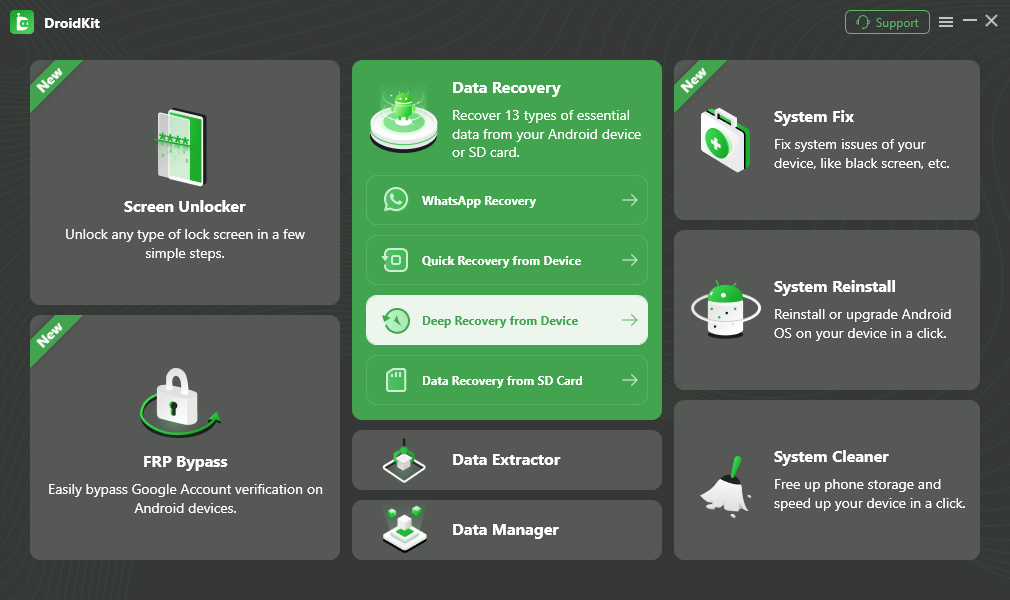
Open DroidKit Data Recovery to search for deleted messages.
Step 2: Select Messages as the data category and connect the Android phone to the computer with a USB cable.
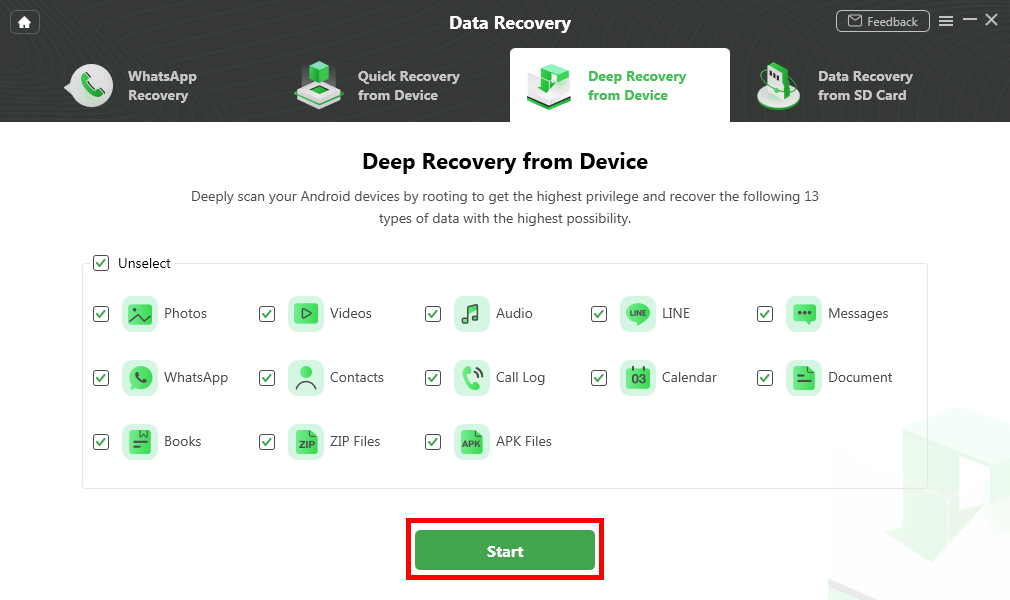
Choose Messages as the data type to scan.
Step 3: When scan results are available, preview the recoverable messages. Select the conversations you need and choose an available recovery destination.
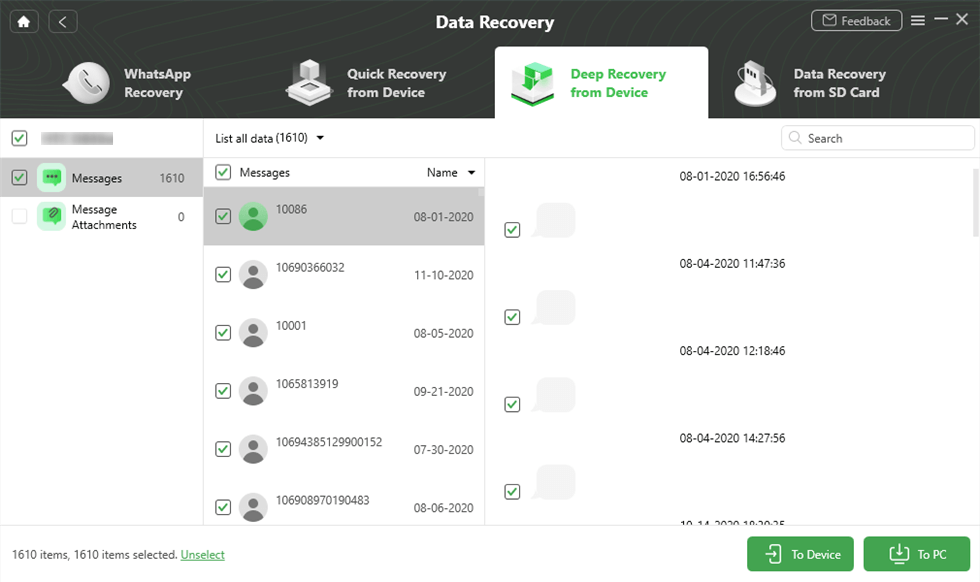
Preview and select the messages you want to recover.
Whether a deleted message can actually be found depends on the phone, the available backup or recovery source, and what has happened on the device since deletion. A scan should not be interpreted as a guarantee that every deleted Verizon text can be recovered.
Recover Deleted Verizon Text Messages on iPhone
On an iPhone using Verizon, first check Apple’s built-in recovery options before looking at carrier records. If the message is still in the Messages app’s Recently Deleted section, recovering it there is the most direct route. An iCloud or computer backup made before deletion may also contain the conversation.
If those options do not contain the message, PhoneRescue for iOS provides iPhone data-recovery modes that can scan supported recovery sources and let you preview available messages.
How to Search for Deleted Verizon Messages on iPhone
Step 1: Launch PhoneRescue for iOS on the computer and connect the iPhone. Choose Recover from iOS Device if you want to check the device directly.
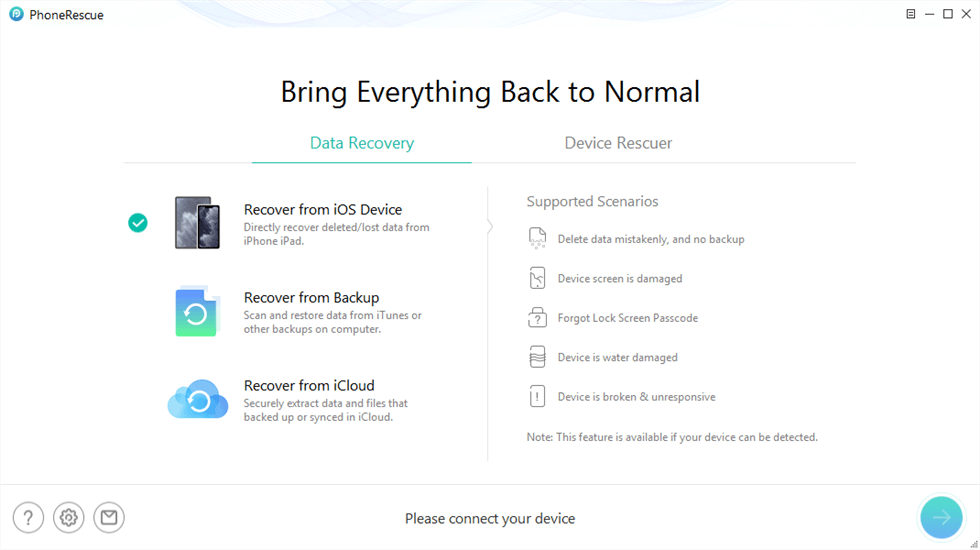
Choose Recover from iOS Device.
Step 2: Select the Messages category so the scan focuses on message data.
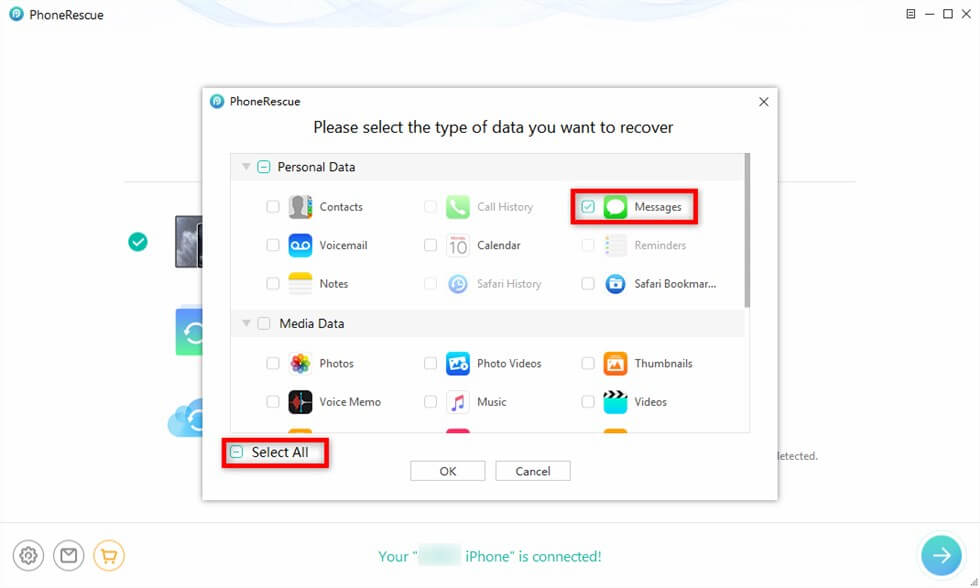
Select the Messages category.
Step 3: Preview the available conversations and select the messages you want to save or restore using the recovery options shown in the software.
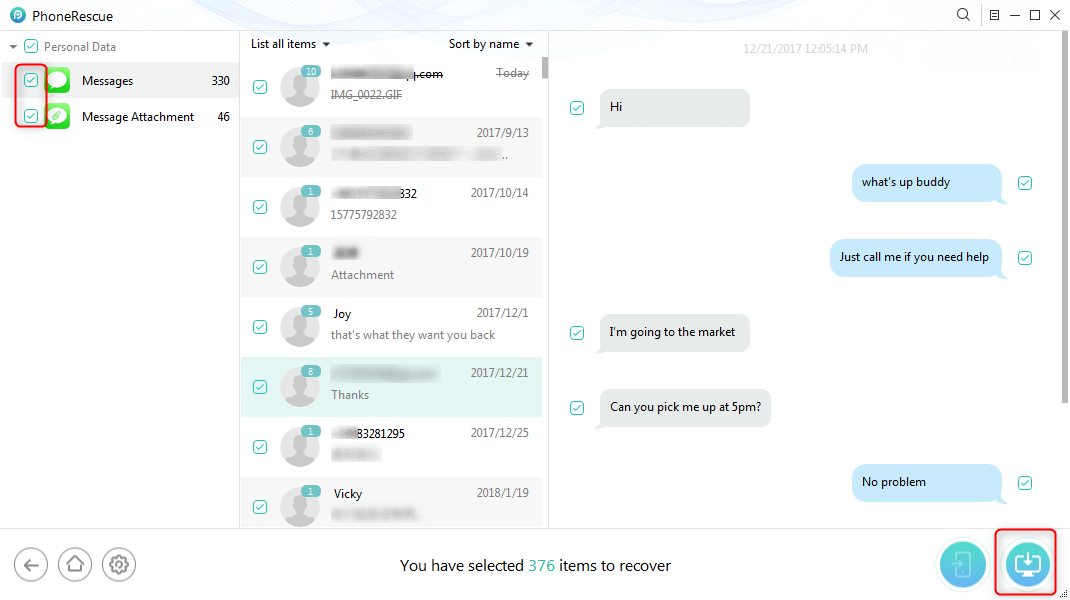
Preview the available messages before recovery.
As with Android recovery, results depend on what data still exists on the iPhone or in an available backup. If the data has already been overwritten or removed from every available source, software cannot recreate the original message.
FAQs about Verizon Deleted Text Messages
1. How long does Verizon keep deleted text messages?
Verizon does not currently guarantee that deleted SMS/MMS content will be stored for a fixed recovery period. Older Verizon support information referenced a short retention period of several days and no more than about 10 days, but current Verizon messaging terms state that Verizon has no obligation to retain delivered messages. Do not rely on a guaranteed 10-day recovery window.
2. How far back can I see Verizon text-message records?
My Verizon can generally provide about 90 days of recent text-message activity details. These records can show information such as dates, times, and phone numbers, but they do not normally contain the actual words in an SMS or MMS.
3. Can Verizon show me the content of deleted texts?
Not through the normal My Verizon message log. The consumer account record is primarily usage information rather than message content. If the content is required for a legal matter, the availability of any carrier-held data depends on whether it still exists and the applicable legal process.
4. Does Verizon Cloud keep deleted text messages?
Not necessarily. On eligible Android devices, Verizon Cloud can sync messages, but Verizon states that deleting a text from the messaging app can also delete the synced copy from Verizon Cloud during the next synchronization. It should therefore not be treated as a permanent trash folder.
5. Can I still recover messages through Verizon Message+?
No. Verizon discontinued Verizon Messages (Message+) in December 2024. Verizon now recommends Google Messages for Android and Apple Messages for iPhone and iPad. Messages that were stored locally on the phone may still appear in the replacement messaging app.
6. Can deleted Verizon texts be recovered without a Verizon backup?
Possibly, but recovery depends on the device and whether another recoverable copy still exists. Check your phone’s recently deleted or trash area first, then relevant device or cloud backups. Android users can also evaluate device-level message recovery, while iPhone users can check Recently Deleted, iCloud/computer backups, or an iOS recovery tool.
Final Word
When asking how long Verizon keeps deleted text messages, the key distinction is between message content and message records. A 90-day My Verizon history does not mean Verizon keeps the actual text body for 90 days, and the old “10-day” figure should no longer be treated as a guaranteed recovery period.
If the message itself is gone, check the phone and any available backups first. Verizon Cloud may help when an eligible Android device was already syncing messages, but deletions can also sync to the cloud. If there is no usable backup, Android and iPhone users can then evaluate device-level recovery options based on what data still remains.
More Related Articles



Joy Taylor is a seasoned technical writer with over a decade of experience in mobile technology. At iMobie, she specializes in producing in-depth content on iOS data recovery, iPhone unlocking solutions, and iOS troubleshooting.
Product-related questions? Contact Our Support Team to Get Quick Solution >
