How to Bypass FRP on Android 11/12/13
Locked by Google verification after resetting an Android 11, 12, or 13 phone? Compare FRP recovery options by Android version, including account recovery and DroidKit FRP Bypass for supported devices.
Seeing a Google verification screen after resetting an Android 11, Android 12, or Android 13 phone means Factory Reset Protection (FRP) has been triggered. The right way to regain access depends on your Android version, phone brand, security patch, and whether you still have access to the Google account previously synced with the device.
This guide focuses specifically on Android 11/12/13. Start with Google account recovery if the phone is yours and you recognize the account. If you cannot complete verification that way, compare the version-specific options below or use an FRP removal tool that supports your device. For broader brand and Android-version coverage, see the complete Android FRP bypass guide.
Can You Bypass FRP on Android 11/12/13?
FRP can be resolved on Android 11, 12, and 13, but there is no single method that works the same way on every phone. Google and Android manufacturers regularly change setup screens and security behavior, so instructions that work on one Android version, brand, or security patch may not work on another.
| Situation | Recommended Starting Point | What to Know |
| You know the previous Google account | Sign in with the previously synced account | This is the most direct recovery path for your own device |
| You forgot the Google password | Recover the Google account first | A recent password change may require additional verification or waiting before setup succeeds |
| Android 11 device | Use Android 11-specific recovery or supported FRP tools | Available options depend heavily on the phone brand and security patch |
| Android 12 device | Use an Android 12-specific guide | Older Android 11 instructions may no longer match the setup flow |
| Android 13 device | Use an Android 13-specific guide or supported FRP tool | Older APK and menu-based methods are increasingly patch-dependent |
If you are not sure which Android version or brand-specific method applies, the broader Android FRP bypass guide organizes recovery options by phone brand and Android version.
Bypass FRP on Android 11/12/13 with DroidKit
If Google account recovery does not solve the verification problem on your own device, DroidKit FRP Bypass provides a guided computer-based FRP removal workflow for supported Android devices.
The advantage of using a guided FRP tool is that you do not need to search for random APK files or manually test commands copied from older tutorials. Device and Android-version support can change, however, so check the current DroidKit FRP Bypass page for supported models and versions before starting.
DroidKit – FRP Bypass for Supported Android Devices
Use the guided FRP Bypass workflow to check and remove Google account verification on a supported Android phone you own or are authorized to access.
How to Use DroidKit FRP Bypass
Step 1. Launch DroidKit on your computer and select FRP Bypass.

Choose FRP Bypass in DroidKit.
Step 2. Connect the Android device to the computer with a USB cable and click Start.
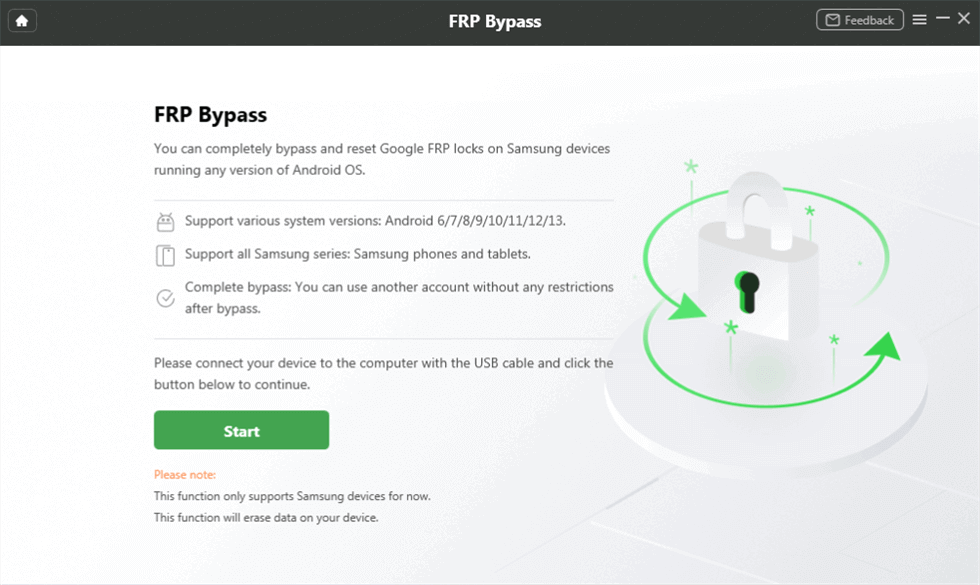
Connect the device and start the FRP Bypass process.
Step 3. Wait while DroidKit prepares the configuration for the connected device. When prompted, click Start to Bypass and follow the on-screen instructions.
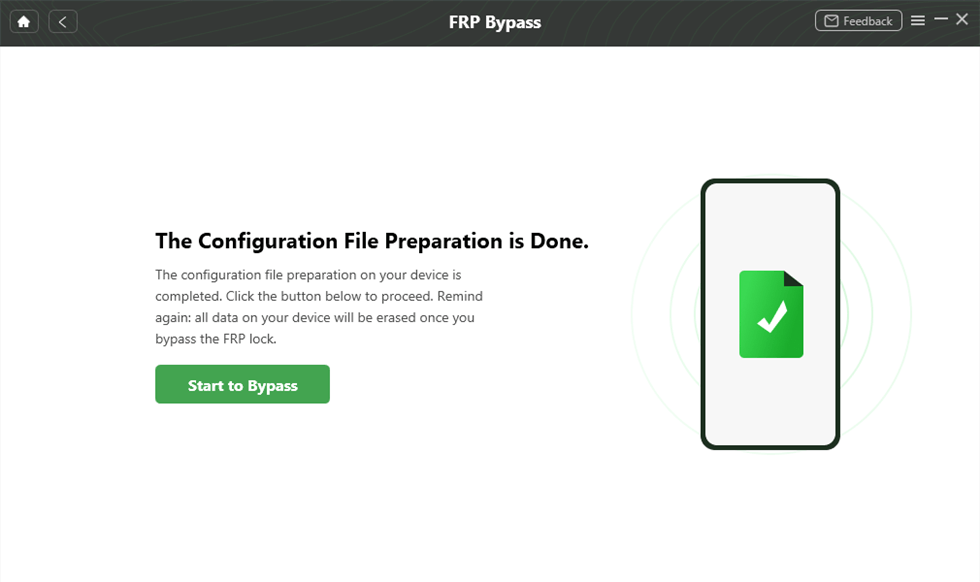
Follow DroidKit’s device-specific instructions.
Step 4. Complete the settings shown in the DroidKit interface. The exact screens can vary by device and Android version.
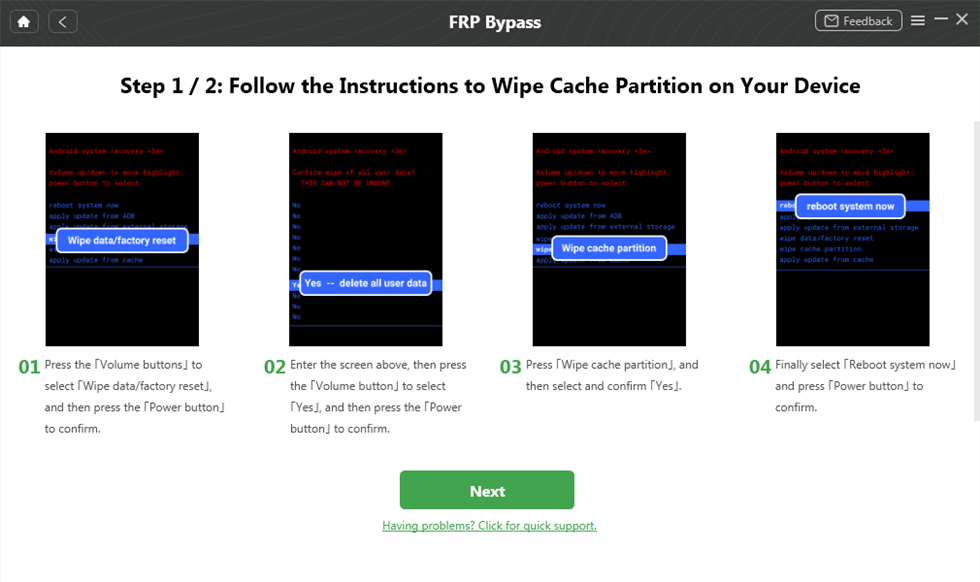
Complete the corresponding settings shown for your device.
Step 5. Follow the remaining prompts until DroidKit reports that the FRP Bypass process is complete.
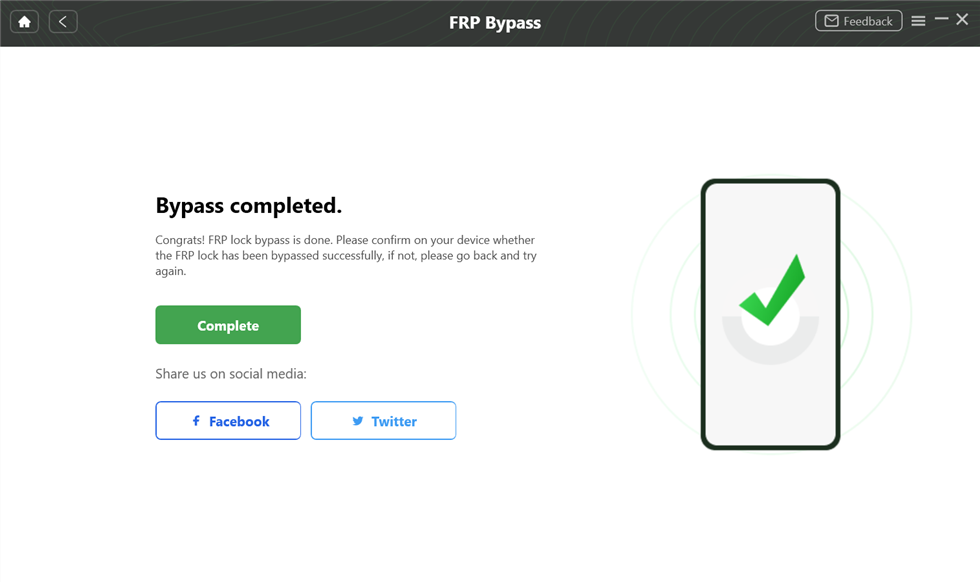
DroidKit displays the completion screen when the process finishes.
FRP exists to prevent unauthorized access after a factory reset. Only use FRP removal methods on a device you own or have permission to manage.
FRP Bypass on Android 11
Android 11 has been available long enough that many FRP tutorials refer to older browser, APK, accessibility, or ADB-based procedures. The problem is that these methods are highly dependent on the manufacturer and security patch. A procedure shown for one Samsung or Xiaomi build should not be assumed to work on every Android 11 phone.
If you own the device, start by identifying the Google account that was previously synced with it. If account recovery is not an option, check the phone brand and current security patch before choosing another method.
Be especially cautious with old “FRP Bypass APK” downloads from unknown websites. An APK being labeled for Android 11 does not establish that it is current, compatible, or safe for your device.
FRP Bypass on Android 12
Do not assume that an Android 11 FRP procedure will also work on Android 12. Setup screens, security patches, and manufacturer-specific interfaces can change the steps and remove entry points used by older tutorials.
For a page dedicated to this version, see the Android 12 FRP bypass guide. It keeps Android 12-specific intent separate from this combined Android 11/12/13 overview.
FRP Bypass on Android 13
Android 13 requires the same version-specific approach. A method that depends on a particular setup menu, browser entry point, APK, or manufacturer feature can stop working after a security update.
Instead of repeatedly trying instructions written for older Android releases, identify the phone brand, Android 13 build, and security patch first. You can then compare the available recovery paths in the Android 13 FRP bypass guide.
Recover Your Google Account After Factory Reset
If the Android phone belongs to you and you simply forgot the Google credentials used before the factory reset, recovering that account should be your first option. FRP normally asks for a Google account that was previously added and synced to the device.
Step 1. On another trusted phone or computer, open Google’s account recovery process.
Step 2. Enter the email address or phone number associated with the Google account you previously used on the locked Android device.
Step 3. Complete the identity-verification prompts Google provides.
Step 4. Once access to the account is restored, return to the reset Android phone and try the recovered account during setup.
If your issue is specifically the Google verification screen that appears after a reset, the Google account verification after reset guide covers that scenario separately.
If the device is second-hand and still asks for the previous owner’s account, the safest starting point is to contact the previous owner or seller and ask them to resolve the account lock. FRP is specifically designed to prevent a reset phone from being activated by an unauthorized user.
FAQs About FRP Bypass Android 11/12/13
1. What is FRP on Android?
FRP stands for Factory Reset Protection. It is an Android security feature designed to protect a device after an unauthorized factory reset. When triggered, the phone may ask for a Google account that was previously synced with the device before setup can continue.
2. Can I bypass FRP on Android 11?
There are recovery and FRP removal options for Android 11, but availability depends on the phone brand, model, Android build, and security patch. Start with the previously synced Google account whenever possible, then evaluate device-compatible options if account recovery does not solve the problem.
3. Does the same FRP method work on Android 11, 12, and 13?
No single procedure should be assumed to work across every Android 11, 12, and 13 device. Manufacturers customize Android, and security updates can change or patch methods that previously worked.
4. Can I bypass Android 12 FRP without a PC?
Some device-specific methods may not require a computer, but whether they are available depends on the phone model and security patch. Avoid assuming that an older APK or menu-based tutorial will work on a current Android 12 build.
5. Can I bypass Android 13 FRP with an APK?
APK-based FRP methods are device- and patch-dependent, and files from unknown download sites can introduce additional security risks. Check Android 13-specific options and use trusted sources rather than installing an unverified APK simply because it is labeled as an FRP bypass app.
6. What if I forgot the Google account after a factory reset?
Try Google’s account recovery process first. If you recover access to the Google account that was previously synced with the device, use those credentials during Android setup. If the problem is specifically Google verification after reset, follow a recovery path designed for that situation.
7. Can DroidKit bypass FRP on every Android 11/12/13 phone?
Device and Android-version support can vary. Check the current DroidKit FRP Bypass compatibility information before starting rather than assuming that every Android 11, 12, or 13 model is supported.
Final Words
For Android 11/12/13 FRP, the Android version is only one part of the problem. Your phone brand, model, security patch, and access to the previously synced Google account can all determine which recovery path is appropriate.
Start with Google account recovery when possible. If you need a guided computer-based option for a supported device, evaluate DroidKit FRP Bypass. For a broader decision path across brands and Android releases, use the Android FRP hub instead of applying Android 11 instructions to every device.
More Related Articles


Roger Smith is a senior technical writer with years of experience in providing Android solutions. He loves to help users solve various problems such as Android unlock, Android data recovery, and Android system repair.
Product-related questions? Contact Our Support Team to Get Quick Solution >
