How to Fix Fingerprint Sensor Not Working on Android
If your Android fingerprint sensor stops working, the cause may be a dirty sensor, wet finger, screen protector issue, software bug, fingerprint data mismatch, or hardware damage. This guide shows 9 practical fixes and explains what to do if fingerprint unlock fails and you also forgot your backup PIN, password, or pattern.
Quick Answer
Quick Answer: If your Android fingerprint sensor is not working, first clean and dry your finger and the sensor area, restart the phone, remove or replace the screen protector, and install available software updates. If the fingerprint scanner still does not respond, delete the saved fingerprint and register it again. If the phone says Fingerprint hardware not available, treat it as a possible system or hardware issue and back up your data if you can still unlock the device.
If fingerprint unlock fails but you still remember your PIN, password, or pattern, use that backup lock method first. If you are locked out because fingerprint unlock fails and you also forgot the backup lock, jump to the lockout section near the end of this guide.
Common Fingerprint Error Messages on Android
Android phones may describe the fingerprint problem in different ways. The table below can help you match the message on your screen with the first action to try.
| Error or Symptom | What It Usually Means | Best First Action |
| Fingerprint sensor not working | The phone cannot read or match the saved fingerprint correctly. | Clean the sensor, restart the phone, then re-add the fingerprint. |
| Fingerprint scanner not responding | The fingerprint service or sensor may be temporarily stuck. | Restart the phone and install pending software updates. |
| Fingerprint hardware not available | Android cannot communicate with the fingerprint module. | Restart, update the system, and check whether the phone was dropped, repaired, or exposed to water. |
| Fingerprint does not match | The saved fingerprint data may no longer match your finger clearly. | Remove the old fingerprint and register the finger again from multiple angles. |
| Use PIN instead of fingerprint | Android requires the backup lock after restart, failed attempts, or security checks. | Enter your PIN, password, or pattern before using fingerprint unlock again. |
Why Is My Fingerprint Sensor Not Working on Android?
A fingerprint sensor can fail for simple reasons such as sweat, dust, or a thick screen protector. It can also stop working because of Android updates, fingerprint data errors, or damage to the sensor hardware.
| Possible Cause | What It Means | What to Try First |
| Wet, dirty, or oily finger | The sensor cannot capture the fingerprint pattern clearly. | Wash and dry your hands, then try again. |
| Dirty sensor area | Dust, sweat, oil, or debris blocks fingerprint reading. | Clean the sensor or in-display fingerprint area gently. |
| Screen protector issue | Thick or incompatible protectors may affect in-display fingerprint scanners. | Remove or replace the protector, then test again. |
| Finger injury or skin change | Cuts, scars, peeling skin, or dryness can change how your fingerprint is read. | Use another registered finger or add a new fingerprint. |
| Temporary Android bug | The fingerprint service, lock screen, or system UI may not respond correctly. | Restart the phone. |
| Outdated software | A system bug may affect fingerprint unlock or biometric settings. | Install Android, One UI, Pixel, Motorola, Xiaomi, OPPO, Vivo, or other available system updates. |
| Fingerprint data mismatch | The saved fingerprint is no longer read accurately. | Remove and add your fingerprint again. |
| Hardware damage | The sensor, display, cable, or fingerprint module may be damaged. | Contact the phone brand, carrier, or a repair center. |
Note: Setting names vary by Android brand and version. Samsung Galaxy, Google Pixel, Motorola, Xiaomi, OPPO, Vivo, OnePlus, and other Android phones may use different names for Fingerprints, Biometrics, Security, Lock Screen, and Display settings.
If the fingerprint sensor is physically damaged, cleaning, re-registering fingerprints, and screen unlock tools cannot repair the hardware. In that case, use your backup lock method, back up your data if possible, and contact repair support.
What Does “Fingerprint Hardware Not Available” Mean?
The message Fingerprint hardware not available usually means Android cannot access the fingerprint module at that moment. It does not always prove the sensor is broken, but it deserves more attention than a simple “fingerprint not recognized” message.
| When It Happens | Likely Cause | What to Do |
| After a restart or system update | Temporary biometric service error | Restart again, then check for another update. |
| After dropping the phone | Sensor, display, or connector damage | Use the backup lock and contact repair support. |
| After screen replacement | In-display sensor or calibration issue | Return to the repair provider or brand service center. |
| After water exposure | Moisture near the sensor or internal damage | Turn the phone off if needed and seek repair advice. |
| Fingerprint settings disappear | System bug, disabled biometric module, or hardware failure | Update Android and contact support if the setting does not return. |
If you can still unlock the phone with your PIN, password, or pattern, back up important files before trying riskier steps such as a factory reset. If you cannot access the phone at all, do not keep guessing passwords repeatedly; review the lockout options below.
Which Fix Should You Try First?
Not every fingerprint issue needs the same fix. Use this quick table to avoid unnecessary resets or repair visits.
| Situation | Best First Fix |
| Fingerprint fails only sometimes | Clean the sensor and re-add your fingerprint. |
| Fingerprint stopped working after installing a screen protector | Remove or replace the screen protector. |
| The phone says the fingerprint scanner is not responding | Restart the phone and install available Android updates. |
| Fingerprint unlock fails after a finger injury or dry skin | Register another finger or add the same finger again. |
| The message says fingerprint hardware is not available | Restart, update, then consider repair support if the message returns. |
| You forgot the backup PIN, password, or pattern | Use official recovery options or a screen lock removal option for supported devices. |
Before You Start: Try Your Backup Lock Method
Fingerprint unlock is only one way to access your Android phone. Android normally requires a backup PIN, password, or pattern after a restart, after several failed fingerprint attempts, or after certain security checks.
Before trying advanced fixes, enter your backup lock method. If you can unlock the phone, back up important photos, files, contacts, and app data first. Then continue with the fingerprint fixes below.
If you cannot remember the backup lock, you may need a different path. For a fingerprint-specific lockout case, see this guide on how to bypass fingerprint lock on Android. If your issue is a forgotten pattern, this guide to unlock a forgotten pattern lock may also help.
Fix 1. Clean and Dry Your Finger and the Sensor
Fingerprint scanners are sensitive to water, sweat, oil, lotion, dust, and tiny particles. If the sensor cannot read the ridge pattern clearly, Android may reject the fingerprint even when the sensor itself is fine.
Step 1. Wash and dry your hands completely.
Step 2. Wipe the fingerprint sensor or the in-display fingerprint area with a soft, dry microfiber cloth.
Step 3. Remove dust, oil, or moisture from the screen area if your phone uses an in-display fingerprint scanner.
Step 4. Try unlocking again with steady pressure. Do not tap too quickly or press only the edge of your finger.
Tip: If your skin is very dry or peeling, try another registered finger first. You can also re-register the same finger after your skin condition improves.
Fix 2. Restart Your Android Phone
A restart can refresh the lock screen, biometric service, and system processes related to fingerprint unlock. This is especially useful when the scanner suddenly stops responding after normal use.
Step 1. Press and hold the Power button.
Step 2. Tap Restart if the option appears.
Step 3. If Restart is not shown, power off the phone, wait a few seconds, and turn it on again.
Step 4. Enter your PIN, password, or pattern after restart, then test fingerprint unlock again.
Note: Many Android phones require the backup lock method after a restart. This is normal and does not mean the fingerprint sensor is broken.
Fix 3. Remove or Replace the Screen Protector
If your phone uses an in-display fingerprint scanner, the screen protector can affect fingerprint reading. Thick glass, poor installation, air bubbles, dust under the protector, or a protector not designed for fingerprint unlock may cause scanner errors.
Step 1. Check whether fingerprint unlock started failing after you installed a new screen protector.
Step 2. Press the fingerprint area firmly but naturally. If it works only with heavy pressure, the protector may be interfering.
Step 3. Remove the protector temporarily and test fingerprint unlock again.
Step 4. If fingerprint works after removal, replace the protector with one that supports your phone’s fingerprint scanner.
Step 5. After installing a new protector, delete and re-add your fingerprint for better recognition.
Some Samsung Galaxy models also include a Touch Sensitivity setting, which can help with screen response when a protector is installed. See Fix 7 for the exact place to check.
Fix 4. Update Your Phone to the Latest Software
Android updates can fix biometric bugs, lock screen errors, and fingerprint service issues. If fingerprint hardware errors appear after an update, it is still worth checking for a newer patch because phone brands often release follow-up fixes.
Step 1. Open Settings on your Android phone.
Step 2. Scroll down and tap Software Update, System Update, or System.
Step 3. Tap Download and install or Check for update.
Step 4. Install any available update and restart the phone.
Step 5. Enter your backup lock method, then test fingerprint unlock again.
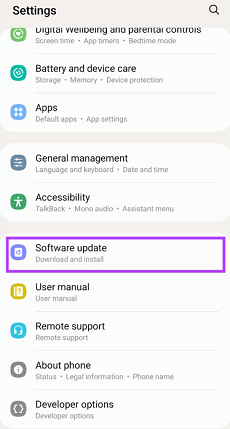
Click on the Software Update
Tip: If your phone is managed by a school, company, or carrier, update options may be limited. In that case, contact the device administrator or carrier support.
Fix 5. Remove and Add Your Fingerprint Again
If the saved fingerprint data is old or no longer matches your finger clearly, re-registering the fingerprint can improve recognition. This is useful after a screen protector change, skin injury, hand dryness, or Android update.
Before You Re-Add Your Fingerprint
Make sure your hand is clean and dry. If your phone has an in-display scanner, clean the fingerprint area on the screen. If your finger has a cut, scar, or peeling skin, register another finger first.
How to Remove the Old Fingerprint
Step 1. Open Settings.
Step 2. Go to Security, Biometrics and security, Password & security, or a similar menu.
Step 3. Tap Fingerprint, Fingerprints, or Fingerprint unlock.
Step 4. Enter your PIN, password, or pattern.
Step 5. Delete the fingerprint that is not working.
How to Add a New Fingerprint
Step 1. Tap Add fingerprint or Register fingerprint.
Step 2. Place your finger on the sensor as instructed.
Step 3. Lift and place the finger again from different angles.
Step 4. Register the edges and center of the finger, not only one spot.
Step 5. Save the fingerprint and test it from the lock screen.
Fix 6. Add the Same Finger More Than Once
If your fingerprint works sometimes but fails at other times, adding the same finger more than once can help. This gives Android more fingerprint samples and may improve recognition from different angles.
Step 1. Open your fingerprint settings.
Step 2. Choose Add fingerprint.
Step 3. Register the same finger again, but place it slightly differently each time.
Step 4. Add another frequently used finger as a backup.
Step 5. Lock the phone and test the saved fingerprints.
Tip: Do not rely on one finger only. Add at least one backup finger so you can still unlock the phone if your main finger is wet, injured, or too dry.
Fix 7. Turn on Touch Sensitivity for Supported Phones
Some Android phones, especially Samsung Galaxy models, include a Touch Sensitivity option. This setting does not repair a fingerprint sensor, but it may improve screen response when a protector is installed over an in-display fingerprint scanner.
Step 1. Open Settings on your phone.
Step 2. Tap Display.
Step 3. Find Touch sensitivity.
Step 4. Turn it on.
Step 5. Re-add your fingerprint after changing the screen protector or touch sensitivity setting.
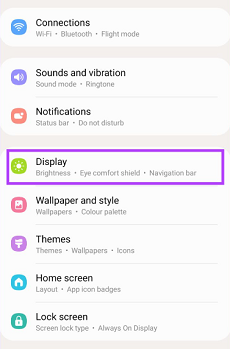
Tap Display in Android Settings
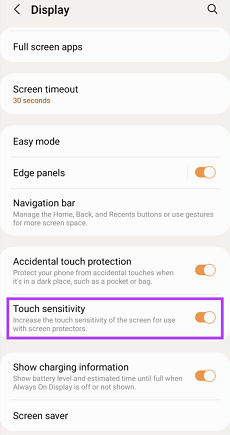
Turn on Touch Sensitivity
Note: If your phone does not show Touch Sensitivity, skip this fix. The setting is not available on every Android model.
Fix 8. Factory Reset Your Phone as a Last Resort
A factory reset can remove software conflicts and reset fingerprint settings, but it also erases data from the phone. Use this only after you have backed up important files or when other fixes have failed.
Step 1. Back up photos, videos, contacts, messages, and important app data if you can still access the phone.
Step 2. Open Settings.
Step 3. Go to General management, System, or Additional settings.
Step 4. Tap Reset or Reset options.
Step 5. Choose Factory data reset or Erase all data.
Step 6. Read the warning carefully and confirm only if you are ready to erase the phone.
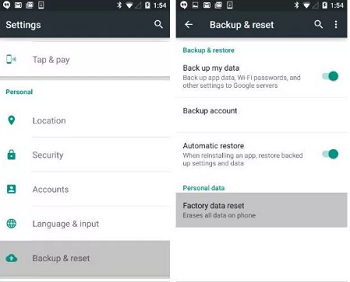
Tap on Reset > Factory data reset
Limitations
A factory reset may help if the fingerprint problem comes from software settings, corrupted fingerprint data, or system conflicts. It will not fix a broken fingerprint sensor, damaged display, loose connector, or water-damaged hardware.
After a factory reset, Android may ask you to sign in with the Google account previously synced on the device. Make sure you know the Google account and password before resetting.
Fix 9. Contact Phone Support or a Repair Center
If fingerprint hardware is unavailable, fingerprint settings disappear, or the scanner still does not respond after cleaning, updates, and re-registering fingerprints, the phone may need hardware service.
You should contact the phone brand, carrier, or a trusted repair center if:
- The fingerprint sensor stopped working after a drop, water exposure, or screen repair.
- The fingerprint option disappeared from Settings.
- The phone repeatedly shows “Fingerprint hardware not available.”
- Other touch, display, or lock screen features also behave incorrectly.
- A factory reset does not bring back fingerprint unlock.
Important: Screen unlock software can help with lock screen access in supported scenarios, but it cannot repair a damaged fingerprint sensor. If the sensor hardware is broken, repair support is the right path.
What If You Are Locked Out Because Fingerprint Unlock Fails?
Fingerprint failure becomes more serious when you also forgot the backup PIN, password, or pattern. In this situation, cleaning the sensor or re-adding a fingerprint is not possible because you cannot get into the phone settings.
Before using any unlock method, check these options first:
- Try the correct PIN, password, or pattern if you recently changed it.
- Check whether your phone brand offers an official recovery option.
- Use your Google or Samsung account recovery if the phone asks for account verification.
- Back up data first if you can still access the device from another trusted method.
Tool-Assisted Option: Remove the Screen Lock If You Cannot Access the Phone
If fingerprint unlock fails and the backup lock is also unavailable, DroidKit Screen Unlocker may help remove Android screen locks on supported devices. This is a lock screen access option, not a fingerprint hardware repair method.
DroidKit is designed to help remove Android screen locks such as PIN, password, pattern, fingerprint lock, and face recognition in supported scenarios. Before using it, check the current compatibility information and data-loss notes for your phone model. Screen unlocking may erase data depending on the device model, lock type, and unlock process.

DroidKit Screen Unlocker
DroidKit – Unlock Android Phone without Password
Locked out after fingerprint unlock fails and the backup lock is forgotten? DroidKit Screen Unlocker can guide supported Android devices through screen lock removal. Review compatibility and data-loss notes before you start.

When DroidKit May Be Relevant
| Situation | Is DroidKit Relevant? | Why |
| Fingerprint sensor is dirty or blocked by a screen protector | No | Clean the sensor or replace the protector first. |
| Fingerprint hardware is damaged but you know the PIN | No | Unlock with the PIN, back up data, then arrange repair. |
| Fingerprint unlock fails and you forgot the backup lock | Yes, if the device is supported | The problem is now lock screen access, not only fingerprint recognition. |
| You want to repair a broken fingerprint sensor | No | Hardware repair requires brand or repair-center support. |
How to Use DroidKit Screen Unlocker
The general process below shows how DroidKit Screen Unlocker works. The exact steps may vary by device brand and model.
Step 1. Launch DroidKit and choose Screen Unlocker
Step 1. Install and open DroidKit on your computer. Choose Screen Unlocker from the main interface.
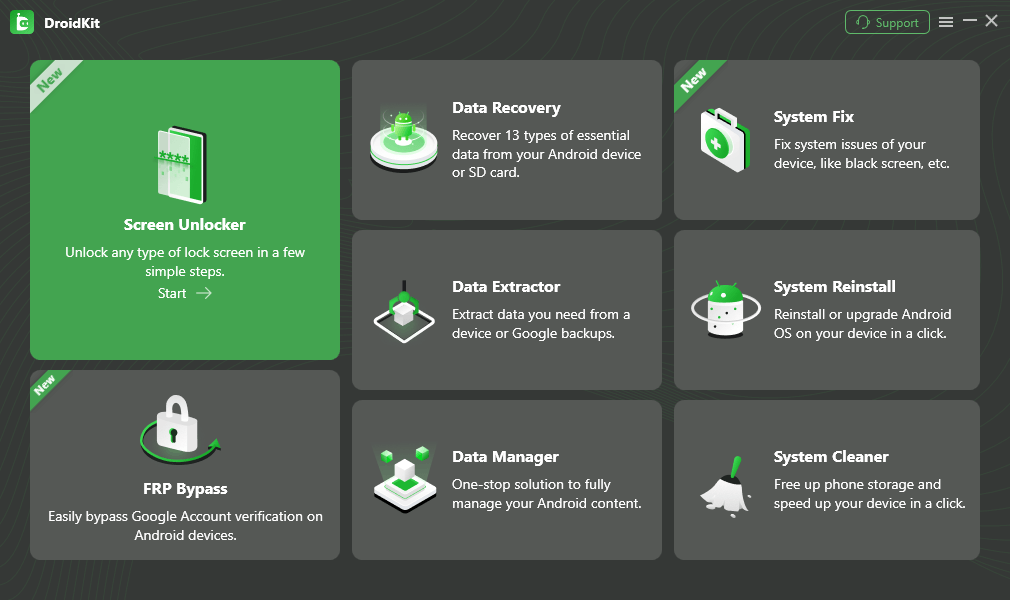
Choose Screen Unlocker
Step 2. Connect your Android phone
Step 2. Connect the locked Android phone to the computer with a USB cable. Follow the on-screen instructions until DroidKit detects the device.

Connect Your Android Device
Step 3. Click Remove Now
Step 3. Click Remove Now to continue. Read the on-screen notes carefully before moving forward.
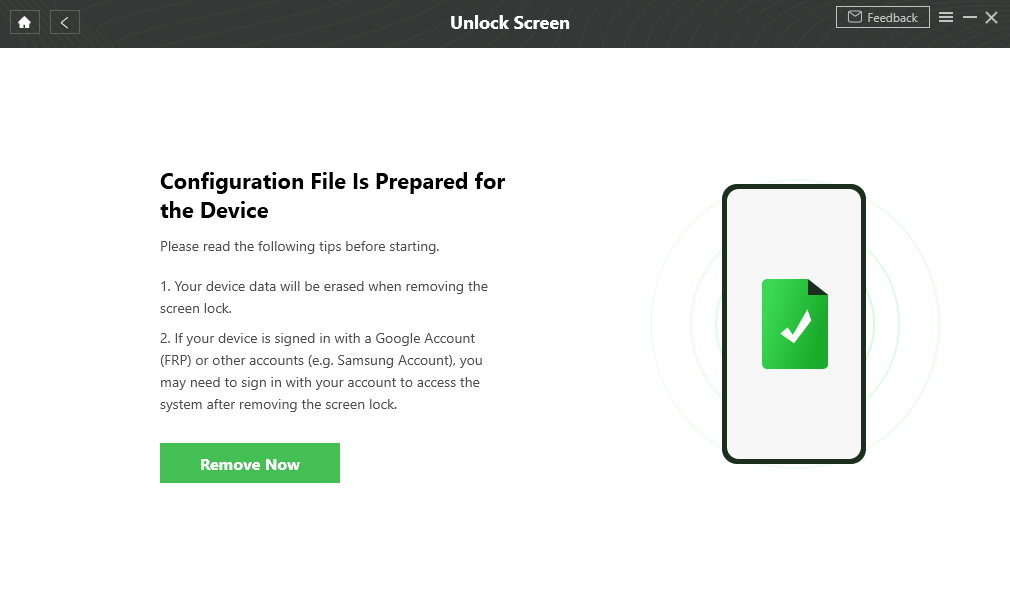
Click Remove Now Button
Step 4. Confirm your device brand
Step 4. Select your Android device brand and continue. Choosing the correct brand helps DroidKit prepare the matching unlock process.
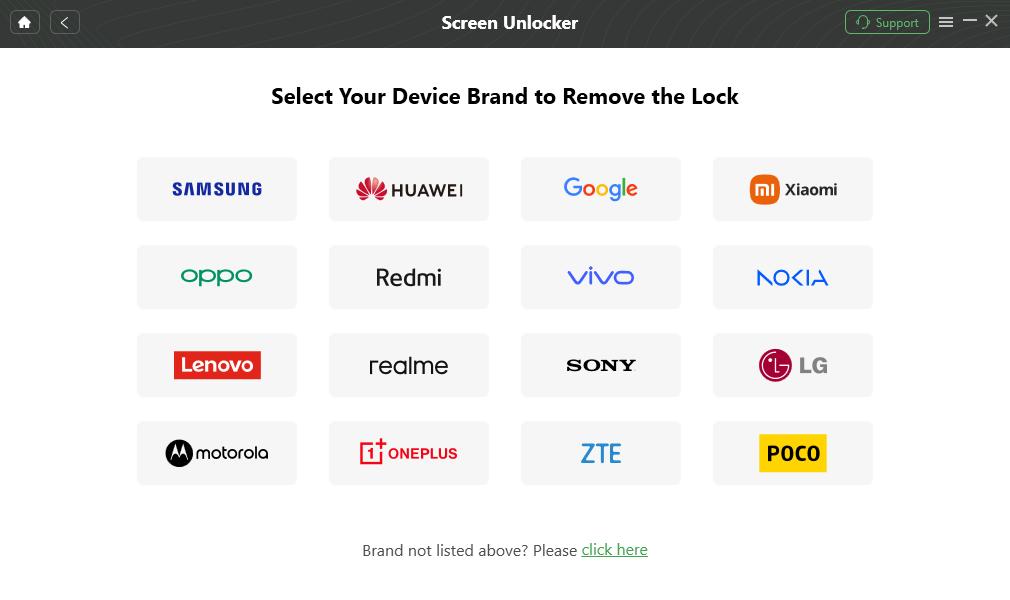
Confirm your Device Brand and Continue
Step 5. Wait for screen lock removal to complete
Step 5. Follow the on-screen instructions and wait for the process to finish. After completion, check whether you can access the phone again.
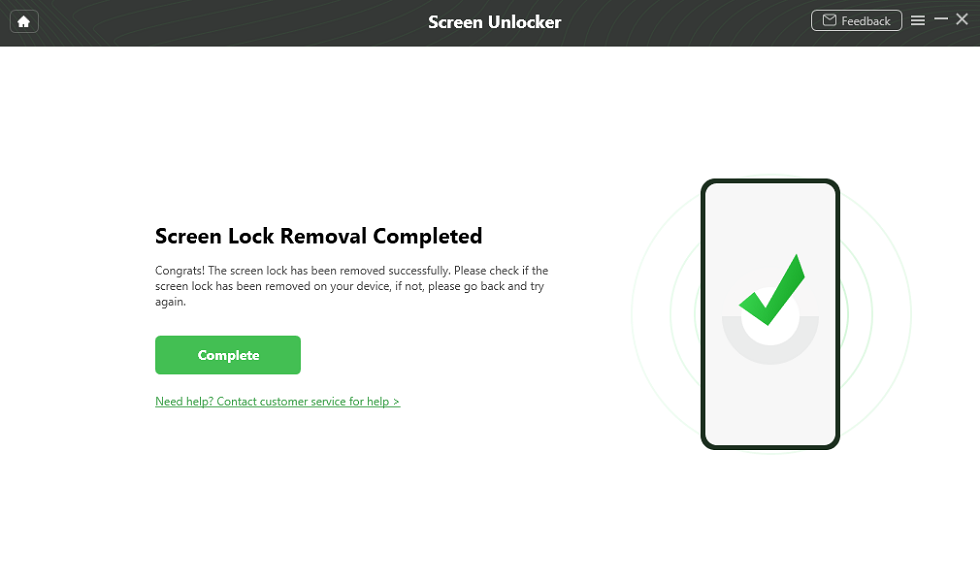
Lock Screen Removal Completed
Reminder: After you regain access, set a new PIN, password, or pattern that you can remember. Then register fingerprints again only after confirming that the sensor works normally.
FAQs About Android Fingerprint Sensor Not Working
Q1. Why is my fingerprint sensor not working on Android?
Your fingerprint sensor may stop working because your finger or the sensor is wet, dirty, or oily. It can also fail because of a screen protector, finger injury, outdated software, fingerprint data mismatch, or hardware damage.
Q2. Why does my phone ask for a PIN instead of fingerprint?
Android may ask for your PIN, password, or pattern after restart, after too many failed fingerprint attempts, after a security timeout, or before allowing biometric unlock again. This is a normal security behavior.
Q3. Can a screen protector stop the fingerprint sensor from working?
Yes. A thick, damaged, dusty, or incompatible screen protector can affect in-display fingerprint scanners. Remove the protector and test again. If fingerprint unlock works after removal, use a protector designed for your phone model and re-register your fingerprint.
Q4. How do I reset my fingerprint on Android?
Open Settings, go to Security or Biometrics, enter your backup lock method, delete the old fingerprint, and add it again. On Samsung, Pixel, Motorola, Xiaomi, OPPO, Vivo, and other Android phones, the exact menu names may vary.
Q5. What should I do if my phone says “Fingerprint hardware not available”?
Restart the phone first, then check for system updates. If the message appears after a drop, water exposure, or screen repair, the fingerprint sensor or related hardware may need service. Use your backup lock and back up data if you can still access the phone.
Q6. Will a factory reset fix fingerprint sensor problems?
A factory reset may fix software-related fingerprint issues, but it will not repair damaged hardware. It also erases data from the phone, so use it only as a last resort and make sure you know the Google account previously synced on the device.
Q7. What if fingerprint unlock fails and I forgot my Android password?
If you forgot the backup PIN, password, or pattern, you cannot re-add fingerprints from Settings. Try official recovery options first. If the device is supported, a screen lock removal tool such as DroidKit Screen Unlocker may help you regain access, but you should review compatibility and data-loss notes before using it.
Q8. Should I repair the phone if none of the fixes work?
Yes. If the fingerprint option disappears, the phone keeps saying fingerprint hardware is unavailable, or the problem started after physical damage, contact the phone manufacturer, carrier, or a trusted repair center.
The Bottom Line
When an Android fingerprint sensor is not working, start with the low-risk fixes: clean and dry the sensor area, restart the phone, remove a problematic screen protector, update Android, and re-add your fingerprint. If the phone shows “Fingerprint hardware not available,” pay attention to recent drops, water exposure, or screen repairs because the problem may be hardware-related.
If fingerprint unlock fails but you still know the PIN, password, or pattern, use that backup lock and back up your data before trying advanced fixes. If you are locked out because both fingerprint unlock and the backup lock are unavailable, review official recovery options or use a supported screen lock removal solution carefully.



Joy Taylor is a seasoned technical writer with over a decade of experience in mobile technology. At iMobie, she specializes in producing in-depth content on iOS data recovery, iPhone unlocking solutions, and iOS troubleshooting.
Product-related questions? Contact Our Support Team to Get Quick Solution >
