Full Guide on Samsung Pattern Unlock Master Code [Updated]
A universal Samsung pattern unlock master code is rarely effective on modern devices. The practical ways to unlock a forgotten pattern include Samsung Find My Mobile, Google Find My Device, Recovery Mode, etc. For an easier and more flexible solution, you can also use iMobie DroidKit to unlock Samsung pattern locks quickly and safely.
Android Issues & Fixes
Android System Issues
Android Apps Issues
iMobie DroidKit – Samsung Pattern Unlock Without Password
Free download iMobie DroidKit to check the Screen Unlocker workflow for your Samsung phone if you forgot the pattern, PIN, or password. Current DroidKit specifications list Android 6.0 and above, including Android 16. Check your exact Samsung model and data-loss behavior before starting.

If you are searching for a Samsung pattern unlock master code, the key point is that modern Galaxy phones do not have one universal code that safely removes every pattern lock. Codes found in old Samsung guides are usually legacy reset/service codes, not a current screen-lock password, and some can erase the device instead of unlocking it.
For a current Galaxy phone, first check whether Samsung’s previous screen lock recovery is available: on One UI 6.1 or later, if you changed the pattern within the last 72 hours, the phone can show Forgot pattern? after repeated failed attempts and let you enter the previous pattern. If that does not apply, use the pattern-specific alternatives below and treat factory reset as a last resort because it erases local data and can trigger Google FRP afterward.
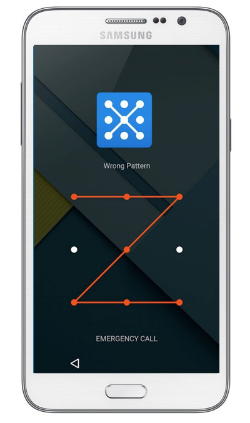
Samsung Pattern Lock Screen
What Is the Code for Samsung Pattern Unlock?
There is no universal Samsung pattern unlock master code for current Galaxy phones. Older web guides often label Samsung reset/service codes as “master codes,” but those codes were model- and firmware-dependent and could trigger a reset rather than recover the forgotten pattern. They should not be treated as a modern unlock password.
Samsung Pattern Master Code: Fact vs. Myth
| Claim | What Is Actually True |
| One master code unlocks every Samsung pattern | No. Modern Galaxy phones do not use a universal pattern-unlock code. |
| Old factory/service codes are screen-lock passwords | No. Some old codes were diagnostic or reset commands and can be device/firmware-specific. |
| A factory reset removes the pattern | Yes, because it erases the device, but Google FRP can still appear during setup. |
| “Forgot Pattern” with Google Account works on current Galaxy phones | Generally no. That Google-account recovery flow is mainly associated with Android 4.4 and earlier. |
| One UI 6.1+ can use an older pattern | Yes, when the pattern was changed within the last 72 hours and the previous lock was retained. |
| A screen-unlock tool may remove a forgotten pattern | Only on supported devices/workflows; data impact depends on the model and method. |
How to Use Samsung Pattern Unlock Master Code Without PC?
For a modern Samsung phone, there is no reliable master code to enter on the Emergency Call screen to recover a forgotten pattern. Old reset/service codes found online are not universal unlock credentials and may be unsupported or destructive on newer firmware.
If you want a without-PC option, check Samsung’s current on-device recovery first:
Step 1. On a Galaxy phone running One UI 6.1 or later, enter the current pattern incorrectly at least five times.
Step 2. If Forgot pattern? appears, tap it.
Step 3. Enter the previous pattern that was used before the current one.
Step 4. Set a new PIN, password, or pattern.
72-hour limit: Samsung documents this previous-lock recovery for One UI 6.1+ when the screen lock was changed within the last 72 hours. If you did not recently change the pattern, or the previous lock was deleted, this option will not appear.
6 Alternatives to Samsung Pattern Unlock Master Code
Because a universal Samsung pattern master code is not a current recovery method, use the alternatives below instead. Start with the least destructive option that matches your Galaxy model and One UI/Android version, and use factory reset only when you accept data loss.
Method 1. How to Remove Forgot Pattern Lock Samsung with iMobie DroidKit
If Samsung’s built-in recovery options do not apply and the device is yours or you are authorized to unlock it, iMobie DroidKit provides a Screen Unlocker for supported pattern, PIN, password, fingerprint, and biometric lock scenarios. Current DroidKit specifications list Android 6.0 and above, including Android 16, across 20,000+ Android phones and tablets.
Data-loss boundary: DroidKit currently lists no-data-loss screen unlock only for certain Samsung model families. Other device/workflow combinations can erase local data, so check the current compatibility information before starting.
DroidKit
- Transfer all kinds of formats of photos from computer to your iPhone.
- With original size with no loss of picture quality and no compression.
- Lightning fast speed to transfer 100 photos in 3.4 seconds.
- No erase of previous photos on your iPhone, 100% clean & safe.
Free Download100% Clean & Safe
Free Download100% Clean & Safe
Free Download * 100% Clean & Safe
How to unlock Samsung phone pattern lock if forgotten via iMobie DroidKit:
Step 1. Install and launch iMobie DroidKit on your computer > On the welcome page, go to the Screen Unlocker mode to initiate the process.
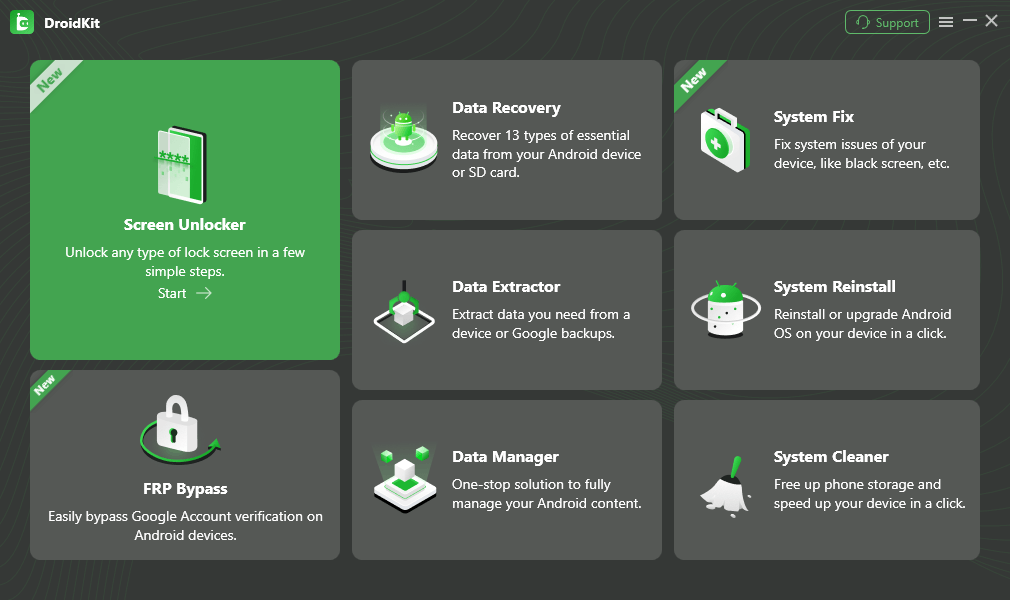
Choose Unlock Screen Function
Before starting: Do not assume every Samsung Screen Unlocker workflow erases data or preserves it. DroidKit currently identifies specific Samsung families for no-data-loss unlock; other workflows can erase local data. If the phone is already locked, creating a fresh backup may not be possible.
Step 2. On the “Unlock Screen” page, read the notes and hit the Start button after connecting your Samsung device to the computer via a USB cable.

Connect your Locked Phone
Step 3. After DroidKit prepares the configuration file for your device, click Remove Now. Then check Samsung to confirm your device brand.
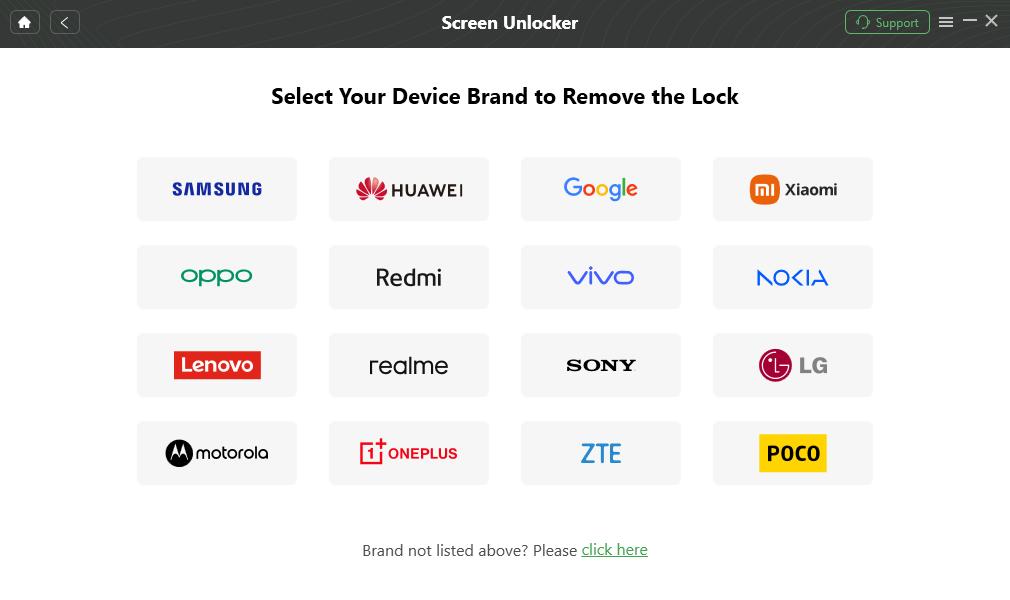
Confirm your Device Brand and Continue
Step 4. Follow DroidKit’s device-specific onscreen instructions. The preparation and removal steps can vary by Samsung model. Keep the phone connected until the software reports that the Screen Unlocker workflow is complete.
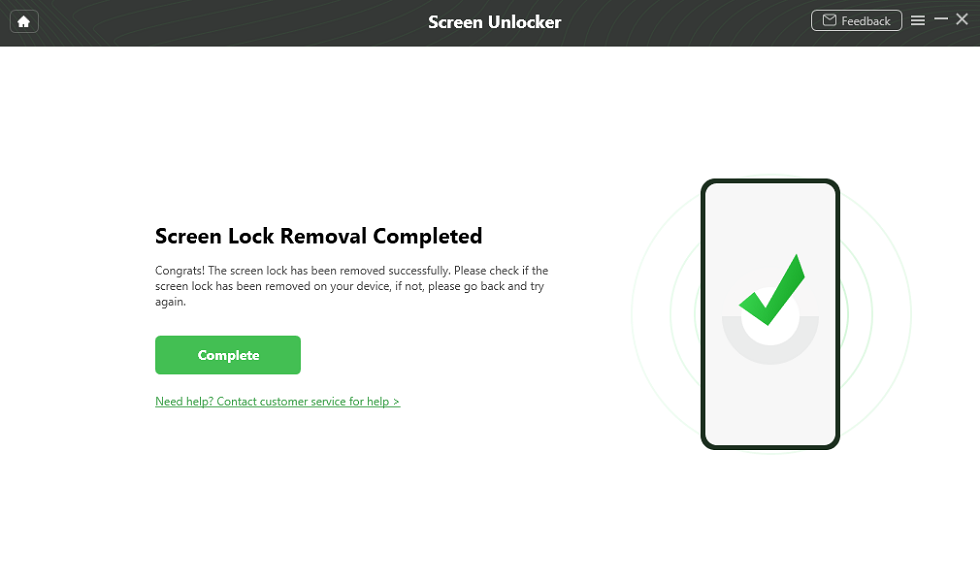
Lock Screen Is Removed Successfully
Why Choose iMobie DroidKit?
For this page, the relevant advantage is its dedicated Screen Unlocker, current Android 16 support, published Samsung no-data-loss compatibility list, and guided Windows/Mac workflow. Other DroidKit modules such as FRP bypass or data recovery are separate features and should not be confused with pattern-lock removal.
Free Download * 100% Clean & Safe
Method 2. Unlock Samsung Forgot Pattern with the Previous Pattern
For newer Galaxy devices, this is one of the best no-PC and no-factory-reset options. Samsung says that Galaxy phones running One UI 6.1 or later can retain the previous PIN/password/pattern for 72 hours after a screen-lock change.
Step 1. Enter the current pattern incorrectly at least five times.
Step 2. Tap Forgot pattern? when it appears.
Step 3. Enter the previous pattern.
Step 4. Set a new screen lock.
This replaces the old Google Find My Device “temporary password” tutorials you may still see online; current Google Find Hub does not provide that old screen-lock replacement workflow.
Method 3. How to Remove Pattern Lock in Samsung via Samsung Remote Unlock
If Samsung remote unlock is available for your device/region and was enabled before you were locked out, it can remove the screen-lock information without a factory reset. Availability and menu names can vary by model, software version, carrier, and region.
Step 1. Open Samsung’s current Find/SmartThings Find service and sign in with the Samsung account registered on the locked device.
Step 2. Select the Galaxy device.
Step 3. If an Unlock option is available, select it and verify your Samsung account password.
Step 4. After the remote unlock completes, set a new screen lock on the phone.
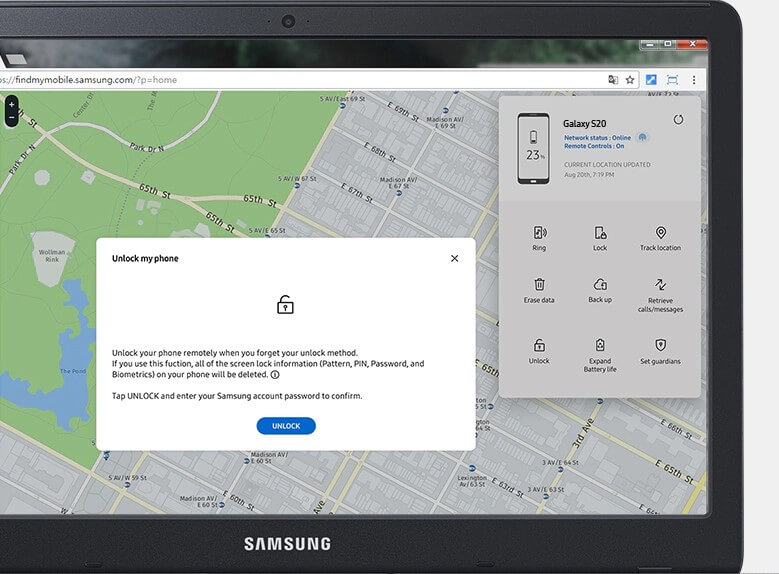
Legacy Samsung Find My Mobile Interface — Update This Screenshot If the Current UI Differs
If the Unlock option is not available, do not rely on an old screenshot or Google Find My Device “temporary password” guide. Continue with another current method.
Method 4. How to Use Forgot Pattern Lock Samsung on Old Android
This is a legacy Android 4.4-or-earlier method. Some older Samsung phones displayed Forgot Pattern after repeated failed attempts and then allowed Google Account verification.
Step 1. On an eligible old device, enter the wrong pattern several times.
Step 2. Tap Forgot pattern.
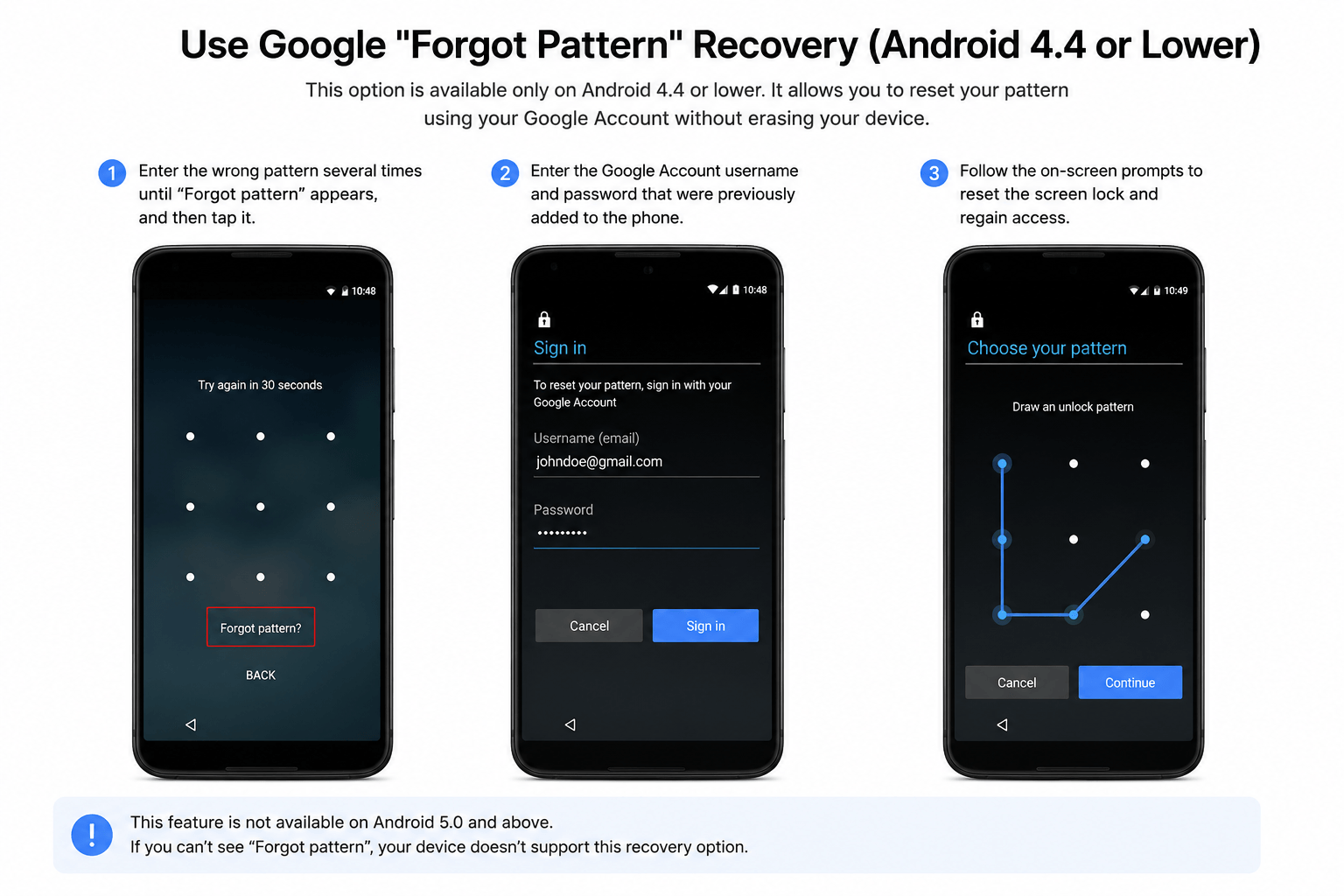
Step 3. Enter the Google Account credentials or backup PIN offered by that old Android version.
Step 4. Set a new screen lock.
Do not expect this Android 4.4-era Google Account recovery flow on a modern Galaxy phone. On current One UI versions, use the previous-screen-lock feature when eligible or another supported method.
Method 5. Unlock Samsung Phone If Forgot Pattern via Recovery Mode
Recovery Mode can factory-reset a Galaxy phone and therefore remove the local pattern lock, but it should be a last resort because it erases local data. The exact button combination can vary by Samsung model, and some newer devices may need to be connected by USB before Recovery Mode appears.
Step 1. Power off the Samsung phone.
Step 2. Use the Recovery Mode key combination documented for your exact Galaxy model.
Step 3. In Recovery Mode, use the volume keys to highlight Wipe data/factory reset and confirm with the Power/Side button.
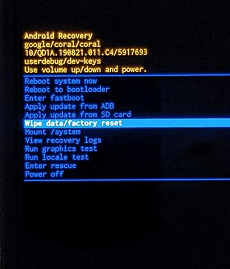
Step 4. Confirm the factory reset, then select Reboot system now.
FRP warning: Factory reset removes the local pattern by erasing the phone, but it does not automatically remove Google Factory Reset Protection. During setup, a protected device can require a Google Account that was previously synced to the phone.
Method 6. Use Extend Unlock (Formerly Smart Lock) If It Is Already Active
Google now calls Smart Lock Extend Unlock. It can keep a phone unlocked for a limited time in trusted situations such as a trusted place or trusted Bluetooth device, but it is not a universal recovery method after the phone is already fully locked. Google’s current guidance says Extend Unlock first requires the device to be unlocked with its PIN, pattern, or password, and it can then keep the device unlocked for up to about four hours.
Use this only if Extend Unlock was configured before the problem and the phone is currently in an active trusted state. If the device has restarted or is already demanding the primary pattern, do not rely on Extend Unlock to replace the forgotten pattern.
Samsung Pattern Unlock Methods Comparison Table
Choose a method based on your Samsung software version, whether the feature was set up in advance, and whether you can accept data loss.
| Method | Best For | Data Impact / Main Limitation |
| “Master code” | Understanding old reset/service-code claims | No universal current unlock code; old commands may be unsupported or destructive |
| Previous pattern (One UI 6.1+) | Pattern changed within the last 72 hours | Designed to keep data; requires the previous pattern |
| DroidKit Screen Unlocker | Supported Samsung devices when built-in recovery does not apply | Data impact depends on model/workflow; some Samsung families support no-data-loss unlock |
| Samsung remote unlock | Supported devices/regions with remote unlock enabled | Availability varies; requires Samsung account and prior setup |
| Legacy Forgot Pattern | Android 4.4 or earlier | Not a modern Galaxy recovery method |
| Recovery Mode | Last resort | Erases local data and can lead to Google FRP verification |
| Extend Unlock | Phone already in an active trusted state | Does not replace the primary pattern after a full lock/restart |
If avoiding a factory reset is your priority, check the One UI 6.1+ previous-pattern feature and Samsung remote unlock first. If those do not apply, confirm the exact DroidKit compatibility/data behavior before using a third-party Screen Unlocker.
FAQs About Samsung Pattern Unlock Master Code
Q1. Is Samsung pattern unlock master code free?
There is no universal current Samsung pattern unlock master code, free or paid. Old reset/service codes are often described online as “master codes,” but they should not be treated as a modern Galaxy screen-lock password. For a free no-PC option, check the One UI 6.1+ previous-pattern recovery if you changed the lock within the last 72 hours.
Q2. Can I use a Samsung pattern unlock master code without losing data?
No universal master-code method can be recommended as a data-preserving unlock. If keeping data is the priority, first try Samsung’s previous-screen-lock recovery or a supported remote-unlock option. DroidKit also lists no-data-loss Screen Unlock support for specific Samsung model families, not every Galaxy device.
Q3. What does *#7353# do on Samsung?
On some older Samsung devices, codes such as *#7353# were associated with diagnostic/service menus. Availability varies by device and firmware, and a diagnostic code is not a pattern-unlock code. Do not rely on service codes to recover a forgotten modern Galaxy pattern.
Q4. How can I unlock a Samsung pattern without factory reset?
On One UI 6.1+ devices, try the previous pattern within 72 hours after changing the lock. Samsung remote unlock may also be available when it was enabled and supported for your setup. If neither applies, check whether your exact Samsung model has a supported no-data-loss Screen Unlock workflow before choosing a factory reset.
Q5. Does Google Find My Device unlock a forgotten Samsung pattern?
Current Google Find Hub does not provide the old “set a temporary lock-screen password” workflow shown in outdated Android Device Manager tutorials. It can locate, secure, or erase devices, but it should not be presented as a current pattern-recovery method.
Q6. Will factory reset remove a Samsung pattern lock?
Yes, because factory reset erases the device and its local screen-lock settings. However, if Google FRP is active, setup can still require a Google Account that was previously synced to the device.
The Bottom Line
For the query Samsung pattern unlock master code, the most important answer is that modern Galaxy phones do not have one universal master code that safely removes every pattern lock. Old reset/service codes should not be treated as current unlock passwords.
On One UI 6.1+, use the previous pattern first when the lock was changed within 72 hours. Next, check Samsung remote unlock where available. DroidKit is one Screen Unlocker fallback for supported devices, but data preservation depends on the Samsung model/workflow. Use Recovery Mode or factory reset only as a last resort because it erases local data and can trigger Google FRP afterward.
Free Download * 100% Clean & Safe



Joy Taylor is a seasoned technical writer with over a decade of experience in mobile technology. At iMobie, she specializes in producing in-depth content on iOS data recovery, iPhone unlocking solutions, and iOS troubleshooting.
Product-related questions? Contact Our Support Team to Get Quick Solution >
