Can't Pass Gmail 2-Step Verification? Safe Ways to Recover Access
If Gmail asks for a second verification step and you cannot complete it, do not look for unsafe bypass tricks. This guide explains the legitimate ways to sign back in, use backup methods, recover your Google Account, and turn off 2-Step Verification only after you regain access.
Gmail 2-Step Verification protects your Google Account by requiring a second step after your password. This may be a Google prompt, a verification code, a backup code, a security key, or a passkey. If you lose your phone, change your number, clear browser cookies, or cannot receive a code, you may be unable to finish sign-in.
This page focuses on safe recovery methods for accounts you own. It does not recommend bypassing Gmail security or using tools to access someone else's account.
Quick Answer: You cannot safely bypass Gmail 2-Step Verification without proving that you own the account. Try another second step first, such as a passkey, Google prompt, backup code, backup phone, or security key. If none works, start Google Account recovery. After you sign in, you can turn off 2-Step Verification from your Google Account security settings, but Google recommends keeping it on for better protection.
What Is Gmail 2-Step Verification?
Gmail uses your Google Account sign-in settings. With 2-Step Verification, you sign in with your password plus a second step, or with a passkey that proves you own the device. This extra check helps protect your mailbox, Google Drive, photos, contacts, and other personal data if your password is stolen.
Common second steps include:
- Google prompts sent to a signed-in phone.
- Backup codes that you created and saved earlier.
- A backup phone that can receive a verification code.
- Security keys or passkeys.
- Authenticator codes generated on a trusted device.
Can You Bypass Gmail 2-Step Verification?
No legitimate method should bypass Gmail 2-Step Verification without confirming the account owner. If you see pages or tools claiming to bypass Gmail 2FA instantly, they may be unsafe, misleading, or designed to steal your login information.
If you own the account, use Google's built-in recovery options. The right method depends on what you still have access to.
| Situation | Recommended action | Data/security note |
|---|---|---|
| You have a passkey on this device | Try signing in with the passkey | A passkey can satisfy the second step because it proves device possession. |
| You saved backup codes | Use one backup code as the second step | Each backup code works once only. |
| You added a backup phone | Send a code to the backup phone | Keep backup phone numbers up to date after signing in. |
| You lost your security key | Use another second step, then remove the lost key | Remove lost keys from account settings after access is restored. |
| No second step is available | Use Google Account recovery | Recovery may take longer if extra security was enabled. |
Safe Ways to Sign In When 2-Step Verification Fails
Method 1. Use a Passkey or Google Prompt
If Google offers a passkey, fingerprint, face scan, device screen lock, or Google prompt, try that first. A passkey can work as a secure sign-in method because it confirms that you have access to your trusted device.
- Go to the Gmail or Google Account sign-in page.
- Enter your email address.
- Choose the passkey, prompt, or trusted-device option if Google offers it.
- Unlock the trusted device to confirm it is you.
Method 2. Sign In with a Backup Code
If you previously downloaded or printed backup codes, use one of them as your second step.
- Start signing in to Gmail.
- When asked for the second step, choose another way to sign in.
- Select the backup code option.
- Enter one unused backup code.
After signing in, generate a new set of backup codes and store them somewhere safe.
Method 3. Send a Code to Your Backup Phone
If you added a backup phone to your Google Account, request a verification code there. This is useful if your main phone is lost, damaged, or unable to receive prompts.
- Start signing in to Gmail.
- Choose another verification option.
- Select your backup phone number.
- Enter the code you receive.
Method 4. Use Account Recovery
If you cannot use any second step, go through Google Account recovery. Use a familiar device, browser, and location if possible. Answer questions accurately and use a recovery email or phone you can access.
Google may delay some recovery requests when 2-Step Verification is enabled, so try again if you later regain access to a trusted device or second step.
Method 5. Fix Code or Prompt Delivery Problems
If the problem is that codes do not arrive or prompts do not show up, check these basics before starting account recovery:
- Make sure your phone has internet or mobile signal.
- Check that the phone number on your account is still active.
- Restart your phone if SMS or prompts are delayed.
- Check whether your carrier blocks messages from Google.
- Try a device or browser where you have signed in before.
How to Turn Off 2-Step Verification After Signing In
You can turn off 2-Step Verification only after you sign in to your Google Account. Turning it off means your account will rely mainly on your password, which is less secure.
- Open your Google Account Security page.
- Under How you sign in to Google , choose 2-Step Verification .
- Verify it is you if Google asks.
- Select Turn off and confirm.
After turning it off, review app passwords, recovery phone, recovery email, and suspicious devices. If you only turned it off temporarily, turn it back on after updating your backup methods.
Gmail 2-Step Verification vs Android FRP Verification
Gmail 2-Step Verification and Android Factory Reset Protection are often confused, but they are not the same thing.
| Item | Gmail 2-Step Verification | Android FRP Verification |
|---|---|---|
| Where it appears | During Google/Gmail online sign-in | On an Android device after factory reset |
| What it protects | Your Google Account | The Android device setup process |
| Best solution | Use backup codes, passkey, backup phone, or account recovery | Sign in with the previously synced Google account or use an owner-authorized FRP solution |
| Can DroidKit help? | No. It is not a Gmail 2-Step Verification bypass tool. | It may help with Android FRP on supported devices you own or have permission to unlock. |
Important: If your real issue is Gmail sign-in, use Google Account recovery. If your issue is an Android phone stuck on a Google verification screen after factory reset, that is FRP, not Gmail 2-Step Verification.
FAQs About Gmail 2-Step Verification
Can I bypass Gmail 2-Step Verification without proving it is my account?
No. Gmail 2-Step Verification is designed to protect the account from unauthorized access. If you cannot complete the second step, use legitimate recovery options such as a backup code, backup phone, passkey, trusted device, or Google Account recovery.
What should I do if I lost the phone used for Gmail 2-Step Verification?
Try another second step first, such as a backup code, backup phone, security key, passkey, or a device where you are already signed in. If none of these work, use Google Account recovery and provide as much accurate information as possible.
Can I turn off Gmail 2-Step Verification?
Yes, but only after you sign in to your Google Account. Go to your Google Account, open Security, choose 2-Step Verification, verify it is you, and select Turn off. Turning it off makes your account less secure.
Do backup codes work if I cannot receive a Gmail verification code?
Yes. If you created backup codes before losing access to your normal second step, you can use one backup code as the second step. Each backup code works once.
Why is Google asking for verification every time I sign in?
Google may ask for verification when you sign in on a new device, clear cookies, use a different browser, change location, or when Google needs to confirm it is really you.
Is Android FRP the same as Gmail 2-Step Verification?
No. Gmail 2-Step Verification protects online Google Account sign-in. Android Factory Reset Protection appears on an Android device after a factory reset and asks for the previously synced Google account. They are different issues.
Can DroidKit bypass Gmail 2-Step Verification?
No. DroidKit should not be presented as a Gmail 2-Step Verification bypass tool. It is relevant only if your issue is Android FRP after a factory reset on a supported Android device you own or have permission to unlock.
Related Articles
- What Is FRP Lock on Android?
- What to Do with Google Account Verification After Reset
- How to Remove a Previously Synced Google Account from Android
- How to Fix Google Account Action Required on Android
When DroidKit Is Relevant: Android FRP After Factory Reset
DroidKit is not for bypassing Gmail 2-Step Verification. However, if your Android phone is stuck on the Google verification screen after a factory reset and you own the device or have permission from the owner, DroidKit FRP Bypass may help on supported Android models.
Before using any FRP tool, confirm the device ownership, check supported brands and Android versions, and understand that steps may vary by device model and system version.
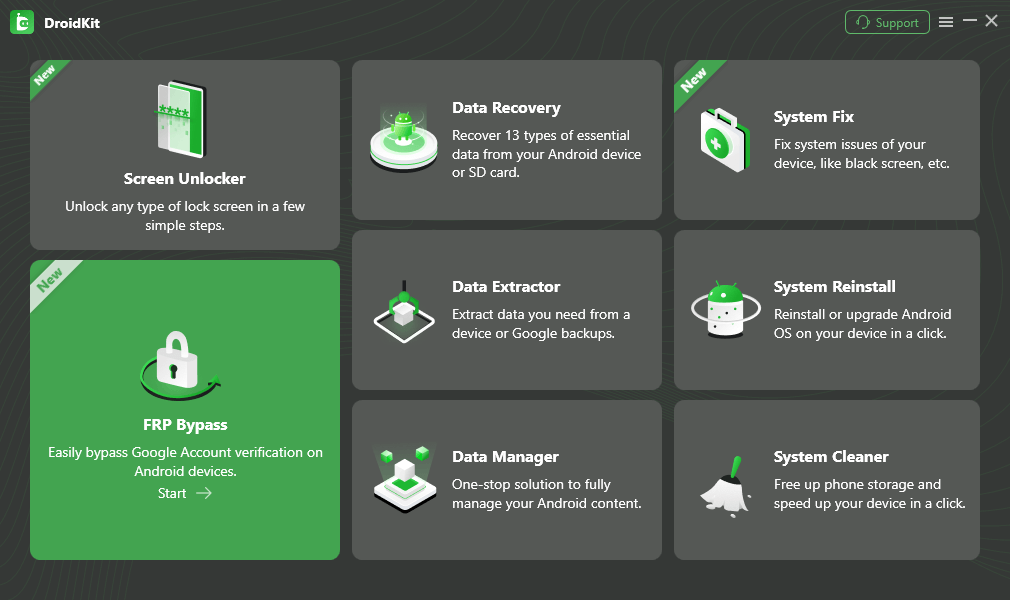
Choose FRP Bypass Mode
Free Download * 100% Clean & Safe
The Bottom Line
If you cannot pass Gmail 2-Step Verification, do not try unsafe bypass methods. Use another second step, a backup code, a backup phone, a passkey, or Google Account recovery. Once you regain access, update your recovery phone, recovery email, and backup codes so you do not get locked out again.
If the issue is actually Android FRP after a factory reset, treat it as a separate Android device verification problem rather than Gmail 2-Step Verification.



Senior writer of the iMobie team as well as an Apple fan, love to help more users solve various types of iOS & Android-related issues.
Product-related questions? Contact Our Support Team to Get Quick Solution >
