VNROM compatibility is decided by more than an APK filename. The exact phone, Android version, security patch, Setup Wizard behavior, and download source all affect whether a VNROM route is worth testing. This guide focuses on Android 13 and 16 questions, Redmi-specific checks, source safety, and the failure signs that matter before trying another file.
VNROM, also searched as VNROM bypass, VNROM APK, or VNROM FRP bypass APK, is a name users often encounter when researching ways to deal with Google account verification after an Android factory reset.
The main question is no longer simply whether one VNROM APK file exists. A VNROM route can depend on the exact phone model, Android version, security patch, Setup Wizard behavior, browser or file access, and whether the downloaded package actually matches the guide being followed.
Quick Answer: VNROM may still appear in older and device-specific FRP workflows, but it should not be treated as one universal APK for every Android phone. Before testing a VNROM-related route, check the exact model, Android version, patch date, required setup entry point, and file source. This is especially important for searches such as VNROM Android 16, VNROM FRP bypass Android 13, and VNROM Redmi, where a generic old APK guide may not match the current phone environment.
For a broader comparison of APK-based FRP resources, file-source risks, and installation errors, see the FRP Bypass APK guide. This page stays focused on VNROM-specific searches, Android-version questions, Redmi compatibility, and VNROM failure diagnosis.
After a factory reset, Android may ask for a Google account that was previously synced with the device. Users who no longer have immediate access to those credentials often search for VNROM because the name appears in FRP APK pages, bypass resource collections, videos, forums, and device-specific guides.
That search demand includes several different intentions:
| Search | What the User Usually Wants to Know |
| VNROM | What the resource is and where the relevant VNROM information is located |
| VNROM bypass | Whether VNROM can help with Google verification on a particular phone |
| VNROM APK | Where the Android package comes from and whether it fits the device |
| VNROM Android 16 | Whether an older APK-oriented route still applies to a much newer Android environment |
| VNROM FRP bypass Android 13 | Whether the required browser, app-installation, or Settings path still exists on Android 13 |
| VNROM Redmi | Whether a generic VNROM guide matches the exact Xiaomi, Redmi, or POCO software environment |
These are different questions. A download page does not establish compatibility, and a compatibility discussion does not prove that a particular APK file is trustworthy.
Before using third-party FRP resources, confirm that the phone belongs to you or that you have explicit permission to service it. If the phone was purchased second-hand and is still connected to the seller’s Google account, ask the seller to remove the account properly before trying unrelated APK files.
VNROM is associated with Android firmware resources, device guides, and FRP-related resource pages. In FRP searches, users often use “VNROM APK” as a broad phrase for files or routes connected with VNROM bypass instructions.
That does not mean every VNROM method consists of one standalone APK that works identically across devices. Depending on the guide, the process may depend on:
This distinction is important because users often respond to one failed APK by searching for another file named “latest VNROM.” If the actual blocker is that the required Settings activity no longer opens, changing the filename does not restore that missing path.
VNROM is one specific child topic inside the broader FRP APK cluster. The FRP Bypass APK Hub is useful for comparing general APK download risks, file types, installation errors, and different APK families. This VNROM page instead concentrates on VNROM naming, source checks, Android 13 and Android 16 questions, Redmi intent, and reasons the VNROM route may stop before completion.
VNROM searches contain several spelling and naming variations. Understanding them helps prevent users from assuming that every similar-looking page or filename is the same resource.
| Name or Search Variant | How to Interpret It | What to Verify |
| VNROM | The main brand or resource name used in FRP and Android firmware searches | Whether the page concerns firmware, a guide, APK files, or an FRP resource collection |
| vnROM.net | The VNROM website domain currently associated with firmware, Android guides, and bypass resources | The exact page, file link, publication context, and device relevance |
| VNROM APK | A broad download-oriented phrase | File source, package name, permissions, Android fit, and guide date |
| VNROOM | A common spelling variation in search queries | Whether the user actually means VNROM before following a different download result |
| RVNROOM | Another search spelling variation associated with VNROM intent | Avoid unrelated pages that use a similar name only to attract download clicks |
The VNROM website currently provides a bypass resource page at vnrom.net/bypass. Even when using a recognizable source page, still check the exact file, device scenario, and Android fit before installing anything.
A page title such as “VNROM latest version 2026” should not be treated as compatibility proof. The phone’s Android version, security patch, and available setup path matter more than a year added to a title.
Users looking for VNROM APK download often focus on finding the shortest route to a file. A better order is to identify the phone environment first and the file second.
Write down the full model code, not only the commercial family name. A Redmi phone, for example, may have different regional variants, software branches, or Android environments that change the setup sequence.
An old guide can show the same VNROM name while relying on a setup screen that no longer appears on a newer update. Compare the guide’s device environment with the actual phone rather than assuming the APK itself controls compatibility.
Ask what the guide needs before downloading the APK:
If the required entry point is missing, downloading the same APK from three different pages does not fix the underlying problem.
Check whether the page clearly identifies what the file is, what environment the guide was written for, and whether the download route matches the page description. Avoid redirected installers and unrelated apps that appear after clicking a VNROM download button.
Review the file type and scan the package before opening it. An Android APK should not unexpectedly redirect you to a Windows installer, browser extension, unrelated subscription, or page asking for Google credentials.
There are two separate safety questions around VNROM:
A genuine-looking APK name does not make a mismatched workflow suitable for every phone. Likewise, a technically compatible guide does not prove that every mirror carrying the VNROM name is trustworthy.
VNROM should not be evaluated with a simple “safe” or “unsafe” label. Source quality and device fit are separate checks, and both matter.
| Warning Sign | Why It Matters | Better Response |
| The same “latest” APK appears under different file sizes or names | The packages may not be identical | Return to a known source page and verify the exact package information |
| The page promises every Android version and every brand | VNROM routes can depend on model, patch, and Setup Wizard behavior | Look for exact device and software context |
| The download opens an unrelated installer | The button may not point to the file described by the guide | Close the installer and reassess the source |
| The APK requests unexpected access | The package may not match the expected resource | Stop installation and verify the package |
| A guide says “Android 16 supported” without explaining the required path | A version claim alone does not show that the same setup route exists | Check the exact device, patch, and screens required by the method |
| The app says App not installed | The package may be damaged, incompatible, blocked, or inappropriate for that environment | Diagnose compatibility before trying random renamed copies |
The strongest download signal is not a filename containing “2026,” “new,” or “latest.” It is a source and guide that explain the exact phone environment and the point where the file is supposed to be used.
There is no useful yes-or-no answer based only on the Android number. A VNROM-related guide can depend on several layers at once: Android version, OEM firmware, security patch, Setup Wizard behavior, app installation permission, and the specific activity or Settings route used by the guide.
That is why searches for VNROM FRP bypass Android 13 and VNROM Android 16 should be handled as compatibility questions, not merely download questions.
| Android Situation | What to Check | Decision Signal |
| Older Android environment | Whether the guide matches the model, setup screen, and patch period | An older APK route may be worth evaluating only when the required screens still exist |
| Android 11 | Browser access, Settings activity, package installation, and device brand behavior | Do not assume every Android 11 phone follows one VNROM path |
| Android 12 | Whether the old setup route has been restricted or changed | A missing menu is a route mismatch, not a reason to download more APK copies |
| Android 13 | Exact brand, security patch, APK install behavior, and Setup Wizard access | Use Android 13-specific guidance when an older VNROM sequence no longer matches |
| Android 14 or 15 | Whether the guide provides exact device and software evidence rather than a generic version claim | Treat legacy APK instructions cautiously when the required setup path is absent |
| Android 16 | Exact device, current patch, source credibility, and whether the complete route is documented | Do not infer compatibility from a VNROM filename or video title alone |
For an Android 13 phone, the key question is whether the required setup route still exists. Check whether the guide depends on an accessible browser, app installation during setup, a Settings shortcut, or another activity that appears on the same model and software build.
When an older VNROM guide no longer matches the screen sequence, the Android 13 FRP guide is more useful because it starts from the Android 13 environment rather than assuming an older APK route remains unchanged.
A query such as “VNROM Android 16” should be treated as a request for compatibility evidence. Before downloading anything, check:
For Android 16-specific FRP context, use the Android 16 FRP guide to understand version-level considerations before assuming a VNROM APK route applies.
VNROM Redmi is another important search pattern because a general Android APK guide does not automatically match Xiaomi, Redmi, or POCO setup behavior.
For a Redmi phone, first identify:
A Redmi-specific path should be checked before applying a generic APK sequence. The Xiaomi and Redmi FRP guide is useful when the real question is the brand environment rather than the VNROM file itself.
The same principle applies across Samsung, OPPO, Vivo, Motorola, Tecno, Infinix, and other Android brands. Do not use brand name alone as evidence that the same APK route will work.
| Brand Situation | Check Before Trying VNROM |
| Samsung | Model code, One UI and Android version, patch date, and whether the required setup entry point still appears |
| Xiaomi / Redmi / POCO | MIUI or HyperOS environment, exact model, Google verification state, and available setup paths |
| OPPO / Realme | Software version, regional build, setup restrictions, and whether app installation is available |
| Vivo | Funtouch OS environment, setup behavior, and whether the required browser or Settings route exists |
| Other brands | Exact model, OEM software, Android version, patch, and guide-specific entry points |
When VNROM fails, the point where it stops matters more than the APK name. Use the symptom to identify what is actually wrong.
| What You See | Likely Area to Check | What to Do Next |
| App not installed | Package integrity, Android fit, installation permission, or incompatible package | Verify the package and device environment before trying another version |
| Browser cannot be opened | The guide depends on a setup route that is unavailable | Stop treating the problem as an APK download issue |
| Settings shortcut does nothing | The required activity or setup transition is blocked or different | Check device- and version-specific instructions |
| APK opens but the guide screens are different | Wrong device environment or outdated guide | Compare model, Android version, OEM layer, and patch |
| A method works in a video but not on the phone | Different model, region, software build, or patch date | Match the device environment instead of the brand name |
| The page says Android 16 but gives no model details | Unverified compatibility claim | Look for exact device evidence before installing files |
| Redmi route stops at a different account or setup screen | The generic VNROM guide does not match the Xiaomi/Redmi environment | Switch to Redmi-specific diagnosis |
Check whether the file is complete, whether it was designed for the environment in the guide, and whether installation is allowed at that point in Setup Wizard. A new filename is not a compatibility fix.
Some APK-oriented guides depend on reaching a specific Settings screen or activity. When that transition no longer exists on the phone, reinstalling the APK does not recreate the missing system route.
Stop at the first major mismatch. Compare the exact model code, Android version, OEM interface, and patch date before continuing. Small wording differences may be harmless, but a completely different Setup Wizard path is a strong sign that the guide does not match.
Identify whether the failure occurs at browser access, APK installation, Settings launch, or account screen transition. That tells you whether the issue is the file, the required entry point, or the overall route.
Do not reconstruct an Android 16 process by combining unrelated steps from Android 10, Android 13, and a different phone brand. Use current model-specific guidance or another appropriate recovery path.
Check whether the guide was written for the same Redmi model and software environment. A generic Android path can diverge quickly on Xiaomi or Redmi software, especially when the account state or Setup Wizard sequence differs.
Users who cannot make VNROM work often move immediately to another tool name. A better comparison starts with the method type and the actual failure point.
| Option | Main Search Intent | What Commonly Decides the Route | Best Question to Ask |
| VNROM | VNROM resource, APK, Android-version and brand compatibility | Source, setup entry point, Android version, patch and device match | Does this exact VNROM guide match my phone environment? |
| AddROM | Legacy APK routes and Settings-related paths | Android version, Setup Wizard behavior and package fit | Does the older Settings route still exist? |
| Pangu | APK-oriented FRP instructions and free-tool searches | Package source, Android fit and required sign-in or setup screen | Are the required screens actually available on this device? |
| Technocare | Samsung-oriented APK research and older FRP routes | Samsung model, One UI/Android environment and patch level | Was this guide written for the same Samsung environment? |
| DroidKit | Computer-based FRP workflow for supported devices | Exact device support and the software route shown for that device | Is my device supported by the current FRP workflow? |
For users who want to compare APK files, desktop applications, and technician tools beyond the VNROM topic, the Best FRP Bypass Tools comparison provides the broader decision layer. VNROM remains a narrower APK-resource query and should be judged on that basis.
Use this sequence before installing a VNROM-related APK or following an old VNROM guide.
Step 1. Confirm the phone is yours or that you have clear authorization to service it. For a used phone still tied to the previous owner’s account, contact the seller before testing unrelated files.
Step 2. Record the exact model code, Android version, OEM software environment, and security patch date.
Step 3. Read the VNROM guide from beginning to end and identify every required entry point: browser, file manager, APK installation, Settings screen, app activity, or account page.
Step 4. Compare those required screens with the phone in front of you. Stop if the guide depends on a menu or activity that the device does not expose.
Step 5. Review the source and file before installation. Check the filename, package type, download behavior, and whether the file asks for unexpected permissions or account information.
Step 6. If the route fails, record the exact failure point—download, installation, browser access, Settings access, activity launch, or account transition—before choosing another method.
VNROM-specific decision rule: “App not installed,” a missing Settings activity, an Android 13 guide running on a different build, or an undocumented Android 16 claim are four different problems. Treat them separately instead of solving all four by downloading another APK.
A VNROM user reaches this decision point for specific reasons: the APK cannot install, the setup screen no longer exposes the browser or Settings path in the guide, a Redmi build behaves differently from the generic instructions, or the only “Android 16” source found provides no matching device evidence.

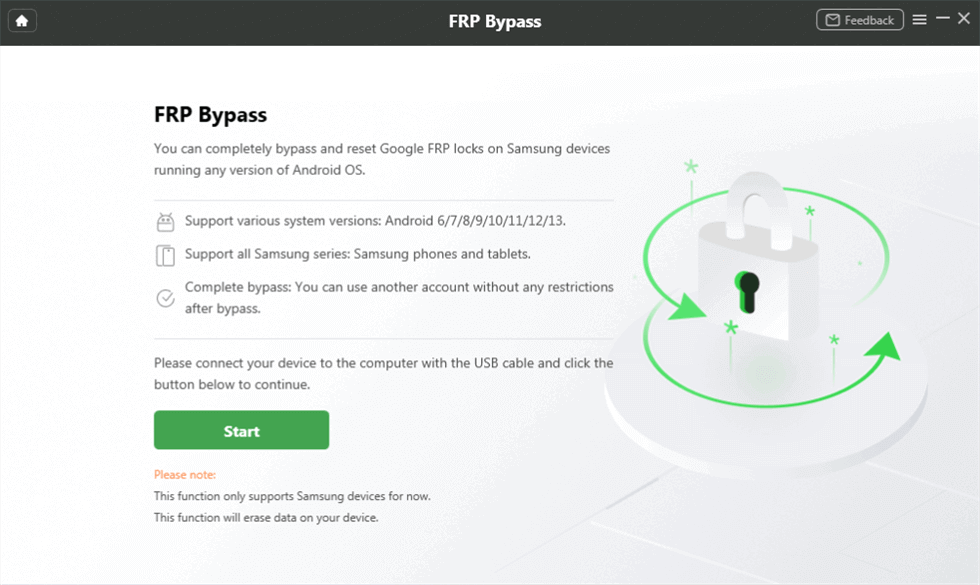
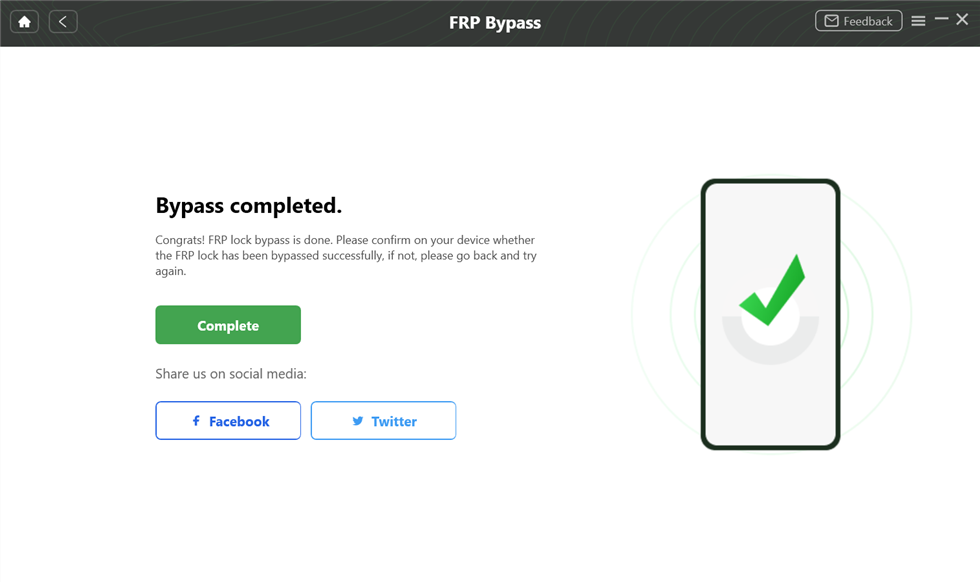
For supported Android devices, DroidKit FRP Bypass provides a computer-based FRP module with on-screen instructions for the detected device route. It does not depend on finding a renamed VNROM APK from multiple mirror pages.
Step 1. Download and install DroidKit on the computer, then choose FRP Bypass.

Step 2. Connect the Android device with a USB data cable and follow the device-detection prompts.
Step 3. Select the requested brand and software information when the workflow asks for it.
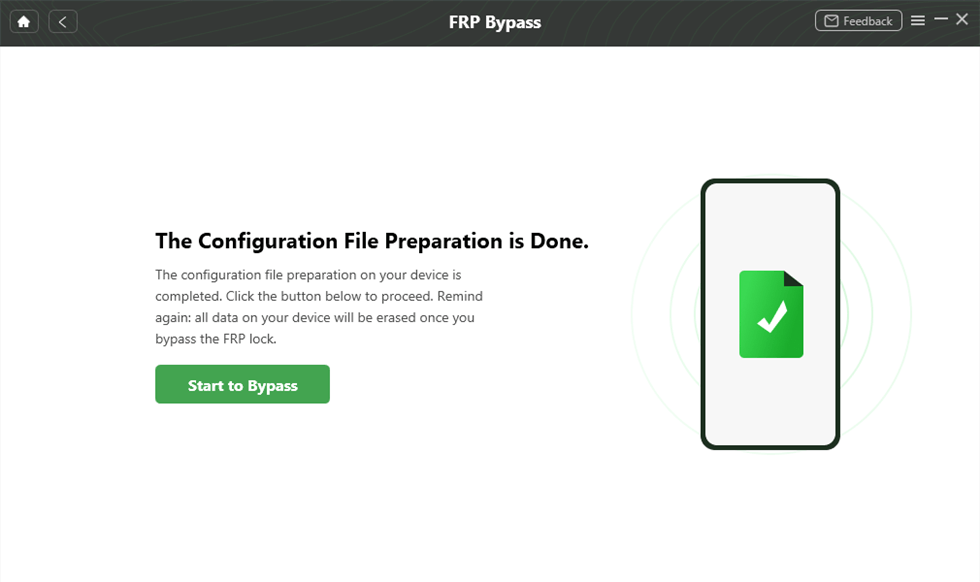
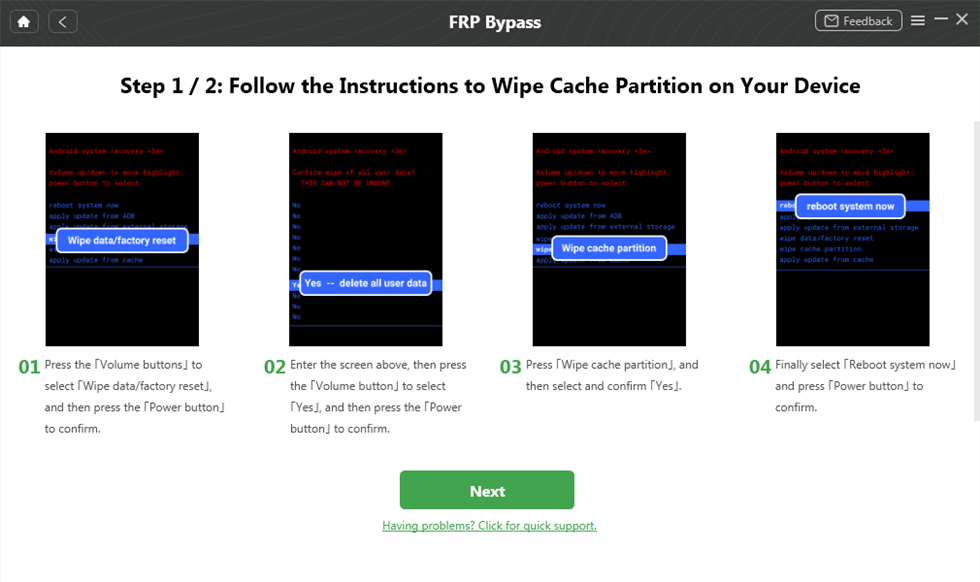
Step 4. Follow the on-screen instructions shown for the supported device route rather than mixing those instructions with an unrelated VNROM guide.
Step 5. Keep the device connected until the software reports that the process has finished.
DroidKit is commercial software. Check the exact device route before purchasing. The reason to consider it on this page is specific: a VNROM download problem, missing APK install path, broken Settings shortcut, or brand/version mismatch may require a different type of workflow rather than another copy of the same APK.
VNROM is associated with Android firmware resources, device guides, and FRP-related resource pages. In FRP searches, people commonly use VNROM, VNROM bypass, or VNROM APK to refer to VNROM-related APK resources and instructions for dealing with Google verification after a reset.
VNROM is the name users search, while vnROM.net is the website domain associated with VNROM firmware, Android guide, and bypass resources. Always check the exact page and file rather than assuming every mirror using the VNROM name comes from the same source.
VNROOM and RVNROOM appear as spelling variations around VNROM search intent. Before downloading a file from a page using a similar name, confirm that the content actually concerns the VNROM resource you intended to research.
The VNROM website currently has a bypass resource page at vnrom.net/bypass. Review the exact guide and file information before installing anything, and match the route to the phone model, Android version, patch, and setup behavior.
Do not judge Android 13 compatibility from the VNROM name alone. Check whether the exact phone still exposes the browser, APK installation, Settings, or activity path required by the guide. If the guide screens do not match, use Android 13-specific device guidance instead of repeatedly installing the same APK.
An Android 16 claim needs exact model and workflow evidence. Check the device, OEM software layer, security patch, required setup screens, and complete guide before assuming that an older VNROM APK route applies to Android 16.
A VNROM route for Redmi depends on the exact model, Android version, MIUI or HyperOS environment, account state, and setup entry points. A generic Android VNROM guide should not automatically be applied to every Redmi device.
Possible areas to check include package integrity, Android compatibility, the installation state allowed by Setup Wizard, and whether the APK was intended for the environment described by the guide. A different filename or “latest 2026” label does not by itself solve those issues.
The guide may depend on a Settings activity or setup transition that is no longer available on that model or software build. Reinstalling the APK cannot restore a system path that the phone does not expose.
Safety depends on the exact file source and package, while suitability depends on the device environment. Check both separately. Avoid unexpected installers, unclear mirrors, packages requesting unrelated access, and pages asking you to enter Google credentials outside an expected account flow.
Record the exact failure point first: download, App not installed, browser blocked, Settings inaccessible, activity missing, Android-version mismatch, or brand-specific setup difference. Choose the next route based on that failure instead of cycling through random VNROM APK copies.
The strongest VNROM search results come from matching the exact question being asked. A user searching VNROM APK needs source and package information. A user searching VNROM FRP bypass Android 13 needs to know whether the required setup route still exists. A user searching VNROM Android 16 needs model-specific compatibility evidence. And a VNROM Redmi search needs Xiaomi/Redmi software context rather than a generic Android promise.
Before trying another file, check the model, Android version, patch, Setup Wizard path, and the precise point where the existing VNROM route stops. An APK filename cannot compensate for a missing Settings activity, a blocked installation path, or instructions written for a different phone environment.
When those VNROM-specific checkpoints show that the APK route does not match the device, move to a method built around the actual phone and software state rather than continuing to test renamed copies of the same file.
Product-related questions? Contact Our Support Team to Get Quick Solution >