What Is FRP Lock? Meaning, Full Form, and How to Remove It
FRP lock, short for Factory Reset Protection lock, is an Android security feature that asks for the previously synced Google account after a factory reset. It helps protect lost or stolen phones, but it can also lock you out if you forget the account, reset the device improperly, or buy a second-hand phone that was not removed from the previous owner’s Google account.
Factory Reset Protection, also called FRP, is built into Android to protect your phone from unauthorized use after a reset. When FRP is active, the device cannot be set up again until the correct Google account is verified. This is helpful if your phone is lost or stolen, but it can become a serious problem when you are the legitimate owner and no longer remember the Google account, password, or previous setup details.
In this guide, you will learn what FRP lock means, how it works, why your Android phone becomes FRP locked, and what safe options you can try to remove FRP lock on a device you own or are authorized to unlock.
Quick Answer: What Does FRP Lock Mean?
FRP lock means Factory Reset Protection lock. It is an Android security feature that protects a device after a factory reset. When FRP is triggered, the phone asks for the Google account that was previously synced on the device before you can set it up again.
In simple terms, FRP lock stops someone from wiping and reusing your Android phone without permission. If you are the legitimate owner but no longer remember the Google account, you should first try account recovery, contact the previous owner, or use an FRP removal option only on a device you own or are authorized to unlock.
Important: FRP is a security feature. You should only remove or bypass FRP lock on your own device or on a device you have clear permission to unlock.
What Is FRP Lock on Android?
FRP lock, or Factory Reset Protection lock, is a Google security feature available on Android phones and tablets. It is designed to prevent someone from erasing your device and using it as a new phone without your permission.
When FRP is active and the device is factory reset without first removing the linked Google account, Android will show a verification screen during setup. This screen usually asks you to sign in with the previously synced Google account. If the account cannot be verified, the phone stays locked.
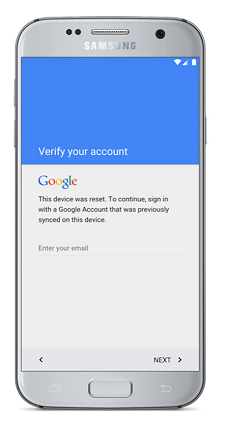
FRP Lock After Factory Reset
FRP Full Form and Meaning
| Term | Meaning |
|---|---|
| FRP | Factory Reset Protection |
| FRP Lock | The Google account verification lock that appears after a reset when FRP is triggered. |
| FRP Bypass | The process of passing or removing the FRP verification screen on an authorized device. |
| Google Account Verification | The setup screen asking for the previously synced Google account after reset. |
Key Features of FRP Lock
1. Device Protection
FRP lock helps protect your Android device from unauthorized use. Even if someone performs a factory reset, they still need the original Google account to set up the device again.
2. Google Account Verification
Because FRP is tied to the Google account previously synced on the phone, Android asks for that account after an untrusted reset. This makes it harder for stolen phones to be wiped and reused.
3. System-Level Security
FRP works at the Android system level. It can still appear even if the phone is reset from recovery mode instead of the Settings app.
4. Automatic Activation
On most modern Android devices, FRP is enabled automatically when you add a Google account and set a secure screen lock, such as a PIN, pattern, or password.
5. Anti-Theft Protection
FRP works together with Android security features to make lost or stolen devices less useful to unauthorized users. It protects the device even after a reset.
You may also want to read the complete Android FRP guide if you already know your device is locked and need removal options.
How Does FRP Lock Work?
FRP usually works quietly in the background. You may not notice it until the phone is reset. Once the protection is active, Android remembers the Google account that was signed in on the device. After a reset, the setup wizard checks whether the device was reset in a trusted way.
Here is how FRP lock works in practice:
- You set up your Android phone and sign in with a Google account.
- You add a secure screen lock, such as a PIN, pattern, password, or fingerprint.
- FRP becomes active and links the device to that Google account.
- Later, the device is factory reset without removing the Google account first.
- During setup after the reset, Android asks for the previously synced Google account.
- If the correct account is entered, you can continue setting up the phone.
- If the account cannot be verified, the phone remains FRP locked.
Trusted Reset vs. Untrusted Reset
A reset from the Settings app after unlocking the phone and removing the Google account is usually safer because it is done by someone who can already access the device. A reset from recovery mode, hard reset menu, or another method may trigger FRP if the Google account is still linked.
This is why many users see the “Verify your account” screen after buying a used phone, forgetting their Google password, or resetting a device from recovery mode. For this specific problem, see the guide on Google account verification after factory reset.
Which Android Phones Have FRP Lock?
Google introduced Factory Reset Protection with Android 5.1 Lollipop, and it is now included on most modern Android phones and tablets. The exact screen, menu name, and verification process may vary by brand, Android version, carrier, and security patch level.
Common Android brands that may use FRP lock include:
- Samsung Galaxy phones and tablets
- Google Pixel devices
- Motorola phones
- Xiaomi and Redmi phones
- OPPO, Vivo, and OnePlus devices
- Lenovo, Tecno, Infinix, Nokia, TCL, and other Android brands
| Device Type | FRP Behavior |
|---|---|
| Samsung Galaxy | May ask for the previously synced Google account after reset. Some models also have brand-specific security behavior. |
| Google Pixel | Uses Google account verification directly during Android setup. |
| Motorola, Xiaomi, OPPO, Vivo | FRP behavior is similar, but setup screens and menus may look different. |
| Android Tablets | Can also trigger FRP if a Google account and screen lock were active before reset. |
If you use a Samsung device and need brand-specific help, check the Samsung FRP lock bypass guide.
How to Turn On or Avoid Triggering FRP Lock
FRP is usually enabled automatically. You do not always need to turn it on manually. Once a Google account is added and a secure screen lock is set, Android can activate Factory Reset Protection in the background.
How FRP Is Usually Enabled
- Open the Settings app on your Android phone.
- Sign in with your Google account.
- Set a secure screen lock, such as a PIN, pattern, or password.
- Keep the Google account linked to the device.
After these conditions are met, FRP may be enabled automatically. If the phone is reset without removing the Google account, the next setup may require account verification.
How to Avoid Triggering FRP Before Selling or Giving Away a Phone
If you plan to sell, trade in, or give away your Android phone, remove your Google account before factory resetting it. This helps the next user set up the phone without being blocked by your account.
- Go to Settings.
- Open Accounts, Passwords & accounts, or a similar menu.
- Select your Google account.
- Tap Remove account.
- Then factory reset the phone from the Settings app.
Tip for used phones: Before buying a second-hand Android phone, ask the seller to reset it in front of you and make sure it can reach the home screen without asking for the previous Google account.
Why Is My Phone FRP Locked?
Your phone may become FRP locked when Android detects that the device was reset while a Google account was still linked. This usually happens after a factory reset, hard reset, or recovery mode reset.
1. Factory Reset without Removing Google Account
This is the most common cause of FRP lock. If you reset your phone from Settings or recovery mode without removing the Google account first, FRP may be triggered and the phone will ask for that account during setup.
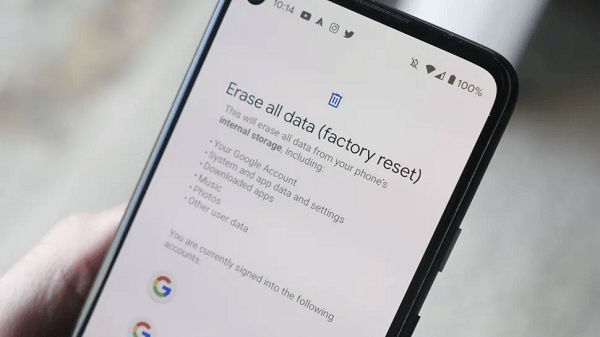
Factory Reset of the Android Device
2. You Forgot the Google Account or Password
If you no longer remember the Google account used on the phone, Android still expects that account during setup. In this case, Google account recovery should be your first option.
3. You Bought a Second-Hand Phone
If the previous owner did not remove their Google account before selling or giving away the device, you may be blocked by FRP when you try to set it up.
4. A Family Member Set Up the Phone
Sometimes a parent, child, friend, or family member sets up the phone, and the current user does not know which Google account was originally synced.
5. Security Updates or Managed Device Policies
Newer Android versions, security patches, or enterprise policies may make FRP behavior stricter. Company-owned or school-managed phones may have extra restrictions beyond normal Google account verification.
FRP Lock vs. Screen Lock vs. Google Account Verification
| Problem | When It Appears | What It Requires |
|---|---|---|
| Screen Lock | Before reset, when unlocking the phone normally | PIN, pattern, password, fingerprint, or face unlock |
| FRP Lock | After a factory reset | Previously synced Google account |
| Google Account Verification | During Android setup after reset | Email and password of the Google account linked before reset |
If your main issue is not FRP but a forgotten screen password, you may need an Android screen lock solution instead of an FRP removal method.
Safe Ways to Remove FRP Lock
The safest way to remove FRP lock is to verify the original Google account used on the phone. If that is not possible, choose the next method based on your situation. Avoid random APKs, unknown scripts, or instructions that ask you to disable security in unsafe ways.
Important: Only bypass FRP on a device you own or have clear permission to unlock. Avoid using these methods on lost, stolen, or found phones.
| Method | Best For | Limitations |
|---|---|---|
| Enter the original Google account | Users who remember the email and password | Does not help if the account is unknown or the password is forgotten |
| Use Google account recovery | Legitimate owners who forgot the password | May require recovery email, phone number, or waiting time |
| Ask the previous owner to remove the account | Second-hand phones | Requires cooperation from the seller or previous owner |
| Contact manufacturer, carrier, or repair service | Users with proof of purchase | May take time and may not be available for all models |
| Use an FRP removal tool | Authorized users when official methods fail | Compatibility depends on brand, model, Android version, and security patch |
Before paying for a remote FRP service: Confirm that the provider currently supports your exact phone model, Android version, and security patch. Review the quoted price, refund terms, expected turnaround time, and any PC or remote-access software requirements before you install anything or share device details.
Use remote assistance only for a device you own or are authorized to unlock. Avoid cracked tools, unofficial download links, or services that cannot clearly explain their ownership requirements, privacy practices, and support process.
Method 1. Enter the Previously Synced Google Account
If you know the Google account that was used on the phone before the reset, enter that email and password on the verification screen. This is the most direct and safest way to unlock FRP.
Method 2. Recover Your Google Account
If you forgot the password, use Google account recovery to reset it. After changing the password, you may need to wait before the phone accepts the new credentials, depending on device and account security settings.
Method 3. Ask the Previous Owner to Remove the Account
If you bought a used phone, contact the seller and ask them to remove the Google account from the device or help you complete the setup. A legitimate seller should be able to help verify ownership.
Method 4. Contact the Manufacturer or Carrier
If you have proof of purchase, the device manufacturer, carrier, or an authorized service center may be able to advise you on the correct unlock path. This is especially important for company-owned, school-managed, or carrier-locked devices.
Method 5. Try an FRP Tool When Official Options Do Not Work
If you own the device and cannot recover the previous Google account, a desktop-based FRP tool may help on supported devices. You can compare available options in the FRP tools for Android phones guide before choosing a method.
Remove FRP Lock with DroidKit When Official Methods Fail
If you have tried the original Google account, account recovery, and previous-owner options but still cannot pass the FRP verification screen, iMobie DroidKit can be a practical desktop-based option for supported Android devices. Use it only on a phone you own or have permission to unlock.
Best for: users who own the device, cannot recover the previous Google account, and want a guided FRP removal process on a computer.
Before you start: FRP removal results may vary by device model, Android version, and security patch level. Check compatibility and make sure you are authorized to unlock the device.
DroidKit provides a guided workflow for Android users who are stuck on the Google account verification screen. It is especially useful when manual methods are confusing, outdated, or blocked by a newer security patch.
Free Download * 100% Clean & Safe
How to Remove FRP Lock with DroidKit
Step 1. Download and install iMobie DroidKit on your PC. Launch it and choose FRP Bypass mode.
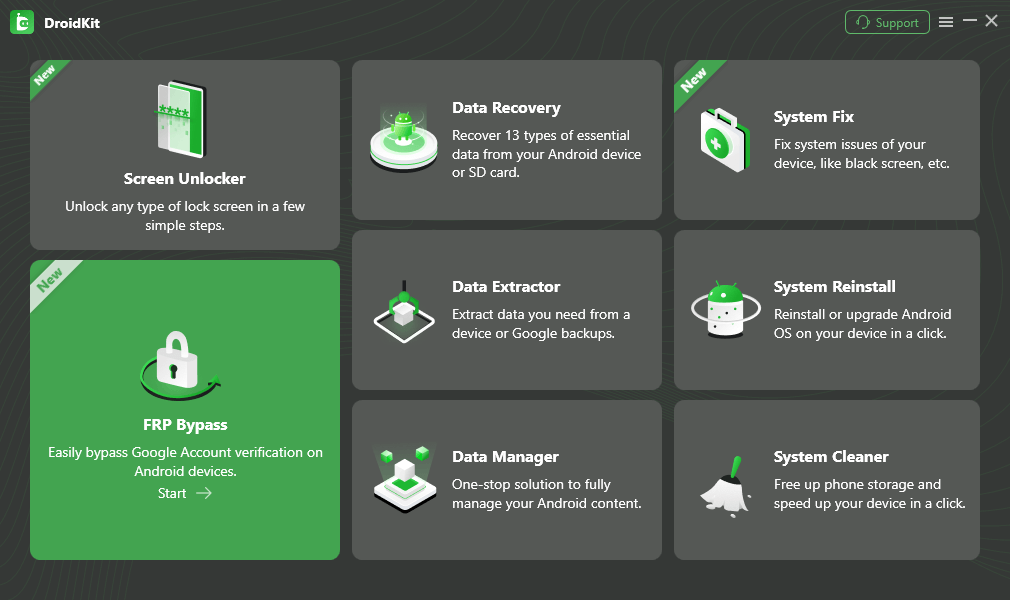
Choose FRP Bypass Mode
Step 2. Connect your device to your PC and click on the Start button.
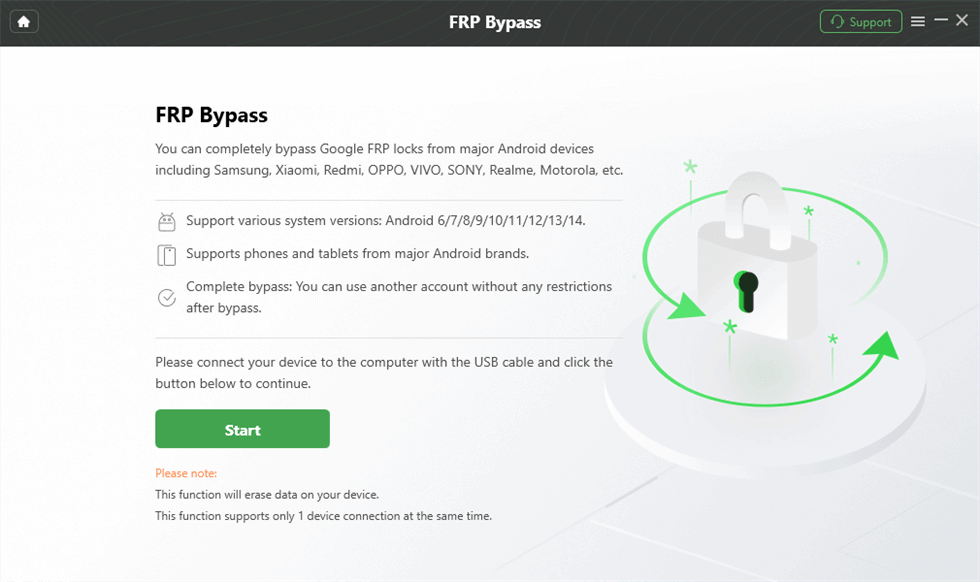
Connect Device and Click Start
Step 3. DroidKit will prepare the configuration file for your device. Then click Start to Bypass.
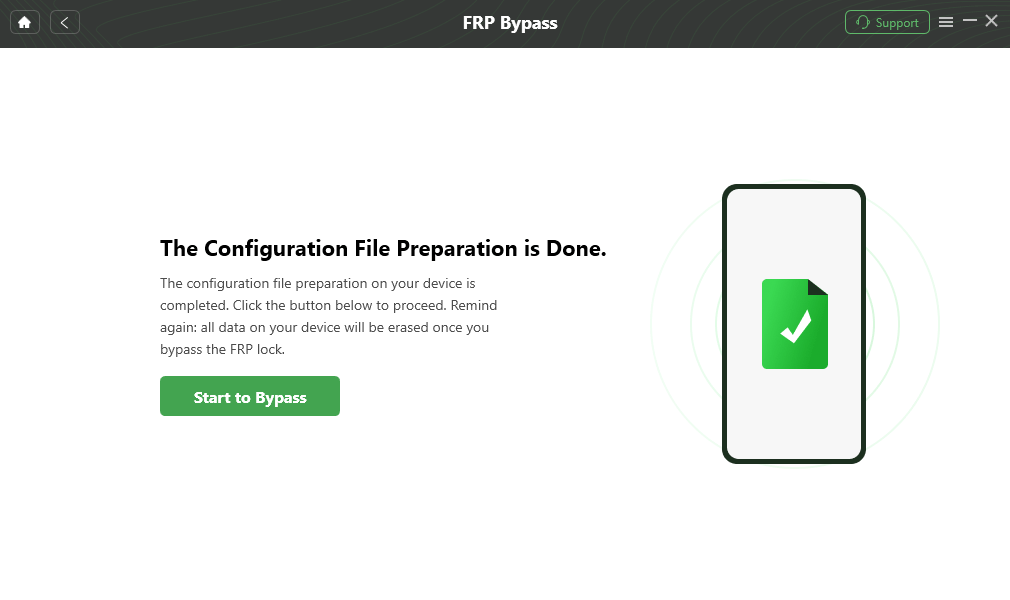
Click Start to Bypass
Step 4. Follow the on-screen instructions to enter recovery mode, select your device’s Android system version, and click Next.
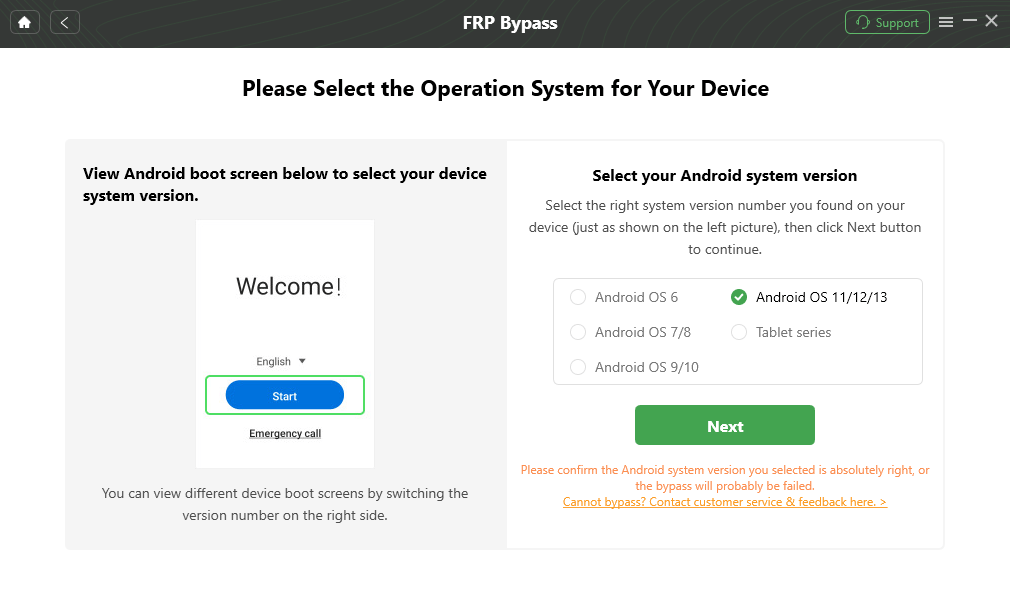
Choose System Version
Step 5. Follow the instructions on the screen to wipe the cache partition. After the device reboots, check whether the FRP lock has been removed.
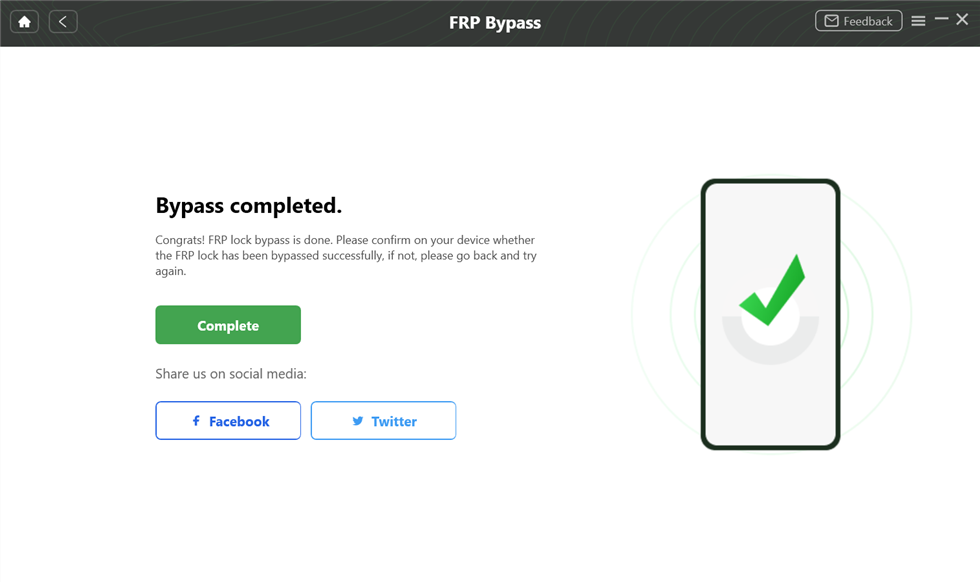
FRP Bypass Complete
If you are not sure whether your device is supported, check DroidKit’s compatibility information first or compare it with other Android FRP bypass methods before proceeding.
Is It Legal and Safe to Bypass FRP Lock?
FRP bypass can be legal and safe only when you are unlocking a device you own or have clear permission to unlock. FRP exists to protect users from theft and unauthorized access, so bypassing it on a stolen, lost, or unknown device is not appropriate.
To stay safe:
- Only remove FRP on your own device or an authorized device.
- Try the original Google account and Google recovery first.
- Ask the previous owner for help if the device was bought second-hand.
- Avoid unknown APK downloads, suspicious websites, or instructions that ask for sensitive information.
- Use reputable tools and check device compatibility before starting.
FRP is not the same as a normal screen lock. If your phone is locked before reset, use a screen lock solution. If it asks for the previously synced Google account after reset, you are dealing with FRP lock.
FRP Lock FAQs
1. What is the full form of FRP lock?
FRP stands for Factory Reset Protection. FRP lock is the Android verification lock that appears after a factory reset when the device still needs the previously synced Google account.
2. What does FRP lock mean on a phone?
FRP lock means your Android phone is protected by Factory Reset Protection. To continue setup after a reset, you need to verify the Google account that was previously synced on the device.
3. What does FRP bypass mean?
FRP bypass means removing or passing the Factory Reset Protection verification screen. It should only be done on devices you own or are authorized to unlock.
4. Why is my phone showing FRP locked?
Your phone may show FRP locked if it was reset while a Google account was still linked to it, if the original account cannot be verified, or if the device was previously owned by someone else.
5. Can a factory reset remove FRP lock?
No. A factory reset can trigger FRP lock if the Google account was not removed first. After the reset, Android may ask for the previously synced Google account before you can use the device.
6. Can I remove FRP lock without a Google account?
The safest option is to recover and verify the original Google account. If that is not possible and you own the device, you can contact the previous owner, ask the manufacturer for help, or use a compatible FRP removal tool.
7. Is FRP lock the same as screen lock?
No. A screen lock protects the phone before reset and usually requires a PIN, pattern, password, fingerprint, or face unlock. FRP lock appears after a factory reset and requires the previously synced Google account.
8. Do all Android phones have FRP lock?
Most modern Android phones and tablets support FRP, especially devices running Android 5.1 or later. The exact setup screens and menus may differ by brand and Android version.
The Bottom Line
FRP lock means Factory Reset Protection lock. It is an Android security feature that protects your phone after a factory reset by asking for the previously synced Google account. It is useful for preventing unauthorized use, but it can also lock out legitimate owners who forget the account or buy a second-hand phone that was not reset properly.
If your phone is FRP locked, start with the safest options: enter the original Google account, recover your Google password, contact the previous owner, or ask the manufacturer for help. If those options fail and you own the device, a guided tool like DroidKit may help on supported models.
Free Download * 100% Clean & Safe
More Related Articles


Roger Smith is a senior technical writer with years of experience in providing Android solutions. He loves to help users solve various problems such as Android unlock, Android data recovery, and Android system repair.
Product-related questions? Contact Our Support Team to Get Quick Solution >
