Quick Answer: An absolute location is a fixed, exact point on the Earth’s surface. In geography, this precise position is defined using a universal system of fixed coordinates, primarily latitude and longitude. Unlike relative location—which describes where a place is compared to somewhere else—an absolute location is permanent and never changes regardless of your starting point.
While the concept of absolute location originated in traditional mapmaking and geography, it is no longer just for textbooks. Today, this exact geographic concept powers the digital GPS technology inside modern smartphones, mapping tools, and location-based applications to pinpoint exactly where you are in the world at any given second.
Real-World Examples of Absolute Location
To understand how this geographic concept works in practice, it helps to look at concrete examples of absolute location in both global and localized systems.
- GPS Coordinates (Latitude and Longitude): The most precise mathematical example is a set of global coordinates. For instance, the absolute location of the Eiffel Tower in Paris is 48.8584° N, 2.2945° E. These coordinates describe a fixed point on Earth that does not move.
- Street Addresses: Many people wonder if a standard mailing address counts as an absolute location. Yes, it does. In a localized postal system, an exact street address (e.g., “1600 Pennsylvania Avenue NW, Washington, D.C., 20500”) serves as an absolute location because it corresponds to one unique, fixed structural plot on a city grid.
- Indoor Grid Designations: Absolute location can even scale down to smaller blueprints. A specific room inside a large building (such as “Room 402, 4th Floor, City Hospital”) acts as a fixed point within that building’s architectural framework.
Absolute vs. Relative Location: What is the Difference?
In geography, absolute and relative location are the two primary ways to describe where something is, but they serve very different purposes. Relative location describes a place based on its relationship to another known location (for example, “10 miles north of the city center”).
Here is a clear comparison to help distinguish the two concepts:
| Feature | Absolute Location | Relative Location |
|---|---|---|
| Definition | An exact, fixed point on the Earth. | A position described in relation to another place. |
| Reliance on Landmarks | Independent; does not require external landmarks. | Highly dependent on surrounding landmarks or starting points. |
| Flexibility | Never changes (coordinates stay the same). | Changes depending on the observer’s starting point. |
| Precision | Pinpoint accuracy (latitude/longitude or exact address). | General area or directional guidance. |
| Example | “123 Main Street, New York, NY” | “Just past the supermarket on the right side of Main Street.” |
Understanding this difference is crucial not just for traditional navigation, but for understanding how modern technology tracks us.
Absolute Location in the Digital Age: How Your Phone Knows Where You Are
While a mountain’s absolute location is physically anchored to the Earth, your personal absolute location moves with you—or rather, with your smartphone. In the digital age, your phone’s reported GPS coordinates act as your digital absolute location.
Modern smartphones determine these exact coordinates by communicating with a network of GPS satellites orbiting the Earth. To improve accuracy and speed, your phone also triangulates data using nearby Wi-Fi networks and cell towers.
This creates an interesting shift in how we think about geography. Physical absolute locations (like the Eiffel Tower) are truly permanent. However, your device’s digital absolute location is simply a stream of data sent to its operating system. Because it is just data, it introduces both incredible convenience and significant privacy concerns for the modern user.
Why Do Mobile Apps Need Your Fixed Coordinates?
When you install a new app, it often requests access to your location. These apps cannot function properly using just a “relative location” (like knowing you are somewhere in a specific city); they require your device’s exact latitude and longitude.
Here are common reasons apps demand your digital absolute location:
- Maps and Navigation: Apps like Google Maps or Waze need fixed coordinates to provide accurate turn-by-turn directions.
- Weather Apps: To deliver hyper-local forecasts and severe weather alerts, these apps track your exact grid position.
- Dating and Social Apps: Services like Tinder or Snapchat rely on pinpoint coordinates to match you with nearby users. For privacy, many users look for ways to change Tinder location by overriding this data.
- Location-Based Games: Augmented reality (AR) games require constant GPS tracking to spawn items and track physical movement, which is exactly why users often seek ways to change location in Pokémon GO.
Because users constantly broadcast their digital absolute location to dozens of apps, privacy has become a major concern. Many users now actively look for ways to manage, restrict, or alter the location data their devices report.
How to Manage or Change Your Digital Absolute Location
You cannot change the physical absolute location of a city, but you absolutely can modify the digital absolute location your phone reports. If you want to protect your privacy, test an app, or manage location-based services without physically traveling, you need a way to override your device’s GPS data.
This is where a guided desktop tool like Fonelora Location Changer becomes highly useful. Fonelora Location Changer allows you to change the reported GPS data sent to the operating system on supported iOS and Android devices, giving you a safe way to handle iPhone and Android location change workflows.
Fonelora Location Changer
Realistic GPS movement simulation, flexible route control, easy no-modification setup, and support for gaming, social, privacy, and location-based testing in one platform.
Here is how the basic workflow operates to change your reported location:
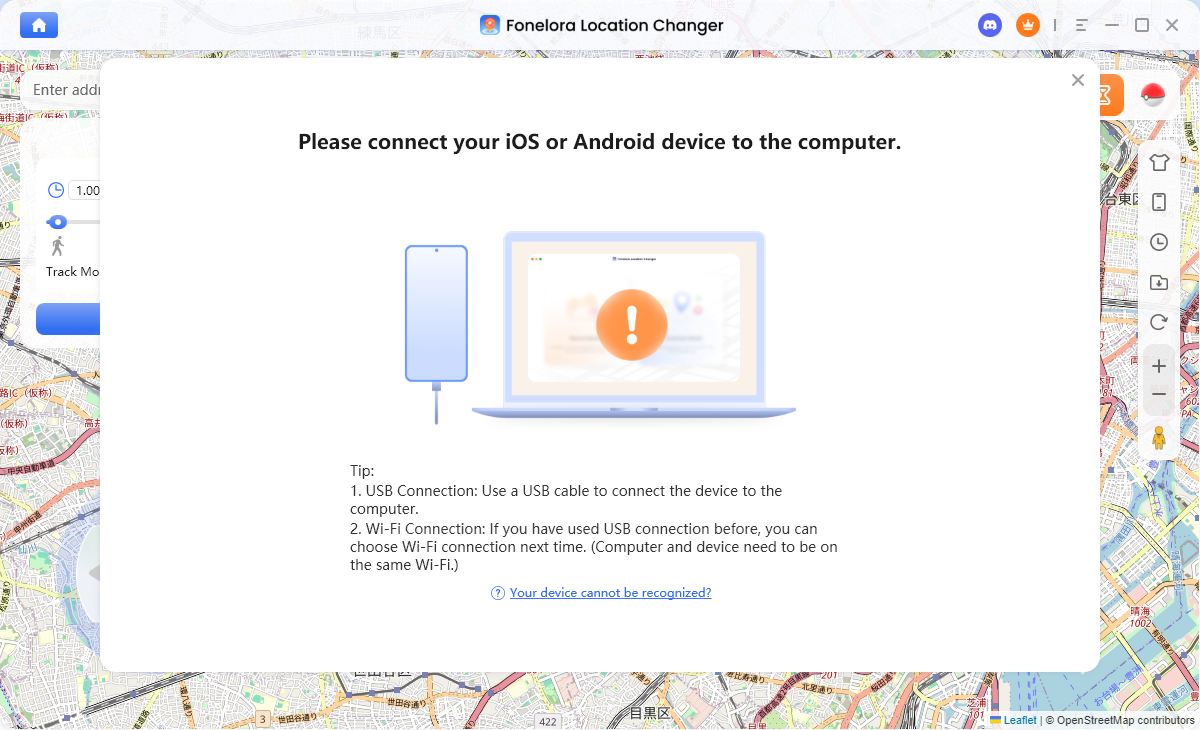
- Connect your device: Launch Fonelora on your computer and connect your supported iPhone or Android device via USB or Wi-Fi.
- Select your movement mode: Choose a mode like Teleport Mode to instantly change your location to a new fixed point.
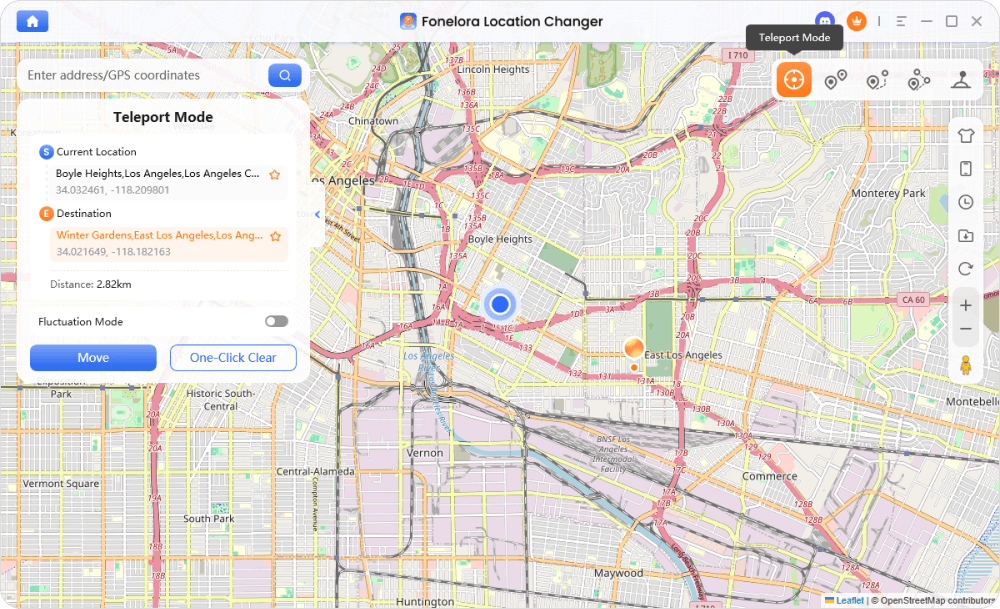
- Pick your new absolute location: Enter a specific street address or paste a latitude/longitude coordinate into the map search bar.
- Apply the change: Confirm the selection. The software will instantly update the GPS data reported to your device’s OS and any installed apps.
Changing your GPS location alters the data for all apps on your device. Results may vary based on your device model, OS version, and specific third-party app rules. Always check compatibility and manage your virtual location responsibly.
Frequently Asked Questions
- What is the definition of absolute location?
- An absolute location is a precise, fixed point on the Earth’s surface. It is most commonly determined using a universal system of geographical coordinates, such as latitude and longitude.
- What is a good example of an absolute location?
- A set of GPS coordinates (like 40.7128° N, 74.0060° W for New York City) is the purest example. A specific street address or a designated room number in a building also serves as a localized absolute location.
- How is absolute location different from relative location?
- Absolute location provides an exact, unchangeable coordinate or address. Relative location describes a place based on its distance or direction from another location (e.g., “five miles south of the river”).
- How do smartphones find my absolute location?
- Smartphones calculate your digital absolute location by receiving signals from GPS satellites. They often refine this exact position by triangulating data from nearby cell towers and Wi-Fi networks.
- Why do mobile apps ask for my absolute location?
- Apps require your exact coordinates to provide location-specific services, such as turn-by-turn navigation, hyper-local weather alerts, nearby social matches, or movement tracking in AR games.
- How can I change my absolute location on my phone?
- While you cannot change a physical location, you can change the digital GPS coordinates your phone reports. Using guided desktop software like Fonelora Location Changer allows you to override the GPS data on supported iOS and Android devices to protect your privacy or manage app settings.
Summary: Managing Your Absolute Location in the Real and Digital World
In geography, an absolute location is a permanent, exact point on the Earth defined by fixed coordinates like latitude and longitude. Whether it is a global GPS coordinate or a specific street address, this location never changes based on your starting point.
However, in today’s highly connected world, this traditional concept has merged with modern technology. Your smartphone translates physical coordinates into digital GPS data, which apps constantly request for navigation, weather, and social features. If you are concerned about broadcasting this exact data constantly, remember that you have options. By using guided desktop workflows like Fonelora Location Changer, you can easily manage, protect, or alter the digital absolute location your supported devices report, taking back control of your location privacy.
Fonelora Location Changer
- Bluetooth Hardware Simulation for Safer GPS Spoofing
- Realistic Movement & Route Simulation
- No Root or Jailbreak Required
- All-in-One Solution for Games, Social Apps & Privacy
More Related Articles