How to Bypass Verify PIN After Factory Reset on Android
Stuck on “Your phone was reset to factory settings. Enter your previous PIN”? Learn what the previous PIN screen means, how it differs from Google account verification, which recovery route fits a second-hand or personal Android phone, and what to do when an old no-PC method no longer works.
Does your Android phone say “Your phone was reset to factory settings. Enter your previous PIN to unlock it”? This screen can appear after a factory reset when Android still requires a credential that was associated with the device before it was erased. Depending on the phone and setup screen, you may be asked for the previous screen-lock PIN, a previously synced Google account, or another ownership-verification step.
The important first step is to identify what the phone is actually requesting. A previous PIN prompt is not always identical to a normal lock screen, and it should not automatically be treated as the same thing as every Google FRP screen. This guide keeps those cases separate so you can choose an appropriate recovery, previous-owner, no-PC, service-center, or supported computer-based route.
If your phone specifically shows “Verify your account” or asks for a Google account previously synced with the device, the dedicated Google verification after factory reset guide covers that account-verification path in more detail.
Quick Answer: If you know the previous PIN, use it first. If you still control the Google account that was on the phone before reset, recover and verify that account. For a second-hand phone, contact the seller or previous owner before attempting another reset. Older keyboard or Settings-based no-PC routes depend on specific Android setup screens and may no longer match newer software. A computer-based FRP workflow is relevant only when the phone is yours or you are authorized to service it and the supported device workflow matches your situation.
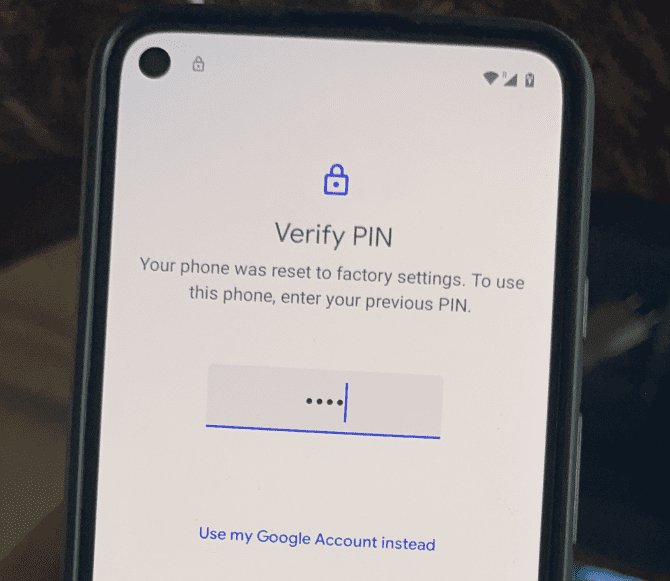
Android Verify PIN after factory reset.
Table of ContentsHide
What Does “Enter Your Previous PIN” Mean?
Which Verify PIN Method Should You Use?
Method 1. Use the Previous PIN or Contact the Previous Owner
Method 2. Check Google Account Verification
Method 3. Use DroidKit for a Supported FRP Situation
Method 4. Can You Bypass Verify PIN Without a Computer?
Method 5. Visit an Official Service Center
Why Verify PIN Methods Stop Working
FAQs About Verify PIN After Factory Reset
What Does “Enter Your Previous PIN” Mean After Factory Reset?
After an Android phone is reset, the setup process may still ask for credentials associated with the device before the reset. The exact wording varies by manufacturer and Android version.
You may see messages such as:
- “Your phone was reset to factory settings.”
- “Enter your previous PIN.”
- “Use your previous screen lock.”
- “Verify your account.”
- “This device was reset.”
- “Sign in with a Google Account that was previously synced on this device.”
These messages belong to the broader Android device-protection and post-reset verification process, but they do not all ask for exactly the same credential.
| What the Phone Asks For | What It Usually Means | Best First Step |
| Previous PIN, pattern, or screen lock | The setup process recognizes a screen credential that was associated with the phone before reset. | Enter the previous credential if you know it. |
| Previously synced Google account | Google account verification or FRP is active after reset. | Recover or verify the Google account previously used on the device. |
| Second-hand phone asks for unknown credentials | The previous owner’s credential or account may still be relevant. | Contact the seller or previous owner. |
| Old tutorial shows a Settings shortcut that is missing | The no-PC route may not match the current Android or Setup Wizard environment. | Stop that route instead of repeating the same shortcut. |
| Normal PIN screen before setup or reset | This may be an ordinary Android screen-lock problem rather than post-reset verification. | Use instructions for the lock that is actually displayed. |
If you want the broader explanation of Android Factory Reset Protection and why another reset does not necessarily remove post-reset verification, see the Android FRP bypass guide.
Which Verify PIN After Factory Reset Method Should You Use?
Choose the route from the credential and ownership situation rather than starting with a random bypass trick.
| Your Situation | Better Starting Point | Why |
| You remember the previous PIN | Enter the previous PIN | This directly satisfies the credential the phone is requesting. |
| You still control the previous Google account | Google account recovery or sign-in | It keeps the device associated with the account owner instead of introducing another bypass method. |
| You recently bought the phone used | Contact the seller or previous owner | The requested credential may belong to the previous owner. |
| The phone specifically says “Verify your account” | Troubleshoot Google FRP | The problem has moved from a previous-PIN query to Google account verification. |
| An old no-PC keyboard or Settings route does not match the screen | Stop and reassess compatibility | The missing setup checkpoint is a sign that the old route does not fit the current device environment. |
| You own the phone, account recovery is unavailable, and a supported computer workflow exists | Evaluate a guided FRP tool | A device-matched workflow can be easier to follow than combining several outdated manual methods. |
| You have proof of ownership but cannot resolve the credential yourself | Official service or manufacturer support | The service provider can evaluate the device and ownership documents directly. |
Method 1. Use the Previous PIN or Contact the Previous Owner
If you know the PIN, pattern, or password used on the phone before factory reset, start with that credential. Do not create a new PIN on another device or assume that your current Google password is interchangeable with the previous screen lock.
If You Bought the Phone Second-Hand
If the requested PIN belongs to a previous owner, contact the seller rather than repeatedly factory-resetting the phone. Ask them to help complete the ownership-transfer process properly.
The previous owner may need to:
- enter the previous device PIN if the setup screen requires it;
- sign in with the Google account previously used on the phone;
- remove their Google account after setup is completed;
- confirm that the phone was legitimately transferred to you; and
- help resolve any account or device-management association that remains from the previous setup.
Second-hand phone checkpoint: If the seller cannot provide the previous credential or verify legitimate ownership, another bypass tutorial does not solve the ownership issue. Consider returning the device or using the marketplace’s buyer-protection process where applicable.
Method 2. Check Whether the Phone Is Asking for Google Account Verification
A previous-PIN screen and a Google verification screen can appear in the same overall post-reset setup journey. Read the wording carefully.
If the phone says “Verify your account” or asks you to sign in with an account that was previously synced with the device, try to recover that Google account first.
Useful checks include:
- confirm which Google account was previously used on the phone;
- try Google’s normal account-recovery process from another trusted device;
- use a recovery phone number or backup email when available;
- if the password was recently changed, follow any security wait or verification instruction Google presents; and
- return to the reset phone only after the account itself is accessible again.
The Google account verification after reset guide separates account recovery, previous-owner situations, PC tools, and older no-PC methods by the screen and failure point.
Previous PIN vs Google Account: Do Not Mix the Two
If the setup screen changes from a previous PIN prompt to a Google account prompt, follow the credential currently being requested. Repeatedly entering unrelated PINs will not solve a Google account verification screen, just as installing an FRP APK is not the logical first response when you already know the previous PIN.
Method 3. Use DroidKit for a Supported FRP Situation
If the phone belongs to you or you are authorized to service it, Google account recovery cannot be completed, and the device is now stopped at an FRP or Google verification stage, a computer-based workflow may be worth evaluating.
DroidKit FRP Bypass provides guided computer steps for supported Android FRP situations. It should be treated as an FRP option rather than as a universal solution for every previous-PIN screen, every Android model, or every security state.
When This Route Makes More Sense
- The phone is yours or you are authorized to work on it.
- The screen has moved to Google/FRP verification after reset.
- Account recovery or previous-owner assistance is not available.
- An old keyboard, APK, or Setup Wizard shortcut does not match the phone.
- The device and Android workflow shown by DroidKit match your situation.
How to Start the FRP Workflow with DroidKit
Step 1. Open DroidKit on your computer and choose FRP Bypass.
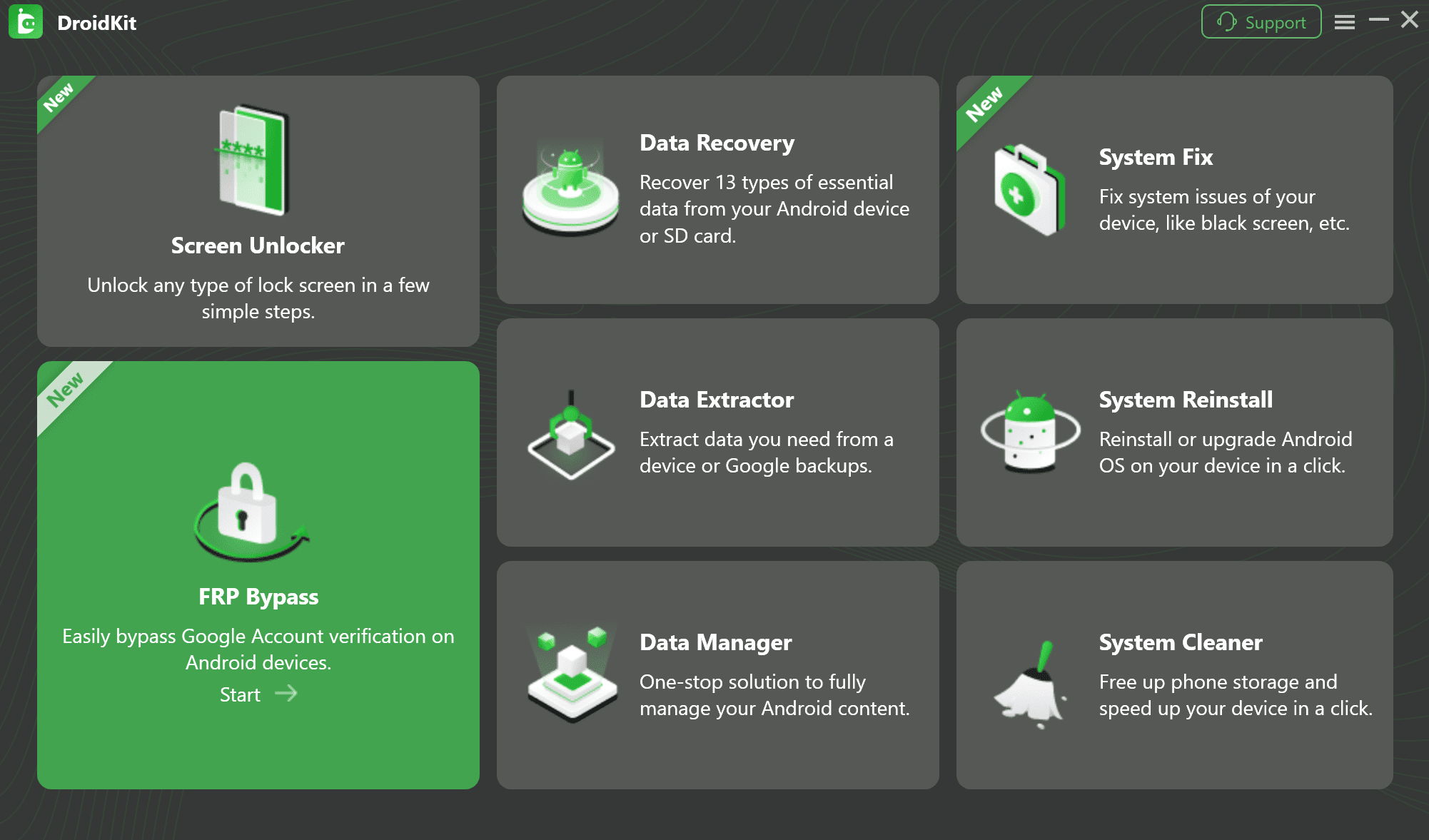
Step 2. Connect the Android phone with a data-capable USB cable, click Start, and choose the correct device brand when prompted.
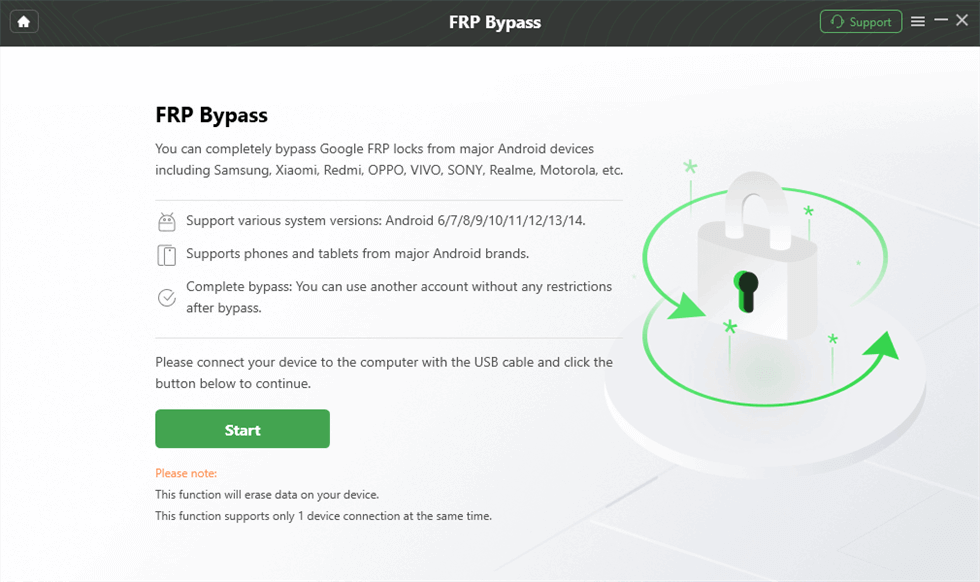
Step 3. Wait while the software prepares the configuration required for the available device route. Continue only when the connected phone and the instructions match.
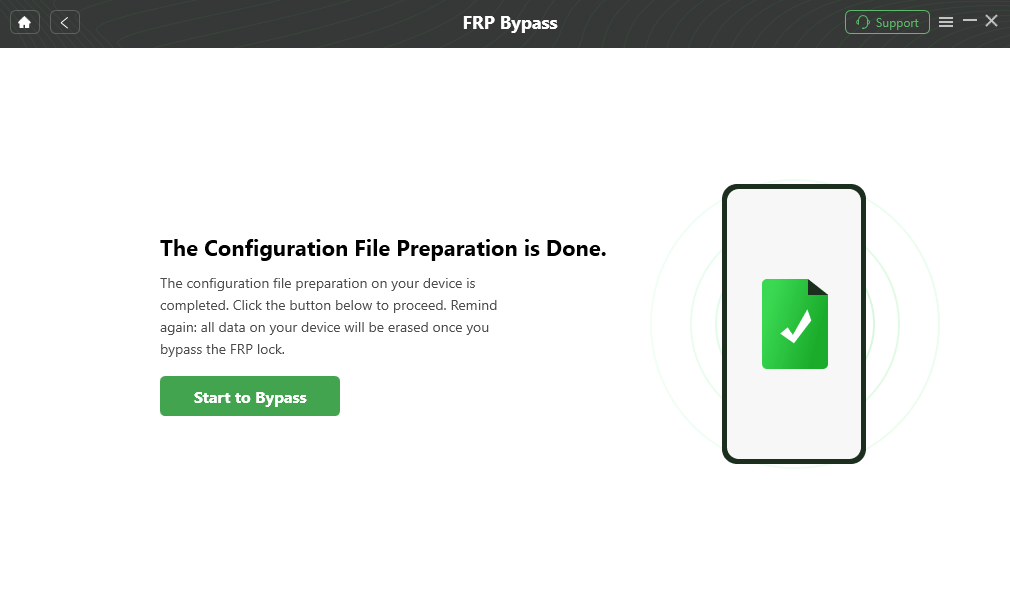
Step 4. Select or confirm the Android system information requested by DroidKit and follow the instructions displayed for that device route.
Step 5. Keep the phone connected until the workflow reports completion, then continue with device setup.
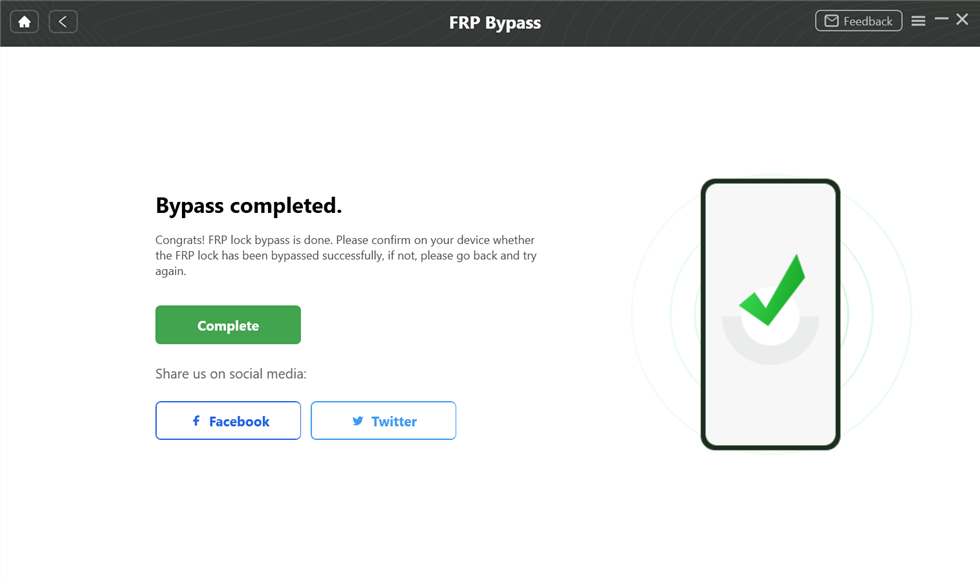
DroidKit – Check the FRP Workflow for Your Device
If your phone has moved from a previous-PIN problem to Google FRP verification, check the DroidKit FRP page for the supported workflow and device requirements before starting.
Method 4. Can You Bypass Verify PIN After Factory Reset Without a Computer?
Older Android tutorials often use keyboard settings, Google Voice Typing, accessibility menus, browser shortcuts, APK installation, SIM-related actions, or other Setup Wizard entry points. These routes depend on very specific software behavior.
The key question is not whether a tutorial says “no PC.” It is whether your phone still exposes the same screens.
| Older No-PC Route | What Must Still Be Available | Stop If |
| Keyboard Settings | The setup keyboard must expose the Settings or help path shown by the instructions. | The gear icon or required menu does not appear. |
| Google Voice Typing route | The voice settings and downstream Settings path must still open. | The menus differ from the tutorial. |
| Browser or help-page route | The setup process must allow the browser or help content to open. | The browser is blocked or redirects back to setup. |
| APK route | Download, file access, installation permission, and the required Settings activity must be available. | The APK cannot install or the required activity is inaccessible. |
| SIM or call-related route | The exact setup behavior used by the old method must still exist. | The call or notification screen no longer exposes the required action. |
What About the Old Keyboard and Google Voice Typing Method?
The previous version of this article used a long keyboard/Google Voice Typing sequence that attempted to reach Android Settings and create a different screen lock. That sequence is highly dependent on the Android build, keyboard version, manufacturer Setup Wizard, and security state.
If your phone still shows the same menus, you can use the old screenshots as a compatibility reference. If even one required checkpoint is missing, stop rather than combining steps from several unrelated tutorials.
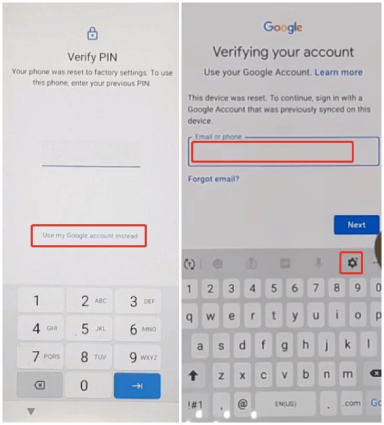
An older method required the keyboard Settings shortcut to be available.
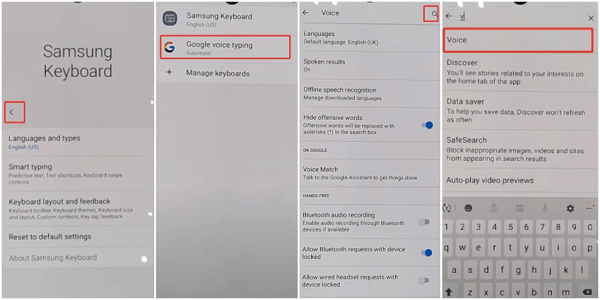
Older routes may also depend on Google Voice Typing menus.
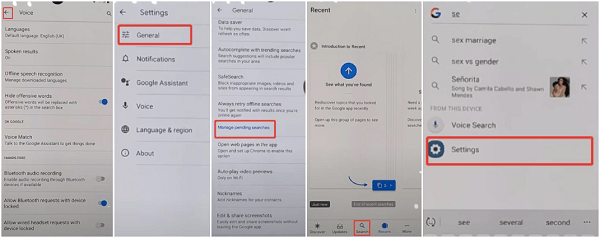
Stop if the route no longer reaches the Settings screen shown by the guide.
Why a No-PC Route May Fail on One Phone but Work on Another
- Different Android versions expose different setup behavior.
- Samsung, Xiaomi, Motorola, OPPO, Realme, Tecno, and other brands use different Setup Wizard implementations.
- Security updates can change keyboard, browser, accessibility, APK, and Settings access.
- Two phones from the same brand can still use different firmware and security states.
- A video or article published for an older build may no longer match the phone in front of you.
Method 5. Visit an Official Service Center
If you own the device and can provide proof of purchase, an official manufacturer or authorized service provider is another option when you cannot satisfy the previous PIN or account-verification request yourself.
This Route Makes Sense When
- you are the original owner;
- you still have purchase or ownership documentation;
- the phone is under warranty or service coverage;
- you do not want to use firmware, APK, or third-party servicing methods; or
- you are unsure whether the current screen is a normal lock, previous-PIN verification, FRP, or another device-security state.
Service policies vary by manufacturer and region, so contact the appropriate support provider before traveling to a store. Do not assume that every retail phone shop is an official service center or that every service provider offers the same post-reset unlock procedure.
Why Verify PIN After Factory Reset Methods Stop Working
If a method fails, identify the first checkpoint where your screen differs from the instructions. That failure is usually more useful than trying another tutorial with a different title.
| Failure Point | What It Suggests | Better Next Step |
| Previous PIN is rejected | The credential may be incorrect, outdated, or not the credential the setup screen expects. | Recheck the exact prompt and ownership/account situation. |
| The phone changes to “Verify your account” | You are now dealing with Google account verification. | Move to Google account recovery or FRP-specific guidance. |
| Keyboard Settings icon is missing | The old no-PC route does not match the current keyboard or Setup Wizard. | Stop that route instead of searching for another version of the same shortcut. |
| Google Voice Typing or Settings path is different | The software environment has changed from the one used by the tutorial. | Choose a route based on the current Android/device state. |
| APK says “App not installed” | The package or installation route does not fit the current setup environment. | Do not keep installing renamed copies of the same APK. |
| A computer tool does not recognize the phone | USB connection, drivers, device state, or workflow compatibility may be wrong. | Resolve detection and compatibility before retrying. |
| A second-hand phone still asks for another person’s credential | The previous owner is still relevant to setup. | Return to the seller or previous owner rather than repeating resets. |
Which Android Phones Can Show Previous PIN or Post-Reset Verification?
Post-reset verification can appear across different Android brands, but the exact screen and available recovery route can vary.
| Brand | What to Check |
| Samsung | Whether the setup screen asks for the previous screen lock, Google verification, or another Samsung-specific security state. |
| Xiaomi / Redmi | Whether the screen belongs to Google verification, a previous screen credential, or a separate Xiaomi account state. |
| OPPO / Realme | Check the exact post-reset prompt and do not assume Samsung keyboard or Setup Wizard instructions will match. |
| Tecno / Infinix | Verify Android version and the actual credential requested during setup. |
| Motorola | Determine whether the phone is requesting Google verification after reset or another device credential. |
For cross-brand FRP methods and version-specific routes, use the Android FRP guide rather than applying instructions from one manufacturer to another.
FAQs About Verify PIN After Factory Reset
Why does my phone ask for the previous PIN after a factory reset?
Android can require a credential associated with the phone before reset as part of its post-reset device-protection process. Depending on the device, you may be asked for a previous screen-lock credential or a Google account that was previously synced with the phone.
Is “Enter your previous PIN” the same as FRP?
They are closely related post-reset security situations, but the exact credential matters. A previous-PIN prompt asks for a screen credential, while a Google FRP screen asks for a previously synced Google account. Follow the prompt that is currently displayed instead of treating every screen as identical.
Can I use my Google password instead of the previous PIN?
Only if the setup screen has moved to Google account sign-in. If the phone specifically requests the previous device PIN, a Google password is not automatically a substitute for that screen credential.
What should I do if I bought the phone second-hand?
Contact the seller or previous owner first. Ask them to provide the required credential or complete the account-removal and ownership-transfer process. If they cannot demonstrate legitimate ownership or remove the old association, consider returning the phone.
Can I bypass verify PIN after factory reset without a computer?
Older no-PC tutorials may rely on keyboard, Google Voice Typing, browser, APK, accessibility, SIM, or Settings shortcuts. Those routes work only when the phone still exposes the same setup path. If a required screen is missing, stop that method instead of repeatedly trying the same shortcut.
Why is an old keyboard bypass method not working?
The Android version, manufacturer Setup Wizard, keyboard version, or security state may differ from the environment used by the original tutorial. A missing gear icon, Voice Typing screen, browser shortcut, or Settings route is a sign that the method does not match your current phone.
What if the phone says “Verify your account” instead?
That message points to Google account verification after reset. Recover the Google account previously associated with the phone when possible, or use Google-verification-specific guidance rather than continuing with a previous-PIN tutorial.
Can DroidKit bypass the previous PIN after reset?
DroidKit’s FRP workflow is relevant when the device is in a supported Google FRP situation after reset. It should not be presented as a universal solution for every previous-PIN screen or every Android model. Check the device workflow before starting.
Conclusion
When Android says “Your phone was reset to factory settings. Enter your previous PIN,” start with the credential and ownership situation rather than the bypass method. Use the previous PIN if you know it, recover the previously synced Google account when the screen asks for Google verification, and involve the previous owner when a second-hand device still depends on their credentials.
If an old no-PC tutorial no longer exposes the keyboard, Google Voice Typing, browser, Settings, or APK checkpoint it requires, that is a compatibility failure—not a reason to repeat the sequence. Reassess the current Android and device environment before choosing another route.
For an authorized device that has moved to a supported FRP situation, a guided computer workflow can be evaluated after account recovery and previous-owner options have been ruled out.
More Related Articles


Roger Smith is a senior technical writer with years of experience in providing Android solutions. He loves to help users solve various problems such as Android unlock, Android data recovery, and Android system repair.
Product-related questions? Contact Our Support Team to Get Quick Solution >
