How to Unlock Android Pattern Lock If Forgotten [2026 New!]
Forgot the Android pattern and wonder how to unlock phone pattern? This guide can help you out with the efficient ways to unlock Android pattern lock if forgotten.
DroidKit – How to Unlock Android Pattern Lock 1 Click
Forgot pattern Android? Don’t worry. Free download DroidKit to unlock your Android phone in simple clicks. It can unlock all Android screen locks, like pattern, digital passcode, PIN, Face/Touch ID, etc. Supports all Android devices, like Samsung, Motorola, Xiaomi, etc.

Today, most smartphone users tend to set patterns, PINs, fingerprints, or other screen locks to protect personal data from prying eyes. However, patterns were forgotten, and you are locked out. You may first try your best to guess a possible pattern lock, but nothing works. So, is it possible to unlock pattern lock? Yes, for sure. There are several ways to unlock pattern if you forgot it.
Then, how to unlock phone pattern? Here in this post, we will offer you several available ways to unlock Android pattern lock. You can reset the pattern lock, unlock the pattern without losing data, unlock any phone pattern, etc. Now keep reading and find out how to unlock pattern lock.
How to Unlock Phone Pattern
Table of ContentsHide
What Is the Android Pattern Unlock Code
Pattern unlock codes are gesture-based passcodes used to secure Android devices. There is no universal master pattern unlock code for modern Android phones. Older devices sometimes respond to codes like *#*#7780#*#* or *2767*3855# which perform factory resets, but these are not pattern unlock codes.
For Android pattern lock code, according to Android Authority, “lock patterns are more predictable than we thought”. And there are common pattern lock unlock codes that most users use. You can guess pattern lock and try to remember yours with the help of the following statistics:
- 44% of people usually start their patterns from the top-left corner dot.
- 77% of users started their patterns in one of the corners.
- Most users use only 5 nodes, and a significant amount only use 4.
- Over 10% of lock patterns were made in the shape of a letter (often representing the first initial of the person or a loved one).
How to Unlock Pattern on Android
1. Use Android Password Unlocker
- Suitable for: Users locked out of their phones with no backup or technical knowledge
- Limitation: Requires a PC, may erase data on some models
How do I remove a pattern lock on my Android? The easiest and fastest way is to use a professional Android screen unlocker, such as DroidKit – Android Phone Toolkit. It is a one-stop solution to all Android problems and can help you unlock Android screen, bypass FRP on Android, repair Android system, recover lost data recovery, etc. And you can learn more about what DroidKit can do for you in Android unlocking below.
Key Feature:
- Unlock all Android screen locks – Including pattern lock, PIN, numeric passcode, fingerprint, Face ID, or other screen locks.
- Only clicks, no root – It enables you to break your Android pattern lock only with simple clicks, even without root. Anyone can use this tool with ease at home.
- Unlock only in minutes – It only takes 3-5 minutes or even a few seconds to unlock your Android device. You don’t need to wait for days anymore.
- Unlock any Android devices – It works perfectly on 20,000+ models of phones and tablets, like Samsung, LG, Huawei, Xiaomi, Google Pixel, etc.
Now, just get DroidKit for free and follow the below instructions to see how to unlock phone pattern in minutes.
Free Download * 100% Clean & Safe
How to Unlock Pattern Lock with DroidKit:
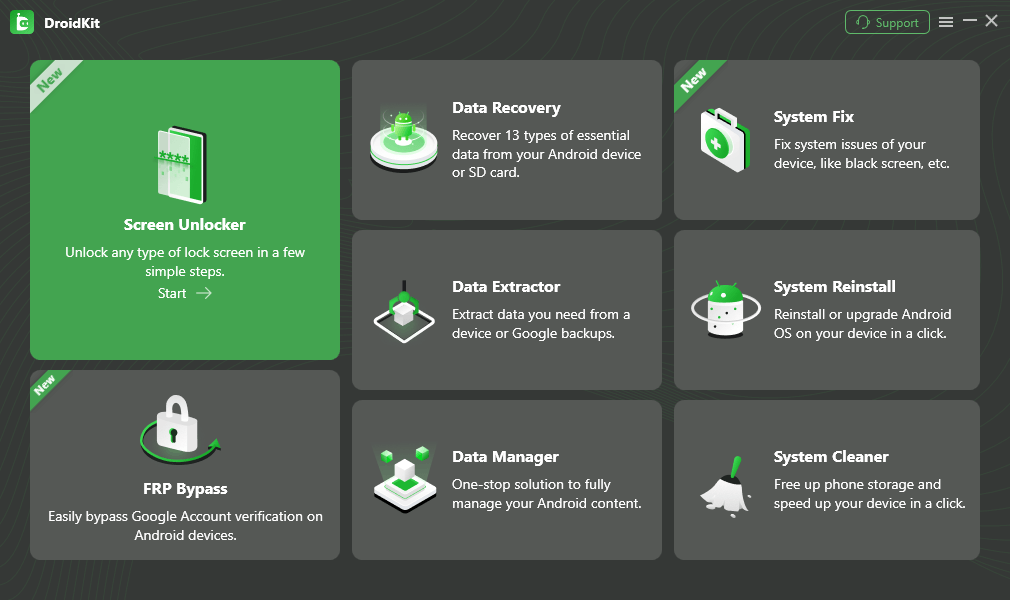
Step 1. Free get and launch DroidKit on your computer and then choose Screen Unlocker.
Choose Screen Unlocker
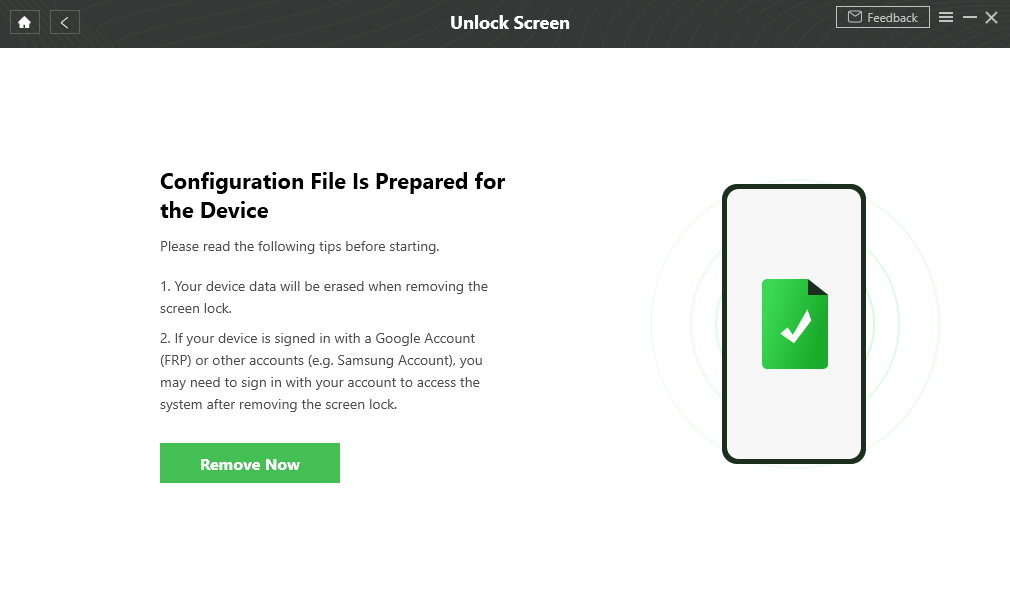
Step 2. Connect your locked phone > Tap on Remove Now after the configuration file is prepared. Select your device brand. Then, you need to put your device into recovery mode and wipe cache partition.
Click Remove Now Button
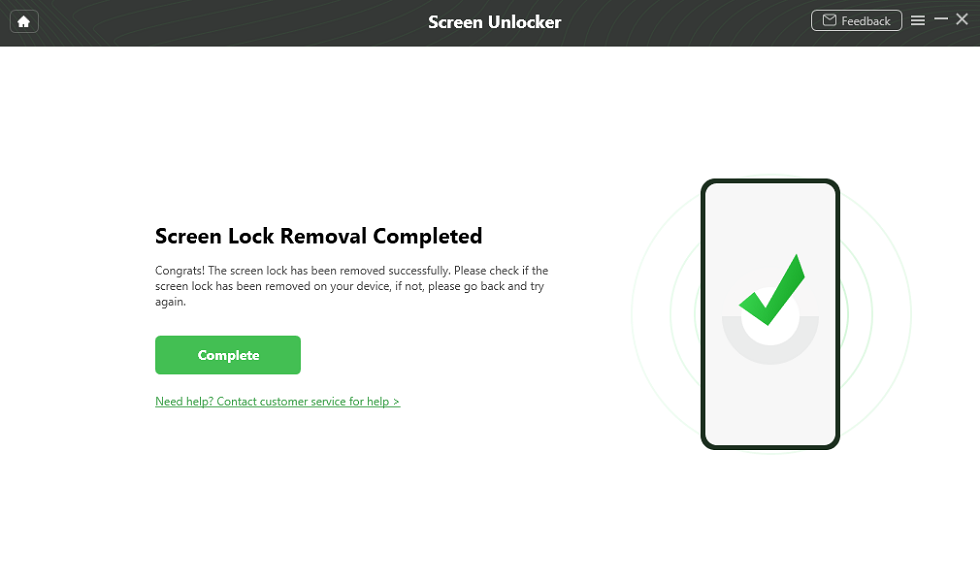
Step 3. After that, DroidKit will start the unlocking process till it’s finished.
Pattern Lock is Removed
Free Download * 100% Clean & Safe
2. via Google Find My Device
- Suitable for: Google account signed in, device online
- Limitation: Not all devices support remote unlock
How to unlock Android phone pattern lock without factory reset? The Find My Device feature of Google allows you to unlock patterns without losing data or resetting, and you can locate your phone and control it remotely. Here we offer you a step-by-step guide on how to unlock pattern lock via Google Find My Device. For more details or functions, please visit Google’s official website.
Before getting started with the steps below, make sure you have added your Google account to your locked phone before activating the remote unlock feature, and your device is powered on and connected to Wi-Fi or mobile data.
Step 1: Visit Find My Device’s official website and log in to your Google Account associated with the locked phone.
Step 2: In Find My Device interface select your device > Click Lock.
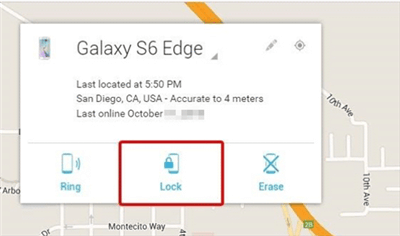
Bypass Samsung Lock Screen with Android Device Manager
Step 3: Enter the new password > Click on Lock again to save.
Step 4: Open your locked phone and enter your password, and it should work now.
3. via Samsung Find My Mobile
- Suitable for: Samsung users with Samsung account
- Limitation: Must be signed in before lockout
If you are using a Samsung phone, how to unlock forgotten pattern? Samsung has a similar feature named “Find My Mobile”. Beyond the unlocking screen, Find My Mobile enables you to lock your lost phone, erase data, back up, retrieve calls/messages, and more. Here’s how to unlock phone pattern in this way.
Step 1: Go to Samsung Find My Mobile website and sign in using your Samsung account.
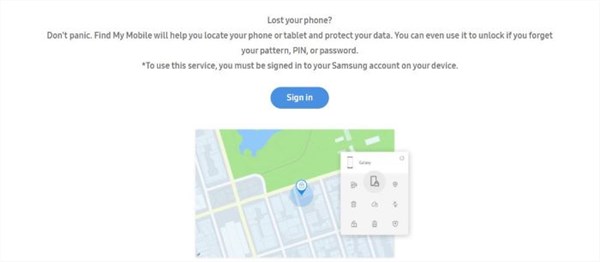
Unlock Samsung Pattern Lock via Samsung Find My Mobile Service
Step 2: Choose Unlock feature. And a window will pop up as below, click Unlock again to confirm.
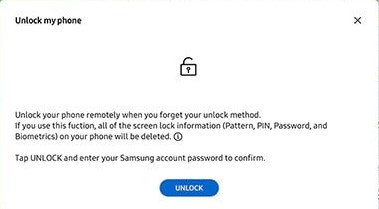
Tap on Unlock Button
Further Reading: You can also read these related posts about Android unlocking.
- Unlock Android Phones Locked by Google’s Find My Device >
- Bypass Any Samsung Google Account APK. Download >
4. with Google Account(Forgot Pattern)
- Suitable for: Android 4.4 and below
- Limitation: Not available on modern Android versions
Still, with your Google account, you get a chance to reset the pattern via the Forget Pattern feature of Android devices. And you can make pattern unlock without resetting via this method. But this quick fix only works on Android OS 4.4 and lower. If it fits you, follow the easy steps below and learn how to unlock pattern lock.
Step 1. Randomly enter a wrong password 5 times then you’ll be taken to a screen that asks whether you have forgotten your pattern.
Step 2. Tap on the Forgotten pattern on the bottom corner then sign in your Google username/email and password that is associated with your locked phone.
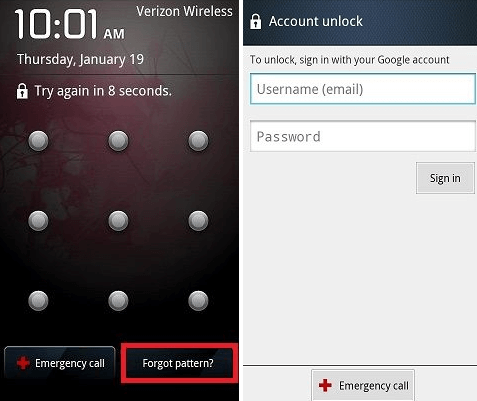
Enter Google Account and Password to Unlock
Step 3. Follow the wizard to create a new pattern, or just tap on None if you don’t want a pattern anymore.
Further Reading: If you don’t want to use Google account, you can read Bypass Android Lock Screen without Google Account >
5. Unlock via Reboot to Safe Mode
- Suitable for: Phones locked by third-party app
- Limitation: Won’t work on system-level lock
Safe mode is also a good way for pattern unlock when you forgot it. Since it can disable most 3rd party applications, then you can count on it to get your pattern removed if you’re locked out by 3rd party lock screen apps. Safe Mode will restrict mobile data access to 3rd party apps completely. You can still make and receive phone calls and messages while other apps are dependent on the specific device.
This method is relatively easy and you should have no trouble implementing it. Let’s check how to unlock phone pattern through this method:
Step 1. Turn the device off first. Press and hold the Power key (on the right-hand side of most Samsung phones) and Volume Down key (on the left-hand side) at the same time until the Safe Mode screen displays on the bottom left corner.
Step 1. Within Safe Mode, navigate around the device to disable the lock screens replacement app, and then the lock will be removed naturally.
Step 3. To exit Safe Mode, hold Volume Down and Power for more than 5 seconds then the phone will restart.
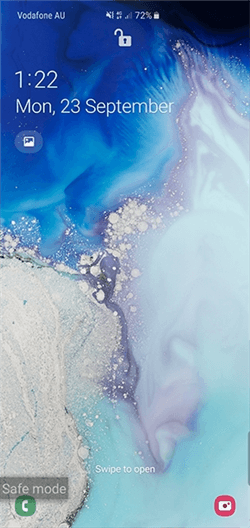
Unlock via Safe Mode
Further Reading: If you stuck on safe mode, please read How to Fix Safe Mode Stuck or Won’t Turn Off >
6. Unlock with Factory Reset (Last Resort)
- Suitable for: Severely locked phones
- Limitation: All data will be erased
In Android Recovery Mode, you can make mobile pattern unlock by resetting your phone with physical buttons. But make it your last resort as all settings and data will be wiped off after a factory reset and it is not reversible, so make sure your information is backed up to Google Drive, Samsung Cloud, or somewhere else before attempting to reset your phone. And here is how to unlock pattern lock.
Step 1. Turn off your phone then press and hold the Volume Up, Power, and Home/Bixby buttons simultaneously until the Recovery mode appears on the screen.
Step 2. From the Installing System Update screen, use the Volume Up/Down button to move and the power button to select the Wipe Data/Factory Reset option.
Step 3. Use the Volume Down button to move the blue highlight to the YES option, and press the Power button again to select Yes. Then wait for a few minutes to complete the factory data reset process.
Step 4. Use the Power button to select the Reboot System Now option to set up your phone.
FAQs About Unlock Pattern Lock Android
1. How to unlock Android phone pattern lock without factory reset?
You can unlock your Android phone without factory reset by using tools like Find My Device (Google) if it’s enabled, Samsung’s Find My Mobile (for Samsung users), or third-party unlocking tools like DroidKit. These tools can remove the lock without erasing data—though success depends on device model and Android version.
2. What is the master code to unlock a phone?
There is no universal master code for all Android phones. Some older models may have service codes used by technicians, but modern smartphones prioritize security. Be cautious of websites offering “unlock codes,” as many are scams.
3. How to unlock android pattern lock with google account?
On older Android versions (Android 4.4 or below), you could unlock the pattern using the “Forgot Pattern?” option, which allows sign-in with your Google account. On newer versions, this option has been removed for security reasons, so you’ll need to use Google’s Find My Device service to remotely unlock or erase the device.
The Bottom Line
That’s all for how to unlock pattern lock. Since DroidKit provides you Android phone unlocker to break patterns on Android with a much easier and quicker process, we strongly recommend you try DroidKit first to access your locked phone without any hassle. And you can also explore more functions in it. If you have any questions about this guide, let us know by leaving messages in the comments below.
Free Download * 100% Clean & Safe
More Related Articles


Roger Smith is a senior technical writer with years of experience in providing Android solutions. He loves to help users solve various problems such as Android unlock, Android data recovery, and Android system repair.
Product-related questions? Contact Our Support Team to Get Quick Solution >
