Moto FRP Tool Download & Motorola FRP Bypass Guide 2026
Moto FRP Tool is a free Motorola-focused utility that some users try for FRP bypass, but it requires technical steps and may not work on newer Android versions. This guide explains what Moto FRP Tool does, download and safety limits, how to use it, no-PC options, common failure reasons, and a guided DroidKit alternative when free or manual methods fail.
Motorola FRP lock can be frustrating, especially when you forgot the Google account credentials used on the phone or bought a second-hand Motorola device that is still linked to the previous owner’s account. If you are searching for a Moto FRP Tool or Motorola FRP bypass tool, you may find many free utilities and manual methods online, but not all of them are safe, updated, or easy to use.
This guide explains what Moto FRP Tool is, whether it is still worth trying in 2026, how to use it, why it may fail, how no-computer Motorola FRP methods work, and when a guided solution like DroidKit FRP Bypass may be a better option. Use FRP tools only on a Motorola device you own or are authorized to repair.
Table of ContentsHide
Quick Answer: Which Motorola FRP Bypass Tool Should You Use?
What Is FRP on Motorola?
What Is Moto FRP Tool?
Is Moto FRP Tool Safe and Still Working?
Which Motorola FRP Bypass Method Fits You?
Motorola FRP Bypass Methods Comparison
How to Use Moto FRP Tool
Moto FRP Tool Not Working: Common Fixes
How to Bypass Motorola FRP without Computer
Why Free or Manual Methods Often Fail
Moto FRP Tool vs DroidKit
Best Motorola FRP Tool Alternative When Free Methods Fail
FAQs About Moto FRP Tool
Final Words
Quick Answer: Which Motorola FRP Bypass Tool Should You Use?
If you are comfortable with technical steps, a Windows computer, USB drivers, Fastboot mode, and third-party utilities, Moto FRP Tool may be worth trying on some Motorola devices. However, it is not the easiest option for beginners and may not work smoothly on newer Android versions or recent security patches.
For most users who want clearer instructions and less trial and error, a guided PC-based tool is usually a better fit. If you want a broader Motorola-specific overview, check this Motorola FRP bypass guide.
| Your Situation | Best Option | Why |
| You want a free Motorola-only utility and can handle technical steps | Moto FRP Tool | It may work on selected Motorola devices but requires setup and patience. |
| You do not have a computer | Manual no-PC method | Possible in limited cases, but usually long and less reliable. |
| You want the easiest guided workflow | DroidKit | Better for users who want on-screen instructions and fewer manual operations. |
| Moto FRP Tool fails or the phone remains locked | Switch to troubleshooting or a guided fallback | The device may be unsupported or blocked by a newer Android security patch. |
What Is FRP on Motorola?
Factory Reset Protection, or FRP, is an Android security feature designed to protect a device after a factory reset. When a Google account is added to a Motorola phone, FRP can be activated automatically. After a reset, the phone asks for the previously synced Google account before setup can continue.
This is helpful when a phone is lost or stolen, but it can also lock out legitimate users. For example, you may forget the Google account password, buy a used Motorola phone that was not properly removed from the previous owner’s account, or reset the phone before removing the account.
Before trying any FRP bypass method, first attempt official Google account recovery or contact the previous owner if the device is second-hand. FRP bypass methods should only be used on devices you own or have permission to service.
What Is Moto FRP Tool?
Moto FRP Tool is a Motorola-focused FRP bypass utility that some users try when they are stuck on the Google verification screen. It is usually used on a Windows computer and may require the Motorola phone to enter Fastboot mode before the tool can communicate with the device.
Unlike a broad Android FRP tool, Moto FRP Tool is focused on Motorola devices. This makes it relevant for Motorola FRP searches, but also means it is not useful for Samsung, Xiaomi, OPPO, Vivo, or other Android brands. If your issue is not Motorola-specific, use a broader Android FRP bypass guide instead.
Pros of Moto FRP Tool:
- Free to use in many cases.
- Designed for Motorola FRP scenarios.
- Can help some users avoid long manual no-PC methods.
- May work without flashing full firmware on selected devices.
Cons of Moto FRP Tool:
- Requires technical knowledge to use correctly.
- Usually requires a Windows computer and USB connection.
- No clear official support channel.
- May not work on all Motorola models or newer Android versions.
- Third-party download sources may create safety risks.
Is Moto FRP Tool Safe and Still Working?
Moto FRP Tool may still work on some Motorola devices, but compatibility is not guaranteed. The result depends on the phone model, Android version, security patch, USB driver status, and whether the tool version still supports the device workflow.
You should also be careful with the download source. If a Moto FRP Tool package comes from an unknown file-sharing page, scan the file before extracting or running it. Do not disable security software unless you fully understand the risk, and avoid tools that force extra installers or suspicious files.
| Check | Why It Matters | Recommended Action |
| Device ownership | FRP protects the previous Google account and device data. | Continue only if the phone is yours or you have repair authorization. |
| Android version | Newer Android versions may block older FRP methods. | Confirm the Android version before choosing a method. |
| Download source | Unofficial files may be modified or unsafe. | Scan the package before opening any executable file. |
| USB driver status | The tool must detect the Motorola phone correctly. | Install proper Motorola USB drivers and use a reliable cable. |
Which Motorola FRP Bypass Method Fits You?
Not every Motorola user should choose the same method. A free tool may be attractive, but it can take longer if the steps are unclear or the device is not supported. Use the table below to choose a realistic path.
| Your Situation | Recommended Method | Best For |
| You want a free option and can handle Fastboot or driver steps | Moto FRP Tool | Users with some technical experience. |
| You do not have a computer and want to try a free route first | Manual Motorola FRP bypass without PC | Users with patience and an older supported device. |
| You want the most guided process | DroidKit FRP Bypass | Beginners or users who already failed with free methods. |
| You are unsure whether your phone is supported | Start with Motorola FRP guide and troubleshooting | Users comparing tools, models, and Android versions. |
Motorola FRP Bypass Methods Comparison
Here is a practical comparison of the main Motorola FRP bypass routes.
| Method | Difficulty | PC Required | Main Risk | Best For |
| Moto FRP Tool | Medium to High | Yes | Driver issues, unsupported model, unclear download source. | Users with technical experience. |
| Manual no-PC method | High | No | Long steps, outdated loopholes, repeated failures. | Users trying a free method on older Motorola devices. |
| DroidKit | Low to Medium | Yes | Requires supported device scenario and computer access. | Most users who want a guided workflow. |
For most users, the biggest question is not whether a method is free, but whether it is clear, stable, and worth the time spent.
How to Use Moto FRP Tool
The steps below describe the typical Moto FRP Tool workflow. The exact interface may vary depending on the version you download. Do not continue if the file source looks unsafe or if your phone is not detected correctly.
Step 1. Download Moto FRP Tool from a source you trust. Scan the package before extracting it. Launch the tool on your Windows computer. Some versions may require a password to open the archive or tool interface.
Step 2. Power off your Motorola phone and put it into Fastboot mode. On many Motorola phones, this requires holding the correct hardware key combination from a powered-off state.
Step 3. Connect the Motorola phone to your computer with a reliable USB cable. Wait for the tool to detect the device. If the device is not detected, check Motorola USB drivers, the cable, and the USB port before continuing.
Step 4. Follow the Moto FRP Tool interface to start the FRP operation. The phone may restart during the process.
Step 5. If a USB debugging or authorization prompt appears on the phone, read it carefully and confirm only if you understand the action.
Step 6. After the phone restarts, go through setup again. If the Google verification screen still appears, the method did not work for your model or security patch.
If this process feels too technical, consider using DroidKit FRP Bypass for a more guided experience.
Moto FRP Tool Not Working: Common Fixes
If Moto FRP Tool does not detect your Motorola phone or the FRP lock remains after reboot, check the likely cause before trying more downloads.
| Problem | Possible Cause | What to Try |
| Tool does not open | Archive password, blocked executable, or unsafe package. | Verify the source, scan the file, and avoid suspicious copies. |
| Phone not detected | Missing Motorola USB driver, bad cable, or wrong connection mode. | Install drivers, use another USB port, and reconnect in the correct mode. |
| Fastboot mode not working | Wrong key combination or model-specific boot behavior. | Check the exact Motorola model and boot mode instructions. |
| FRP still appears after reboot | Unsupported model or newer security patch. | Try a guided FRP method or Motorola-specific troubleshooting path. |
| Manual route fails repeatedly | Old loophole has been patched. | Stop repeating the same steps and switch to a compatible method. |
How to Bypass Motorola FRP without Computer
Motorola FRP bypass without a computer is possible in limited cases, but it is usually more complicated than using a PC-based tool. These methods often depend on old Android setup loopholes, emergency information screens, app permission paths, or accessibility shortcuts. Newer Android versions and security patches may block them.
Step 1. Turn on the FRP-locked Motorola device and connect it to Wi-Fi. On the lock or setup screen, tap Emergency Call.
Step 2. Tap Emergency Information twice if the option is available.

Emergency Information Preview
Step 3. Tap the edit icon and profile picture option if available. Choose the image or file selection path that opens the app list or file manager.
Step 4. Try to reach app permissions, app information, or Settings from the menu. On some older Motorola devices, this may allow access to Accessibility or Apps settings.
Step 5. If you can reach Settings, enable the Accessibility Menu if required by the method.
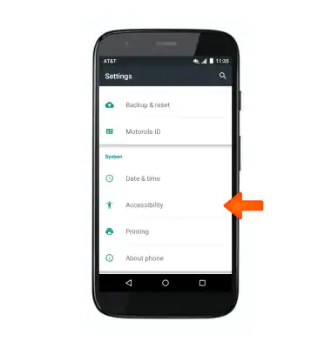
Accessibility Menu on Motorola
Step 6. Follow the remaining Android setup or app settings path only if your device allows it. If a menu is missing, the method is likely patched on your phone.
Step 7. Restart the device and check whether the Google verification screen still appears. If FRP remains, stop repeating the same manual route.
Limitations of the Manual Method
- The steps are long and easy to get wrong.
- It may not work on all Motorola devices or Android versions.
- It requires stable Wi-Fi and access to specific setup menus.
- It often fails after Android security updates.
- It can waste a lot of time if you are not familiar with Android settings.
Why Free or Manual Methods Often Fail
Many users start with free or manual Motorola FRP bypass methods, but later switch to a professional tool because the free route often costs more time than expected.
Common failure reasons include:
- Outdated instructions from older Android versions.
- Compatibility problems on newer Motorola firmware.
- Repeated restarts with FRP still present.
- Driver or Fastboot detection problems.
- Blocked accessibility, emergency information, or settings routes.
- No official support when something goes wrong.
If your main issue is that every method keeps failing, you may also need a troubleshooting route instead of another random tool download.
Moto FRP Tool vs DroidKit
Moto FRP Tool and DroidKit serve different users. Moto FRP Tool is a free Motorola-focused utility that may be useful for technical users. DroidKit is a guided Android toolkit designed for users who prefer step-by-step instructions and official software access.
| Feature | Moto FRP Tool | DroidKit |
| Best for | Technical users testing a Motorola-only utility. | Users who want guided FRP steps on supported devices. |
| Device scope | Motorola-focused. | Motorola and other supported Android brands. |
| Ease of use | Requires more manual setup. | Provides on-screen instructions. |
| Download safety | Depends on the third-party source. | Official iMobie download source. |
| When to avoid | When the file looks unsafe or the phone is not detected. | When your device scenario is not supported or you do not have a computer. |
Best Motorola FRP Tool Alternative When Free Methods Fail
If Moto FRP Tool feels too technical, the no-computer method is too long, or your Motorola phone remains locked after several attempts, iMobie DroidKit can be a more practical alternative for supported Motorola FRP scenarios.
DroidKit is designed for users who want a clearer FRP bypass process with on-screen guidance. It is especially useful if you are not familiar with Fastboot, Android setup loopholes, app settings routes, or driver troubleshooting.
Free Download * 100% Clean & Safe
How to Bypass Motorola FRP with DroidKit
Step 1. Launch DroidKit on your computer and choose FRP Bypass mode.
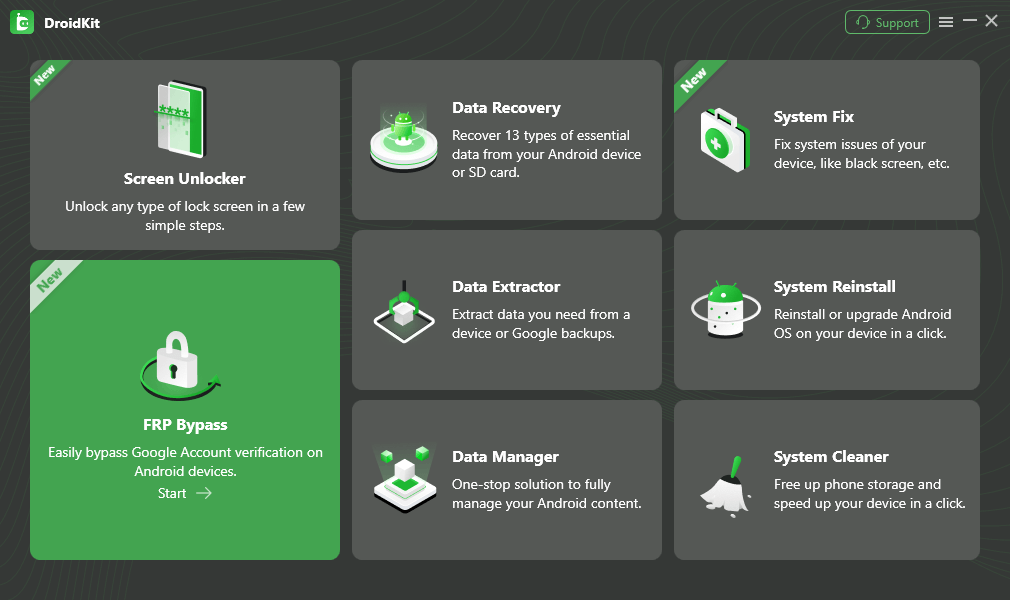
Choose FRP Bypass Mode
Step 2. Connect your Motorola phone to the computer with a USB cable and click Start.
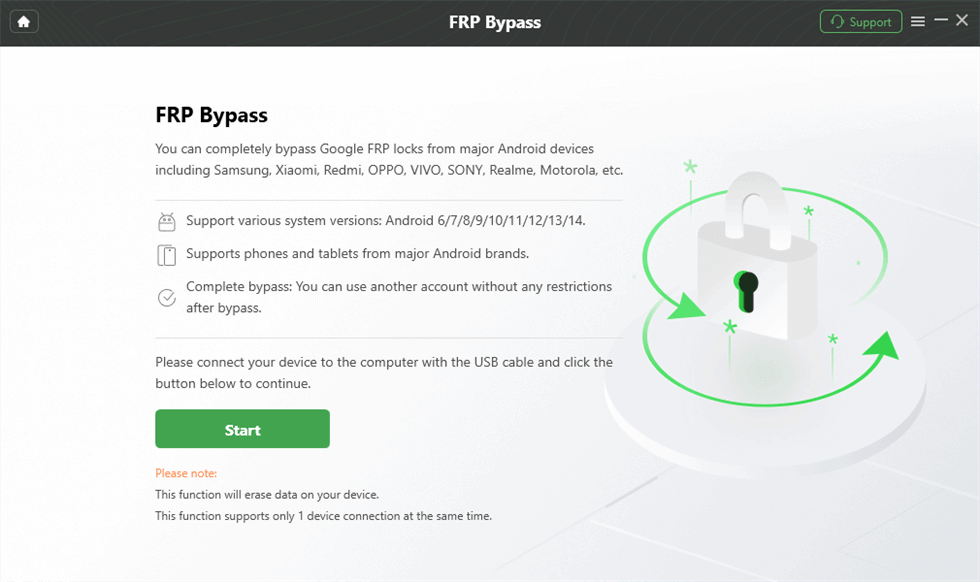
Connect Device and Click Start
Step 3. Select the correct device brand. DroidKit will prepare the configuration file for your device. Tap Start to Bypass when ready.
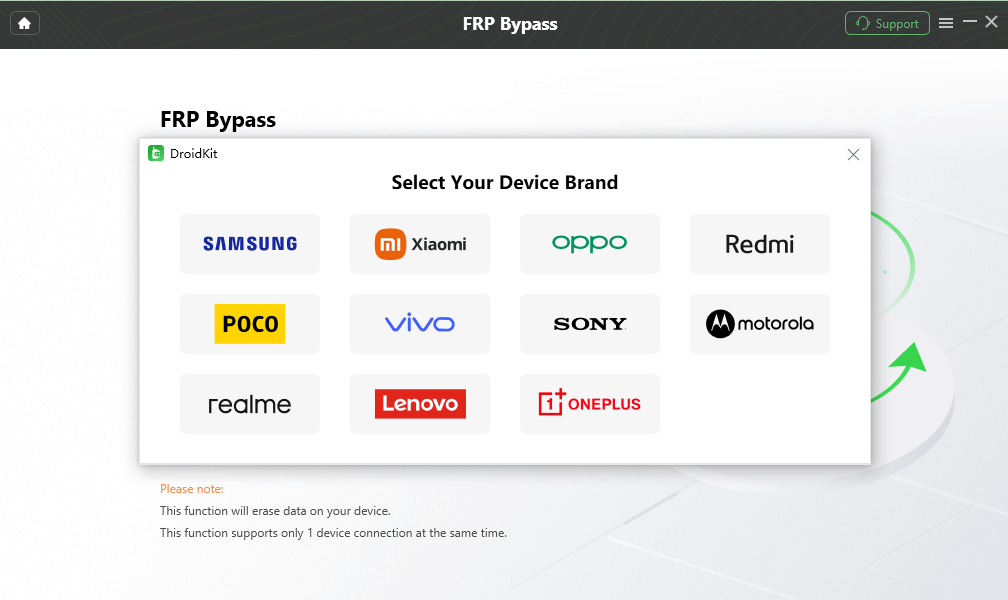
Choose Device Brand
Step 4. Follow the on-screen instructions to complete the required device settings. Tap Reset when prompted.
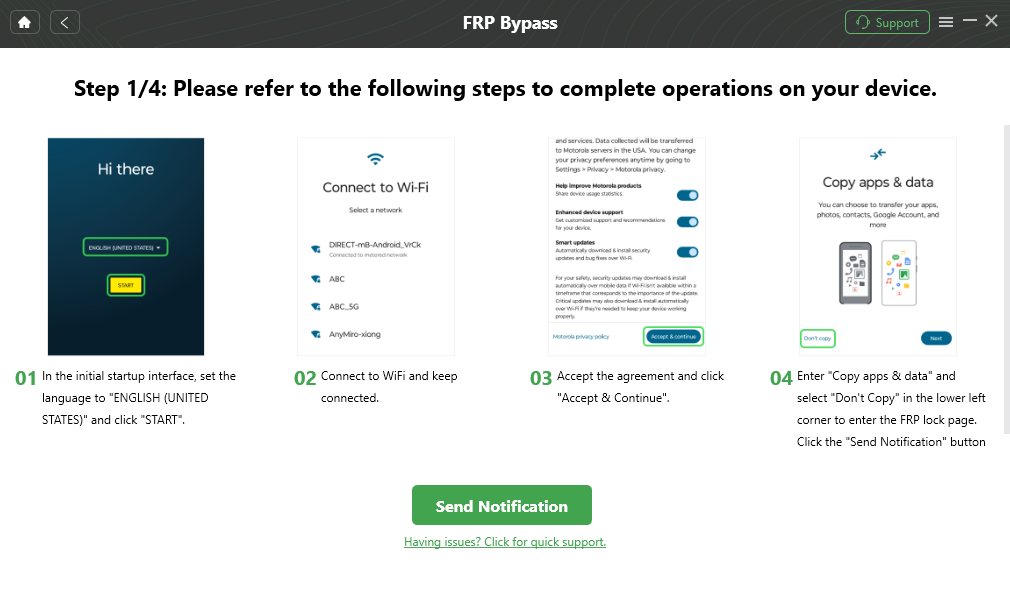
Follow the Bypass Steps
Step 5. Wait while DroidKit completes the FRP bypass process. When the completion screen appears, restart the Motorola phone and set it up again.
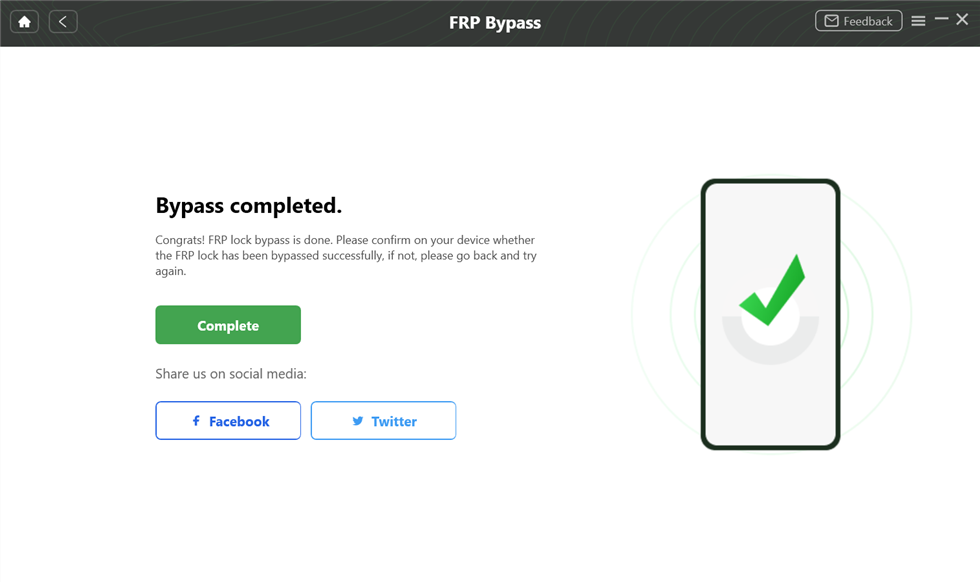
FRP Bypass Complete
FAQs About Moto FRP Tool
Is Moto FRP Tool free to use?
Yes, Moto FRP Tool is generally available as a free Motorola FRP bypass utility. However, the download source matters, so scan the package before running it.
Does Moto FRP Tool work on all Motorola phones?
Not always. Compatibility depends on the Motorola model, Android version, security patch, USB driver status, and the tool version.
Can I bypass Motorola FRP without a computer?
Yes, but no-PC methods are usually longer, less reliable, and more likely to fail on newer Android versions or recent security patches.
Is Moto FRP Tool safe?
It depends on the file source and the version you download. Because many free FRP tools are shared through third-party sites, scan the file and avoid suspicious installers or repackaged copies.
What is the easiest Motorola FRP bypass tool?
For most users, a guided PC-based tool like DroidKit is easier than using free utilities or long manual methods, as long as the device scenario is supported.
What should I do if Moto FRP Tool does not work?
Check drivers, USB cable, Fastboot mode, Android version, and security patch. If the tool still fails or feels too technical, switch to a more guided Motorola FRP bypass method.
Is it legal to bypass Motorola FRP?
FRP bypass should only be performed on a device you own or are authorized to repair. Do not use FRP tools to access someone else’s phone, account, or data.
Final Words
Moto FRP Tool is still a useful option if you want a free Motorola FRP bypass tool and do not mind a more technical setup. However, it is not always the safest or most practical route for ordinary users, especially when the device has a newer Android version or the tool cannot detect the phone properly.
If you want a faster, simpler, and more guided process, iMobie DroidKit is a better next step for many supported Motorola FRP lock cases. Instead of spending too much time testing uncertain methods, choose the route that best matches your device, Android version, and technical comfort level.
Free Download * 100% Clean & Safe
More Related Articles


Roger Smith is a senior technical writer with years of experience in providing Android solutions. He loves to help users solve various problems such as Android unlock, Android data recovery, and Android system repair.
Product-related questions? Contact Our Support Team to Get Quick Solution >
