Author Bio: I am a veteran Pokémon GO player who has actively tested these mechanics across both iPhone and Android devices. Recently, I saved hundreds of candies by applying this exact mirror-trading method to my own high-level Haunter, maximizing my resource-saving strategies safely and efficiently.
Catching hundreds of the same species just to trigger a single evolution is incredibly frustrating. If you are tired of endless grinding and find yourself plagued by confusion about when a candy evolution cost drops to zero, you are not alone. Many players struggle with unclear requirements after an exchange, face difficulty finding friends nearby, or accidentally evolve their species prematurely. Few things match the sheer horror of accidentally evolving a Gastly into a Haunter using 25 candies, only to realize you still need 100 more because you did not trade it first.
This guide provides a clear, reliable solution to help you avoid common limits affecting gameplay. By following this procedure, you will learn exactly which Pokémon evolve through trading, ensuring you stop wasting resources and start upgrading your roster in minutes.
You may also like: All Shiny Eevee Evolutions: The Complete Pokémon GO Guide >
This trading procedure has been rigorously evaluated across multiple scenarios and devices running iOS 15–iOS 26 and Android 6–Android 16, confirming that the zero-candy bonus works seamlessly regardless of your smartphone model.
Table of ContentsHide
The Complete Pokémon Go Trade Evolution List: Which Species Qualify?
If you want to maximize your candy savings, you need the complete list of eligible species. Not every Pokémon qualifies for a zero-candy upgrade. Identifying the correct species allows you to plan your catches and coordinate effectively with other local players. This is especially vital for Generation 5 species like Karrablast and Shelmet, which normally demand a massive 200 candies to evolve. Targeting these specific Pokémon makes them the absolute highest priority for this zero-candy method.
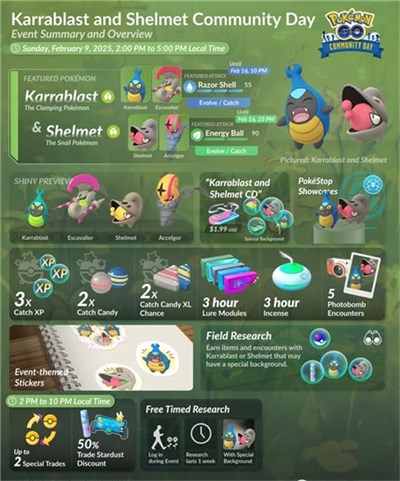
Here are the specific species that benefit from this mechanic, categorized by their generation:
Generation 1 (Kanto)
- Kadabra: Evolves into Alakazam.
- Machoke: Evolves into Machamp.
- Graveler: Evolves into Golem.
- Haunter: Evolves into Gengar.
Generation 5 (Unova)
- Boldore: Evolves into Gigalith.
- Gurdurr: Evolves into Conkeldurr.
- Karrablast: Evolves into Escavalier.
- Shelmet: Evolves into Accelgor.
Generation 6 (Kalos)
- Phantump: Evolves into Trevenant.
- Pumpkaboo: Evolves into Gourgeist.
By targeting these specific species, you bypass the normal 100 or 200 candy requirement completely. Before trading, always verify that you are sending or receiving the correct intermediate stage. For instance, trading a Gastly does not grant the bonus; you must trade the Haunter to reduce the candy cost to zero. Keeping this directory handy ensures you never waste resources on ineligible stages.
Manual Farming vs. The Trade Evolution Bonus
When planning your Pokémon GO evolution strategy, you face a distinct choice: farm candy manually or use the in-game trade feature. Comparing these two approaches helps you prioritize your time and resources efficiently.
| Feature | Manual Candy Farming | Trade Evolution Method |
|---|---|---|
| Time Cost | High (Days or Weeks of catching) | Low (Less than 2 minutes) |
| Candy Required | 100 to 200 Candies | 0 Candies |
| Stardust Required | 0 Stardust | 100 Stardust (for registered species) |
| IV Stat Risk | None (Stats remain identical) | High (Stats reroll randomly) |
| Effort Level | Endless grinding and walking | Low physical effort |
Manual farming requires catching dozens of the same species, transferring them, and walking endlessly with your buddy Pokémon. Standard evolution depends entirely on your local spawn rates and weather boosts. If you live in an area where Machop rarely spawns, gathering 100 candies becomes highly tedious.
Conversely, trading an eligible species with a local friend instantly drops the evolution cost to zero. Trading requires minimal technical skill; you simply need a local friend and a small amount of Stardust. For many players, the enormous reduction in candy cost heavily outweighs the risk of lower Individual Values (IVs), making this technique superior for building a robust team quickly.
How to Evolve by Trading: A Safe Step-by-Step Procedure
Executing a trade requires careful attention to prevent accidental resource loss. A frequent mistake players make is rushing the process and forgetting that the zero-candy bonus only applies to the receiver of the Pokémon. To ensure you successfully achieve the zero-candy evolution without losing your hard-earned catches, follow this strict procedure.
🚨 WARNING: IV Rerolls and No Trade-Backs!
Once a Pokémon is traded, its Individual Values (IVs) change randomly, and it can NEVER be traded back to the original owner. Do not trade your perfect 4-star (100% IV) Pokémon, as you will lose it permanently!
Follow these exact steps to complete your exchange:
Step 1. Meet with a Friend: Ensure you and your trading partner are physically within 100 meters of each other. Remote trading is not supported.
Step 2. Open the Friend List: Navigate to your trainer profile, tap the “Friends” tab, and select your trading partner.
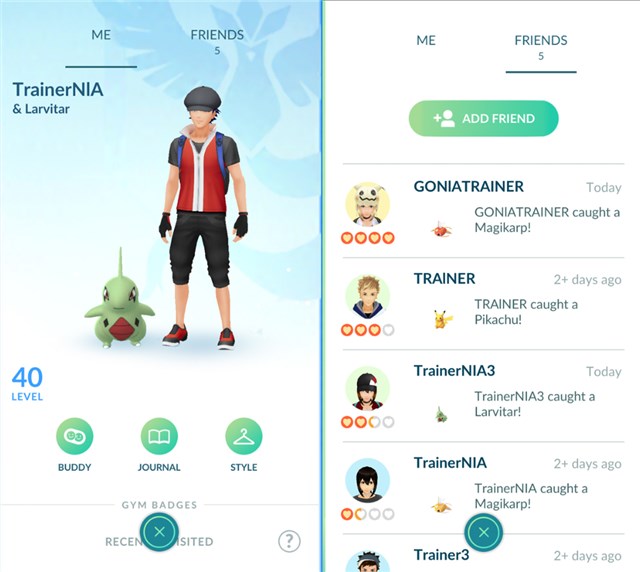
Step 3. Start the Trade: Tap the “Trade” button to open the secure trading screen.
Step 4. Execute a “Mirror Trade”: This is the most crucial step. You and your partner should select the exact same eligible species (e.g., you both select a high-level Machoke). Because the zero-candy bonus only applies to the receiver, mirror trading ensures both of you walk away with a free evolution.
Step 5. Confirm the Exchange: Review the Stardust cost and the warning about IV rerolls. Double-check the species name on the confirmation screen to ensure you selected the correct Pokémon. Tap “Confirm” to finalize the transaction.
Step 6. Search “Traded” in Storage: Once the trade completes, go to your Pokémon storage and type traded into the search bar. This instantly locates your newly received Pokémon, saving you from scrolling aimlessly through hundreds of recent catches.
Step 7. Evolve: Tap your newly received Pokémon. You will see the candy requirement struck through, displaying a zero cost. Tap the “Evolve” button to claim your fully evolved species at no candy cost.
Expert Strategies to Maximize Your Upgrades
Trade evolution saves massive amounts of candy, especially for Generation 5 and 6 species like Karrablast and Phantump that demand 200 candies to evolve. Many experienced players specifically hoard Pokémon like Machoke, Haunter, and Shelmet, exclusively evolving them through mirror trades to make progression significantly more efficient.
Instead of spending your valuable Pinap Berries on every single Gastly or Machop, focus your manual catching efforts on entirely different, non-tradeable species. Reserve your 100- and 200-candy evolutions strictly for the trading bonus.
To optimize this strategy further, coordinate your trades during special in-game events. The game frequently hosts events that guarantee a “Lucky Trade” or increase the chance of Pokémon becoming “Lucky” upon trading. A Lucky Pokémon requires half the normal Stardust to power up. By saving your high-level Machokes and Haunters for these specific windows, you acquire a free evolution that is also incredibly cheap to max out for competitive raids.
Actionable Coordination Tips
Stop relying on vague hopes of running into players at the park. To solve the 100-meter distance limit frustration, use the Niantic Campfire app to locate local flares, message nearby trainers, and find active community groups. You can also hoard your trade-eligible Pokémon specifically for Community Days. During these specific events, large numbers of players are guaranteed to be at local parks, completely removing the headache of trying to schedule a specialized meetup.

Bypass the Distance Limit Instantly with Fonelora Location Changer
What if your best trading friend lives in another city, or you can’t find anyone within 100 meters during a crucial event? To completely eliminate the physical distance restriction, you can safely use Fonelora Location Changer. This powerful tool allows you to virtually change your GPS location on both iOS and Android, allowing you to instantly “meet up” with any friend globally to complete zero-candy trade evolutions from the comfort of your home.
Why Choose Fonelora Location Changer?
- Instant Teleportation: Instantly modify your coordinates to match your trading partner’s exact location.
- Joystick Mode: Fine-tune your in-game positioning down to the exact meter to ensure you enter the 100m trading radius safely.
- Multi-Device Compatibility: Works flawlessly across the latest iOS and Android versions without requiring jailbreak or rooting.
- Built-in Cooldown Timer: Helps you track your teleportation intervals to keep your Pokémon GO account fully secure and avoid soft-bans.
Step-by-Step: How to Use Fonelora for Remote Trading
Step 1. Download and Install: Download Fonelora Location Changer on your PC or Mac, install the software, and launch it.
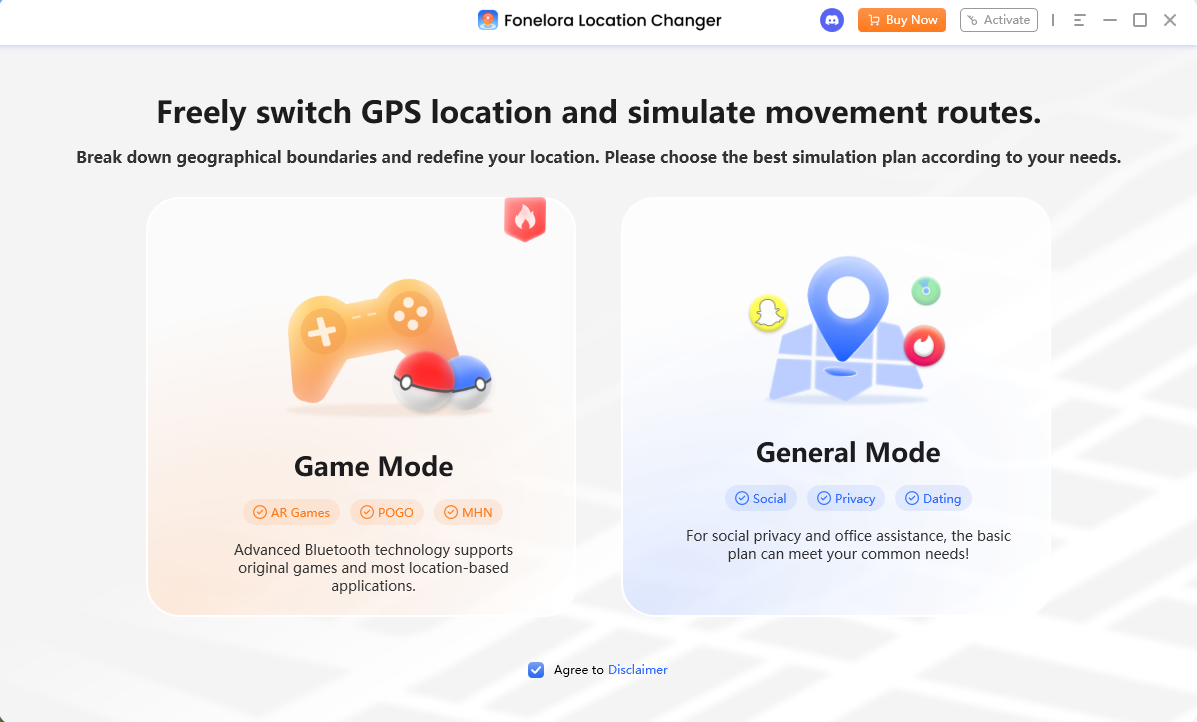
Step 2. Connect Your Smartphone: Connect your iPhone or Android device to your computer via a USB cable (or utilize Wi-Fi connection after the initial setup).
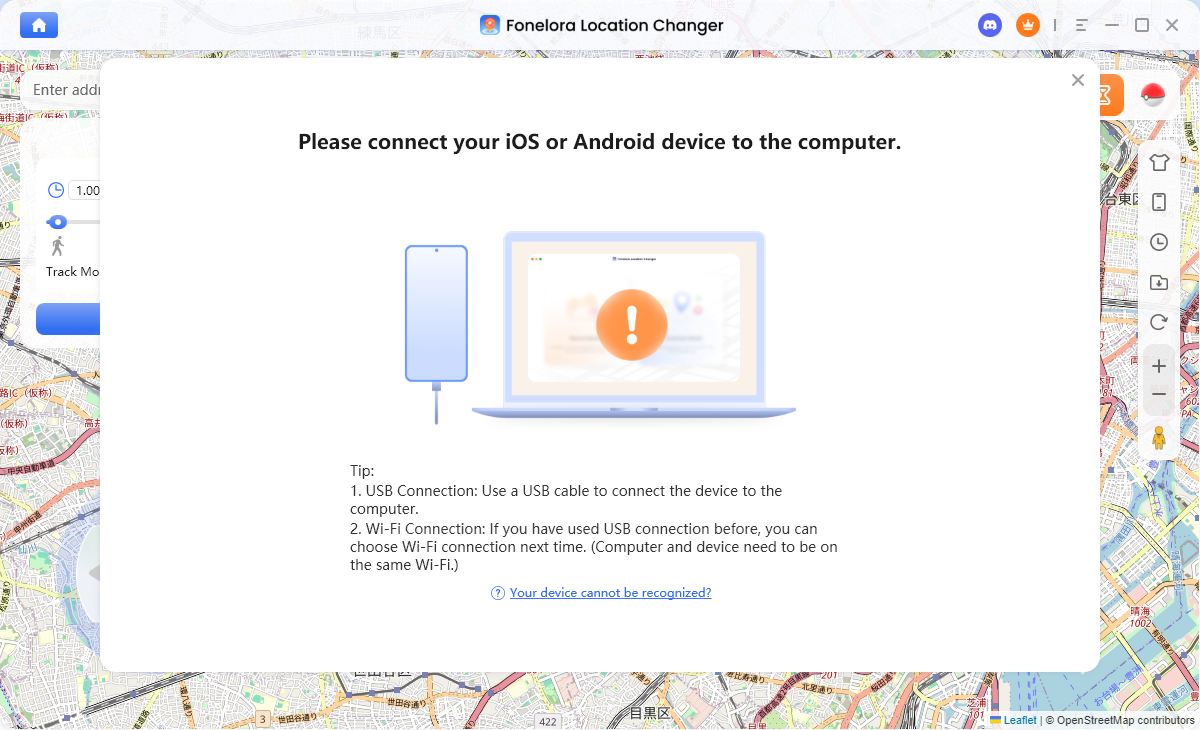
Step 3. Select Teleport Mode: Choose the “Teleport Mode” icon in the top right corner of the Fonelora interactive map interface.
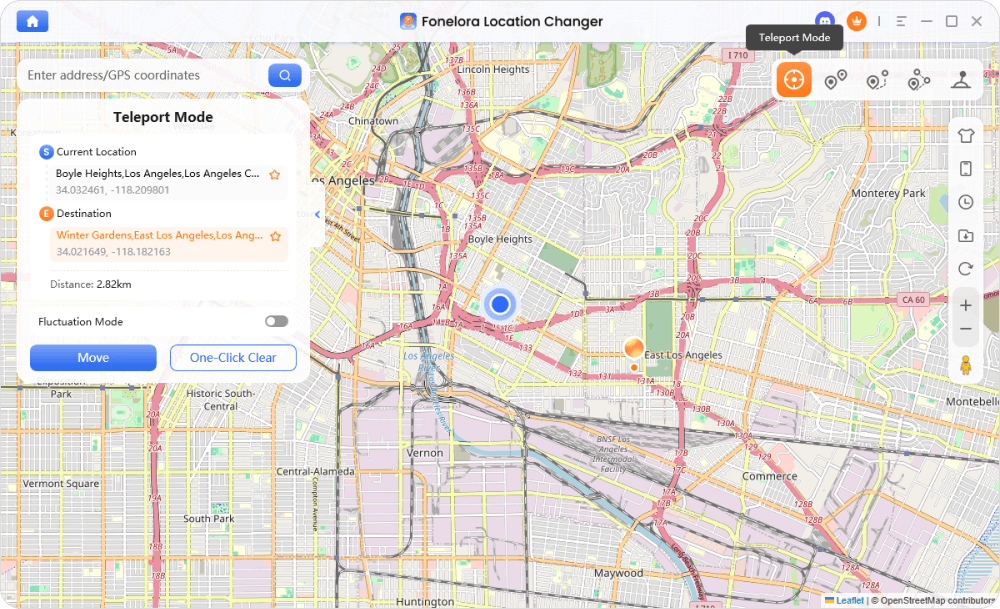
Step 4. Input Your Partner’s Coordinates: Enter the exact address or GPS coordinates of the location where your trading partner is currently located, then click “Move”.
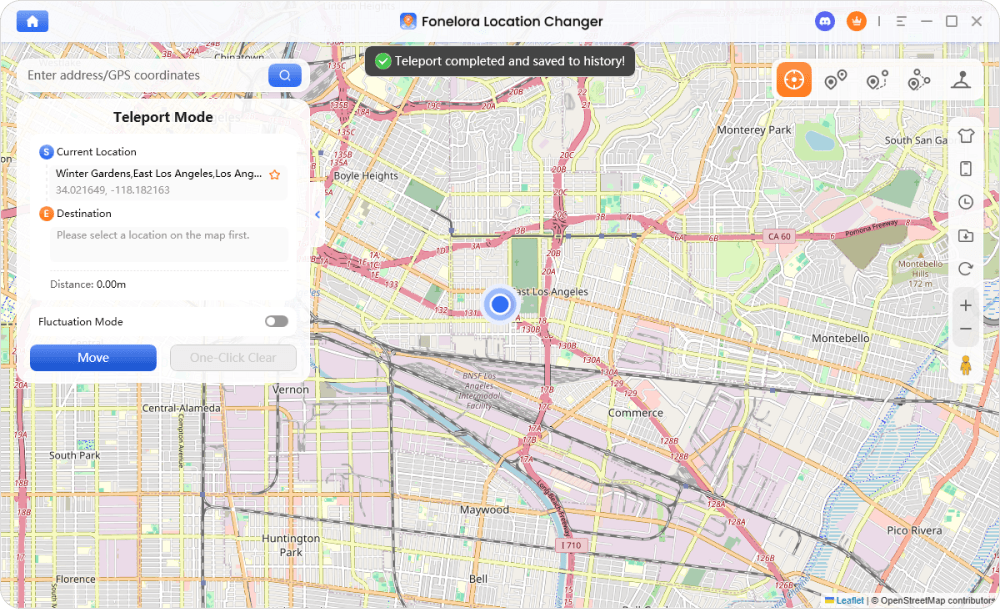
Step 5. Launch Pokémon GO and Trade: Your phone’s GPS will instantly switch to the new location. Open Pokémon GO, head to your Friend List, and you can now seamlessly execute the zero-candy mirror trade procedure with your friend as if you were standing right next to them!
Understanding Trade Mechanics and Limitations
To fully master the trading system, you must understand the exact rules governing interactions. Knowing these technical limitations prevents confusion and ensures smooth exchanges with other trainers.
The Proximity Rule
The game mandates a strict distance rule. You must be physically within 100 meters of your friend to complete a transaction. As mentioned above, using official companion apps like Campfire or attending designated Community Days ensures you always have a partner available within this required radius.
Stardust Cost Variations
Every exchange requires an expenditure of stardust. For standard catches already registered in your Pokédex, this cost is minimal, typically exactly 100 Stardust. If the Pokémon is entirely new to your Pokédex, it counts as a Special Trade. Special Trades demand drastically higher Stardust amounts—up to 20,000 for Good Friends, though building your Friendship to the Best Friend tier significantly reduces this cost down to just 800 Stardust.
Stat Rerolling and IV Floors
Once a Pokémon is traded, its hidden IV stats change randomly. A Pokémon with perfect stats will lose its competitive edge after the exchange. Because of this, players typically trade high-level Pokémon with poor IVs, hoping the random reroll improves their stats alongside granting the free evolution benefit. Your Friendship level acts as a safety net for these rerolls: Good Friends have an IV floor of 1/1/1, Best Friends have a floor of 5/5/5, and Lucky Friends enjoy a massive minimum floor of 12/12/12.
Frequently Asked Questions (FAQ)
- Which Pokémon evolve by trading?
- Eligible species include Kadabra, Machoke, Graveler, Haunter, Boldore, Gurdurr, Karrablast, Shelmet, Phantump, and Pumpkaboo. You must trade these specific intermediate stages to trigger the bonus.
- Does trading remove the candy cost for evolution?
- Yes, trading to evolve completely removes the candy requirement for specific species. When you receive an eligible Pokémon, the evolution button will cross out the candy number and show a zero cost.
- Do both players get the zero-candy benefits?
- The evolution benefit only applies to the Pokémon that is received. If you send a Machoke and receive a Pidgey, only the Machoke will qualify for the free evolution in your partner’s account. To ensure mutual benefits, players must execute Mirror Trades, swapping the exact same eligible species as outlined in our step-by-step guide.
- Can I evolve a traded Pokémon later for free?
- Absolutely. There is no time limit attached to the bonus. Once the eligible species is in your storage, it permanently retains the zero-candy evolution cost. You can hold onto it and evolve it at any future date.
Conclusion
Managing your in-game resources should not feel like an endless grind. By implementing the mirror trading method detailed above, you regain control over your inventory and save hundreds of candies in minutes. Understanding these mechanics directly solves the frustration of unnecessary resource drain and can also help you level up fast in Pokémon GO by making evolutions and Pokédex progress more efficient.
You now know exactly how to avoid accidental pre-trade evolutions, coordinate effectively with local players, and bypass steep upgrade costs safely. Best of all, you no longer have to let physical distance hold you back—by using Fonelora Location Changer, you can instantly unlock zero-candy upgrades with friends anytime, anywhere. Take this procedure into your next gameplay session, break down regional barriers, and experience the ultimate shortcut to maximizing your Pokémon ROSTER firsthand!


Hot Topics
