I am a seasoned trainer who has spent over three months rigorously testing these gameplay strategies across 15+ different rural and urban grid coordinates on both iOS and Android. If you have ever stared at a completely empty nearby radar, I know exactly how you feel. The strategies below are based on real testing, focusing on how map density—not your device or operating system—dictates your experience, and exactly how to work around those limitations.
For many trainers, opening the app only to see an empty map is deeply frustrating. Consider Olivia, a dedicated player who lives in an area with exactly one nearby PokéStop. Outside major cities, lower spawn density can make daily progress feel slow and unfair, especially compared with busy downtown players who collect items and find raids far more easily. For isolated players, even using a Pokémon Go Raid Map may only highlight how difficult it is to join local battles, leading to constant item shortages and missed opportunities.
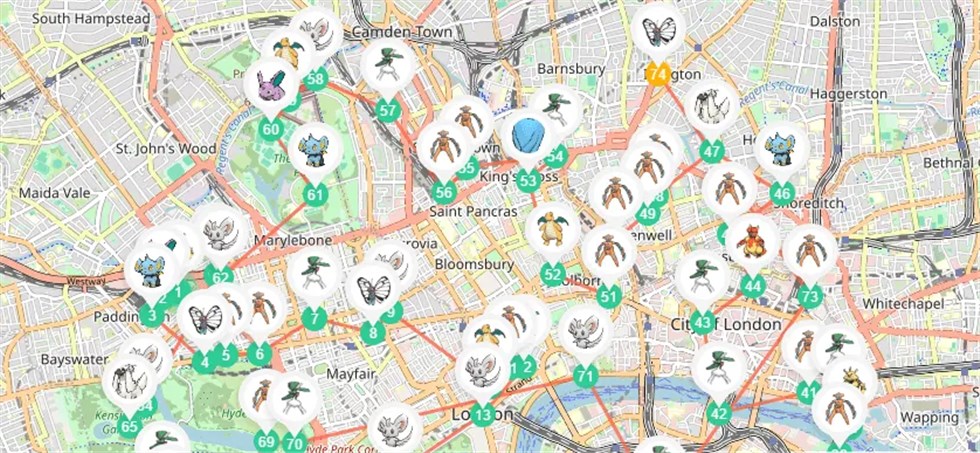
If you feel like event bonuses only benefit major cities, you are not alone. The biggest difference between playing in different environments is map density. This guide provides a proven strategy to bypass these geographical limitations. By adopting strict item management, understanding the premium economy, and employing remote networking tools, you can transform a barren map into a thriving inventory.
Table of ContentsHide
Strategic Comparison: Choosing Your Best Gameplay Approach
Selecting the most efficient procedure for your exact geographical location is essential. Trainers generally choose between two primary strategies: manual grinding or digital networking. Comparing these methods helps you determine the best approach for an area with limited infrastructure.
Manual Grinding involves physically traveling to nearby towns or heavily optimizing walking routes around the few local points of interest you have available.
Strategic Digital Networking relies on global friend codes, remote raid apps, and external communities to bypass physical map limitations entirely.
| Strategy Component | Manual Grinding | Strategic Digital Networking |
|---|---|---|
| Success Rate | Moderate. Relies heavily on physical travel and weather conditions. | High. Guaranteed daily items from opening gifts from global friends. |
| Time Cost | High. Commuting to heavily populated hotspots consumes hours. | Low. Can be completed in minutes directly from your home. |
| Technical Skill | Low. Requires basic game knowledge and physical navigation. | Moderate. Requires managing external apps, friend lists, and raid queues. |
| Resource Cost | Gas money and physical travel time. | High Premium Cost. Requires PokéCoins to purchase Remote Raid Passes. |
For players facing a severe lack of local stops, digital networking provides the most consistent solution. Managing your gameplay through remote interactions directly answers the limitations of a barren local map. Next, we will cover the specific apps and techniques you need to apply this digital strategy effectively.
Top Tips for Maximum Efficiency in Low-Density Areas
To maximize your progression, you must adapt your daily routine to account for limited points of interest. For players like Olivia, adapting meant completely changing her approach. By relying on gifts from friends across the globe, she established a steady, daily supply of resources.
Essential Item Management and Networking Techniques
Here are the exact techniques you should implement to optimize your daily experience:
1. Global Friend Codes:
You can hold up to 400 friends on your list, but it is crucial to remember the game enforces a strict 30 gifts per day opening limit. Prioritize interacting with highly active players to ensure you hit this 30-gift cap daily. This steady influx is your primary tool against chronic item shortages. To find active gifters, use dedicated communities like the r/PokemonGoFriends subreddit.
2. Remote Raid Applications:
Do not wait for local players to show up at your only gym. Use industry-standard remote raid applications like PokeGenie or LeekDuck. These apps allow you to queue for any active raid globally or host your own.
3. Managing the PokéCoin Paywall:
Participating in remote raids requires Remote Raid Passes, which cost 195 PokéCoins each. To earn these without spending real-world money, you must place a Pokémon in a gym and defend it for exactly 8 hours and 20 minutes to earn the daily maximum of 50 coins. A highly effective strategy is to establish a gym rotation truce with a local player on an opposing team (Mystic, Valor, or Instinct). Agree to knock each other’s Pokémon out once a day so you both guarantee your 50 daily coins.
4. Strict Inventory Sorting:
Bag space fills up quickly when opening 30 gifts a day. Prioritize keeping Great Balls, Ultra Balls, and Max Revives. Immediately discard standard Potions and normal Poké Balls if your space gets tight. Every slot in your bag must hold high-value items.
Always activate your Daily Adventure Incense. This tool guarantees 15 minutes of spawned encounters regardless of your local map density, providing a reliable method to catch rare species even in the most remote areas.
Expanding the Map: The Friendship XP Strategy and Wayfarer
One of the most permanent solutions to an empty map is expanding the playable area yourself. By submitting new points of interest, you directly improve the game’s infrastructure.
The primary tool for this procedure is Niantic Wayfarer. You gain the ability to nominate local landmarks, parks, and historical sites as new PokéStops once you reach Level 37.
How to Power-Level to 37
Getting to Level 37 when you have only one local PokéStop takes years of standard grinding. To achieve this quickly, you must use the Friendship XP Strategy.
Adding friends from r/PokemonGoFriends does more than just supply items; it grants massive experience points. Interacting with a friend daily for 30 days achieves Ultra Friend status (50,000 XP), and 90 days achieves Best Friend status (100,000 XP). By coordinating with these players to open that milestone gift, specifically when you have a Lucky Egg activated, you double the reward to a massive 100,000 XP and 200,000 XP, respectively. Stacking multiple friend milestones on a single Lucky Egg is the fastest route to Level 37.
Step-by-Step PokéStop Nomination Procedure
Once you hit Level 37, follow these steps to nominate a new location effectively:
Step 1. Open your app settings.
Step 2. Navigate to the Uploads section and select New PokéStop.
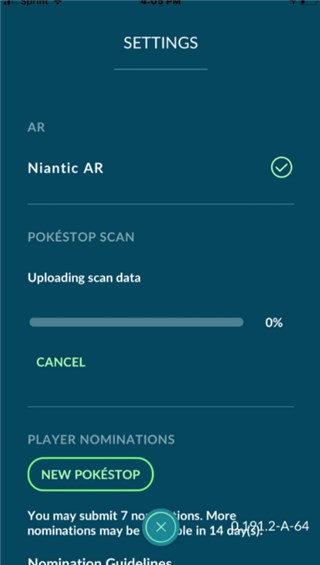
Step 3. Take a clear, well-lit photograph of the object, ensuring no people or license plates are visible.
Step 4. Take a secondary surrounding area photo to prove the location is safe for pedestrians to access.
Step 5. Provide an accurate title and a detailed description explaining the cultural, historical, or community value of the location.
Understanding the Map: Why Is Your Radar Empty?
To understand why your map is empty, you must look at the mechanics behind the developer’s mapping algorithms.
The game relies heavily on a database of points of interest initially built by players of an older augmented reality game called Ingress. Urban environments naturally contain high concentrations of historical markers, public art, and public transit hubs. Consequently, the mapping algorithms cluster PokéStops and gyms densely in those locations.
In open countryside environments, fewer qualifying landmarks exist. This algorithmic clustering leads directly to drastically lower spawn rates and a severe lack of local gyms. Additionally, Pokémon spawns are historically tied to local cellular data traffic. Because open fields and small neighborhoods generate significantly less cellular traffic than a downtown commercial district, the system generates fewer wild encounters.
This technical reality validates the core frustrations you face. The system is inherently designed to reward physical density, which is exactly why relying on digital networking apps is heavily advised.
Community Wishlists: Advocating for Better Accessibility
When researching solutions, you might see articles discussing future game features that aim to balance the map. It is important to clarify that many of these are simply community wishlists, not official features promised by the developers.
Player advocacy groups heavily emphasize the need for systemic solutions. Highly requested changes include enhanced daily spawn boosters that scale up when a player is in a low-density area, or an increased daily item allowance for players lacking nearby PokéStops. Other proposed ideas focus on scaling raid boss difficulty dynamically, allowing solo players to complete higher-tier raids without requiring external apps like PokeGenie.
Staying informed about these community discussions helps manage expectations. Niantic frequently updates spawn algorithms and Wayfarer criteria, so bookmarking official community forums is the best way to track real, structural changes.
Frequently Asked Questions
- Why is the game easier in cities?
- The game relies on mapped points of interest and cellular data traffic density. Cities possess massive concentrations of both, resulting in heavily clustered PokéStops, numerous gyms, and highly active wild spawns.
- How can I get more local PokéStops?
- Players who achieve Level 37 can nominate local landmarks, trail signs, and parks through the Niantic Wayfarer system. Approved nominations are translated into new in-game locations.
- What challenges do isolated players face?
- The primary obstacles include severe item shortages, significantly lower spawn densities, and a frequent inability to complete high-tier raids due to a lack of local active trainers available to assist.
- Are spawn rates different depending on location?
- Yes. Spawn algorithms heavily favor areas with high PokéStop density and active cellular usage. This makes encounters naturally rarer in the countryside.
Regain Control of Your Gameplay Experience
Overcoming the geographical limits of your local map is absolutely possible with the right strategy. By building a global friend list through active subreddits and joining remote lobbies with dedicated apps, you can solve many of the core frustrations caused by an empty map and limited local gyms. These digital networking tools help you maintain a steady item supply, join more battles, and level up fast in Pokémon GO even when your area lacks strong in-person communities.
You do not have to accept slow progress just because your local map is sparse. With smarter networking, consistent gifts, and remote raid coordination, you can keep gaining resources, earn more experience, and work toward eventually submitting your own PokéStops. Regain control of your gameplay today by adding new global friends, using a remote raid coordinator, and turning daily shortages into steady progress.


Hot Topics
