How to Bypass Google FRP on Huawei Without PC After Factory Reset
Stuck on Google verification after resetting a Huawei phone? Learn which no-PC FRP methods may still work, why Emergency Call, TalkBack, and APK routes often fail, and what to try next.
If your Huawei phone asks you to verify a Google account that was previously synced with the device after a factory reset, you are dealing with Factory Reset Protection, or FRP. The right next step depends on the exact lock screen, the Huawei model and firmware, and whether older no-PC routes are still available on that build.
Do not confuse Google FRP with a Huawei ID prompt or an ordinary PIN, pattern, or password lock. Those are different account or lock situations. This guide focuses on Huawei Google FRP after factory reset, explains when legacy no-PC methods such as Emergency Call, QuickShortcutMaker, and TalkBack may still appear, and shows what to do when those routes are already patched.
Before you begin: Use account-recovery or FRP methods only on a Huawei phone you own or are authorized to manage. If the device is second-hand, asking the previous owner to resolve the linked account is the best first step.
Table of ContentsHide
Quick Answer: Can You Bypass Huawei FRP After Factory Reset Without PC?
Huawei Google FRP vs Huawei ID vs Screen Lock
Huawei FRP Bypass Methods Compared
Method 1: Recover the Previous Google Account First
Method 2: Does Recovery Mode Remove Huawei FRP?
Method 3: Does the Huawei Emergency Call FRP Method Still Work?
Method 4: When QuickShortcutMaker May Work
Method 5: When the TalkBack Method May Work
When No-PC Huawei FRP Methods Fail: Try a Guided PC Option
Huawei Screen Lock vs FRP Lock
Huawei FRP Bypass Not Working: Check the Failure Point
FAQs About Huawei FRP Bypass Without PC
The Bottom Line
Quick Answer: Can You Bypass Huawei FRP After Factory Reset Without PC?
Sometimes, but no-PC Huawei FRP routes depend heavily on the exact firmware and security patch. Older Huawei builds may still expose setup-screen paths used by Emergency Call, TalkBack, browser access, or APK-based methods. On other devices, those menus are missing or patched, so repeating the same legacy steps will not help.
| Your Situation | Best First Step | What to Know |
| You know the Google account previously used on the phone | Sign in or recover that Google account | This addresses the actual FRP verification request without relying on a setup loophole. |
| The phone asks for Huawei ID instead of Google | Use Huawei ID recovery or Huawei support | Huawei ID is a separate account-lock situation. |
| You bought the Huawei phone used | Contact the previous owner | Ask the seller to resolve the linked Google or Huawei account before using bypass methods. |
| A legacy Huawei build still exposes setup shortcuts | Check the no-PC route that matches the menus you can actually open | Availability varies by firmware and security patch. |
| Emergency Call, TalkBack, browser, and APK routes are missing | Stop repeating legacy methods | A guided computer-based option may be more practical if the device is supported. |
Huawei Google FRP vs Huawei ID vs Screen Lock: What Are You Seeing?
Before trying any Huawei FRP bypass method, read the message on the phone carefully. A factory-reset Google verification screen, a Huawei ID prompt, and a normal screen lock are not interchangeable.
| Lock Type | What You See | Best Direction |
| Google FRP | The setup screen asks for a Google account previously synced on the device. | Recover the Google account, contact the previous owner, or use an applicable FRP method. |
| Huawei ID lock | The device requests a Huawei ID, Huawei account, or related activation login. | Use Huawei account recovery or Huawei support with appropriate ownership information. |
| Screen lock | The phone asks for a PIN, pattern, password, fingerprint, or face authentication before normal use. | Treat it as a screen-lock issue rather than Google FRP. |
| Verification returns after another factory reset | The setup screen still asks for the previously synced Google account. | FRP is still active. Repeating the reset does not address the account verification. |
If your Huawei specifically asks for a previously synced Google account after reset, the Google account verification after reset guide explains the broader FRP verification flow beyond Huawei devices.
Huawei FRP Bypass Methods Compared
The most useful question is not simply whether a method is “free” or “without PC.” Check what the Huawei setup wizard still lets you open. If a required menu, browser route, accessibility page, or account activity is missing, that method does not fit your current firmware.
| Method | PC Needed? | When It May Help | Main Limitation |
| Google account recovery | No | You own the account previously synced on the phone | You need enough recovery information to regain account access. |
| Recovery Mode reset | No | You need to erase or reset the phone for another reason | Another reset does not reliably remove an already active FRP verification request. |
| Emergency Call route | No | A legacy setup screen exposes an old shortcut path | The route is unavailable on many newer builds. |
| QuickShortcutMaker / APK route | No | Browser access, APK installation, and required account activities still exist | Files can be incompatible or unsafe, and setup access is often restricted. |
| TalkBack route | No | Accessibility Help or another route out of Setup Wizard is still exposed | Help, browser, sharing, Gmail, and Settings paths may be blocked. |
| DroidKit FRP Bypass | Yes | You want a guided computer-based workflow after no-PC routes fail | Requires a computer and an applicable supported device scenario. |
Method 1: Recover the Previous Google Account First
If you own the Google account that was previously synced to the Huawei phone, account recovery is the most direct starting point. You do not need to search for an Emergency Call code or install an APK when you can still regain access to the account the setup screen is requesting.
Step 1. Confirm that the Huawei screen is asking for a Google account rather than Huawei ID.
Step 2. On another phone or computer, try to recover the Google account using the recovery information available to you.
Step 3. After you regain access, return to the reset Huawei phone and use the previously synced account when Setup Wizard requests it.
Step 4. If the device is second-hand and the requested account belongs to someone else, contact the previous owner rather than attempting to access their account.
Step 5. If the screen actually asks for Huawei ID, stop using Google FRP instructions and use the appropriate Huawei account-recovery route instead.
Lock check: A Google FRP screen, Huawei ID login, and screen PIN are separate problems. A method designed for one does not automatically resolve the others.
Method 2: Does Recovery Mode Remove Huawei FRP?
Usually not if FRP is already active. Recovery Mode can erase the device, but the phone may still request the previously synced Google account when Setup Wizard starts again.
This distinction matters because many older Huawei tutorials present another factory reset as an FRP solution. In practice, if the account-verification requirement was already triggered, wiping the phone again does not necessarily change that state.
If you need Recovery Mode for a normal reset, a common Huawei flow is:
Step 1. Power off the Huawei phone.
Step 2. Use the hardware-button combination shown for your specific Huawei model to enter its recovery environment.
Step 3. Choose the wipe or factory-reset option if your goal is to erase the device.
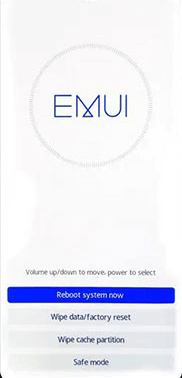
Select Wipe Data on the Huawei Recovery Screen
Step 4. Restart the phone after the reset completes.
Step 5. If Setup Wizard still asks for the previous Google account, FRP remains active. Do not keep repeating the factory reset.
Key point: Recovery Mode is useful for erasing a phone, but it should not be treated as a guaranteed Huawei FRP removal method.
Method 3: Does the Huawei Emergency Call FRP Method Still Work?
The Emergency Call method comes from older Huawei and Android FRP tutorials. It relies on legacy setup-screen behavior that may expose another part of the system from the emergency interface.
On many Huawei phones, the Emergency Call screen now remains limited to emergency dialing and does not provide a usable route into Settings or account management. If that is what you see, consider the method patched for your device.
You can use these checkpoints before spending more time on it:
- The Emergency Call screen must expose more than ordinary emergency dialing.
- A camera, notification, Settings, or another setup escape route must still be available.
- If the old asterisk-entry or copy-and-paste behavior does nothing, stop repeating it.
- Do not assume an “emergency code” shown in an old tutorial works across Huawei models or security patches.
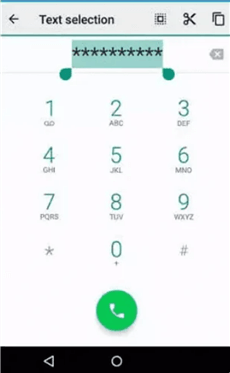
A Legacy Emergency Call Route Used in Older Tutorials
If nothing opens: The absence of the required shortcut is the failure signal. Repeating the same emergency-screen sequence is unlikely to change the result.
Method 4: When QuickShortcutMaker May Work for Huawei FRP
QuickShortcutMaker appears in older Huawei FRP guides because it can expose Android activities such as account-related settings. The method is useful only if Setup Wizard still gives you several required pieces of access.
Before downloading anything, check these conditions:
| Checkpoint | If Available | If Missing |
| Browser or Web Search opens from setup | You may be able to reach a download page | The APK route cannot start from this path |
| Unknown-app installation is allowed | An APK can potentially be installed | Do not keep downloading files you cannot install |
| Required Google account activity exists | QuickShortcutMaker may expose a relevant activity | The legacy workflow is incompatible with the current build |
| QuickShortcutMaker opens normally | You can inspect only the activities visible on the phone | If it crashes or fails to install, stop using this route |
One older Huawei path uses Wi-Fi settings to check whether a Web Search option can be reached:
Step 1. Connect the Huawei phone to Wi-Fi during setup.
Step 2. Open the connected network settings if the setup screen allows it.
Step 3. Check whether editing a network field exposes a Web Search or browser action.
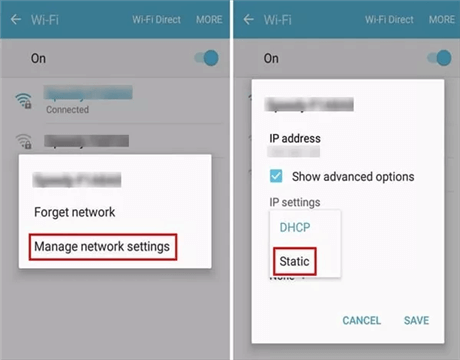
Check Whether the Legacy Web Search Route Exists
Step 4. If browser access is unavailable, stop. This particular QuickShortcutMaker route does not fit the phone.
Step 5. If APK installation is available, use only files from a source you trust and only when the package matches the Android environment you are working with.
APK warning: Do not install random Google Account Manager or FRP APK files simply because a filename appears in an old tutorial. Modified, incompatible, or untrusted APK packages can create additional security and setup problems.
Method 5: When the TalkBack Huawei FRP Method May Work
TalkBack methods depend on Android accessibility screens exposing a path to Help, sharing, a browser, Gmail, or Settings. Newer firmware may remove one or more of those transitions.
Use the method as a compatibility check rather than assuming every step will appear:
Step 1. Connect the Huawei phone to Wi-Fi and continue to the Google verification screen.
Step 2. Check whether the keyboard or accessibility controls available during setup let you open a settings or Help screen.
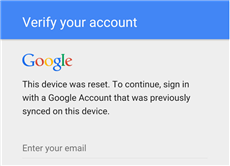
Check Which Keyboard or Help Options Are Available
Step 3. If Help & Feedback is visible, check whether it exposes any further browser or sharing option.
Step 4. Continue only through options that actually appear on your Huawei phone. Do not rely on a menu shown in a different firmware tutorial.
Step 5. If Help, sharing, browser, Gmail, or Settings access is missing, consider the TalkBack route patched for your current build.
Failure signal: If one of the required transitions is missing, switching gestures or repeating TalkBack activation does not restore a menu that the firmware no longer exposes.
When No-PC Huawei FRP Methods Fail: Try a Guided PC Option
If the Huawei phone still asks for Google verification and the no-PC routes above are unavailable, a computer-based workflow can be the next option to evaluate. DroidKit FRP Bypass provides guided FRP instructions for supported device situations.
This option is most relevant when:
- the Emergency Call route exposes no useful system menu;
- Web Search or browser access is blocked during setup;
- QuickShortcutMaker or a required account activity cannot be used;
- TalkBack no longer exposes the required Help, sharing, or Settings route;
- you prefer an on-screen computer workflow instead of searching for legacy APK files.
No FRP tool should be assumed to support every Huawei model, Android version, EMUI build, or security patch. Check the current device requirements before proceeding.
How to Start the DroidKit FRP Workflow
Step 1. Install and open DroidKit on a Windows PC or Mac, then select FRP Bypass.
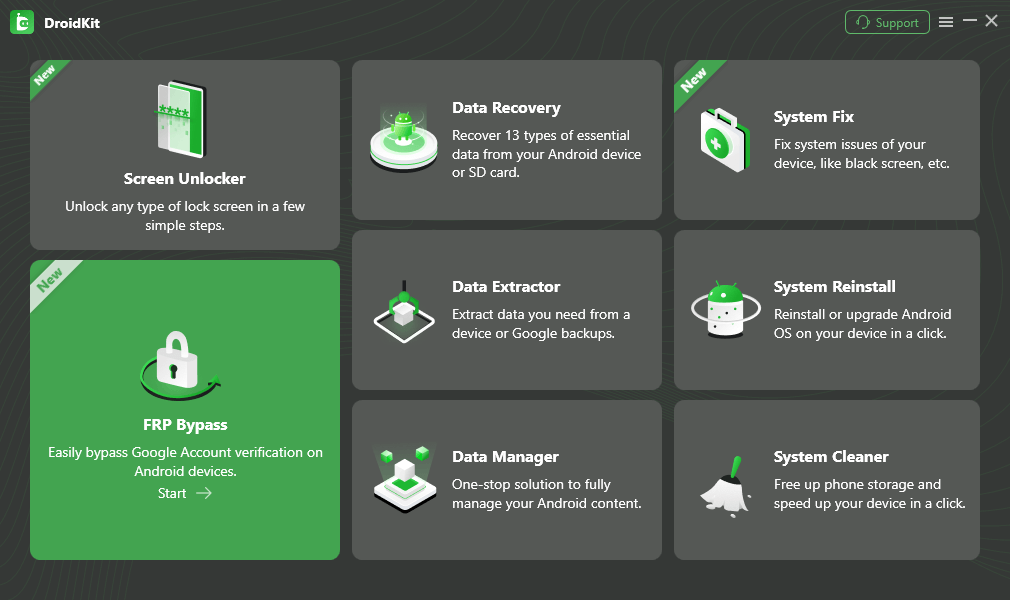
Choose FRP Bypass
Step 2. Connect your Huawei phone to the computer with a working USB cable and follow the connection prompt shown by DroidKit.
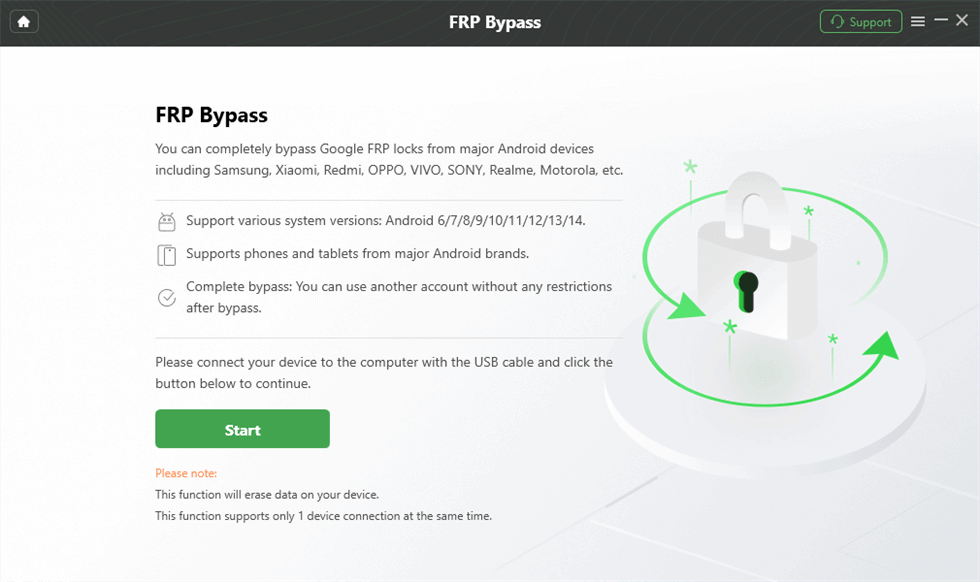
Connect the Device and Start
Step 3. Select the device information requested by the software and continue only if the connected Huawei scenario is supported.
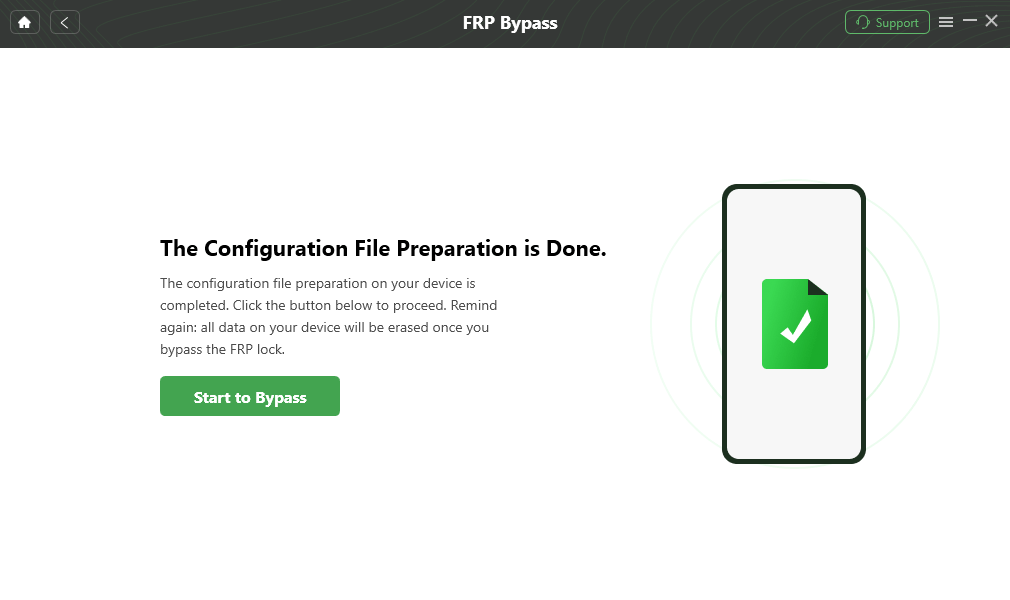
Continue the Guided FRP Workflow
Step 4. Follow the instructions DroidKit displays for the connected device rather than using screenshots or button sequences intended for another Android brand.
Step 5. Keep the phone connected while the software is working. When the workflow finishes, follow the device setup instructions shown on screen.
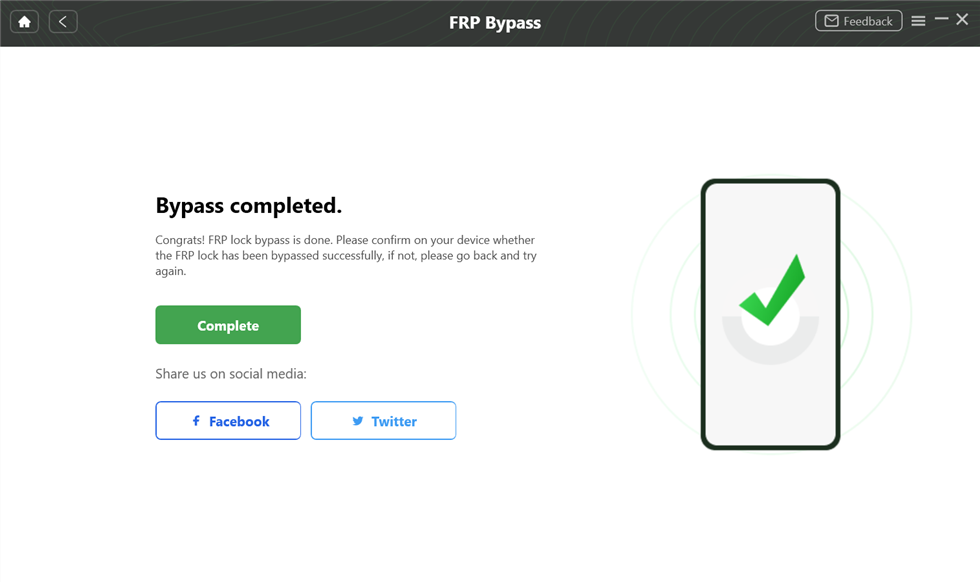
FRP Workflow Completed
Why the steps are kept device-specific: Huawei FRP behavior can differ by model, Android version, EMUI build, and security patch. Do not follow a Samsung-specific configuration screen simply because it appears in another DroidKit tutorial.
Huawei Screen Lock vs FRP Lock
A Huawei screen lock is not the same as Google FRP. Screen lock is the PIN, pattern, password, fingerprint, or face authentication used before a factory reset. FRP is an account-verification requirement that appears during setup after a reset.
| Problem | What It Means | What to Do |
| The phone asks for PIN, pattern, or password before normal use | Screen lock | Use an appropriate screen-lock recovery method rather than this FRP guide. |
| The setup process asks for a previously synced Google account | Google FRP | Use account recovery, previous-owner help, or an applicable FRP workflow. |
| The phone asks for Huawei ID | Huawei account or activation-related lock | Use the corresponding Huawei account-recovery path. |
If the problem appears only after factory reset and specifically requests the old Google account, stay with the FRP methods on this page. A separate screen-unlock workflow does not replace Google account verification.
Huawei FRP Bypass Not Working: Check the Failure Point
If a method fails, identify what is missing instead of restarting the same tutorial from the beginning. The missing menu or failed checkpoint usually tells you whether the method is compatible with your Huawei build.
| Problem | Likely Reason | What to Do Next |
| Another factory reset still asks for the Google account | FRP is still active | Use Google account recovery, previous-owner help, or another applicable FRP route. |
| The phone asks for Huawei ID instead | You are not dealing with standard Google FRP | Switch to Huawei ID recovery or Huawei support. |
| Emergency Call opens only the dialer | The legacy escape route is unavailable | Stop repeating the emergency-screen method. |
| Web Search does not appear from Wi-Fi settings | Setup Wizard blocks that browser route | The QuickShortcutMaker path described here does not fit the phone. |
| QuickShortcutMaker cannot install or open | The APK is blocked, incompatible, or unsuitable | Do not keep downloading different untrusted packages. |
| Required Google Account Manager activity is absent | The legacy account route is unavailable on the build | Switch methods instead of forcing another APK version. |
| TalkBack cannot open Help or another system route | The accessibility path is patched | Stop repeating TalkBack gestures and evaluate another option. |
| A PC tool cannot detect the phone | Connection, USB, driver, mode, or support issue | Check the cable, USB port, connection instructions, and device support. |
FAQs About Huawei FRP Bypass Without PC
Can I bypass Huawei FRP after factory reset without a PC?
Some legacy Huawei builds may still expose no-PC routes through setup menus, accessibility features, a browser, or APK installation. Availability depends on the exact firmware and security patch, so a method shown on another Huawei phone may be missing on yours.
How do I know if my Huawei has Google FRP or a Huawei ID lock?
Google FRP asks for a Google account previously synced with the phone after reset. A Huawei ID lock asks for a Huawei account or Huawei activation-related login. They are separate account systems and require different recovery paths.
Will another factory reset remove Huawei FRP?
Not reliably. If the phone already requires the previously synced Google account, another wipe can return you to the same verification screen after restart.
What is the Huawei FRP bypass Emergency Call code?
Older tutorials describe Emergency Call and text-entry workarounds, but there is no universal Huawei emergency code that should be expected to remove FRP across models. These setup-screen routes are unavailable on many newer firmware builds.
Why does the QuickShortcutMaker Huawei FRP method not work?
The route depends on browser access, APK installation, QuickShortcutMaker compatibility, and the required Android account activity still being exposed. If one of those checkpoints is missing, the method does not match the current build.
Is it safe to download Google Account Manager APK files for Huawei FRP?
APK files from unknown mirrors can be modified, outdated, or incompatible. Avoid installing random packages simply to reproduce an old tutorial, especially when the exact Android version and source cannot be verified.
Why does the TalkBack Huawei FRP method fail?
TalkBack tutorials rely on specific transitions from accessibility or Help screens into sharing, browser, Gmail, or Settings. If those options are absent, the relevant path has been restricted on that firmware.
Can I unlock Huawei FRP if I do not know the old Google account?
If the account belongs to you, try Google account recovery first. If the phone is second-hand, contact the previous owner. For an owned or authorized device where account recovery is not available, evaluate only FRP methods that support the specific Huawei scenario.
Does DroidKit bypass FRP on every Huawei phone?
No. FRP support can vary by Huawei model, Android version, EMUI build, security patch, and device state. Check the current supported conditions before starting a computer-based workflow.
The Bottom Line
Huawei FRP bypass without PC is mainly a question of which setup routes your exact firmware still exposes. If the phone asks for the previously synced Google account, start with account recovery or previous-owner help. If it asks for Huawei ID instead, use Huawei account recovery rather than a Google FRP method.
Recovery Mode does not reliably remove an already active FRP verification request, while Emergency Call, QuickShortcutMaker, and TalkBack depend on legacy setup paths that may no longer exist. Check each method at its first compatibility checkpoint and stop when the required menu is missing.
If the no-PC paths are unavailable and the device is yours or you are authorized to manage it, a guided computer workflow such as DroidKit can be evaluated for a supported Huawei FRP situation. The important part is matching the method to the actual lock, model, firmware, and security state instead of repeating a tutorial designed for another device.
More Related Articles


Roger Smith is a senior technical writer with years of experience in providing Android solutions. He loves to help users solve various problems such as Android unlock, Android data recovery, and Android system repair.
Product-related questions? Contact Our Support Team to Get Quick Solution >
