Samsung Tab A FRP Bypass: Unlock Tool & No-PC Methods
Samsung Tab A FRP methods vary by exact model, Android version, security patch, and whether OTG file access or Download Mode is available. Check those details first, then compare Samsung Support, APK/OTG, DroidKit, and Odin without applying instructions from the wrong Tab A generation.
If your Samsung Galaxy Tab A stops at Google verification after a factory reset, Factory Reset Protection (FRP) is active. The tablet is asking for a Google account that was previously synced with the device before the reset.
The important detail is that Samsung Tab A is not one single hardware and software configuration. Different Tab A generations can use different Android versions, security patches, button layouts, Setup Wizard screens, OTG behavior, and Download Mode procedures. A method shown for one Tab A model may therefore stop at the first or second screen on another.
This guide helps you identify those differences before choosing a Samsung Tab A FRP bypass route. You can compare Samsung ownership support, an APK/OTG no-PC route, DroidKit, and Odin, then use the troubleshooting section to identify why a method does not match your tablet.
Before you begin: If you still know or can recover the Google account previously used on the Tab A, use that account first. If the tablet was purchased second-hand and remains linked to another person’s account, ask the previous owner to resolve the account association. The methods below are intended for a tablet you own or are authorized to service.
Table of ContentsHide
Quick Answer: Can You Bypass FRP on Samsung Tab A?
Check Your Samsung Tab A Model First
Choose the Right Samsung Tab A FRP Bypass Method
Method 1: Samsung Tab A FRP Unlock Tool with DroidKit
Method 2: Samsung Tab A FRP Bypass Without PC via APK / OTG
Method 3: Ask Samsung Support for Ownership Help
Method 4: Use Odin for Compatible Tab A Firmware Scenarios
What If Samsung Tab A FRP Bypass Does Not Work?
Samsung Tab A FRP Bypass FAQs
Final Words
Quick Answer: Can You Bypass FRP on Samsung Tab A?
There is no single Samsung Tab A FRP method that fits every generation. The route you should consider depends on the exact tablet model, Android version, security patch, whether the old Google account can be recovered, whether the Setup Wizard exposes OTG/file access, and whether the tablet can enter the Download Mode required by an Odin procedure.
- You know the old Google account: recover or sign in with that account before trying a bypass route.
- You have proof of ownership: Samsung Support is the official support path to check.
- You want a no-PC option: first confirm that connecting OTG storage actually exposes a file or installer path during setup.
- The manual route no longer matches: evaluate an applicable computer-guided FRP workflow instead of downloading more unknown APK files.
- You want to use Odin: confirm the exact Tab A model and matching firmware before loading any files.
If you need guidance covering Tab A8, Tab E, and other Galaxy Tab families rather than this Tab A-specific scenario, start from the Samsung tablet FRP bypass guide. For Samsung phones and other Galaxy families, use the Samsung FRP bypass guide.
Check Your Samsung Tab A Model Before Choosing a Method
Before copying steps from a Tab A video or downloading firmware, identify the tablet in front of you. This is particularly important with Odin and older no-PC routes because hardware buttons and software screens have changed across the Tab A family.
| What to Check | Why It Matters | What to Do |
| Exact model number | Firmware, Download Mode instructions, and device-specific procedures can vary by model. | Check the model information available on the tablet, packaging, purchase record, or device label before downloading firmware. |
| Android version | An older APK or setup-screen route may not behave the same way on a later Android release. | Match any tutorial to the Android environment actually installed on the tablet. |
| Security patch / current setup screens | A shortcut used in an older FRP tutorial may no longer appear. | If the required screen is missing, stop that route instead of assuming you skipped a hidden step. |
| Physical Home button or newer button layout | Older Tab A instructions often assume a Home button, while other models use a different Download Mode sequence. | Do not use a hardware-button combination simply because it worked on another Tab A generation. |
| OTG and file access during setup | The APK/OTG route cannot start if the locked Setup Wizard never exposes the storage device or file. | Test whether the expected file picker or File Manager appears before preparing multiple APK files. |
| Ownership documents | Samsung may ask for purchase or device information before offering an ownership-related support route. | Prepare the receipt and identifying device information before contacting support. |
A model name such as “Galaxy Tab A” is therefore not enough to establish compatibility. The first useful check is whether the screens and hardware behavior required by a method actually exist on your particular tablet.
Choose the Right Samsung Tab A FRP Bypass Method
Use the method prerequisites below rather than choosing solely by whether a method is described as free or easy.
| Your Situation | Route to Check | PC Needed? | Main Limitation |
| You still control or can recover the previously synced Google account | Google account recovery | No | Requires access to the account recovery information. |
| You are the legitimate owner and can provide purchase information | Samsung Support | No | Samsung determines the verification and support options available for your case. |
| OTG storage opens a usable file path during setup | APK / OTG route | No | File access, APK installation, and compatibility may be blocked. |
| The no-PC setup path does not match your tablet | DroidKit FRP workflow | Windows or Mac | The workflow presented by the software must match the connected device scenario. |
| You understand Samsung firmware flashing and have verified the exact model | Odin | Windows | Firmware and binary mismatches can cause flashing or system problems, and normal firmware flashing should not be treated as a universal FRP removal method. |
If your intent is specifically to compare software rather than manual Tab A routes, review the Samsung FRP tool options before choosing one.
Method 1: Samsung Tab A FRP Unlock Tool with DroidKit
DroidKit includes an FRP Bypass workflow and is relevant to this Tab A scenario when the tablet no longer exposes the entry point required by the no-PC method and you prefer an on-screen computer workflow.
It is worth checking when:
- connecting an OTG drive does not expose the file access required by the APK route;
- the APK installer does not open or the setup environment blocks installation;
- the screens shown by an older manual Tab A tutorial are not present on your tablet;
- you do not want to flash model-specific firmware with Odin; and
- the Samsung tablet workflow offered by DroidKit matches the connected device scenario.
For product-specific details before starting, see DroidKit FRP Bypass.
Free Download* 100% Clean & Safe
Steps to Start the Samsung Tab A FRP Workflow with DroidKit
Step 1. Install DroidKit on a Windows PC or Mac. Open it and choose FRP Bypass.
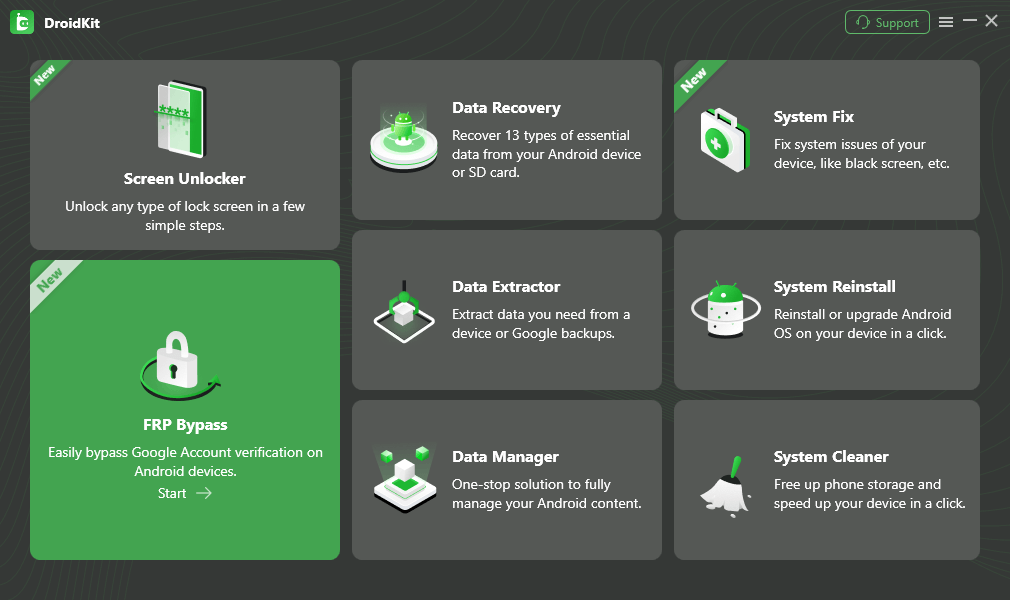
Choose FRP Bypass Mode
Step 2. Connect the Samsung Tab A to the computer using a data-capable USB cable, then click Start.
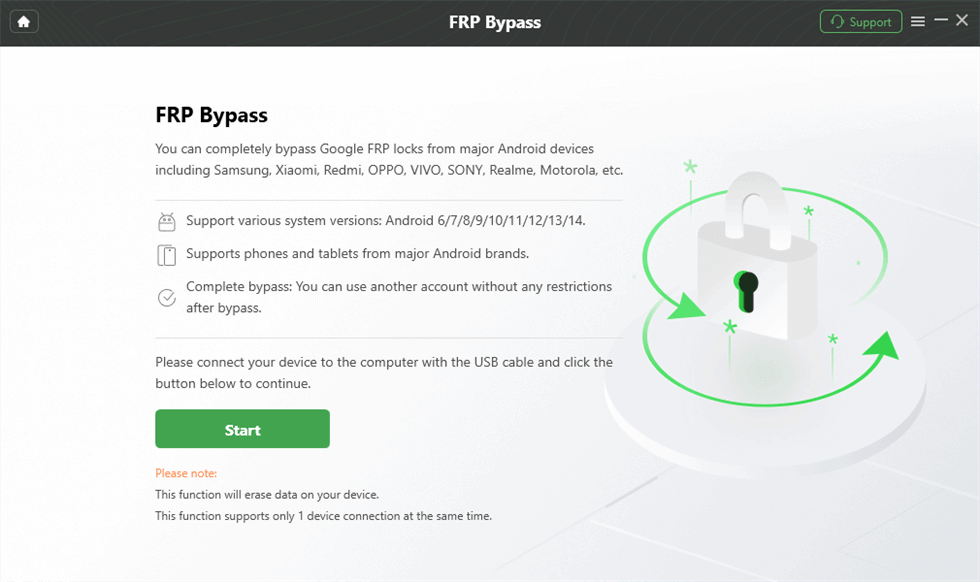
Connect the Tablet and Click Start
Step 3. Select the device brand and continue with the workflow displayed for the connected device. When prompted, click Start to Bypass.
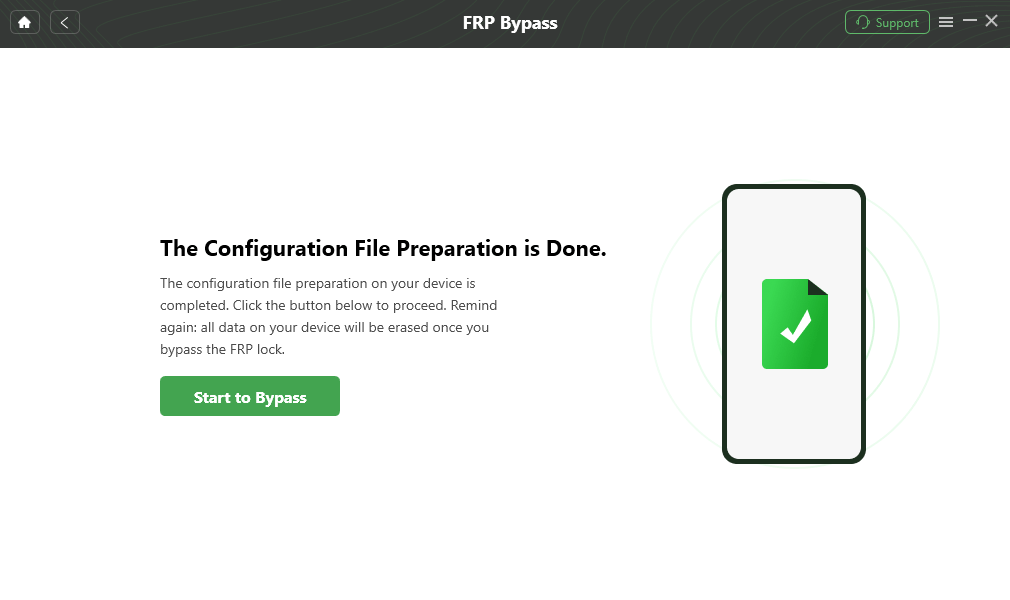
Continue with the FRP Workflow
Step 4. Select the operating system or device series requested by the software. If the interface offers a Tablet series route for your connected device, choose the matching option and continue.
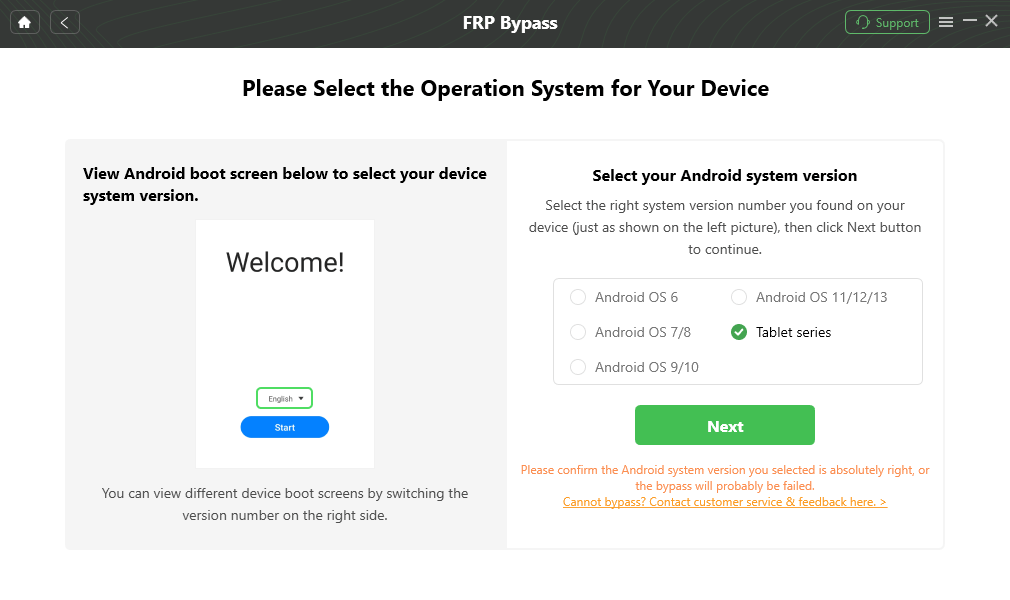
Choose the Tablet Series When It Matches Your Device
Step 5. Follow the device instructions displayed by DroidKit. If the applicable tablet workflow presents a Reset step, complete the preceding settings before continuing.
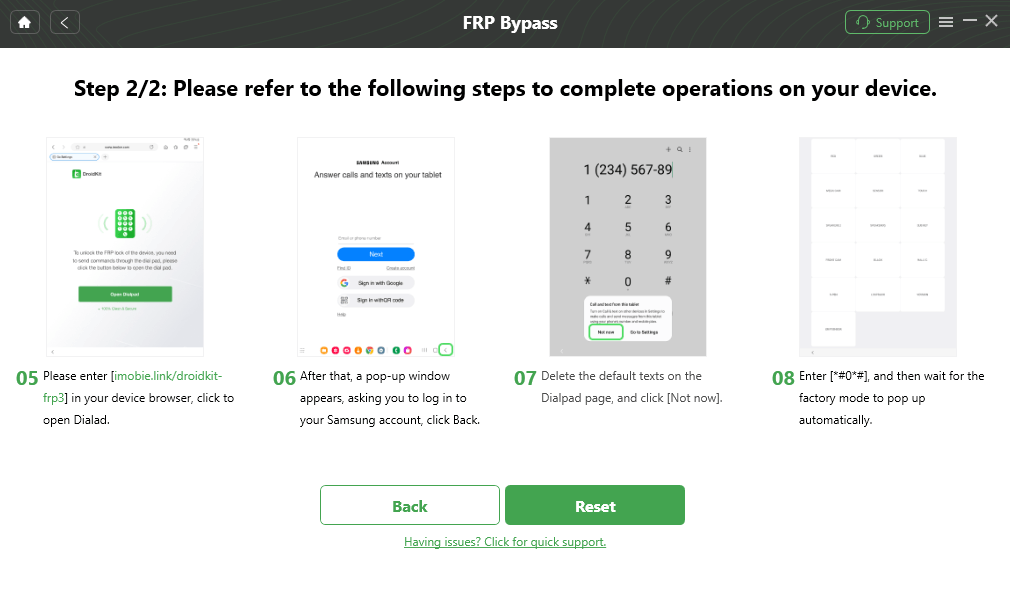
Follow the Reset Step When Shown
Step 6. Allow the selected workflow to finish and follow the setup instructions shown for the tablet.
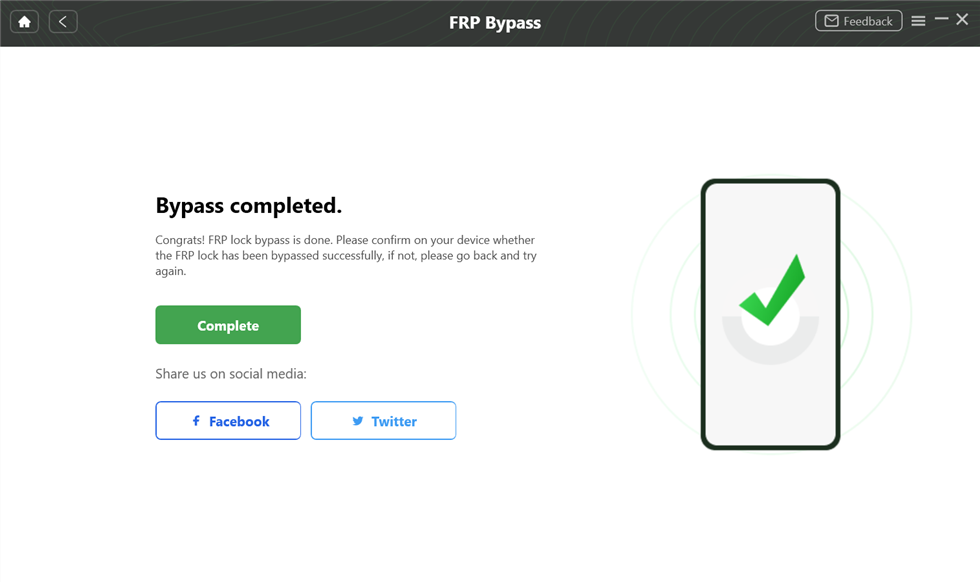
DroidKit FRP Workflow Completion Screen
Compatibility note: Do not assume that every device carrying the Galaxy Tab A name uses the same workflow. Follow the operating system and device-series choices DroidKit presents for the connected tablet rather than selecting a route based only on the product family name.
Method 2: Samsung Galaxy Tab A FRP Bypass Without PC via APK / OTG
The APK / OTG route is often searched by users who want a Samsung Tab A FRP bypass without a computer. Its first prerequisite, however, is not the APK file. The locked tablet must actually expose the USB storage or file-access path needed to open that APK during setup.
APK Safety: Do not install a package simply because its filename includes “FRP bypass.” Check where the file came from and stop if a download page, modified APK, or installer asks for permissions unrelated to the stated function.
Checkpoint 1: Does OTG Expose the File During Setup?
Step 1. Put the APK you intend to evaluate on a USB storage device using another device.
Step 2. Connect that storage device to the Tab A through a compatible OTG adapter.
Step 3. Check what the locked Setup Wizard actually does. Continue only if the tablet exposes a usable file picker, File Manager, or other route that lets you reach the stored file.
If nothing opens, do not assume that downloading another APK will solve the problem. The missing component is the setup-screen entry point, not necessarily the file itself.
Checkpoint 2: Can the Tab A Open the APK Installer?
Step 4. If file access appears, locate the APK and try to open it.
Step 5. Check whether Android presents the installer and whether the required installation permission is available.
Step 6. If installation is blocked, the package reports an error, or the installer cannot be reached, stop the APK route rather than trying a series of random FRP packages.
Checkpoint 3: Does the APK Route Reach the Required System Screen?
Step 7. If the APK installs and opens, continue only when its next screen matches the route you are evaluating for that Samsung Tab A environment.
Step 8. If the tutorial requires Android Settings but the APK cannot reach Settings on your tablet, treat that as the stopping point for this method.
The key difference is compatibility: a file that can be copied to a USB drive is not automatically usable from a locked Tab A Setup Wizard.
Method 3: Ask Samsung Support for Ownership Help
If you are the original owner and have purchase information, Samsung Support is the official support route to check before experimenting with firmware or unknown APK packages. Samsung determines what verification information and service options are available for a particular device and region.
Step 1. Identify the exact Tab A model and collect the serial number and purchase information you have available.
Step 2. Visit Samsung Support and select the support channel available in your country or region.
Step 3. Explain that the Galaxy Tab A is stopping at Google account verification after a factory reset.
Step 4. Provide the ownership information Samsung requests.
Step 5. Follow the service or account-related next steps Samsung provides for the tablet.

Samsung Support Service Example
This route is most useful when you can establish ownership. It should not be described as a guaranteed remote FRP removal service because the support process and available service options are determined by Samsung.
Method 4: Use Odin Only for Compatible Samsung Tab A Firmware Scenarios
Odin is a Windows-based Samsung firmware flashing utility. It is useful for specific firmware service and recovery tasks, but ordinary firmware flashing should not be treated as a universal Samsung Tab A FRP bypass. FRP and firmware installation are separate issues, and the result depends on the exact device and procedure being used.
The most important work therefore happens before you click Start in Odin.
Before Loading Any Firmware in Odin
- Confirm the exact Samsung Tab A model number.
- Verify that the firmware package is intended for that exact device.
- Check the firmware/binary requirements relevant to the device.
- Do not use a Download Mode key combination copied from another Tab A generation without confirming it applies to yours.
- Do not flash random files advertised only as “Tab A FRP firmware.”
Step 1. Identify the exact Galaxy Tab A model before downloading firmware.
Step 2. Obtain the appropriate Samsung firmware package from a source you trust and inspect the package before proceeding.
Step 3. Install the required Samsung USB drivers and Odin on a Windows computer.
Step 4. Put the tablet into the Download Mode appropriate for that exact model. Some older Samsung tablets used combinations involving Volume, Power, and a physical Home button, while other models use different controls.
Step 5. Connect the tablet and confirm that Odin actually detects the device before loading firmware.
Step 6. Load the firmware components required by the package, which may include Samsung firmware slots such as BL, AP, CP, and CSC. Use only the files that belong to the verified package and procedure.
Step 7. Recheck the model and files before clicking Start. Do not continue if the package does not clearly match the device.
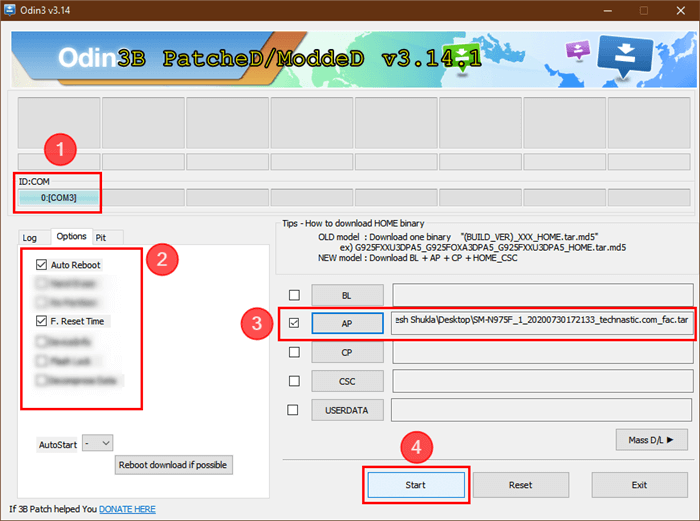
Samsung Firmware Workflow in Odin
If Odin reports FAIL, does not detect the tablet, or the model and firmware package do not match, stop and diagnose that problem before flashing again. Repeating a mismatched firmware attempt can create a larger system problem without resolving Google verification.
For the file-matching requirements, Odin connection checks, and common FAIL conditions, read the Odin FRP bypass guide.
What If Samsung Tab A FRP Bypass Does Not Work?
Instead of repeating an entire tutorial, identify the first prerequisite that fails on your Tab A. That usually tells you whether the route is incompatible, the connection needs repair, or the instructions belong to another device generation.
| Problem | Likely Reason | What to Check Next |
| OTG drive is connected but no file screen appears | The Setup Wizard does not expose USB storage access, or the adapter/storage connection is not usable. | Verify the OTG hardware separately. If storage works normally but locked setup still exposes no file path, stop the APK/OTG route. |
| APK shows “App not installed” | The package may be incompatible or installation is restricted in the current setup environment. | Do not keep downloading random APK versions. Treat the installation failure as a compatibility checkpoint. |
| APK installs but cannot open Settings | The next system entry point required by the tutorial is blocked or different. | Stop that route rather than combining steps from another Samsung model. |
| The Download Mode key combination does not work | The instructions may belong to another Tab A generation or button layout. | Confirm the exact model and its Download Mode procedure before continuing with Odin. |
| Odin shows no connected device / COM port | Possible driver, USB cable, port, or Download Mode issue. | Resolve detection first; do not load or flash firmware while the connection is unreliable. |
| Odin displays FAIL | The firmware, binary, device model, connection, or flashing procedure may not match. | Stop and verify the model and package instead of retrying random firmware. |
| The tablet boots but still asks for the previous Google account | FRP verification remains active. | Recover the previously synced account, use Samsung’s ownership support route, or evaluate another applicable FRP workflow. |
| An older Tab A tutorial shows menus that are missing on your tablet | The Android version, patch level, One UI/setup environment, or device generation differs. | Use the missing screen as the stopping point and choose a method that matches the current tablet. |
Samsung Tab A FRP Bypass FAQs
1. Can I bypass FRP on Samsung Tab A without a PC?
A no-PC route is possible only when the tablet exposes the entry points that method requires. For an APK/OTG method, check first whether connecting storage during setup gives you usable file access and whether Android allows the installer to open. If either prerequisite is missing, the APK procedure cannot continue as written.
2. How do I know which Samsung Tab A FRP method fits my tablet?
Start with the exact model number, Android version, current setup screens, button layout, and whether OTG or Download Mode is available. “Galaxy Tab A” covers multiple generations, so matching those details is more reliable than choosing a method based on the family name alone.
3. Is there a free Samsung Tab A FRP unlock tool?
Some manual routes and firmware utilities do not require purchasing an FRP program, but “free” does not mean universally compatible. APK/OTG depends on file and installer access, while Odin requires a Windows PC, the correct device procedure, and correctly matched firmware.
4. Why doesn’t my USB OTG FRP method open File Manager?
The tablet may not expose USB file access from the locked Setup Wizard, or there may be an OTG hardware issue. Test the adapter and storage separately. If the hardware works but setup still provides no file picker or File Manager, stop any APK tutorial that depends on that entry point.
5. Why does my FRP APK say “App not installed”?
The package may not fit the Android environment, or the Setup Wizard may restrict installation from that source. Do not treat repeated APK downloads as the solution. If the installer consistently cannot proceed, choose a route that does not depend on sideloading an APK.
6. Can Odin remove FRP from a Samsung Tab A?
Odin is a Samsung firmware flashing utility, not a universal FRP unlock button. Some specialized procedures may involve Odin, but simply flashing ordinary firmware should not be presented as a guaranteed way to remove Google verification. Verify the exact Tab A model, firmware requirements, and purpose of the procedure before flashing anything.
7. Why doesn’t the old Volume Down + Power + Home combination work?
Not every Galaxy Tab A has the same physical buttons or Download Mode process. A combination shown for an older Home-button model may not apply to another generation. Confirm the exact model before following hardware-key instructions.
8. Can Samsung Support help with FRP on a Galaxy Tab A?
Samsung Support is the official route to check when you are the legitimate owner and can provide the requested device and purchase information. Samsung determines the ownership-verification process and the service options available in your country and for your particular tablet.
9. Will Samsung Tab A FRP bypass erase my data?
Some procedures may involve resetting or flashing the tablet. In addition, a device that reached FRP after a factory reset has already undergone a reset process. Do not begin another reset or firmware procedure under the assumption that local data will be preserved.
10. What should I do when every Tab A tutorial looks different from my screen?
Stop combining instructions from different models. The mismatch itself is useful information: your Tab A generation, Android build, security patch, or Setup Wizard differs from the tutorial. Re-identify the exact tablet and choose a route whose first required screens match what you actually see.
Final Words
The safest way to choose a Samsung Tab A FRP route is to start with the tablet rather than the tutorial. Confirm the exact model and Android environment, then check the prerequisite that decides each path: account access for Google recovery, ownership information for Samsung Support, OTG/file access for an APK route, a matching computer workflow for DroidKit, or verified firmware and Download Mode requirements for Odin.
If the first required screen or device behavior is missing, stop that method instead of borrowing the next step from another Tab A generation. That single compatibility check can prevent wasted APK downloads, incorrect button sequences, and risky firmware attempts while keeping this guide focused on the Tab A model in front of you.
More Related Articles



Joy Taylor is a seasoned technical writer with over a decade of experience in mobile technology. At iMobie, she specializes in producing in-depth content on iOS data recovery, iPhone unlocking solutions, and iOS troubleshooting.
Product-related questions? Contact Our Support Team to Get Quick Solution >
