10 Samsung Unlock Tools & Options for Screen Lock, FRP & SIM
Samsung screen locks, Google FRP and carrier SIM locks are three different problems, so one unlock tool will not solve all of them. This guide compares 10 Samsung tools and options by lock type, current role, prerequisites, data impact and limitations—including older remote-unlock methods that should no longer be treated as active solutions.
A Samsung phone can be “locked” in several completely different ways. A forgotten PIN, password, pattern, fingerprint, or face lock is a screen-lock problem. A phone asking for a previously synced Google account after a factory reset is Factory Reset Protection (FRP). A Galaxy phone that works normally but rejects another carrier’s SIM has a SIM or network lock.
That distinction matters more than the name of the unlock tool. Software designed for Samsung FRP will not necessarily remove a normal screen PIN, and neither of those functions will carrier-unlock a phone. Some older tools and web services also appear in Samsung unlock tutorials even though their original remote-unlock function is no longer available.
This guide compares 10 Samsung unlock tools and options by what they actually address, what they require, where data loss can occur, and whether the method should still be considered a current unlock route or only a legacy reference.
Table of ContentsHide
Quick Answer: First Identify Your Samsung Lock Type
Samsung Unlock Tools Compared at a Glance
DroidKit: Guided Option for Samsung Screen Lock & FRP
Samsung Screen Unlock Options: What Still Works?
Samsung FRP Tools: Free, Guided & Technical Options
Samsung SIM / Network Unlock Options
Which Samsung Unlock Option Fits Your Situation?
When Should You Stop Using an Unlock Tool?
Samsung Unlock Tool FAQ
Choose by Lock Type, Not Tool Popularity
Quick Answer: First Identify Your Samsung Lock Type
| What You See | Lock Type | Correct Tool Category |
| PIN, pattern, password, fingerprint or face lock before normal phone access | Samsung screen lock | Screen-lock recovery or screen-unlock software |
| “Verify your account” after a factory reset | Google FRP | Previously synced Google account, Samsung FRP guide or FRP-specific software |
| The phone works, but another carrier’s SIM is rejected | SIM / network lock | Carrier unlock or compatible network-unlock service |
| The phone was lost or stolen | Device-security situation | Use Google/Samsung lost-device functions rather than trying to bypass the lock |
If you only need to compare screen-lock software, use the Android phone unlocking software guide. If the phone is specifically stuck at Google verification, the Samsung FRP bypass guide is the more focused starting point.
Samsung Unlock Tools Compared at a Glance
The 10 options below are not ten interchangeable ways to unlock the same Samsung phone. Some are current software products, some are technical FRP utilities, some are carrier services, and some are legacy methods that should no longer be treated as normal remote screen-unlock solutions.
| Tool / Option | Main Lock Type | Current Role | PC Needed | Main Limitation |
| DroidKit | Screen lock / FRP | Current guided workflow for supported device situations | Yes | Compatibility and data impact depend on the selected workflow |
| Dr.Fone Screen Unlock | Screen lock | Current third-party screen-unlock software | Yes | Device compatibility and data preservation are not universal |
| Google Find Hub | Lost-device management | Locate, secure and erase | No | Not a current forgotten-PIN remote-unlock tool |
| Samsung Find / former Find My Mobile | Lost-device management | Samsung device-location and management service | No | Old Remote Unlock functionality should not be treated as a current unlock method |
| KingoRoot | Root / technical Android modification | Root-oriented utility | Depends on route | Not a general Samsung screen-unlock replacement |
| Easy Samsung FRP Tool | FRP | Legacy/community Samsung FRP utility | Windows | Package source, version and current device support need verification |
| SamFW Tool | FRP / Samsung servicing | Samsung-focused Windows utility | Windows | May require specific device modes, drivers or setup checkpoints |
| Official carrier unlock | SIM / network lock | Preferred first route when eligible | No | Eligibility rules vary by carrier, account and device status |
| Cellunlocker | SIM / network lock | Third-party remote unlocking service | No software installation in many cases | Price, delivery time and eligibility vary |
| GalaxSim Unlock | SIM / network lock | Legacy Samsung-focused app route | No desktop PC for the app itself | Root and model compatibility can limit usefulness on newer devices |
DroidKit: Guided Option for Samsung Screen Lock & FRP
DroidKit belongs in two Samsung lock categories: screen-lock recovery and Google FRP. These are separate workflows inside the same Android toolkit, so users should choose the module that matches the screen actually shown on the phone.
DroidKit is most relevant when you want on-screen instructions rather than an older Samsung service utility, and the current workflow supports the connected device situation. It should not be described as a SIM-unlock tool.
DroidKit for Samsung Screen Lock
Use the DroidKit Android Phone Unlocker route when a local PIN, password, pattern, fingerprint or face lock is preventing normal access.
Before starting: Screen-lock removal can erase data depending on the Samsung model and workflow. If preserving local files is important, check the current device-specific instructions before proceeding.
Step 1. Open DroidKit and choose Screen Unlocker.
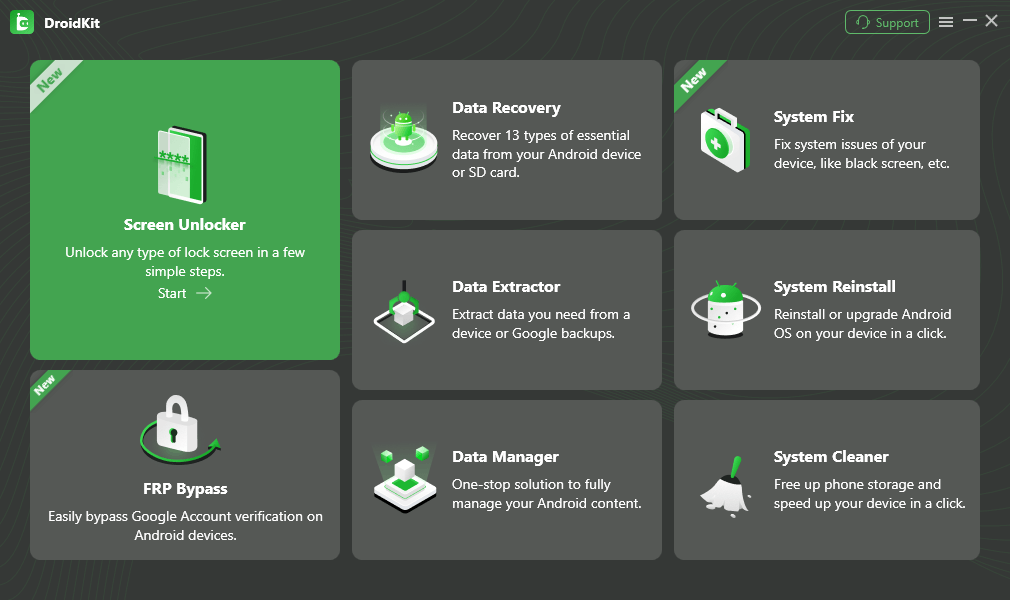
Choose the Screen Unlocker workflow.
Step 2. Connect the Samsung phone with a data-capable USB cable and start the applicable workflow. When the required configuration is ready, continue with Remove Now.
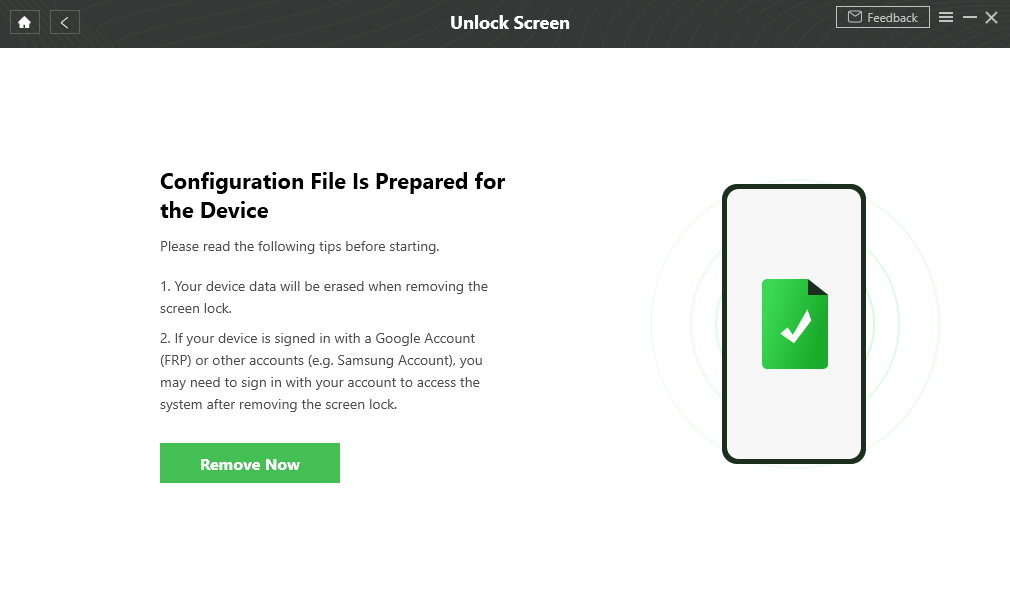
Continue with Remove Now after the preparation stage.
Step 3. Choose the device route requested by DroidKit and follow the Samsung-specific instructions shown on screen.
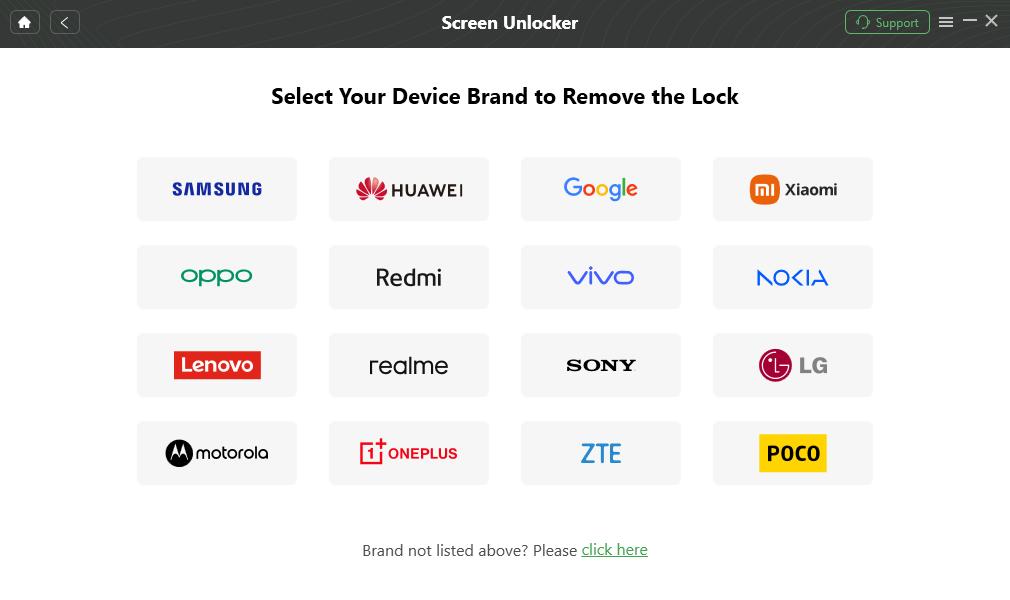
Choose Samsung when that is the route requested for the connected phone.
Step 4. Complete the device-side instructions and wait for the applicable screen-lock workflow to finish.
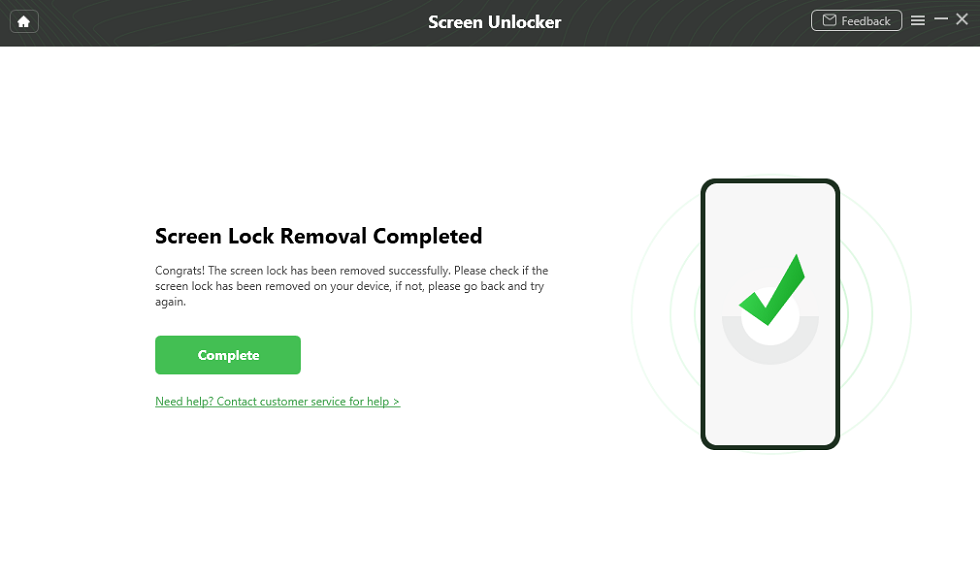
Screen Lock Removal completion screen.
DroidKit for Samsung FRP
If the phone has already been factory reset and now asks for a previously synced Google account, that is FRP rather than the original screen lock. The DroidKit FRP Bypass workflow is the relevant product route for supported Android device situations.
Step 1. Open DroidKit and choose FRP Bypass.

Choose the FRP Bypass workflow.
Step 2. Connect the Samsung device and start the workflow.

Step 3. Follow the device/system prompts shown by the current software rather than selecting an Android version only because an older tutorial uses it.
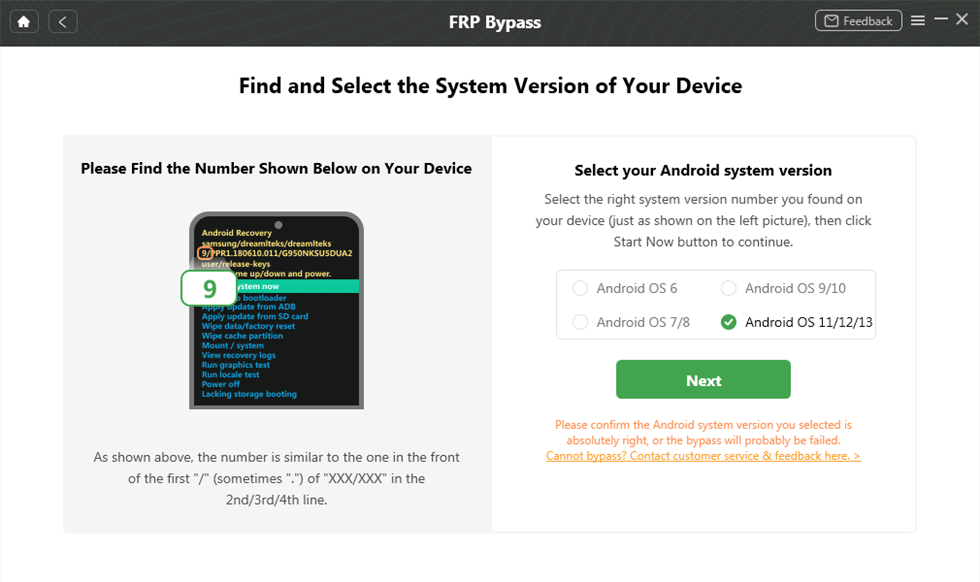
Use the system information requested by the applicable workflow.
Step 4. Complete the on-screen settings and keep the device connected until the selected workflow finishes.
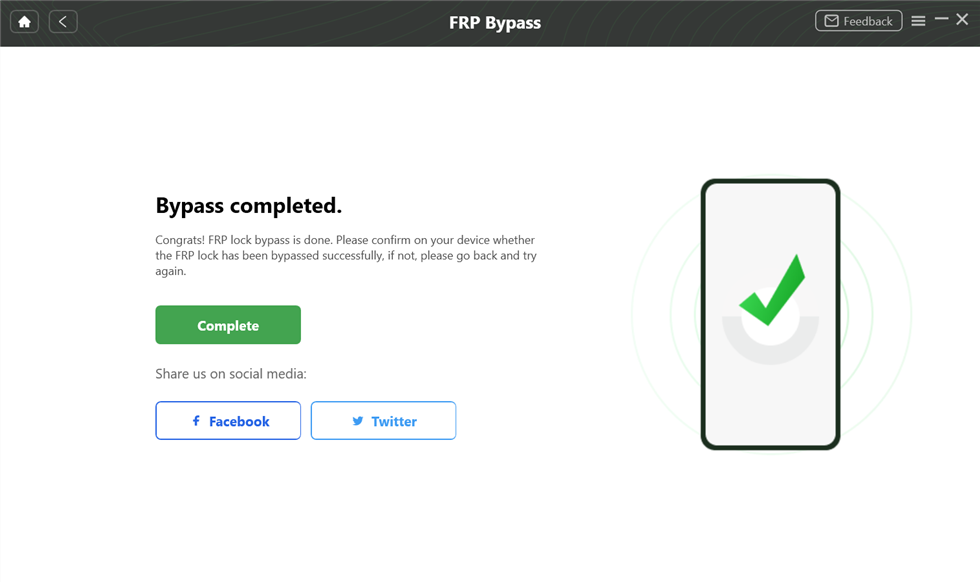
DroidKit FRP Bypass completion screen.
Best fit: users who need screen-lock or FRP recovery and prefer a guided workflow for a supported device.
Main limitation: it is not a carrier SIM-unlock service, and neither its screen-lock nor FRP workflow should be described as universally data-preserving or compatible with every Galaxy configuration.
Samsung Screen Unlock Options: What Still Works?
2. Dr.Fone Screen Unlock
Dr.Fone remains a current third-party Android screen-unlock product. Its Android Unlock product line includes screen-lock and FRP functions, but the exact data impact and supported device workflow should be checked before starting.
Dr.Fone Screen Unlock is a reasonable comparison point for users who want another commercial PC-based Samsung screen-unlock workflow.
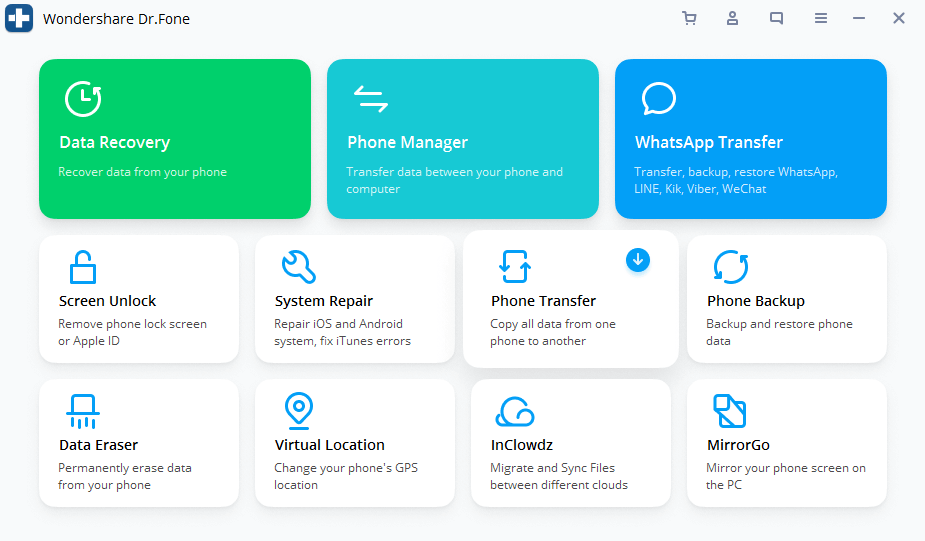
Dr.Fone Android Screen Unlock.
Best for: users comparing current desktop screen-unlock products.
Check before using: exact Samsung model support, Android version, computer requirements and whether the selected workflow erases data.
3. Google Find Hub — Device Management, Not Forgotten-PIN Unlock
Older Android unlock articles may still refer to Android Device Manager as though users can remotely set a new password and unlock a modern Samsung phone. That should no longer be used as the default recommendation.
Google’s current Find Hub is designed around locating, securing and erasing a lost Android device. If you cannot unlock a modern Android phone, Google’s current recovery guidance may require erasing the device rather than remotely replacing the forgotten PIN or pattern.
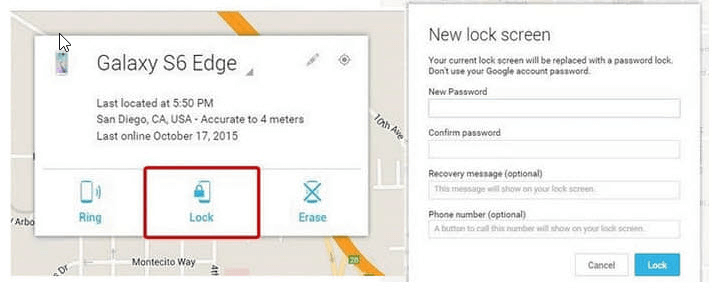
Older Android Device Manager screenshots should not be treated as a current forgotten-PIN remote-unlock workflow.
Current value: lost-device location, security and erase functions.
Not a current replacement for: a Samsung PIN/password/pattern recovery method that preserves normal access.
4. Samsung Find / Former Find My Mobile — Remote Unlock Is a Legacy Reference
Samsung Find and the older Find My Mobile ecosystem remain relevant for locating and managing Galaxy devices, but old tutorials showing a universal Unlock button should not be treated as a current screen-unlock solution.
Samsung has documented that the former Remote Unlock function was disabled. That makes this option useful as a legacy-status warning in a Samsung unlock comparison, not as a method users should rely on to remove a current Galaxy PIN.
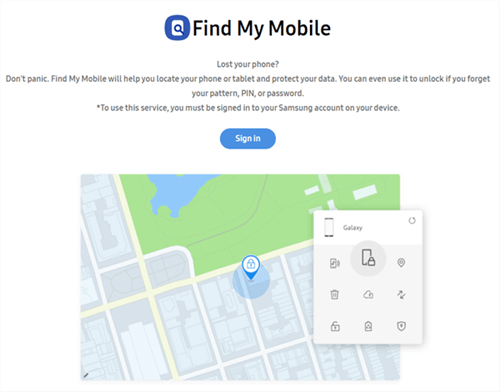
Older Find My Mobile screenshots may show functionality that is no longer available as a current remote-unlock method.
Current value: Samsung account/device-management functions where available.
Do not rely on: an old Find My Mobile screenshot promising instant remote screen unlock.
5. KingoRoot — Root Utility, Not a General Samsung Screen Unlocker
KingoRoot is primarily a rooting utility. It appears in older Android unlock lists because rooting and bootloader-related modification can overlap with technical device servicing, but that does not make it a direct replacement for a dedicated Samsung screen-unlock product.
KingoRoot is better understood as a root-oriented Android utility than a general Samsung password remover.
Best for: experienced users researching Android rooting or device modification.
Poor fit for: users who simply forgot a Galaxy PIN, pattern or password and need a documented current unlock workflow.
For a Samsung-specific forgotten-password guide rather than a tool list, the relevant step-by-step page is included in More Related Articles below.
Samsung FRP Tools: Free, Guided & Technical Options
FRP is different from a normal screen lock. If the Galaxy device asks for a previously synced Google account after a factory reset, choose an FRP-specific route rather than a PIN/password-removal tool.
If you want a larger software comparison, see the Samsung FRP tool comparison.
6. Easy Samsung FRP Tool
Easy Samsung FRP Tool appears in many Samsung FRP tutorials as a Windows utility. Version labels such as V2.7 are commonly associated with the package, but a version number should not be treated as proof of a verified official current release or universal Samsung support.
The Easy Samsung FRP Tool guide covers its download, workflow and current limitations in more detail.
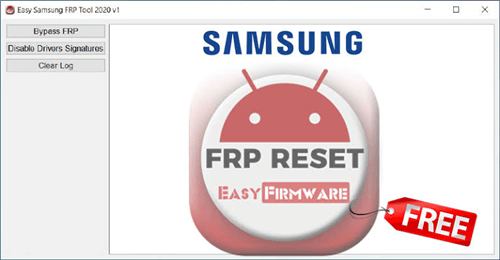
Easy Samsung FRP Tool.
Best for: users specifically researching older Windows-based Samsung FRP utilities.
Main limitations: download-source verification, package identity, device detection and compatibility with the current Samsung setup environment.
7. SamFW Tool
SamFW is a Samsung-focused Windows utility used in FRP and other Samsung servicing workflows. Depending on the operation, users may need the correct Samsung USB driver, a specific device state, Test Mode or another on-device checkpoint.
The SamFW Tool guide covers package/version questions and troubleshooting separately.
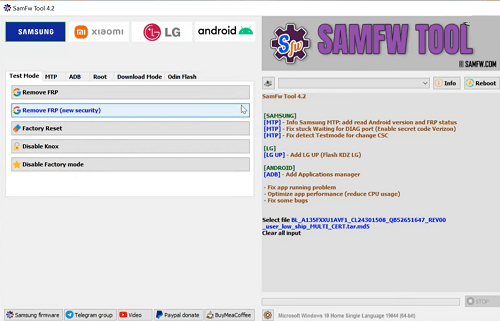
SamFW Tool interface.
Best for: users comfortable with Samsung-specific Windows utilities and device-detection requirements.
Main limitations: driver problems, device-state requirements and differences between the phone/software environment and the tutorial being followed.
Neither Easy Samsung FRP Tool nor SamFW should be chosen simply because the tool is free. First confirm that Google FRP is actually the lock type and that the exact workflow matches the device.
Samsung SIM / Network Unlock Options
A SIM or carrier lock has nothing to do with a forgotten Samsung PIN or Google FRP. If the phone boots normally but refuses another carrier’s SIM, start with the original carrier’s official unlock policy before paying for or installing third-party tools.
8. Official Carrier Unlock
The original carrier is the best first checkpoint for a network-locked Samsung because it can tell you whether the device is eligible for an official SIM unlock.
Eligibility can depend on factors such as:
- whether the device has been fully paid for;
- whether the account is in good standing;
- minimum active-service requirements;
- whether the device has been reported lost or stolen;
- the phone’s IMEI and original carrier; and
- the carrier and country’s unlocking policy.
Best for: eligible Samsung owners who want the carrier-supported route.
Main limitation: eligibility requirements vary, and not every phone/account qualifies immediately.
9. Cellunlocker
Cellunlocker is a third-party phone-unlocking service that offers remote carrier/network unlocking for supported phones and carriers. Users generally provide details such as the device model, IMEI and original network, then follow the service process supplied for that device.
Best for: users who have already checked the official carrier route and are evaluating an external network-unlock service.
Check before paying: exact carrier/device eligibility, price, delivery estimate, refund conditions and whether the unlocked Samsung will support the frequencies/features of the new carrier.
10. GalaxSim Unlock — Legacy Root-Based SIM Option
GalaxSim Unlock appears in older Samsung SIM-unlock guides as an Android app designed around certain Galaxy models. Its historical appeal was that the unlocking process could run on the phone rather than through a desktop service.
However, this is better treated as a legacy technical option rather than the default route for a current Galaxy phone. Root requirements, supported-model boundaries and changes in modern Samsung software can make old app-based SIM-unlock instructions unsuitable for newer devices.
Best for: experienced users researching older Samsung devices for which the exact app/model compatibility has been established.
Poor fit for: a current Galaxy owner who has not yet checked the carrier’s official unlock policy or does not want to root/modify the device.
Which Samsung Unlock Option Fits Your Situation?
| Your Situation | Start Here | Avoid |
| You forgot a Samsung PIN, pattern or password | Check current screen-lock recovery options and data impact | FRP utilities and SIM-unlock services |
| The phone shows Google verification after reset | Recover the previously synced Google account or use a Samsung FRP route | Normal screen-lock tools that do not address FRP |
| You recently changed the screen lock on a newer Galaxy | Check whether Samsung’s previous-lock recovery option is available before destructive methods | Immediate factory reset if a non-destructive route exists |
| You need a guided screen-lock or FRP workflow | Evaluate a current product workflow such as DroidKit or another supported commercial option | Assuming every Galaxy model has the same data-loss behavior |
| You want a free Samsung FRP utility | Check package source, exact workflow, device detection and current support first | Downloading random “latest version” ZIP/EXE files from unknown mirrors |
| The phone works but rejects a new carrier SIM | Check official carrier eligibility first | Screen-lock or FRP software |
| A lost-device service shows locate/erase options but no Unlock button | Use the functions the current service actually provides | Following an old screenshot that promises a discontinued remote-unlock function |
When Should You Stop Using an Unlock Tool?
Changing tools is not always the correct answer. Stop the current route and reassess when the first required condition is missing.
- The tool addresses the wrong lock type. A Google FRP screen cannot be solved by a SIM-unlock code.
- The exact Samsung model or software state is not documented. A brand logo inside a utility does not prove model compatibility.
- The phone is not detected. Fix the USB cable, driver or required device state before changing desktop software.
- The tutorial depends on a menu that no longer exists. Do not mix steps from another Galaxy model or Android version.
- The download source cannot be verified. Do not disable security simply to run an unknown executable.
- The method will erase data but your main goal is preserving local files. Reconsider before starting a reset-based route.
- A remote-unlock tutorial is based on a discontinued feature. Use the current service capabilities instead of trying to reproduce an old UI.
Samsung Unlock Tool FAQ
What type of Samsung unlock tool do I need?
Start with the screen shown by the phone. A PIN, pattern or password before normal access is a screen lock. Google verification after a factory reset is FRP. A phone that works normally but rejects another carrier’s SIM has a network lock. Each requires a different tool category.
Can Google Find Hub unlock a forgotten Samsung PIN?
Do not treat Google Find Hub as a current forgotten-PIN remote-unlock tool. Its current lost-device functions center on locating, securing and erasing Android devices. Google separately explains that a device that cannot be unlocked may need to be erased and set up again.
Can Samsung Find or Find My Mobile still remotely unlock a Galaxy phone?
Old Find My Mobile tutorials may show a Remote Unlock option, but Samsung has documented that this former function was disabled. Current Samsung Find functionality should therefore be checked for what is actually available rather than relying on old unlock screenshots.
Does a Samsung screen-unlock tool also remove Google FRP?
Not automatically. Screen lock and FRP are separate security layers. A product may offer both functions as different modules, but the user must choose the workflow that matches the actual lock.
Can Samsung unlock tools erase my data?
Yes. Data impact varies by method and model. Factory reset always erases local user data, while commercial screen-unlock tools can have different behavior depending on the supported Samsung workflow. Check before starting if data preservation matters.
Are free Samsung FRP tools safe?
The word “free” does not establish file safety or compatibility. Verify the source, package identity, required drivers and exact Samsung workflow before running a third-party executable.
Is SamFW better than Easy Samsung FRP Tool?
They are both Samsung FRP-oriented utilities, but the better fit depends on the phone and the workflow available. SamFW can require Samsung-specific device states or debugging/Test Mode checkpoints, while Easy Samsung FRP Tool has its own package and compatibility limitations.
Can KingoRoot remove a Samsung screen password?
KingoRoot is primarily a rooting utility and should not be treated as a general current Samsung password-removal solution. Users who only forgot a screen lock should start with screen-lock-specific recovery methods.
Can I unlock a carrier-locked Samsung for free?
Possibly. Check the original carrier first because some devices qualify for an official network unlock when account and device requirements are met. Third-party services are more relevant after you understand why the official carrier route is unavailable.
Is DroidKit the best Samsung unlock tool for everyone?
No single tool fits every Samsung lock. DroidKit is relevant when its current screen-lock or FRP workflow supports the device and the user wants guided instructions. It is not a SIM-unlock service, and device/data-loss conditions still need to be checked.
Choose by Lock Type, Not Tool Popularity
The most important update to a Samsung unlock-tool list is not adding another product name. It is removing the assumption that every tool still does what an old tutorial claims.
For a forgotten Samsung PIN, choose a current screen-lock recovery path and check data impact first. For Google verification after reset, use an FRP-specific route. For a SIM/network restriction, start with the carrier rather than screen-lock or FRP software.
Google Find Hub and Samsung Find are still useful device-management services, but old remote-unlock claims should not be mixed into a current forgotten-password comparison. Likewise, rooting utilities and legacy apps should be labeled for what they actually are instead of being presented as universal Galaxy unlockers.
Once the lock type is clear, comparing tools becomes much simpler: check exact device support, prerequisites, data impact, download trust and the first required checkpoint. Stop when the method no longer matches the phone instead of cycling through tools from a list.
More Related Articles


Roger Smith is a senior technical writer with years of experience in providing Android solutions. He loves to help users solve various problems such as Android unlock, Android data recovery, and Android system repair.
Product-related questions? Contact Our Support Team to Get Quick Solution >
