How to Unlock Huawei Phone Without Resetting or Losing Data
Forgot your Huawei PIN, pattern, or password? Check which no-reset options can still work, including Smart Unlock, legacy Forgot Pattern, Safe Mode, and previously authorized ADB, plus what Huawei officially recommends when none of them applies.
Forgot the PIN, pattern, or password on your Huawei phone and want to keep the files stored on it? The first thing to understand is that “unlock without resetting” is possible only when a usable recovery condition was already in place before you became locked out.
For example, Smart Unlock may still help if a compatible Bluetooth device was already configured as an unlocking device. Safe Mode can help only when a third-party lock app is causing the problem. The old Forgot Pattern route belongs mainly to older Android environments, while ADB normally requires USB debugging and computer authorization that existed before the lockout.
Quick Answer: Try existing no-data-loss access first: a previously configured Smart Unlock device, an older Forgot Pattern screen that actually appears, Safe Mode for a third-party lock app, or a computer that was already authorized for ADB. If none of those conditions applies and you truly forgot the Huawei system lock password, current Huawei guidance points to resetting the device, which erases local data. Check your Huawei Cloud or other backups before choosing that route.
If you are comparing this Huawei-specific situation with other Android screen-lock tools, see the Android phone unlocking software guide for screen-lock, FRP, and data-loss differences.
Which Huawei Unlock Method Fits Your Situation?
| Your Situation | Better Starting Point | Reset Required? | Main Requirement |
| A Huawei Watch, band, or Bluetooth device was already configured for Smart Unlock | Smart Unlock | No | The trusted unlocking device must already have been configured |
| An older Huawei actually shows “Forgot Pattern” | Legacy Forgot Pattern recovery | No, when the old recovery flow is available | Older Android environment and access to the account requested by the phone |
| A downloaded lock-screen app is blocking access | Safe Mode | No | The lock must come from a third-party app rather than Huawei’s system lock |
| USB debugging was enabled and this computer was already trusted | ADB compatibility check | Potentially no on legacy setups | Existing authorized ADB access |
| No existing no-reset recovery option works | Evaluate a supported screen-unlock workflow | May be required | Exact Huawei model and supported device route |
| You know the HUAWEI ID and accept erasing the phone | Huawei Find Device | Yes | Huawei Cloud / Find Device access |
| You forgot the system password and have no usable recovery condition | Huawei Recovery Mode / official support | Yes in the normal official recovery path | Backups and account credentials should be checked first |
Can You Really Unlock a Huawei Phone Without Losing Data?
Only in limited situations. This page should not imply that every Huawei PIN or pattern can be removed while the encrypted local files remain accessible.
On current Huawei devices, the lock-screen credential protects access to encrypted data. If you genuinely forgot the system password and no previously configured unlock condition remains available, the official recovery route can require a factory reset.
That means the first priority is not trying more unlock tricks. It is checking whether you still have one of these existing access conditions:
- a Smart Unlock Bluetooth device was already configured;
- the phone itself displays an older Forgot Pattern recovery option;
- the problem comes from a third-party lock-screen app rather than Huawei’s system lock;
- an already authorized computer can communicate with the phone through ADB; or
- important data is already synchronized to Huawei Cloud, Google services, or another backup location.
Before any reset: Check Huawei Cloud and any other backup service you previously enabled. Resetting can remove the local screen lock, but it cannot recover unbacked-up encrypted files from the locked phone.
Method 1. Try Huawei Smart Unlock If It Was Already Set Up
Huawei Smart Unlock can use a compatible Bluetooth device, such as a smart band or watch, as an unlocking device. This is one of the strongest legitimate no-reset options on this page because it is an actual Huawei feature rather than an old lock-screen loophole.
However, Smart Unlock has to be configured before you become locked out. You cannot normally add a new trusted device from the lock screen after forgetting the password.
Check Whether Smart Unlock Can Still Help
Step 1. Bring the Huawei Watch, band, or other Bluetooth unlocking device close to the phone.
Step 2. Make sure the wearable or Bluetooth device is powered on and able to reconnect.
Step 3. Wake the Huawei phone and check whether the previously configured Smart Unlock condition allows access.
Step 4. If the phone opens, back up important data immediately before restarting or changing security settings.
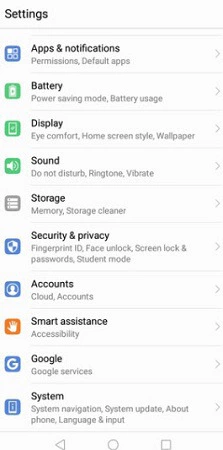
Smart Unlock must be configured before the lockout.
Limitation: Smart Unlock is not a password-recovery service. If the phone requires the primary credential because of a restart, security condition, or changed device state, the trusted Bluetooth device may no longer be enough.
Method 2. Check Legacy Forgot Pattern on an Older Huawei
Some older Android-based Huawei phones may still display Forgot Pattern after repeated incorrect pattern attempts. When that option actually appears, the phone may provide an account-based recovery route without first factory resetting the device.
The important phrase is when it actually appears. This is a legacy Android behavior and should not be presented as a normal feature of a current EMUI or HarmonyOS device.
For a broader explanation of older pattern-recovery methods, see the forgot Android pattern guide.
How to Check the Old Forgot Pattern Route
Step 1. Enter the pattern incorrectly until the phone displays its normal retry or recovery message.
Step 2. Look for Forgot Pattern or Forgotten Pattern.
Step 3. If the option is present, follow the account-verification flow shown by that Huawei device.
Step 4. If the option never appears, stop. Repeatedly entering patterns will not create a recovery feature that the current software does not provide.

Forgot Pattern is mainly relevant to older Android environments.
Method 3. Use Safe Mode Only for a Third-Party Lock App
Safe Mode can help when the screen is being blocked by a downloaded third-party lock application. It does not remove the built-in Huawei PIN, pattern, or password.
This distinction matters because many older articles list Safe Mode next to normal password-removal methods even though it solves a different problem.
When Safe Mode Is Worth Trying
- You installed a separate lock-screen or security app.
- The problem started after installing or configuring that app.
- The Huawei system lock itself is not the credential you forgot.
Step 1. Restart the phone using the Safe Mode procedure supported by your Huawei model.
Step 2. Check whether the third-party lock app is disabled in Safe Mode.
Step 3. If you can access Settings, uninstall the third-party lock app.
Step 4. Restart normally.
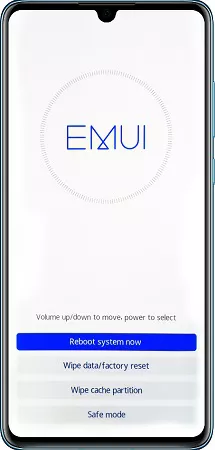
Safe Mode is useful for third-party app locks, not the original Huawei system password.
Method 4. Check ADB Only If It Was Already Authorized
ADB appears in many “unlock Huawei without resetting” tutorials, but it has strict prerequisites. A locked phone does not normally give a new computer unrestricted ADB access simply because it is connected by USB.
Before considering an ADB route, confirm:
- USB debugging was enabled before you became locked out;
- the computer had already been authorized by the phone;
- the authorization relationship still exists;
- ADB can actually detect the device in an authorized state; and
- the Android/Huawei software is old enough for the specific legacy technique you are evaluating.
The USB debugging on a locked Android phone guide explains why this prerequisite blocks most ADB recovery attempts.
If ADB Says Unauthorized or Shows No Device
Stop treating ADB as a no-reset option for that phone. If debugging was never enabled or the computer was not previously trusted, repeatedly reconnecting the cable or entering old lock-file commands does not create authorization.
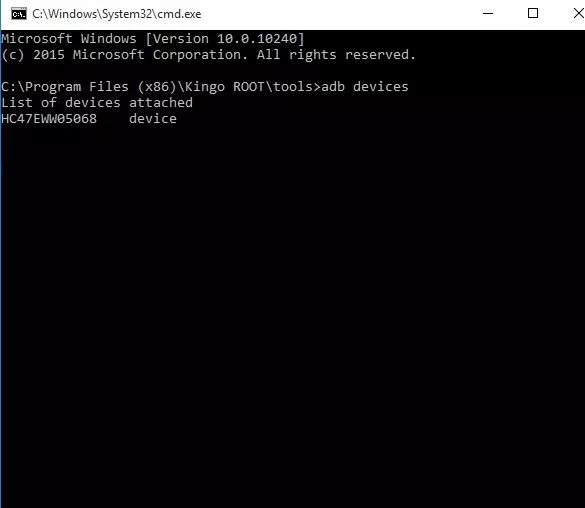
ADB requires the correct debugging and authorization state.
Method 5. Use a Screen Unlock Tool for a Supported Huawei
If Smart Unlock, legacy Forgot Pattern, Safe Mode, and authorized ADB do not apply, a guided desktop screen-unlock workflow may be easier to evaluate than old Emergency Call or lock-screen loopholes.
DroidKit provides a Screen Unlocker workflow for supported Android devices, including Huawei screen-lock situations. Because this page targets unlock Huawei without resetting or losing data, the data warning needs to be explicit: screen-lock removal may erase data depending on the device and workflow.
When a Guided Tool Is Worth Evaluating
- The Huawei phone belongs to you or you are authorized to service it.
- The no-reset conditions above do not apply.
- You have already checked whether important data is backed up.
- You have a Windows PC or Mac and a working USB data connection.
- The available workflow supports the connected Huawei situation.
Step 1. Install DroidKit on the computer, connect the Huawei phone, and choose Screen Unlocker.
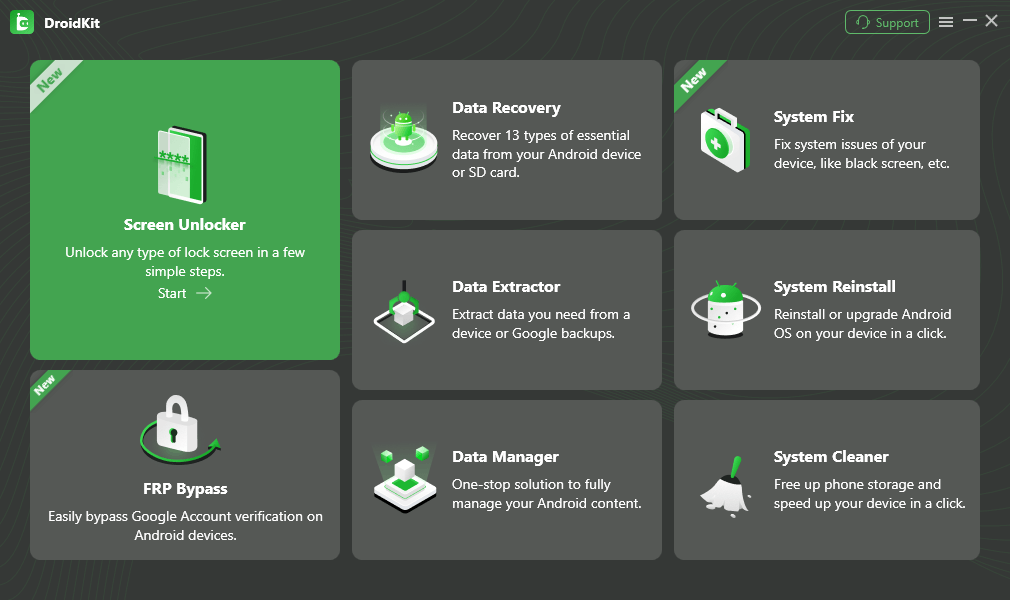
Choose Screen Unlocker.
Step 2. Read the information shown for the connected device and click Start when you are ready.

Connect the locked phone and start the workflow.
Step 3. Let DroidKit prepare the device configuration and continue with Remove Now when prompted.
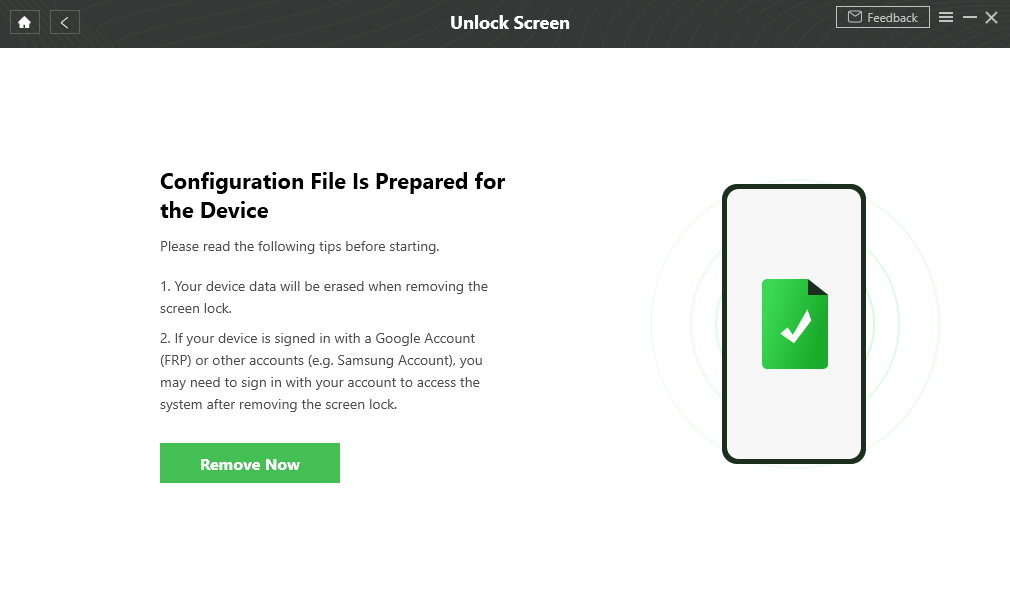
Continue with Remove Now.
Step 4. Select or confirm Huawei as the device brand and follow the instructions displayed for the available route.
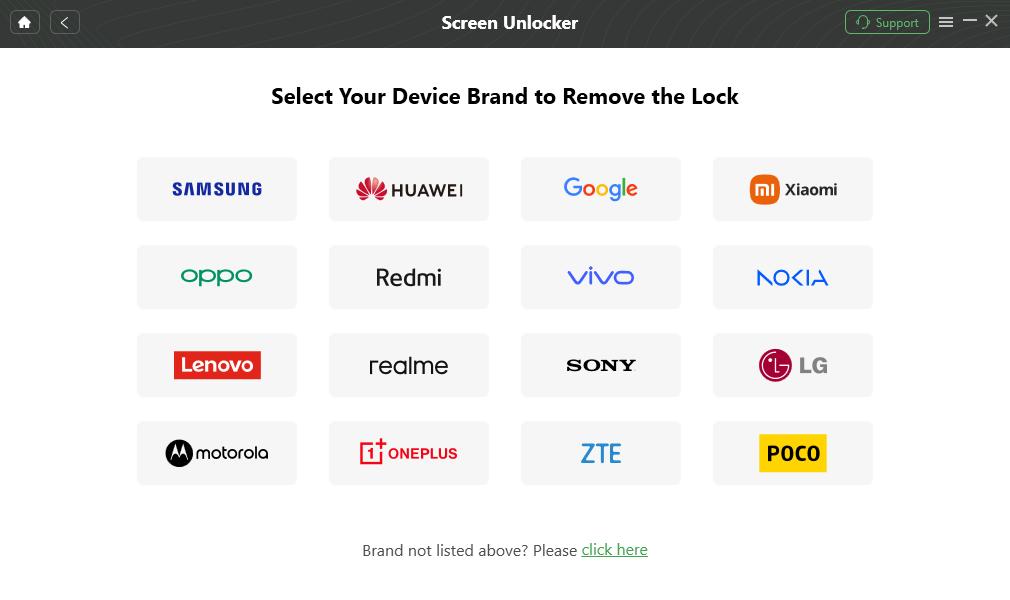
Select the applicable device brand.
Step 5. Keep the phone connected until the supported workflow reports completion.
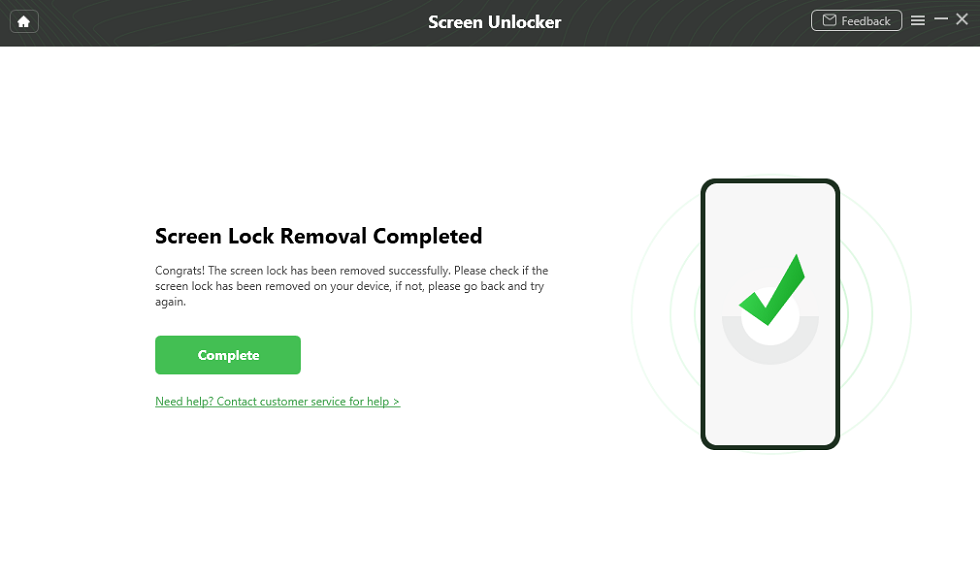
Complete the available screen-lock workflow.
Data checkpoint: If the software indicates that the available Huawei route will erase the device, stop if retaining unbacked-up local data is more important than immediate access.
Method 6. Use Huawei Find Device If You Accept Data Loss
Huawei Find Device is useful for locating, securing, or erasing a Huawei device, but Erase data is not a no-reset unlock method. It removes the local lock by returning the device to a factory-reset state.
Step 1. Open Huawei Cloud from another device.
Step 2. Sign in with the HUAWEI ID associated with the locked phone.
Step 3. Open Find Device and select the Huawei phone.
Step 4. Choose Erase data only if losing local data is acceptable.
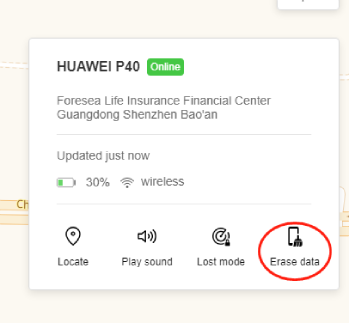
Erase data resets the phone and removes local data.
Step 5. Verify the HUAWEI ID when requested and allow the erase operation to complete.
Step 6. During setup, be prepared to enter the HUAWEI ID previously associated with the phone if Activation Lock is enabled.
Method 7. Factory Reset Huawei in Recovery Mode
If you have genuinely forgotten the Huawei system lock password and none of the existing non-reset access conditions works, Recovery Mode is the standard local reset route.
This method erases local data.
Step 1. Power off the Huawei phone.
Step 2. Use the Recovery Mode button combination supported by your Huawei model.
Step 3. Select the option to clear data or restore factory settings.
Step 4. Confirm the factory reset and wait for it to finish.
Step 5. Restart the phone and complete setup using the account information requested by the device.
After reset: If the Huawei phone asks for a Google Account previously synced with the device, the screen-lock problem has changed into post-reset Google verification. See the Google verification after reset guide for that separate situation.
Method 8. Contact Huawei Support
If important unbacked-up data is still on the phone, or the device behaves differently from the recovery options above, check Huawei’s official support before erasing anything.
Open Huawei Support, select the relevant region and device, and prepare the model, purchase information, and HUAWEI ID details requested by support.
Huawei’s current guidance for a genuinely forgotten system lock password is conservative: when the correct password cannot be recovered and no existing access condition applies, the normal recovery path is a factory reset. Huawei also notes that encrypted device data cannot simply be decrypted by the vendor without the correct lock-screen credential.
Can Emergency Call Unlock a Huawei Phone?
Older Huawei and Android tutorials sometimes show long character strings, dialer codes, camera shortcuts, notification-panel actions, or copy-and-paste sequences from the Emergency Call screen.
Do not treat those steps as a current universal Huawei password method. Emergency Call is intended for emergency dialing, and old lock-screen loopholes are heavily dependent on Android, EMUI, HarmonyOS, and security-patch behavior.
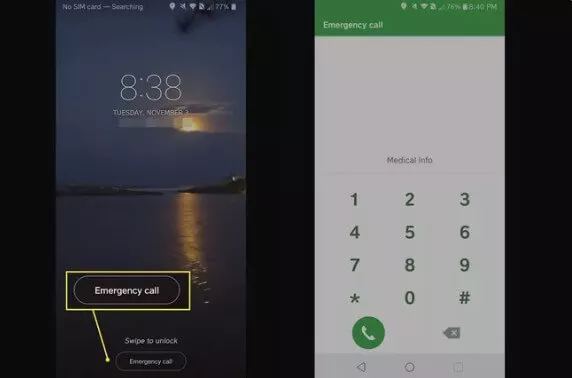
Emergency Call should not be treated as a universal Huawei password bypass.
If an old tutorial depends on opening the camera, notification panel, Settings, or another app from the Emergency Call screen and your Huawei does not expose that path, stop the method rather than repeating random codes.
Huawei Unlock Method Not Working? Check the Failure Point
| What Happens | What It Suggests | Better Next Step |
| Smart Unlock does not open the phone | The trusted device was not configured, is disconnected, or the primary password is now required | Do not assume a new watch can be added from the lock screen |
| Forgot Pattern never appears | The phone does not support the old Android recovery flow | Stop repeating incorrect patterns |
| Safe Mode still shows the same Huawei PIN or pattern | The lock is the system lock rather than a third-party app | Safe Mode is not the correct method |
| ADB shows unauthorized or no device | USB debugging or computer authorization was not available before lockout | Stop relying on ADB for that phone state |
| Screen-unlock software cannot detect Huawei | Cable, port, driver, device state, or compatibility problem | Resolve device detection before starting another unlock operation |
| Huawei Find Device offers only Erase data | The available remote path is data-erasing | Check backups before confirming |
| Phone asks for HUAWEI ID after reset | Huawei Activation Lock is active | Use the HUAWEI ID previously associated with the phone |
| Phone asks for a previous Google Account after reset | Google FRP is now active | Move to Google account verification guidance |
FAQs About Unlocking Huawei Phone Without Resetting
Can I unlock a Huawei phone without resetting it?
Only when an applicable non-reset access condition already exists. Examples include a previously configured Smart Unlock device, an older Forgot Pattern recovery screen, an already authorized ADB computer, or a third-party lock app that can be disabled through Safe Mode. If the modern Huawei system password itself is forgotten and none of those applies, the official recovery route may require a factory reset.
Can I unlock Huawei without losing data?
Possibly, but do not assume it. Smart Unlock or a compatible legacy recovery route may preserve data, while Huawei Find Device and Recovery Mode erase local data. Screen-unlock software can also have device-specific data-loss behavior.
Does Huawei Smart Unlock work if I forgot my password?
It can help only when a compatible Bluetooth device was configured as an unlocking device before the lockout and the current security state still allows Smart Unlock. It cannot normally be configured for the first time from the locked screen.
Can Emergency Call unlock a Huawei phone?
There is no universal Emergency Call password-bypass method for current Huawei phones. Old tutorials depend on device- and software-specific lock-screen behavior and should be treated as legacy compatibility tricks rather than reliable recovery options.
Can ADB unlock Huawei without factory reset?
ADB is relevant only in narrow situations where USB debugging and computer authorization already existed. If the phone is unauthorized or the computer cannot see it through ADB, old lock-file commands are not a practical recovery route.
Does Huawei Find Device unlock a phone without deleting data?
No. The Erase data function returns the Huawei phone to a factory-reset state and removes local data. It is a reset method rather than a data-preserving password-recovery feature.
Can I unlock Huawei P30, P40, Y6, or Y9 without a password?
The model name alone does not guarantee a no-reset route. Check whether Smart Unlock or an older recovery feature was configured, whether the lock comes from a third-party app, and whether you have a usable backup. If the system lock itself cannot be recovered, reset-based options may be required.
What happens after I factory reset a locked Huawei phone?
The local screen lock and device data are removed, but setup may still request the HUAWEI ID associated with Activation Lock or a previously synced Google Account when Google FRP applies. Make sure you know the relevant account credentials before resetting.
Final Words
The safest way to approach unlocking a Huawei phone without resetting is to check for access that already existed before the password was forgotten. Smart Unlock, a legacy Forgot Pattern flow, Safe Mode for a third-party lock app, or an already authorized ADB computer can sometimes avoid an immediate factory reset.
If none of those conditions applies, do not rely on Emergency Call strings or claims that every Huawei PIN can be removed while encrypted local data remains intact. Check your backups first, then decide whether a supported screen-unlock workflow, Huawei Find Device, Recovery Mode, or official Huawei support is the appropriate next step.
More Related Articles



Joy Taylor is a seasoned technical writer with over a decade of experience in mobile technology. At iMobie, she specializes in producing in-depth content on iOS data recovery, iPhone unlocking solutions, and iOS troubleshooting.
Product-related questions? Contact Our Support Team to Get Quick Solution >
