Unlock Android Tablet Without Google Account: FRP Recovery Options
Locked on Google verification after resetting a Samsung or Android tablet? This guide explains what FRP means, what recovery options to try first, when DroidKit may help on supported tablets, and what data-loss risks to check before you continue.
If your tablet says “This device was reset. To continue, sign in with a Google Account that was previously synced on this device” , the tablet is not just protected by a normal screen lock. It is protected by Factory Reset Protection , also known as FRP or Google verification.
That message usually appears after a factory reset when a Google Account was already added to the tablet. The safest recovery path is to use the original Google Account, recover that account, or ask the previous owner to remove the device from their account. If those options are unavailable, a supported FRP bypass tool may help, but you should understand compatibility, ownership, and data-loss risks first.
Quick Answer: Can You Unlock a Tablet Without the Google Account?
Quick Answer: If your Android or Samsung tablet asks for the Google Account previously synced after a factory reset, it is protected by FRP. The safest way to unlock it is to sign in with that Google Account, recover the account, or ask the previous owner to remove the device from their account. If those options are unavailable, DroidKit FRP Bypass may help on supported tablets, but it may erase device data and compatibility must be checked first.
What Does “Previously Synced Google Account” Mean on a Tablet?
A previously synced Google Account is the Google Account that was added to the tablet before it was reset. After a reset, Android may ask for that same account to confirm that the person setting up the tablet is the owner or someone authorized by the owner.
This is why a newly created Google Account, a different Gmail address, or an account that was never added to the tablet may not pass verification. If you recently changed the Google password, you may also need to wait before signing in again, depending on the device and account status.
FRP vs Screen Lock: Know What Kind of Lock You Have
Before choosing a method, identify the exact lock screen you see. A Google verification screen, a forgotten PIN, and a factory reset menu are different problems.
| Problem | What It Means | Best Next Step | DroidKit Relevance |
|---|---|---|---|
| Google verification / FRP | The tablet was reset and asks for the previously synced Google Account. | Recover the Google Account, ask the previous owner, or check a supported FRP tool. | High, on supported tablets |
| Screen lock | You forgot the PIN, pattern, password, fingerprint, or face unlock. | Try existing unlock options, Samsung remote options if enabled, or a screen unlock method. | Medium |
| Old Android Forgot Pattern | Very old Android tablets may show a Google Account recovery option on the lock screen. | Use it only if the option appears and you know the account. | Low |
| Factory reset | The tablet is erased from Recovery Mode or Settings. | Use only when you understand data loss and FRP consequences. | Low as an FRP solution |
Before You Start: Ownership, Data Loss, and Backup Warning
Use the methods below only on a tablet you own or are authorized to unlock. FRP is designed to prevent unauthorized reuse after a reset, especially on lost, stolen, or second-hand devices.
Important: Many reset and FRP bypass workflows can erase local data on the tablet. Before you continue, check whether your photos, contacts, files, and app data were backed up to Google, Samsung Cloud, or another backup service.
The table below can help you choose a recovery path.
| Method | Best For | Needs Google Account? | Will It Erase Data? | Important Limit |
|---|---|---|---|---|
| Google Account recovery | You forgot the account password | Yes | No | You may need to wait after changing the password |
| Previous owner removal | Second-hand tablet | Previous owner needed | No, if done before reset | Best handled before purchase or resale |
| DroidKit FRP Bypass | Supported FRP-locked tablets | No, in supported scenarios | Yes, may erase data | Depends on model, Android version, region, and security patch |
| Android 4.4 Forgot Pattern | Very old tablets | Yes | No | Only works on Android 4.4 or earlier |
| Factory reset | Screen lock only, when FRP is not a concern | May need after reset | Yes | Can trigger Google verification |
Method 1. Recover or Confirm the Previously Synced Google Account
The most reliable way to pass Google verification is to use the Google Account that was already synced on the tablet before the reset. If you know the email but forgot the password, start with Google Account recovery rather than trying random bypass methods.
When this works
- You remember the Gmail address used on the tablet.
- You can receive recovery codes through your recovery phone or email.
- You did not just change the password, or the required waiting period has passed.
What if you forgot the Google password?
Use Google Account Recovery to reset the password. After changing the password, avoid repeatedly trying incorrect credentials on the tablet. Some devices may require a waiting period before the new password is accepted after a reset.
Method 2. Ask the Previous Owner to Remove the Google Account
If you bought a used Samsung or Android tablet and it asks for the previous Google Account, contact the seller first. The previous owner should remove their Google Account from the tablet before resale or complete setup for you in person.
Best option for second-hand tablets
For a second-hand device, the cleanest solution is owner-side removal. Ask the seller to:
- Sign in with the Google Account previously used on the tablet.
- Remove the account from the tablet in Settings if the device is still accessible.
- Remove the device from their account dashboard if available.
- Provide valid proof of purchase if you need Samsung or retailer support.
If the seller cannot help and the tablet remains stuck on Google verification, treat the purchase as risky. Avoid installing unknown APK files or following unverified bypass videos.
Method 3. Use DroidKit FRP Bypass on Supported Tablets
If the tablet is stuck on Google verification after a factory reset and you own or are authorized to unlock it, DroidKit FRP Bypass may help on supported Android tablets.
Compatibility note: DroidKit compatibility depends on the exact model, Android version, region, and security patch. DroidKit’s official guide also notes that Samsung devices with security patches dated August 2023 or later are currently unable to bypass FRP. The FRP Bypass function may erase data on the device.
Use this option only after checking the official guide and confirming that your device is supported.
Free Download * Check compatibility first
Basic steps with DroidKit
Step 1. Install DroidKit on your computer and choose FRP Bypass .
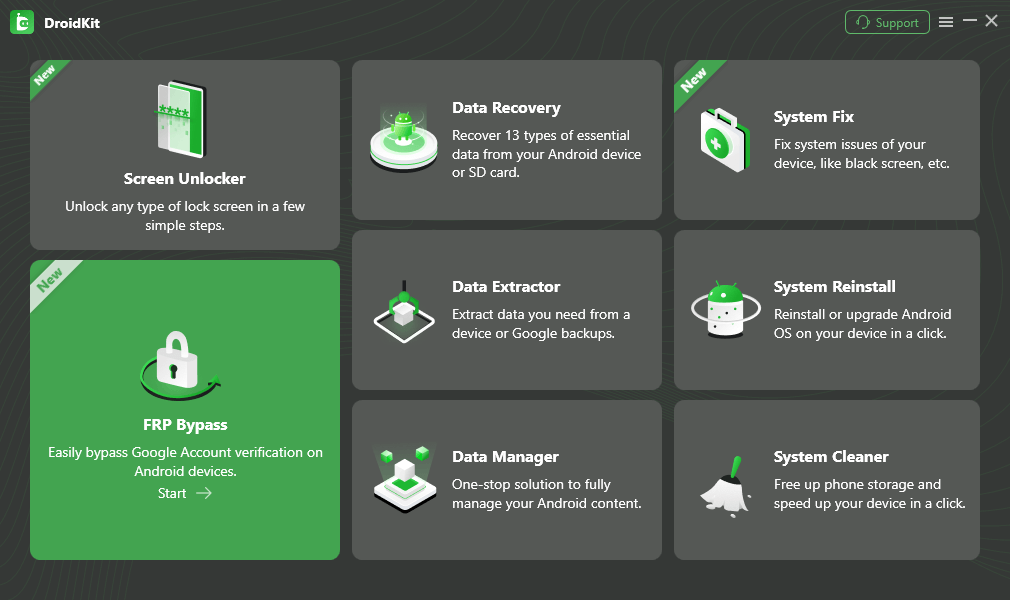
Choose FRP Bypass Mode
Step 2. Connect your tablet to the computer and click Start .
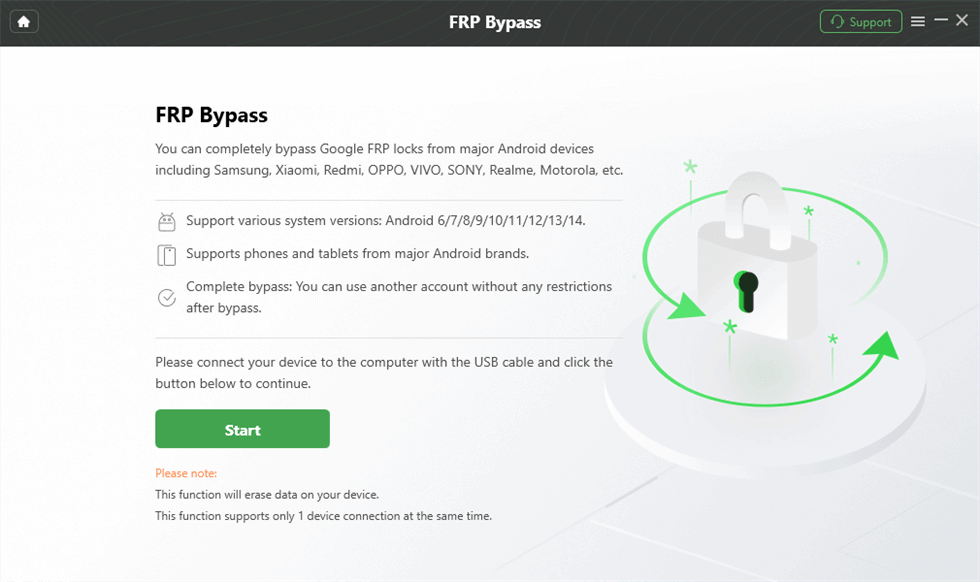
Click on Start
Step 3. Choose the device brand. DroidKit will prepare a configuration file for the selected device.
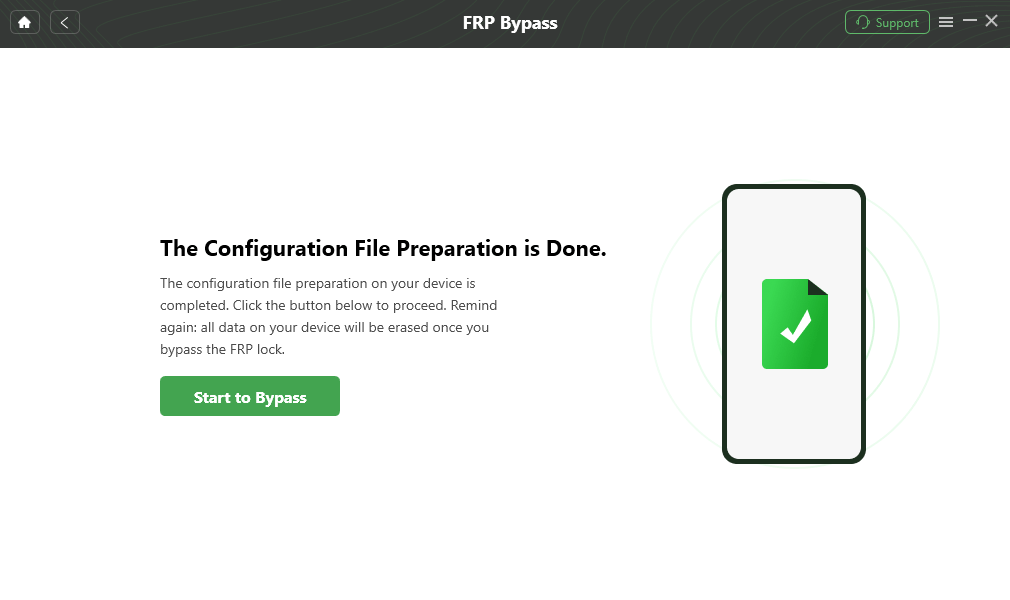
Click Start to Bypass
Step 4. Select the matching Android system version or tablet option when prompted.
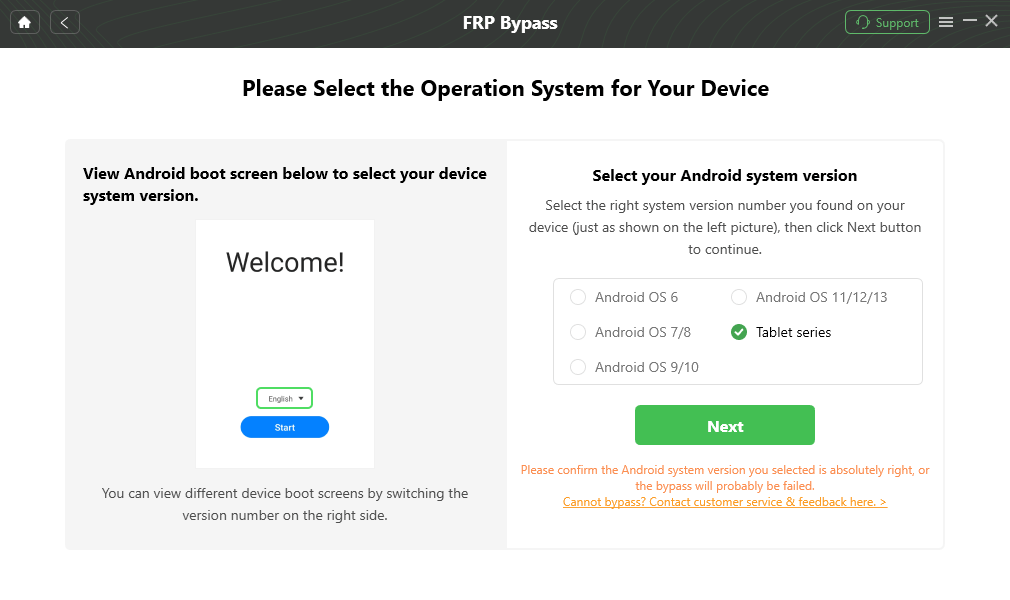
Choose Tablet
Step 5. Follow DroidKit’s on-screen instructions carefully. The required operations may vary by model and system version.
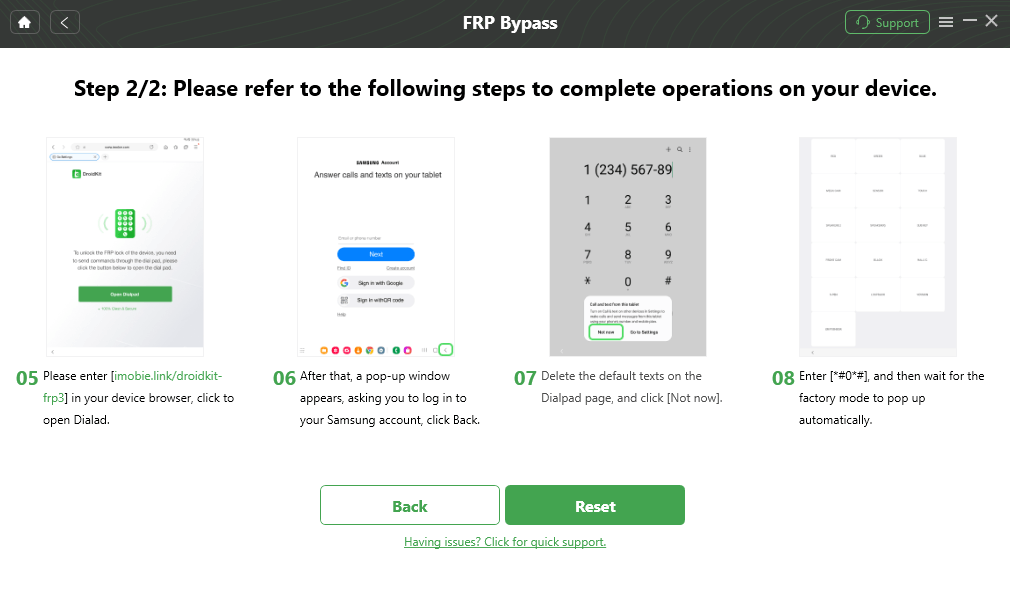
Follow the Tablet FRP Bypass Instructions
Step 6. Wait for the process to finish. When the tablet restarts, complete setup only on a device you own or are authorized to unlock.
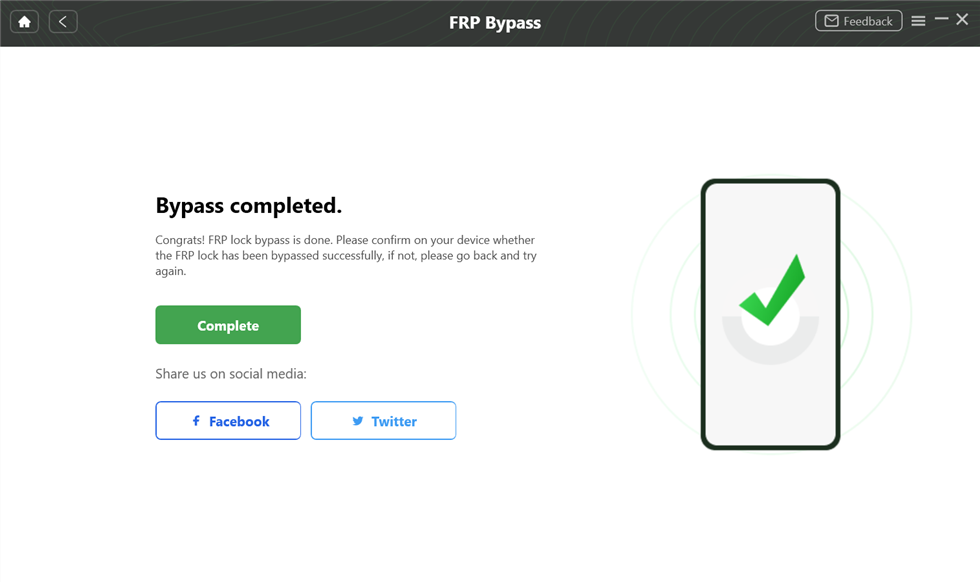
FRP Bypass Complete
What About ADB, Forgot Pattern, or Factory Reset Methods?
ADB pattern removal is usually not a FRP solution
You may see old guides that use ADB commands to delete a pattern lock file. This is not a reliable solution for Google verification after reset. It usually requires USB debugging to have been enabled and the computer to have been authorized before the tablet was locked. Most users who are already stuck on FRP cannot use this method.
Android 4.4 Forgot Pattern is only for very old tablets
Some old Android tablets running Android 4.4 or earlier may show a Forgot Pattern option after several failed attempts. If this option appears and you know the linked Google Account, you may be able to reset the lock screen without erasing data. Most modern Samsung and Android tablets no longer support this method.
Factory reset may trigger Google verification
A factory reset can erase a screen lock, but it also erases local data. If a Google Account was added before the reset, FRP may still appear afterward and ask for the previously synced account. That is why factory reset should not be described as a reliable way to unlock a tablet without a Google Account.
How to Disable FRP Before Resetting or Selling a Tablet
The best way to avoid FRP problems is to remove accounts before resetting the tablet. Do this while you can still access the device.
- Open Settings on the tablet.
- Go to Accounts , Accounts and backup , or a similar account menu depending on the model.
- Select the Google Account on the device.
- Tap Remove account and confirm.
- After the account is removed, perform the factory reset from Settings.
If you are selling a tablet, remove both Google and Samsung accounts, back up important data, and reset the device from Settings instead of Recovery Mode when possible.
FAQs About Unlocking Android Tablet Without Google Account
Can I unlock an Android tablet without the Google Account?
Sometimes, but only in supported or authorized scenarios. If the tablet asks for the previously synced Google Account after a reset, that is FRP. The safest path is to recover the Google Account or ask the previous owner to remove the account. Tool-assisted FRP bypass may work only on supported devices and may erase data.
Why does my Samsung tablet ask for the previous Google Account after reset?
This is Factory Reset Protection, also called FRP or Google verification. It helps prevent someone from using a lost, stolen, or reset device without the original owner’s account.
Does factory reset unlock a tablet without Google Account?
No, not always. A factory reset can remove a screen lock and erase local data, but it can also trigger Google verification. After reset, the tablet may still ask for the Google Account previously synced on the device.
Can DroidKit unlock a Samsung tablet without Google Account?
DroidKit FRP Bypass may help remove Google verification on supported Android tablets. Compatibility depends on the exact model, Android version, region, and security patch, and the FRP bypass process may erase device data.
Will FRP bypass erase data on my tablet?
It may. Many FRP bypass or reset workflows erase data on the device. DroidKit’s official FRP guide also states that the FRP Bypass function will erase data on the device.
What if I bought a used Samsung tablet with Google verification?
Contact the seller and ask them to remove the Google Account from the device or finish setup with the original account. If the seller cannot help, avoid unverified bypass methods and consider Samsung support with proof of purchase.
Does the old Forgot Pattern option still work?
It only works on very old Android versions, usually Android 4.4 or earlier. Most modern Samsung and Android tablets no longer support this lock-screen recovery method.
How can I disable FRP before selling or resetting a tablet?
Remove the Google Account from Settings before performing a factory reset. On most Android tablets, this is the safest way to prevent Google verification from appearing for the next owner.
The Bottom Line
If your Samsung or Android tablet is locked on Google verification after a reset, treat it as an FRP issue first. Try the previously synced Google Account, recover the account, or contact the previous owner. DroidKit FRP Bypass can be a practical option for supported tablets, but it is not universal, may erase data, and should only be used on devices you own or are authorized to unlock.
Free Download * For supported devices only
Related Guides You May Need



Senior writer of the iMobie team as well as an Apple fan, love to help more users solve various types of iOS & Android-related issues.
Product-related questions? Contact Our Support Team to Get Quick Solution >
