How to Fix iPhone or iPad Frozen During an iOS Update
Is your iPhone or iPad frozen during an iOS update? Learn when to keep waiting, when to force restart, how to use Recovery Mode and choose Update before Restore, and when a system repair tool may help.
If your iPhone or iPad appears frozen while installing an iOS or iPadOS update, do not immediately disconnect it or restore the device. An update progress bar can move very slowly or appear not to move at all, especially when the device has a large amount of data to process.
The right fix depends on what you see. If the Apple logo still shows a progress bar and the device responds when you press a button, the update may still be running. If the device is completely unresponsive, repeatedly restarts, stays on the Apple logo with no progress, or cannot finish the update, you can move on to force restart or computer-based recovery.
Quick answer: Keep the iPhone or iPad connected to power while an update is still progressing. If it becomes completely unresponsive, force restart it. If it still cannot finish updating, use Finder on Mac or the Apple Devices app on Windows and try Update before Restore. Update attempts to reinstall the system without erasing your data; Restore erases the device.
Why Does iPhone Freeze During an iOS Update?
An iPhone or iPad can appear stuck at different stages of an update, and the cause depends on where the process stops.
| What You See | Possible Cause | Best Starting Point |
| Apple logo with a progress bar that moves slowly | The update may still be processing | Keep the device connected to power and wait |
| Software update will not download | Network, update server, or storage issue | Check Wi-Fi, storage, and the downloaded update file |
| Device becomes completely unresponsive | Temporary software failure during installation | Force restart |
| Apple logo appears for a long time with no usable progress | The update may not have completed correctly | Use a computer and Recovery Mode |
| Device repeatedly restarts | The system may not be completing startup | Computer-based Update or system repair |
| Update repeatedly fails even on a computer | Software, USB, storage, or hardware issue | Check the connection and escalate if necessary |
Common Reasons an iPhone Will Not Finish Updating
Apple currently lists several common reasons an iPhone or iPad may fail to update wirelessly:
- the device does not support the available software;
- there is not enough free storage;
- the update takes a long time to download;
- the device cannot reach the update server;
- the update does not complete.
A low battery or lost power can also interrupt the process, so keep the device connected to a power source while troubleshooting an over-the-air update.
1. Check If the Update Is Really Frozen
If the screen shows an Apple logo with a progress bar, the safest first step is usually to wait.
Apple notes that the progress bar can move slowly or appear static. In some cases, it may finish and then start progressing again as another stage of the update completes.
Try pressing one of the device buttons once. If an updating message appears, the update is still running.
Do not force restart an update simply because the progress bar has paused for a few minutes. Keep the device connected to power and give the installation time to complete.
When Is It More Likely to Be Truly Stuck?
Move to the next fix when the device is clearly unresponsive, the update never completes, or the phone repeatedly fails to boot after the update attempt.
If you can still use the iPhone normally but the update itself will not install, you can also retry the downloaded update before entering Recovery Mode.
2. Force Restart the iPhone or iPad
If the device is genuinely frozen and does not respond to normal input, a force restart is the least destructive next step.
Force Restart iPhone 8 or Later
Step 1. Press and quickly release the Volume Up button.
Step 2. Press and quickly release the Volume Down button.
Step 3. Press and hold the Side button until the Apple logo appears.
Force Restart iPhone 7 or iPhone 7 Plus
Press and hold the Side button and Volume Down button together until the Apple logo appears.
Force Restart iPhone 6s or Earlier
Press and hold the Home button and Side or Top button until the Apple logo appears.
Force Restart iPad Without a Home Button
Step 1. Press and quickly release the volume button closest to the top button.
Step 2. Press and quickly release the other volume button.
Step 3. Press and hold the Top button until the iPad restarts.
Force Restart iPad with a Home Button
Press and hold the Home button and Top button until the Apple logo appears.
A force restart does not intentionally erase your iPhone or iPad. It is different from choosing Restore in Recovery Mode.
3. Retry the iOS Update
If the iPhone or iPad starts normally after the force restart, check the basic update requirements before trying again.
Check Available Storage
Go to:
Settings > General > iPhone Storage
or:
Settings > General > iPad Storage
If the device is very low on storage, free enough space for the update process.
Delete and Download the Update Again
If the downloaded update itself is not completing:
Step 1. Open Settings > General > iPhone Storage or iPad Storage.
Step 2. Find the iOS or iPadOS update in the list.
Step 3. Tap the update and choose Delete Update.
Step 4. Return to Settings > General > Software Update.
Step 5. Download and install the update again.
Keep the Device on Power and Wi-Fi
Use a reliable Wi-Fi connection and keep the iPhone or iPad connected to power while the update installs.
If the update repeatedly fails over the air, move to a computer-based update.
4. Use Recovery Mode and Choose Update First
If the iPhone or iPad will not finish the update or will not start normally, use a computer.
On a current Mac, use Finder. On a current Windows PC, use the Apple Devices app. Compatible older Windows environments may still use iTunes.
Important: When the computer offers Update and Restore, try Update first. Update attempts to reinstall the system while preserving personal data. Restore erases the device.
Put iPhone 8 or Later into Recovery Mode
Step 1. Connect the iPhone to the computer.
Step 2. Press and quickly release Volume Up.
Step 3. Press and quickly release Volume Down.
Step 4. Press and hold the Side button.
Step 5. Keep holding it past the Apple logo until the Connect to Computer screen appears.
For iPhone 7 or iPhone 7 Plus
Connect the phone and hold the Side and Volume Down buttons until the Recovery Mode screen appears.
For iPhone 6s or Earlier
Connect the phone and hold the Home and Side or Top buttons until the Recovery Mode screen appears.
Then Update the Device
Step 1. Locate the iPhone or iPad in Finder, Apple Devices, or iTunes.
Step 2. When the computer offers Update or Restore, choose Update first.
Step 3. Allow the computer to download and reinstall the current system software.
Step 4. Keep the device connected until the update process finishes.
If the software download takes long enough that the device exits Recovery Mode, allow the download to finish and then repeat the Recovery Mode steps.
5. Repair a Frozen iPhone with AnyFix
If force restart and Apple’s normal update process do not solve the problem, AnyFix iOS System Repair provides a computer-based repair workflow for iPhone and iPad system problems such as frozen screens, failed updates, boot loops, and devices stuck on the Apple logo.
The important change from the older version of this guide is that not every AnyFix repair mode preserves data.
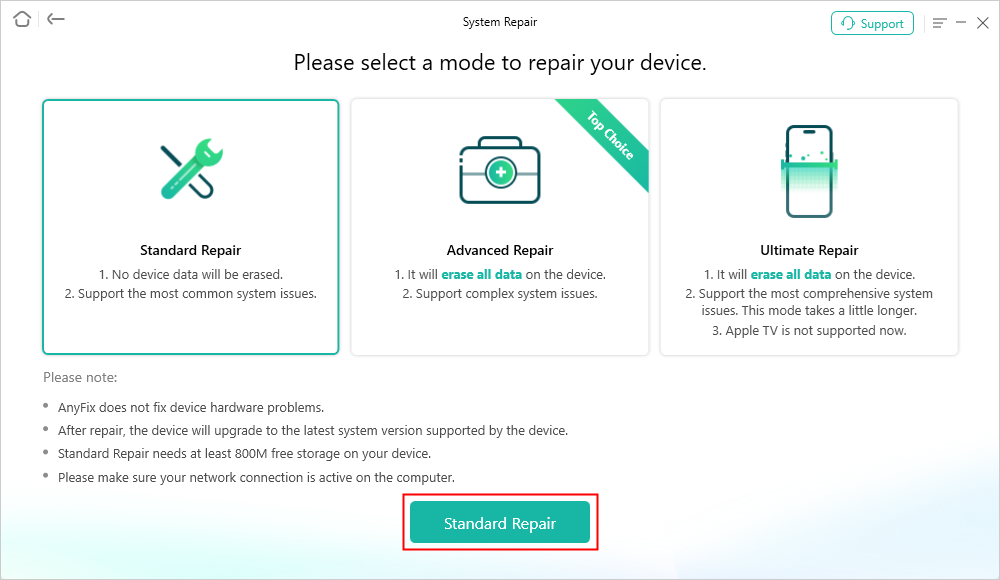
| AnyFix Mode | Current Data Impact | Typical Use |
| Standard Repair | No data loss according to current AnyFix product information | Less severe supported system issues |
| Advanced Repair | Erases device data | More persistent issues such as devices that will not update or restart |
| Ultimate Repair | Erases device data | Severe frozen, black/white/blue screen, DFU, or startup problems |
AnyFix – Repair iPhone or iPad Update Problems
- Includes system repair for frozen screens, failed updates, Apple logo and boot issues.
- Provides multiple repair modes based on issue severity.
- Standard Repair is currently described as preserving data.
- Advanced and Ultimate Repair erase device data.
- Review the mode and data warning before starting the repair.
How to Repair an Update Problem with AnyFix
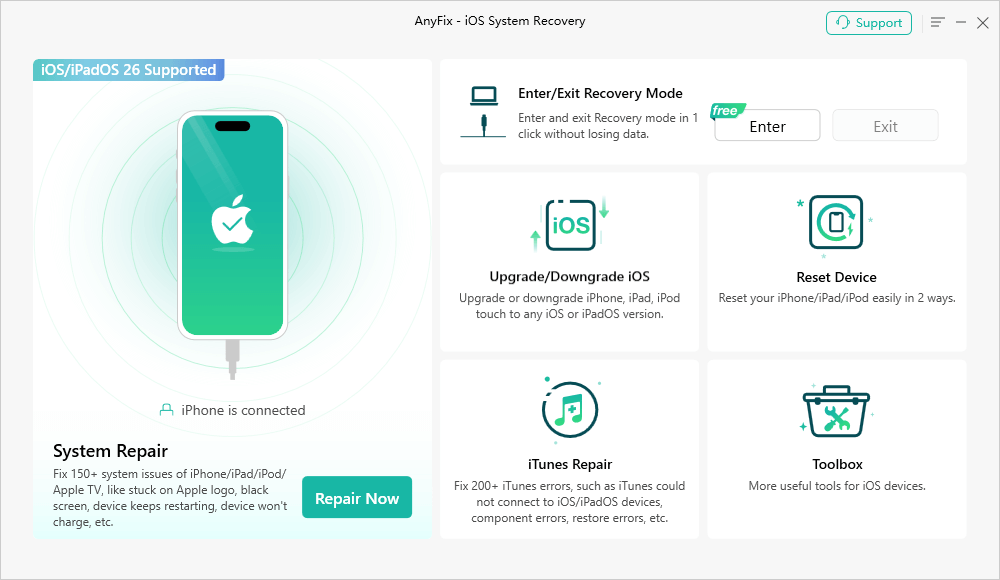
Step 1. Launch AnyFix on the computer and connect the iPhone or iPad.
Step 2. Choose System Repair.
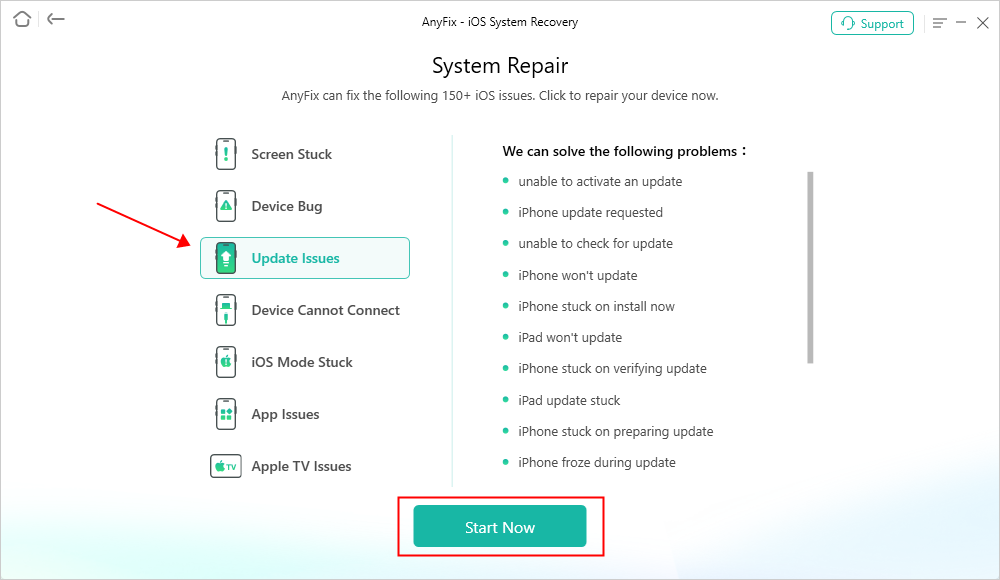
Step 3. Choose the problem category that matches the current iPhone or iPad state.
Step 4. Review the available repair mode and its data impact before continuing.
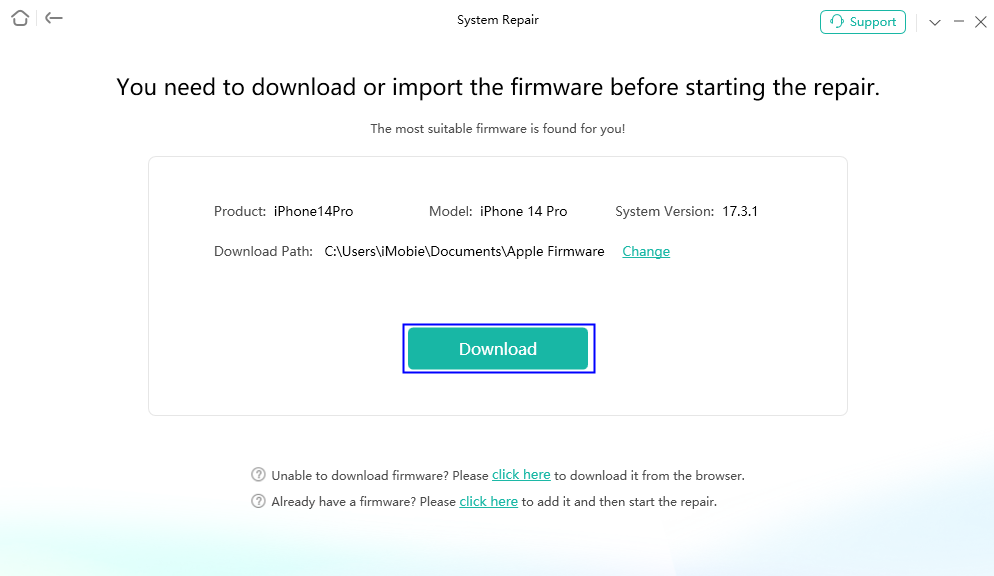
Step 5. Download the firmware package required by the repair.
Step 6. Start the repair and keep the device connected until AnyFix reports the result.
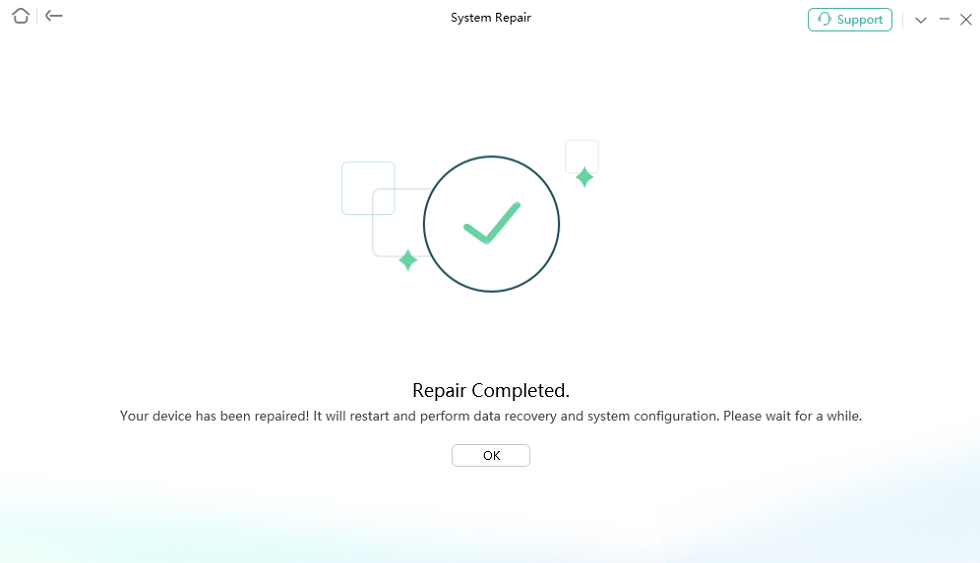
Do not assume that a frozen-update case will always qualify for Standard Repair. If AnyFix requires Advanced or Ultimate Repair, current product information says those modes erase device data.
When Should You Choose Restore?
Restore should be the fallback after less destructive options fail.
Apple currently recommends trying Update first when Recovery Mode offers both choices. Choose Restore when Update does not solve the startup problem and you are prepared for the device to be erased.
Restore reinstalls iOS or iPadOS and removes local information and settings from the device.
If you have a recent iCloud or computer backup, you can restore supported data afterward during setup.
When to Consider Apple Service
Seek further service when:
- the device cannot enter Recovery Mode because a required button is damaged;
- Update and Restore both repeatedly fail;
- the computer cannot reliably detect the device;
- the iPhone or iPad repeatedly freezes again after a successful software reinstall;
- there are signs of battery, storage, liquid, impact, or other hardware damage.
FAQs About iPhone Frozen During Update
1. Why is my iPhone frozen during an iOS update?
An update can fail or appear frozen because of insufficient storage, a slow or interrupted download, loss of power, difficulty reaching the update server, or a software problem during installation.
2. How long should I wait if the iPhone update progress bar is not moving?
A progress bar can move very slowly or appear static. Keep the device connected to power and check whether it still reports that it is updating. Do not force restart solely because the bar pauses briefly.
3. Can I force restart an iPhone during an update?
If the update or restore process truly never completes and the device is unresponsive, Apple recommends force restarting it. If the device is still actively updating, allow the process to finish instead.
4. Does force restarting during an update erase data?
A force restart does not intentionally erase user data. It simply forces the device to restart. A full Restore is the process that erases the device.
5. Does Recovery Mode delete everything?
Entering Recovery Mode alone does not erase the device. When your computer offers Update or Restore, try Update first. Choosing Restore erases the device and reinstalls the system.
6. Should I choose Update or Restore in Recovery Mode?
Try Update first if you have not already done so. Apple states that Update can reinstall the software while attempting to keep your personal data. Use Restore if Update fails and you are prepared to erase the device.
7. Why does my iPhone update take so long?
The duration depends on the update size, internet speed, device storage, and the amount of data the device has to process during installation. Keep the device on power and avoid unnecessary network activity during the update.
8. Can I delete an iOS update and download it again?
Yes when the iPhone or iPad can still start normally. Open Settings > General > iPhone Storage or iPad Storage, select the update, delete it, then return to Software Update and download it again.
9. Can AnyFix repair an iPhone frozen during an update without losing data?
It depends on the required repair mode. AnyFix currently describes Standard Repair as a no-data-loss mode, while Advanced and Ultimate Repair erase device data. Review the mode offered for your specific problem before proceeding.
10. What if my iPhone still will not update after Recovery Mode?
If Update and Restore repeatedly fail, check the computer, USB cable, and device connection. If the problem follows the iPhone or iPad across different computers or the device cannot use Recovery Mode, hardware service may be needed.
The Bottom Line
If your iPhone or iPad looks frozen during an update, first confirm that the installation is actually stuck. A slow progress bar can still be normal. Keep the device connected to power and only force restart when it is genuinely unresponsive or the process never completes.
If a normal restart does not help, use Finder or Apple Devices and choose Update before Restore to give the device a chance to reinstall the system without erasing your data. If Apple’s update path still fails, AnyFix provides another system-repair route, but check whether the required repair mode preserves or erases data before starting.



Joy Taylor is a seasoned technical writer with over a decade of experience in mobile technology. At iMobie, she specializes in producing in-depth content on iOS data recovery, iPhone unlocking solutions, and iOS troubleshooting.
Product-related questions? Contact Our Support Team to Get Quick Solution >
