How to Fix iTunes Error 2006 When Updating or Restoring iPhone

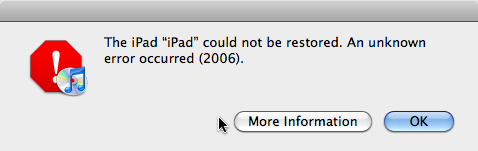
Getting “An unknown error occurred (2006)” while updating or restoring an iPhone, iPad, or iPod touch? Apple identifies Error 2006 as a USB connection-related restore error. Try the cable, USB port, Apple Devices/Finder/iTunes, security software, and computer fixes in the right order.

By Joy Taylor | Last Updated: Sep. 04, 2026

If your iPhone, iPad, or iPod touch stops updating or restoring and the computer shows “An unknown error occurred (2006)”, start by checking the connection between the Apple device and the computer.

Apple currently groups Error 2006 with update and restore errors related to the USB connection, cable, USB port, or computer. So before resetting the iPhone or reinstalling everything, troubleshoot the physical connection and computer environment first.

Quick answer: Connect the device directly to the computer, use a reliable Apple-certified USB cable, switch USB ports, update Finder/Apple Devices/iTunes, restart the device and computer, check security software, and then try another computer if Error 2006 continues.

What Does iTunes Error 2006 Mean?

iTunes Error 2006 normally appears while an iPhone, iPad, or iPod touch is being updated or restored from a computer.

Apple’s current update-and-restore documentation lists Error 2006 together with errors 2000, 2001, 2002, 2005, and 2009 under USB connection troubleshooting.

Possible Cause Why It Matters What to Try
Damaged or unreliable USB cable The connection can fail while firmware is being transferred Use another Apple-certified data cable
Problematic USB port The port may provide unstable data or power Connect directly to another computer USB port
USB hub or keyboard port Indirect ports may not provide a reliable restore connection Connect the device directly to the computer
Outdated Apple device software Old device-management components may cause restore/update problems Update macOS, Apple Devices, or iTunes
Security software interference Third-party security software can interfere with Apple device communication Update or reconfigure the security software
Computer-side USB problem The device may work normally with another computer Try another updated Mac or PC

Error 2006 does not automatically mean the iPhone itself needs to be erased or factory reset.

1. Check the USB Cable and Connection

Start with the simplest fix because Apple specifically associates Error 2006 with USB communication.

Step 1. Disconnect the iPhone, iPad, or iPod touch from the computer.

Step 2. Inspect the USB or USB-C cable for damaged connectors, loose plugs, bent contacts, or visible wear.

Step 3. Reconnect the device directly to a USB port on the computer.

Step 4. Do not connect through a USB hub, dock, keyboard USB port, or other intermediate accessory while troubleshooting Error 2006.

Step 5. If the error appears again, try another reliable Apple-certified cable.

A charging cable is not always a reliable data cable. The connection must remain stable throughout the update or restore process.

Disconnect Other USB Accessories

If several devices are connected to the computer, disconnect unnecessary USB accessories temporarily. Keep only essential input devices and the iPhone, iPad, or iPod touch connected while testing the restore again.

2. Switch USB Port or Computer

If changing the cable does not fix Error 2006, isolate the computer-side USB connection.

Step 1. Move the device to a different USB port on the same computer.

Step 2. Avoid the USB port on a keyboard.

Step 3. Retry the update or restore.

Step 4. If Error 2006 remains, use another updated Mac or PC if one is available.

Apple explicitly recommends trying another computer when USB-related update and restore errors continue.

Why Trying Another Computer Helps

A second computer helps distinguish between:

If the same device and cable restore normally on another computer, the first computer becomes the more likely source of the problem.

3. Update Finder, Apple Devices, or iTunes

Older guides describe Error 2006 only as an “iTunes error,” but Apple’s current computer tools differ depending on your operating system.

Computer Current Apple Device Tool
Current Mac Finder
Current Windows PC Apple Devices app
Compatible Windows setup using legacy Apple software iTunes

On Mac

Install the latest macOS updates available for the Mac, then reconnect the iPhone and use Finder.

On Windows

Update the Apple Devices app if that is the device-management tool installed on your PC.

If your PC still uses iTunes for device management, install the latest iTunes version available for that environment.

You do not need to install iTunes on a modern Mac just because the error is commonly called “iTunes Error 2006.” Current macOS device updates and restores are handled through Finder.

4. Restart the iPhone and Computer

Restarting both sides of the connection can clear a temporary USB, device-service, or restore-process problem.

Step 1. Disconnect the iPhone or iPad.

Step 2. Restart the computer.

Step 3. Restart the Apple device normally.

Step 4. Reconnect it directly to the computer and retry the update or restore.

Force Restart If the iPhone Is Not Responding

If the iPhone is frozen and cannot be restarted normally, use the correct force-restart sequence.

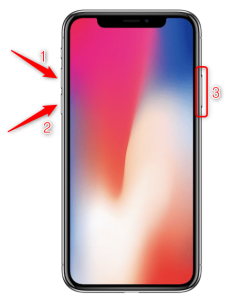
iPhone 8 or Later

Step 1. Press and quickly release Volume Up.

Step 2. Press and quickly release Volume Down.

Step 3. Press and hold the Side button until the Apple logo appears.

iPhone 7 or iPhone 7 Plus

Press and hold the Side button and Volume Down button together until the Apple logo appears.

iPhone 6s or Earlier

Press and hold the Home button and Side or Top button until the Apple logo appears.

A force restart does not erase your iPhone data. It should not be confused with a factory restore. A Restore operation, by contrast, reinstalls iOS and erases the information and settings on the device.

5. Check Security Software

If the cable, USB port, and computer software are current but Error 2006 still appears, third-party security software can be another factor.

Apple recommends checking security software when computer communication interferes with an iPhone or iPad update or restore.

Before changing anything:

Do not permanently disable security protection just because an old troubleshooting article tells you to “shut it down.” If temporary testing is necessary, follow the security vendor’s own instructions and restore protection afterward.

6. Repair iTunes Errors with AnyFix

If the USB hardware has been checked and your problem is occurring inside the Windows iTunes environment, AnyFix provides an iTunes repair workflow for connection, backup, restore, installation, update, and sync-related errors.

Its current product information still includes more than 200 iTunes error scenarios. For an Error 2006 case that appears during update or restore, the relevant category is the Connection / Backup / Restore family rather than an iOS factory reset.

AnyFix – Repair iTunes Connection and Restore Errors

  • Includes dedicated iTunes connection, backup, and restore troubleshooting.
  • Also covers installation, download, update, and sync-related iTunes problems.
  • Use it after checking the cable and USB ports because Error 2006 is officially classified as a USB-related restore error.
  • On Mac, current AnyFix documentation notes limitations on iTunes repair because of macOS restrictions.

How to Check iTunes with AnyFix

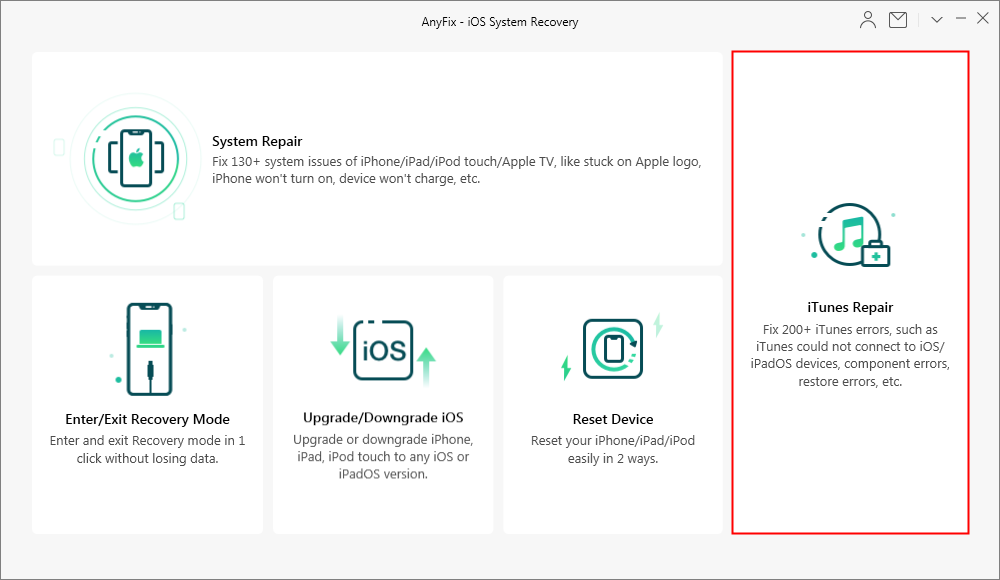
Step 1. Launch AnyFix on the computer and choose iTunes Repair.

Choose iTunes Repair in AnyFix

Open the iTunes Repair workflow in AnyFix.

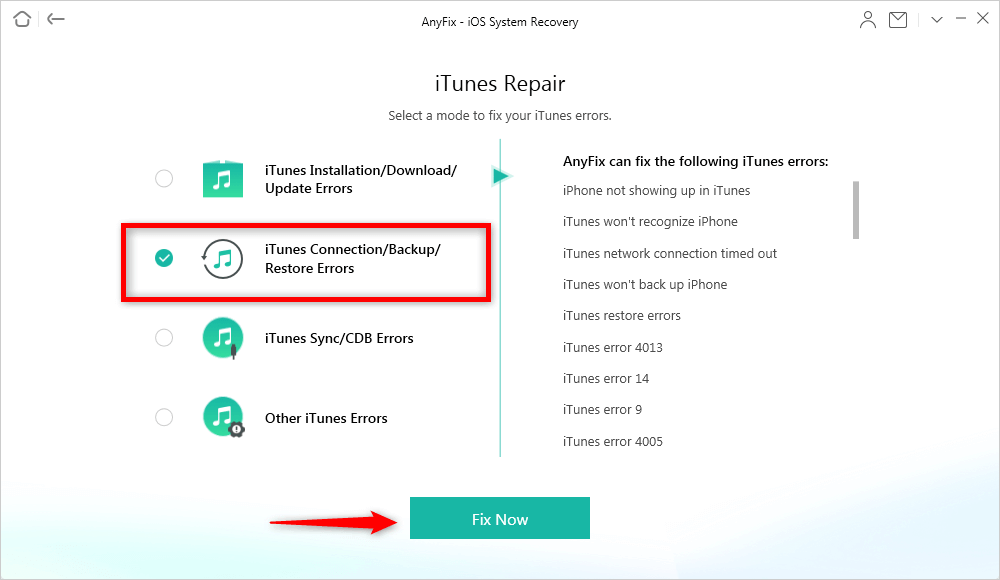
Step 2. Choose the Connection / Backup / Restore error category that best matches the failed restore or update.

Choose an iTunes connection backup or restore error category

Select the appropriate iTunes error category.

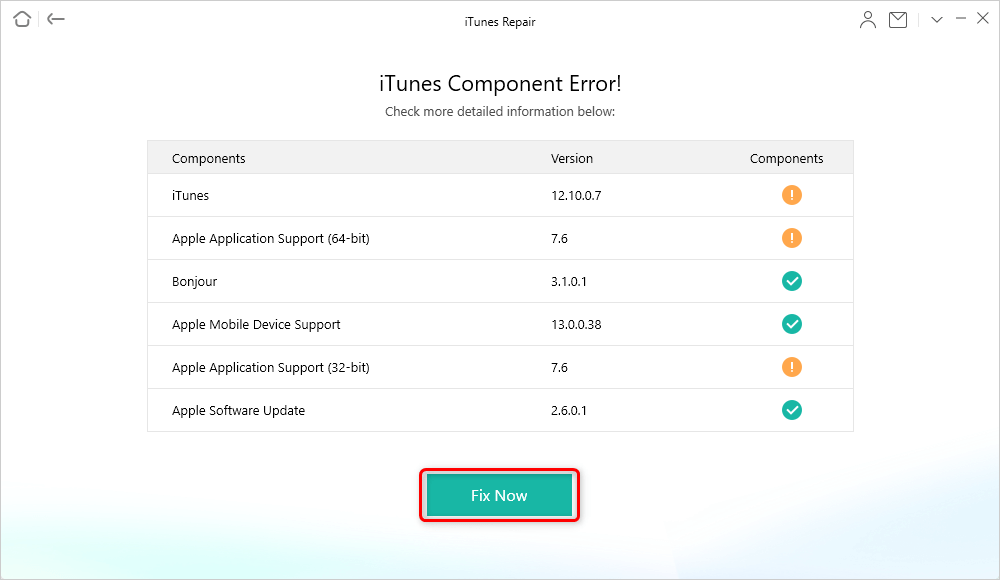
Step 3. Let AnyFix inspect the relevant local iTunes components.

Scan iTunes components with AnyFix

Allow AnyFix to inspect the local iTunes environment.

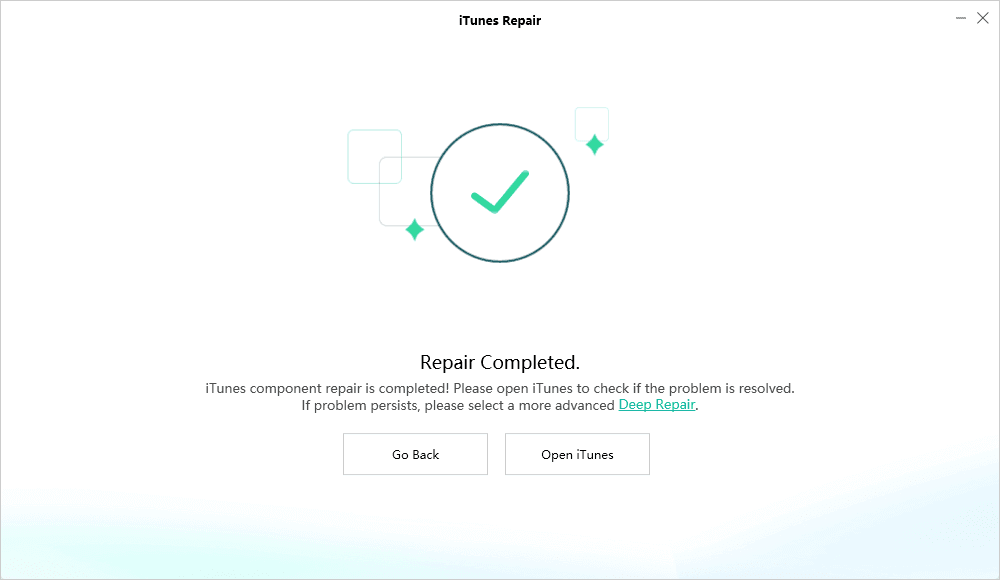
Step 4. Follow the repair instructions and restart iTunes before attempting the update or restore again.

AnyFix iTunes repair completed

Retry the Apple device operation after the local iTunes repair finishes.

AnyFix cannot repair a physically damaged USB cable, USB port, or iPhone connector. If changing the physical connection solves Error 2006, an iTunes repair is unnecessary.

What If Error 2006 Still Appears?

If you have already tried a reliable cable, multiple USB ports, an updated computer, and another computer, do not keep repeating the same restore indefinitely.

Check whether:

If the problem follows the iPhone across different cables and computers, hardware inspection or Apple support may be the appropriate next step.

Does Restore Erase the iPhone?

Yes. If you eventually perform a full Restore, Apple states that the process reinstalls the software and deletes the information and settings on the device.

Do not confuse this with Restart or Force Restart, neither of which intentionally erases user data.

FAQs About iTunes Error 2006

1. What is iTunes Error 2006?

Error 2006 is an iPhone, iPad, or iPod update/restore error that Apple currently groups with USB connection-related errors. Check the cable, USB port, and computer connection first.

2. Is Error 2006 caused by the USB cable?

It can be. Apple recommends trying the cable that came with the device or another Apple-certified cable when Error 2006 appears. USB ports and the computer itself can also be responsible.

3. Should I use a USB hub when restoring an iPhone?

No while troubleshooting Error 2006. Apple recommends plugging the device directly into a USB port on the computer rather than a keyboard or USB hub.

4. Does force restarting an iPhone delete everything?

No. Force restart does not intentionally erase the iPhone. A full Restore is the operation that reinstalls iOS and erases the device’s information and settings.

5. Do I still need iTunes to fix Error 2006 on Mac?

No. Current Macs use Finder for iPhone and iPad updates and restores. Windows PCs can use the Apple Devices app, while compatible Windows configurations can still use iTunes.

6. Can security software cause Error 2006?

Security software can interfere with communication between Apple device-management software and the device. Apple recommends checking third-party security software when update or restore errors continue.

7. Should I factory reset my iPhone to fix Error 2006?

Not as the first fix. Apple classifies Error 2006 as a USB-related update/restore error, so troubleshoot the connection first. A Restore erases the iPhone and should not replace basic cable and USB troubleshooting.

8. Can AnyFix fix iTunes Error 2006?

AnyFix provides iTunes connection, backup, and restore repair functions and supports a broad range of iTunes errors. However, a physically damaged cable, USB port, or iPhone connector still needs to be addressed separately.

9. What if Error 2006 happens on more than one computer?

If the same iPhone fails with multiple reliable cables and multiple updated computers, the likelihood of a device-side USB or hardware problem increases. Consider Apple or professional hardware inspection.

The Bottom Line

If you see iTunes Error 2006 while updating or restoring an iPhone, start with the connection. Apple currently identifies Error 2006 as part of its USB-related restore-error group, so check the cable, connect directly to another USB port, update Finder/Apple Devices/iTunes, restart both devices, and try another computer before considering a destructive restore.

If the physical USB connection is stable but the Windows iTunes environment continues producing connection or restore errors, AnyFix provides a local iTunes repair workflow. If Error 2006 follows the device across multiple cables and computers, investigate possible hardware trouble instead of repeatedly restoring the phone.

Author Avatar
Joy Taylor Twitter Share Facebook Share

Joy Taylor is a seasoned technical writer with over a decade of experience in mobile technology. At iMobie, she specializes in producing in-depth content on iOS data recovery, iPhone unlocking solutions, and iOS troubleshooting.

Get It Now

  • * 60-Day Money Back Guarantee
  • * Lifetime FREE Upgrade

Users Served

Mentioned in Top Tech Sites:

Highly Rated by Users:

Rated

based on Customer Reviews