How to Put Music on iPod Classic/Touch/Shuffle/Nano without iTunes
Want to put music on an iPod without iTunes? The right method depends on whether you have an iPod nano, classic, shuffle, or touch. This guide explains how to add music from a computer without using iTunes, when cloud transfer works, and when a traditional iPod still needs computer syncing.
Can You Put Music on an iPod without iTunes?
Yes, but the available method depends on your iPod model. For an iPod nano, classic, or shuffle, you still need a compatible computer-based music management or syncing method to add songs. These models cannot use cloud apps such as Dropbox to import music directly.
An iPod touch has more options because it can run apps and access online services. If your goal is simply to add local MP3 or AAC files from a computer without replacing the music already on the iPod, a compatible iPod management tool can also be an alternative to traditional iTunes syncing.
Which Method Should You Use for Your iPod?
| iPod Model | Computer Transfer without iTunes | Cloud Method | Apple Sync |
| iPod nano | Possible with a compatible iPod management tool | No | Yes |
| iPod classic | Possible with a compatible iPod management tool | No | Yes |
| iPod shuffle | Possible with a compatible iPod management tool | No | Yes |
| iPod touch | Yes | Yes, depending on the app and iOS version | Yes |
Key difference: iPod nano, classic, and shuffle are not general-purpose USB music players. Music normally needs to be added through compatible software that updates the iPod music library. Simply dragging MP3 files to the device storage is not the same as adding playable songs to its Music library.
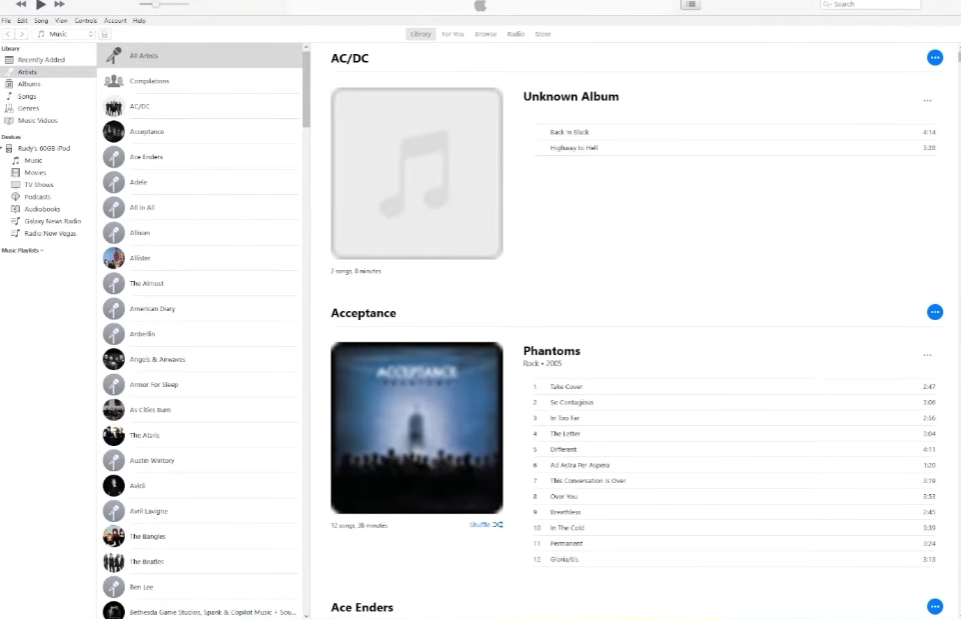
Before You Choose a Method
- Check your iPod model. A method for iPod touch may not work on iPod nano, classic, or shuffle.
- Decide whether you need to keep the existing songs. If the iPod was previously synced with another music library, review the sync settings before applying a new library.
- Check the music source. Local MP3, AAC, WAV, AIFF, or other compatible audio files are different from Apple Music subscription downloads.
- Make sure the computer recognizes the iPod. Try another USB port or cable before changing software if the device does not appear.
- Back up irreplaceable music first. This is especially important when using an iPod that was originally synced with another computer.
How to Put Music on iPod without iTunes?
If you do not want to use iTunes, first identify which iPod you have. An iPod touch can use apps and online services, while an iPod nano, classic, or shuffle still relies on compatible computer-based software to update its music library.
If your main concern is keeping the songs already stored on the iPod, avoid assuming that every sync method works the same way. Review the destination device and selected songs before starting a new library-based sync.
Way 1. Transfer Music from Computer to iPod without iTunes
If you want to add selected music files from a computer without managing the iPod through a full iTunes library sync, AnyTrans provides a device-management workflow for transferring supported music files between a computer and compatible iPod models.
This approach is most useful when you want to choose individual songs instead of syncing an entire music library. Before using it with an older iPod nano, classic, or shuffle, confirm that your specific device is recognized by the current version of AnyTrans.
- Select individual supported music files to add from a computer.
- Manage supported music already stored on the connected iPod.
- Transfer supported content between a computer and compatible Apple devices.
- Convert some incompatible local media formats when supported by the current software version.
Step 1. Install and launch AnyTrans on the computer. Connect the iPod with a USB cable, open Device Manager, and choose the option to add content to the connected device.
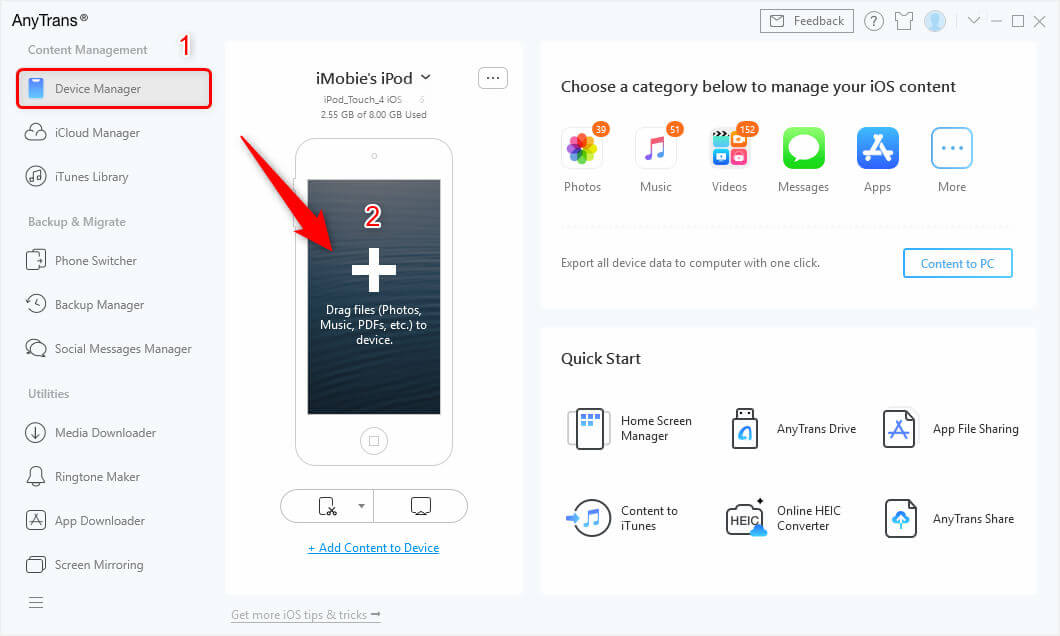
Connect the iPod and choose music to add
Step 2. Select the local songs you want to add and click Open to start the transfer. Wait until the process finishes before disconnecting the iPod.
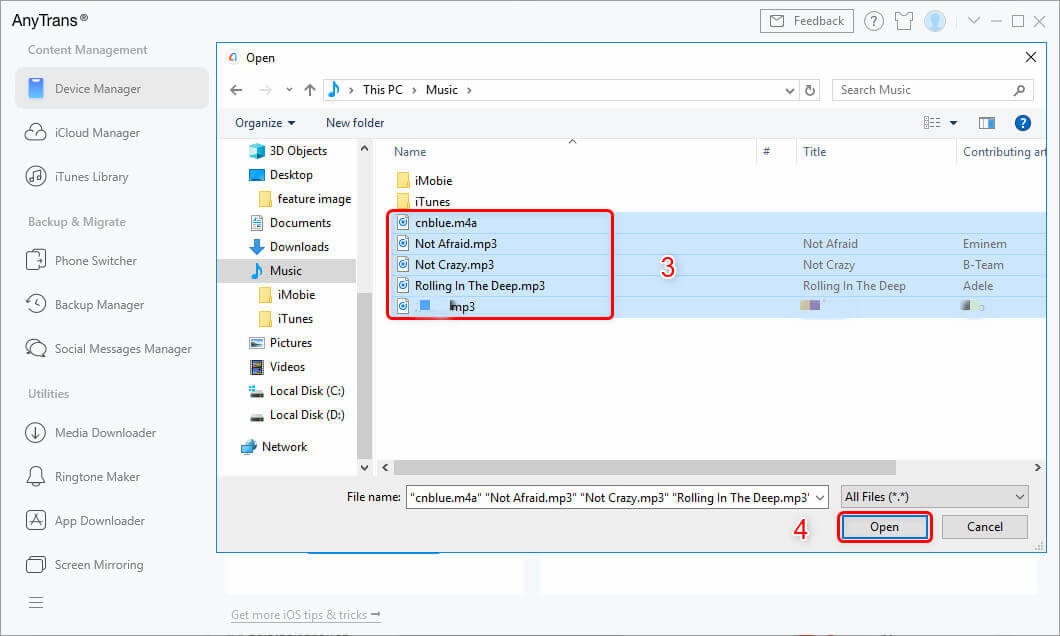
Select the music files to transfer
After the transfer, open the music section for the connected iPod and confirm that the songs appear before ejecting the device.
Way 2. Access Music on iPod Touch without iTunes via Cloud Service
If you have an iPod touch, a cloud-storage app can be another way to access music files from a computer without using iTunes. This method does not apply to iPod nano, iPod classic, or iPod shuffle because those models cannot install and use Dropbox like an iPod touch.
Using Dropbox as an example:
- Upload your music files from the computer to Dropbox.
- Install and open Dropbox on a compatible iPod touch.
- Sign in to the same Dropbox account.
- Open the uploaded audio file from Dropbox to access or play it on the iPod touch.
Note: A cloud-storage app may let you access or play an audio file, but it does not necessarily import that file into Apple’s Music library. If you specifically need the song to appear in the Music app, use a compatible music-management or syncing method instead.
How to Put Music on iPod with iTunes?
iTunes is still relevant for some traditional iPod setups, especially iPod classic, nano, and shuffle. On current Windows systems, Apple also provides the Apple Devices app together with the Apple Music app for syncing supported music to Apple devices.
If you already use iTunes and your iPod is recognized, you can keep using the following workflow. Before syncing, check whether the iPod contains music from another library and choose the sync options carefully.
Step 1. Open iTunes on your computer, connect your iPod, and select the device icon.
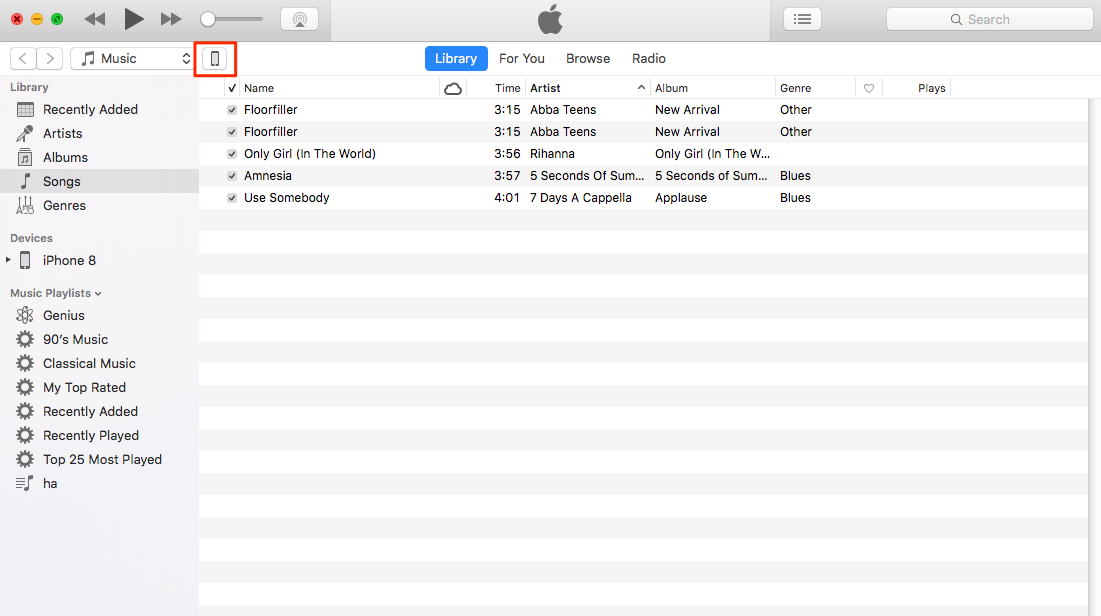
Select the connected iPod in iTunes
Step 2. Choose Music, enable Sync Music, and select either the entire music library or the artists, albums, playlists, or songs you want to sync. Review the selection before clicking Sync.
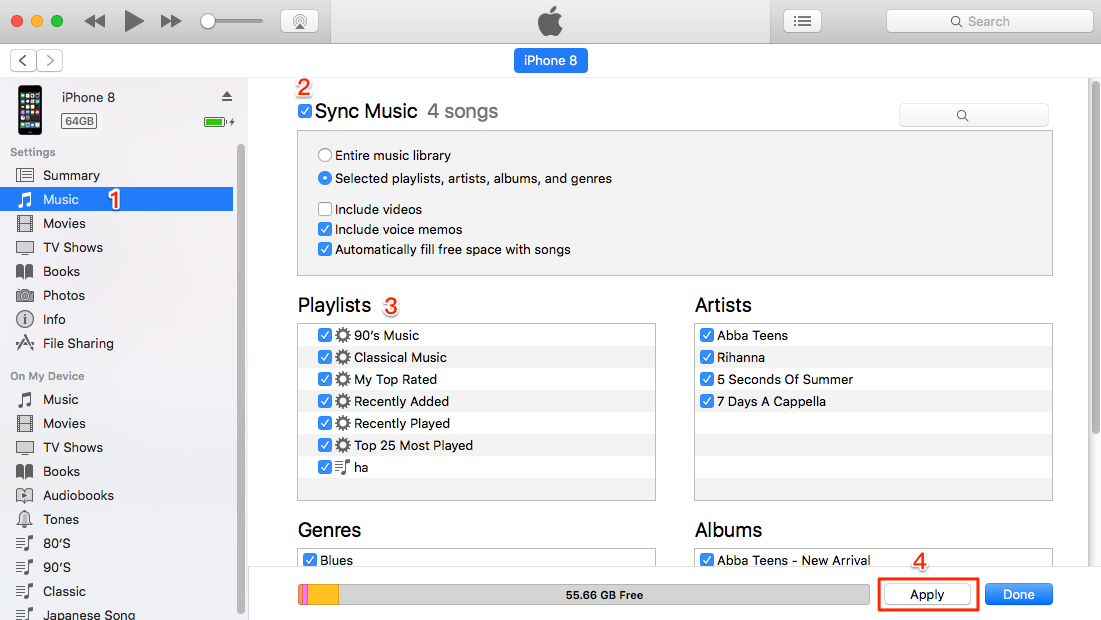
Choose which music to sync to the iPod
Sync warning: Music syncing is library-based. If the iPod was previously synced with another computer or library, changing its sync setup can affect music already stored on the device. Review the selected music before applying the sync.
Using Apple Devices on a Current Windows PC
If you use a current Windows PC, Apple’s newer workflow uses the Apple Devices app for device management and the Apple Music app for the music library. Connect the iPod, select it in Apple Devices, open Music, and choose whether to sync the entire library or selected artists, albums, genres, and playlists.
This is an Apple-provided alternative to the older iTunes device-management interface, although compatibility can vary with older iPod hardware.
Can You Transfer Apple Music Downloads to an iPod?
Local music files and Apple Music subscription downloads are not the same thing. Apple states that Apple Music subscription songs cannot be transferred using the standard manual music-syncing workflow described for Windows devices.
For an older iPod nano, classic, or shuffle, use locally owned and compatible music files rather than assuming that an offline Apple Music subscription download can be copied to the device like an MP3.
Bonus Tip. Transfer Music from iPhone to iPod without iTunes
If the music you want to move is stored on an iPhone rather than a computer, the workflow is different. A device-transfer tool such as PhoneTrans may help with supported device-to-device transfer scenarios.
Before starting, confirm that both devices are recognized and that the destination iPod model supports the selected transfer workflow. This option is mainly relevant when your source music is on another Apple device; if your music is already stored on a computer, use one of the methods above instead.
FAQs about Putting Music on an iPod without iTunes
Can I put music on an iPod nano without iTunes?
You can avoid the iTunes application by using a compatible computer-based iPod management method, but an iPod nano still needs its music library to be managed through compatible software. Cloud-app methods such as Dropbox do not work on iPod nano.
Can I put music on an iPod classic without iTunes?
A compatible desktop iPod management tool may provide an alternative to iTunes. However, iPod classic still relies on computer-based music management, so simply copying MP3 files to the device storage is not the same as adding them to its playable music library.
Can I drag and drop MP3 files directly onto an iPod?
Not in the same way as a basic USB MP3 player. Traditional iPods use a managed music library, so files normally need to be added through compatible syncing or iPod-management software.
Will adding music delete the songs already on my iPod?
It depends on the method and the iPod’s existing sync setup. Be especially careful if the iPod was previously synced with another computer or music library. Check the sync selection and back up irreplaceable music before changing the device’s library configuration.
Why is my iPod not showing up on my computer?
Check the USB cable and port first, reconnect the iPod, and restart the device and computer if necessary. If the iPod still is not recognized, confirm that the current operating system and music-management software support the device before attempting a transfer.
The Bottom Line
You can put music on an iPod without using the traditional iTunes interface, but the correct method depends on the iPod model. iPod nano, classic, and shuffle still rely on compatible computer-based music management, while iPod touch can also use apps and cloud services for some music-access scenarios.
If you want to add selected local songs from a computer without managing the device through a full iTunes library sync, a compatible iPod management tool such as AnyTrans can provide another workflow. If you prefer Apple’s own tools, use iTunes where appropriate or check the current Apple Devices and Apple Music workflow on Windows.
Whichever method you choose, confirm your iPod model, check whether the device contains music from another library, and make sure the source files are compatible before starting the transfer.



Joy Taylor is a seasoned technical writer with over a decade of experience in mobile technology. At iMobie, she specializes in producing in-depth content on iOS data recovery, iPhone unlocking solutions, and iOS troubleshooting.
Product-related questions? Contact Our Support Team to Get Quick Solution >
