How to Transfer iTunes Library to Android in 2026

Your old iTunes library can still move to Android, but Google Play Music and older iCloud Music Library instructions are outdated. Compare current Apple Music Sync Library, YouTube Music uploads, manual USB transfer, and AnyDroid based on the music and media you actually have.

Author Avatar Joy Taylor Last Updated: Sep. 02, 2026

If your music collection started in iTunes, moving to Android does not mean you have to rebuild it from scratch. The right method now depends on what is actually inside the library: local MP3/AAC files, iTunes Store purchases, Apple Music library items, playlists, or other media stored on your computer.

The biggest change from older guides is that Google Play Music is no longer available. For a cloud-based alternative, YouTube Music now lets you upload your own compatible audio files from a computer. Apple users can also use the current Sync Library feature in Apple Music, while local music files can still be copied directly to Android with USB.

If you want to move supported iTunes library categories directly from a computer to Android without uploading the collection to a cloud music service, AnyDroid also continues to provide a dedicated iTunes Library to Android workflow.

Before choosing a method: An iTunes music library is not the same thing as an iPhone/iTunes backup. If you are trying to move contacts, messages, photos, or other data stored inside an iPhone backup rather than the media library itself, you need a backup-transfer workflow instead.

Quick Answer: Which iTunes-to-Android Method Should You Use?

Start with the type of library you have rather than the name of the app on your computer.

Your Music Situation Recommended Method Main Requirement Main Limitation
You have local MP3, AAC, M4A, FLAC, or other compatible music files YouTube Music upload or manual USB transfer Access to the actual audio files on the computer Does not automatically move the entire iTunes database, ratings, or all playlist metadata.
You subscribe to Apple Music and want the same cloud music library on Android Apple Music Sync Library Apple Music or iTunes Match subscription and the same Apple Account Requires the Apple Music ecosystem rather than making ordinary local copies of subscription tracks.
You want a free local transfer with no cloud upload USB file transfer Local transferable audio files and a data-capable USB cable Mainly copies files; it does not recreate the full iTunes library database.
You want to select supported iTunes media categories and send them directly to Android AnyDroid iTunes Library to Android Computer, connected Android device, and supported iTunes library content The current AnyDroid guide lists actual transfer as an activated-version feature.

What Is Actually in Your iTunes Library?

The phrase “iTunes library” can describe several different kinds of content. That matters because the same transfer method does not fit all of them.

Library Content Can You Treat It as a Normal Local File? Better Transfer Direction
MP3, AAC, M4A, FLAC, or other music files imported from your computer Usually, if the actual file is stored locally and the target player supports it USB, YouTube Music, or AnyDroid
Music imported from CDs Usually, if the resulting audio files remain on the computer USB, YouTube Music, or AnyDroid
iTunes Store music purchases Depends on the file you have locally, but current iTunes Store music is generally distributed in iTunes Plus format Local transfer or Apple Music, depending on your library setup
Apple Music subscription library Do not treat subscription downloads like ordinary owned MP3 files Apple Music Sync Library on Android
iTunes playlists, ratings, play counts, and library organization Not as simple audio files Apple Music is the better choice when preserving the cloud library experience matters.
iPhone backup created with iTunes No. It is a device backup, not the music library folder. Use an iTunes-backup-to-Android workflow for supported backup data.

If your main goal is simply to hear the same locally stored songs on an Android phone, methods 1, 3, and 4 are the most relevant. If you want your Apple playlists and cloud music collection to follow you, method 2 is usually the better fit.

Part 1: Transfer iTunes Music to Android with YouTube Music

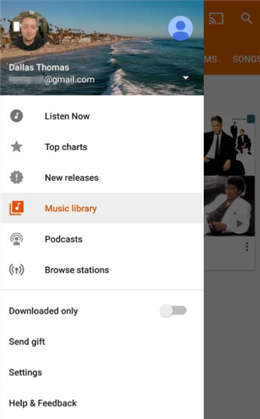
Google Play Music used to be a common answer to this question, but that service and its old Music Manager workflow have been retired. The current Google option for uploading a personal music collection is YouTube Music.

YouTube Music accepts personal audio uploads from a computer. Current supported upload formats include FLAC, M4A, MP3, OGG, and WMA, and Google currently allows up to 100,000 uploaded songs in a personal YouTube Music library.

Good fit for: local music files you want available on Android without subscribing to Apple Music. YouTube Music uploads are personal to your account and are separate from the regular streaming catalog.

How to Upload iTunes Music Files to YouTube Music

Step 1. On your computer, locate the actual audio files from your old iTunes or Apple Music library. If a song exists only as a cloud item and is not stored as a normal local audio file, this upload method will not have a file to send.

Step 2. Open YouTube Music in a desktop browser and sign in to the Google Account you use on your Android phone.

Step 3. Drag the compatible audio files onto the YouTube Music page, or click your profile picture and choose Upload music.

Step 4. Wait for the uploads to finish. Newly uploaded music may take some time to appear in your library.

Step 5. On your Android phone, open YouTube Music with the same Google Account.

Step 6. Go to your Library and switch to the Uploads section to find the music you added.

YouTube Music also allows uploaded songs to play in the background, ad-free, and offline without requiring a current YouTube Music Premium subscription. However, this method uploads audio files and their associated metadata; it does not migrate the complete iTunes database as an iTunes library.

For Google’s current upload requirements, see the YouTube Music upload guide.

Part 2: Sync iTunes / Apple Music Library to Android with Apple Music

If you already use Apple Music, this is the most natural way to keep an Apple-based music library available on Android. Apple’s current feature is called Sync Library.

Sync Library requires an Apple Music subscription or an iTunes Match subscription. You also need to use the same Apple Account on the computer and the Apple Music app on Android.

On the Apple Music App for Windows

Step 1. Open the Apple Music app on your Windows PC.

Step 2. Check that you are signed in with the Apple Account used for your Apple Music or iTunes Match subscription.

Step 3. Click the Sidebar Actions button, choose Settings, and open General.

Step 4. Turn on Sync Library.

Step 5. Wait for the cloud library to finish updating before checking the Android device.

On a Mac

Step 1. Open the Music app.

Step 2. Confirm that the correct Apple Account is signed in.

Step 3. Choose Music > Settings > General.

Step 4. Select Sync Library and wait for the library to finish syncing.

On Your Android Phone

Step 1. Install the current Apple Music app on the Android phone.

Step 2. Sign in with the same Apple Account used on the computer.

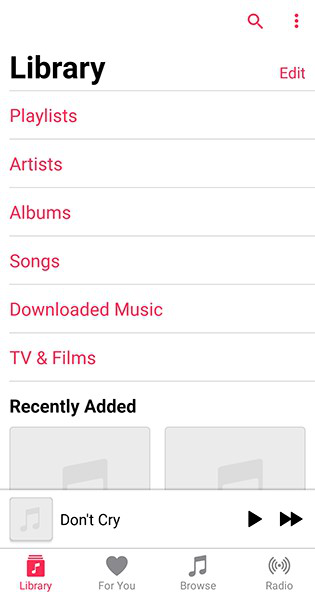
Step 3. Open Library. Once the computer library has finished syncing, the available cloud library content should appear there.

Apple notes that Sync Library is a synchronization feature rather than a backup service, so keep a separate backup of important local music files before making large changes to the library.

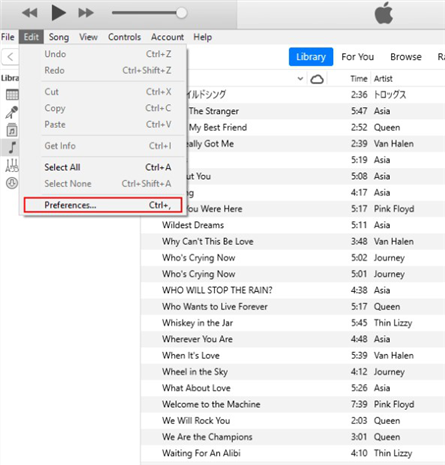
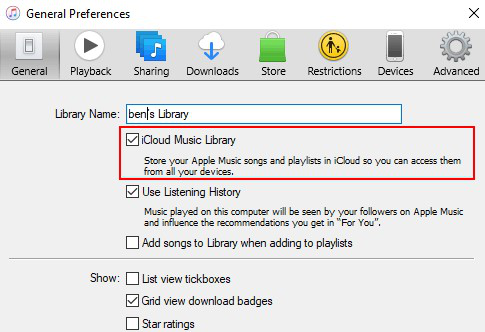
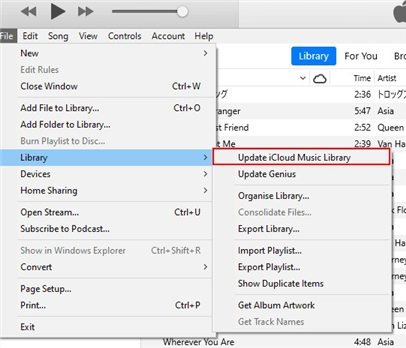
Still using legacy iTunes for Windows? Apple still documents the older Windows application. In legacy iTunes, the equivalent Sync Library option is called iCloud Music Library. The old screenshots previously used on this page should not be treated as the current Apple Music for Windows interface.

See Apple’s current Sync Library instructions for the latest Windows and Mac menu paths.

Part 3: Manually Copy iTunes Music Files to Android

If the songs are actual local audio files on your computer, USB transfer is the simplest free method. It does not require Apple Music, YouTube Music, or another cloud service.

This works best for music you own or imported yourself. It copies the audio files; it does not automatically reproduce every iTunes playlist, star rating, play count, Smart Playlist rule, or other database-only information.

Find the Actual Music Files First

Do not copy the iTunes database file and expect Android to understand it. You need the music files themselves.

If you still use classic iTunes for Windows, the media library is commonly stored inside your Music folder under the iTunes Media directory unless you changed its location. If you are unsure where a song is stored, use the music application’s file-location or Show in Explorer option to locate the source file.

Copy Local Music to Android

Step 1. Unlock the Android phone and connect it to the computer with a USB cable that supports data transfer.

Step 2. On the Android device, open the USB notification and choose File transfer when prompted.

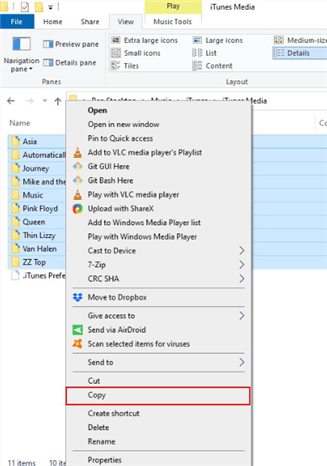
Step 3. On the computer, locate the folders containing the local iTunes/Apple Music audio files you want to move.

Locate local iTunes music files before transferring them to Android

Locate the Local Music Files You Want to Copy

Step 4. Open the Android device in File Explorer and locate or create a Music folder in user-accessible storage.

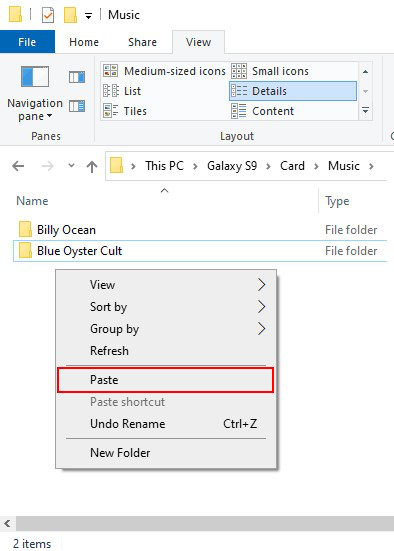
Step 5. Copy the selected music files or folders into the Android Music folder.

Copy local iTunes music files into the Android Music folder

Copy Local Music Files to Android

Step 6. Disconnect the phone safely and open a local music player. Android may take a short time to index newly copied media.

What Manual USB Transfer Does Not Preserve

  • iTunes star ratings.
  • Play-count history.
  • Smart Playlist rules.
  • Some playlist organization.
  • Apple Music subscription access rights.
  • Content that exists only in the cloud and is not stored as a normal local audio file.

If those library features matter more than simply getting the audio onto Android, use Apple Music Sync Library or a library-aware transfer tool instead.

Part 4: Transfer iTunes Library to Android with AnyDroid

AnyDroid is relevant to this specific task because Android Mover includes a dedicated iTunes Library to Android mode. Instead of manually locating media folders, the program loads supported categories from the computer’s iTunes library and lets you choose what to transfer.

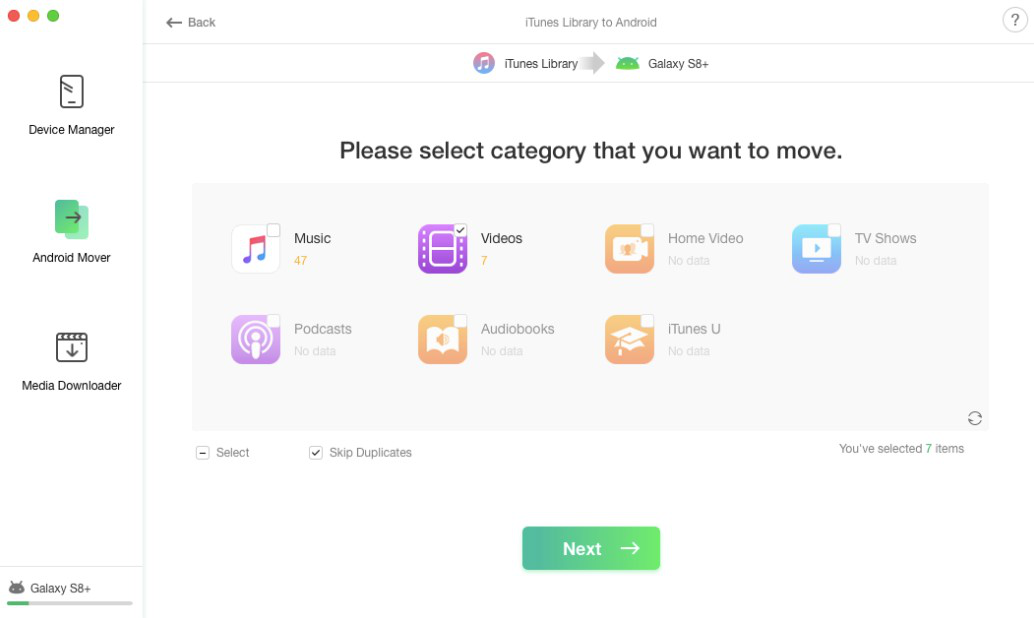
The current AnyDroid guide lists the following iTunes-library media categories:

  • Music
  • Videos
  • Home Video
  • TV Shows
  • Podcasts
  • iTunes U
  • Audiobooks

The current guide also lists supported music formats including MP3, M4A, M4B, WAV, WMA, AMR, APE, AAC, OGG, AC3, MKA, and FLAC.

AnyDroid – iTunes Library to Android

  • Loads supported categories from the iTunes library on the computer.
  • Lets you choose categories before starting the transfer.
  • Includes a Skip Duplicates option in the current workflow.
  • Connects Android by USB or Wi-Fi according to the current user guide.
  • Transfer time depends on the size of the selected files rather than a fixed number of minutes.

Free vs activated version: The current AnyDroid guide shows the iTunes Library to Android transfer itself as an activated-version capability. The download can be used to install and inspect the software, but do not describe the complete transfer as a permanently free feature.

How to Move an iTunes Library with AnyDroid

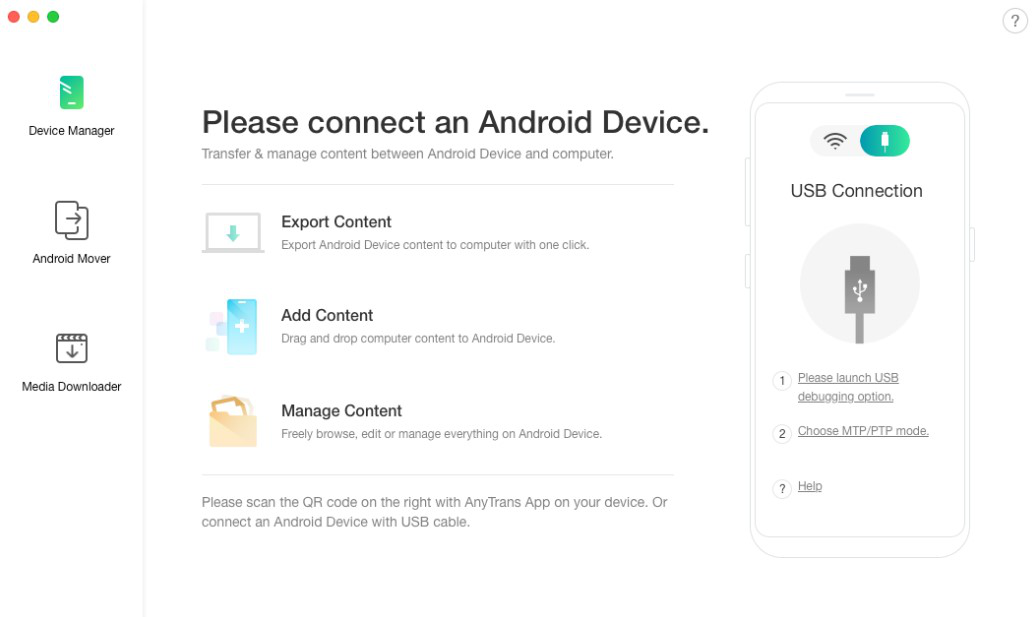
Step 1. Install and launch AnyDroid on the computer, then connect the Android phone by the connection method supported by the current program.

Connect an Android device to AnyDroid

Connect the Android Device to AnyDroid

Step 2. Open Android Mover and choose iTunes Library to Android.

Step 3. Wait for the library content to load, then choose the supported file categories you want to move.

Choose iTunes library categories to transfer to Android in AnyDroid

Choose the iTunes Library Categories to Transfer

Step 4. Keep Skip Duplicates selected if you do not want duplicate copies of files that are already present. Uncheck it only if you intentionally want duplicates.

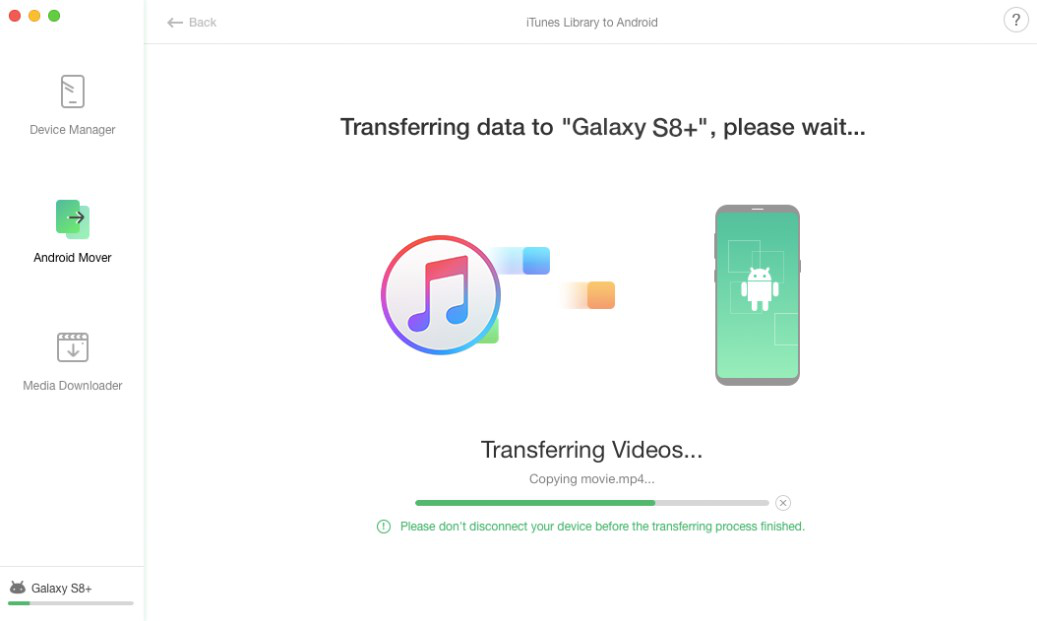
Step 5. Click Next to begin the transfer.

Wait for AnyDroid to transfer selected iTunes library content to Android

Wait for the Selected Library Content to Transfer

Step 6. Keep the Android device connected until the process is complete. The time required varies with the size and number of selected files.

For the current menu names, supported formats, and version requirements, see the AnyDroid iTunes Library to Android guide.

What May Not Transfer to Android?

A successful music migration does not necessarily mean every item you saw in iTunes will become a normal file on Android.

Item What to Expect
Apple Music subscription songs Use Apple Music on Android and Sync Library rather than treating subscription items as ordinary transferable local files.
Cloud-only tracks A USB or upload method needs an actual local audio file. Download or otherwise make an eligible local copy available first when appropriate.
iTunes playlists Manual USB copy does not automatically reproduce the complete iTunes playlist database on Android.
Ratings and play counts These are library metadata rather than part of the audio file copy in a normal USB transfer.
Unsupported audio/video formats The target player or transfer application must support the specific format.
iTunes/iPhone backup A backup is separate from the iTunes music library and requires a different transfer process.

iTunes Music Not Showing on Android?

Problem Check First
YouTube Music upload is missing Confirm you are signed in to the same Google Account and check Library > Songs/Albums > Uploads. Newly uploaded tracks can take some time to appear.
Sync Library option is missing Confirm the computer is signed in to the correct Apple Account and that you have Apple Music or iTunes Match.
Apple Music library is empty on Android Sign in with the same Apple Account and wait for the computer’s cloud library update to finish.
Android only charges over USB Open the USB notification and choose File transfer, then reconnect if necessary.
Copied songs do not appear in the Android player Check that the player supports the format and allow Android time to index the newly copied media.
Some iTunes items cannot be found as files They may be cloud-only, subscription content, or stored somewhere other than the folder you are browsing.
AnyDroid cannot see the iTunes library Confirm that the library is available on the same computer and let the current AnyDroid version finish loading before selecting iTunes Library to Android.
AnyDroid transfer takes longer than expected The current guide states that transfer time varies with the size of the selected files. Do not rely on an old fixed 3–5 minute estimate.

FAQs About Moving iTunes Music to Android

Can I transfer an iTunes library to Android without Apple Music?

Yes. If your songs are normal local audio files, you can upload compatible files to YouTube Music, copy them to Android over USB, or use a desktop transfer tool such as AnyDroid. Apple Music is mainly useful when you want the Apple cloud library and playlists available across devices.

Can I transfer Apple Music songs to Android?

The supported way to use an Apple Music subscription library on Android is the Apple Music app. Turn on Sync Library on the computer, sign in to Apple Music on Android with the same Apple Account, and access the synced library there.

Why isn’t Google Play Music included anymore?

Google Play Music was discontinued and replaced by YouTube Music. For personal local music files, YouTube Music now provides the current upload workflow.

Can I upload my old iTunes songs to YouTube Music?

Yes, when you have compatible local audio files. YouTube Music currently supports FLAC, M4A, MP3, OGG, and WMA uploads and allows up to 100,000 uploaded songs. Uploading is done from a computer rather than from the YouTube Music mobile app.

Does copying the iTunes folder to Android transfer my playlists too?

Not necessarily. A normal USB transfer copies the audio files you select. iTunes playlist definitions, ratings, play counts, Smart Playlist rules, and other library-database information are separate from the song files.

Is an iTunes backup the same as an iTunes library?

No. The iTunes music library contains media and library information, while an iTunes/iPhone backup stores device backup data such as supported settings and personal information. The two require different migration methods.

Can AnyDroid transfer an iTunes library to Android?

Yes. The current AnyDroid guide includes a dedicated iTunes Library to Android mode and lists supported categories such as music, videos, TV shows, podcasts, iTunes U, and audiobooks. The guide also provides a Skip Duplicates option. The actual transfer is listed as an activated-version feature.

How long does AnyDroid take to transfer an iTunes library?

There is no reliable fixed transfer time. AnyDroid’s current guide states that the transfer duration varies according to the size of the selected files, so the old claim that every library takes 3–5 minutes should not be used.

Conclusion

In 2026, transferring an iTunes library to Android starts with identifying what kind of library you actually have. For ordinary local music files, YouTube Music and USB transfer are straightforward options. If you subscribe to Apple Music and want the same playlists and cloud library across devices, Sync Library is a better fit.

AnyDroid serves a different use case: it can load supported iTunes library categories on the computer and move selected content directly to Android through its dedicated Android Mover mode. That is useful when you want a library-aware desktop transfer instead of manually locating folders or uploading every file to a cloud service.

The one method you should no longer follow is the old Google Play Music workflow. Likewise, old iTunes screenshots that refer only to iCloud Music Library should be treated as a legacy Windows path, not the current Apple Music interface.

More Related Articles

Author Avatar
Joy Taylor Twitter Share Facebook Share

Joy Taylor is a seasoned technical writer with over a decade of experience in mobile technology. At iMobie, she specializes in producing in-depth content on iOS data recovery, iPhone unlocking solutions, and iOS troubleshooting.

Back to Top Icon