How to Transfer Music from iPhone to iPhone [Updated]
Switched to a new iPhone? Want to transfer music from an old iPhone to a new iPhone? Read on this post to see how to transfer music from iPhone to iPhone directly, 8 useful methods will be offered here.
Quick Answer: How Do You Transfer Music from iPhone to iPhone?
The best method depends on where the music came from. If both iPhones use the same Apple Account and you subscribe to Apple Music, Sync Library is usually the simplest option. If you are setting up a brand-new iPhone, Quick Start can migrate the device as part of the initial setup.
If the old iPhone contains local MP3/AAC files or other non-purchased music that is not available through your Apple Music library, you may need a computer-based transfer workflow or the original audio files. AirDrop, Mail, and iCloud Drive can transfer ordinary audio files stored in the Files app, but they do not turn protected Apple Music tracks into transferable audio files.
First, Check What Kind of Music You Want to Transfer
| Music Type | Best Starting Method | Important Limitation |
| Apple Music library | Sync Library | Requires compatible devices, the same Apple Account, and Apple Music access |
| iTunes Store purchases | Redownload purchases or use a computer music library | Only applies to eligible purchased content |
| Local MP3/AAC music synced from an old computer | Computer-based device-transfer workflow | The original files may not be available through Apple’s normal reverse-sync workflow |
| Audio files in the Files app | AirDrop, iCloud Drive, or Mail | The received file does not automatically become part of the Apple Music library |
| Entire old iPhone moving to a new iPhone | Quick Start | Designed for new-device setup, not selective post-setup music transfer |
Why Did My Music Not Transfer to My New iPhone?
If some or all of your music is missing on the new iPhone, first identify which type of music did not transfer. Common causes include:
- Different Apple Accounts: Apple Music libraries and purchased content may be associated with a different Apple Account.
- Sync Library is turned off: Apple Music subscribers need Sync Library enabled on supported devices to access the same cloud music library.
- The songs were local files: MP3/AAC files that were originally synced from an old computer may not automatically appear on the new iPhone.
- The transfer is still processing: Cloud libraries and new-device migration can take time depending on the amount of data and network connection.
- Not enough storage: The new iPhone may not have enough free space to download all offline music.
- The method only shared access: Home Sharing, a Music app share link, or a cloud-storage link does not necessarily create a permanent copy in the new iPhone’s Music library.
If your missing songs are part of an Apple Music library, check the Apple Account and Sync Library settings first. If the missing songs are local files, use one of the local-file or device-transfer methods below.
How to Transfer Music from iPhone to iPhone (iOS 26 Supported)
There is no single best method for every music library. Use the table below to choose an option based on whether you are moving an entire phone, syncing Apple Music, transferring local files, or sharing only a few audio files.
| Method | Best For | Computer? | Main Limitation |
| Apple Music Sync Library | Apple Music subscribers | No | Requires the same Apple Account and Sync Library |
| AnyTrans | Selected local/non-purchased music after setup | Yes | Device and content support should be checked first |
| AirDrop | Ordinary audio files stored in Files | No | Music app sharing may send a link rather than an audio file |
| Home Sharing | Streaming a shared computer music library | Yes | Does not directly copy music from iPhone to iPhone |
| Quick Start / Device Migration | Brand-new iPhone setup | No | Not a selective music-only transfer after setup |
| A few ordinary audio files | No | Attachment-size and file-access limits | |
| iTunes / Computer Library | Purchased music or a computer-managed library | Yes | Transfer Purchases does not cover every local song |
| iCloud Drive | MP3/audio files stored in Files | No | Files remain files; they are not automatically added to Music |
Share Music from iPhone to iPhone with Apple Music
Suitable for: Apple Music subscribers who want the same music library available on both iPhones.
If both iPhones use the same Apple Account associated with your Apple Music subscription, you normally do not need to copy the Apple Music songs from one iPhone to the other. Instead, turn on Sync Library so the supported music library is available across your devices.
- Make sure both iPhones are signed in with the Apple Account used for the Apple Music subscription.
- On each iPhone, open Settings > Apps > Music.
- Turn on Sync Library.
- Connect the new iPhone to the internet and open the Music app.
- Wait for the library to update. Download songs or albums again if you want them stored offline on the new iPhone.
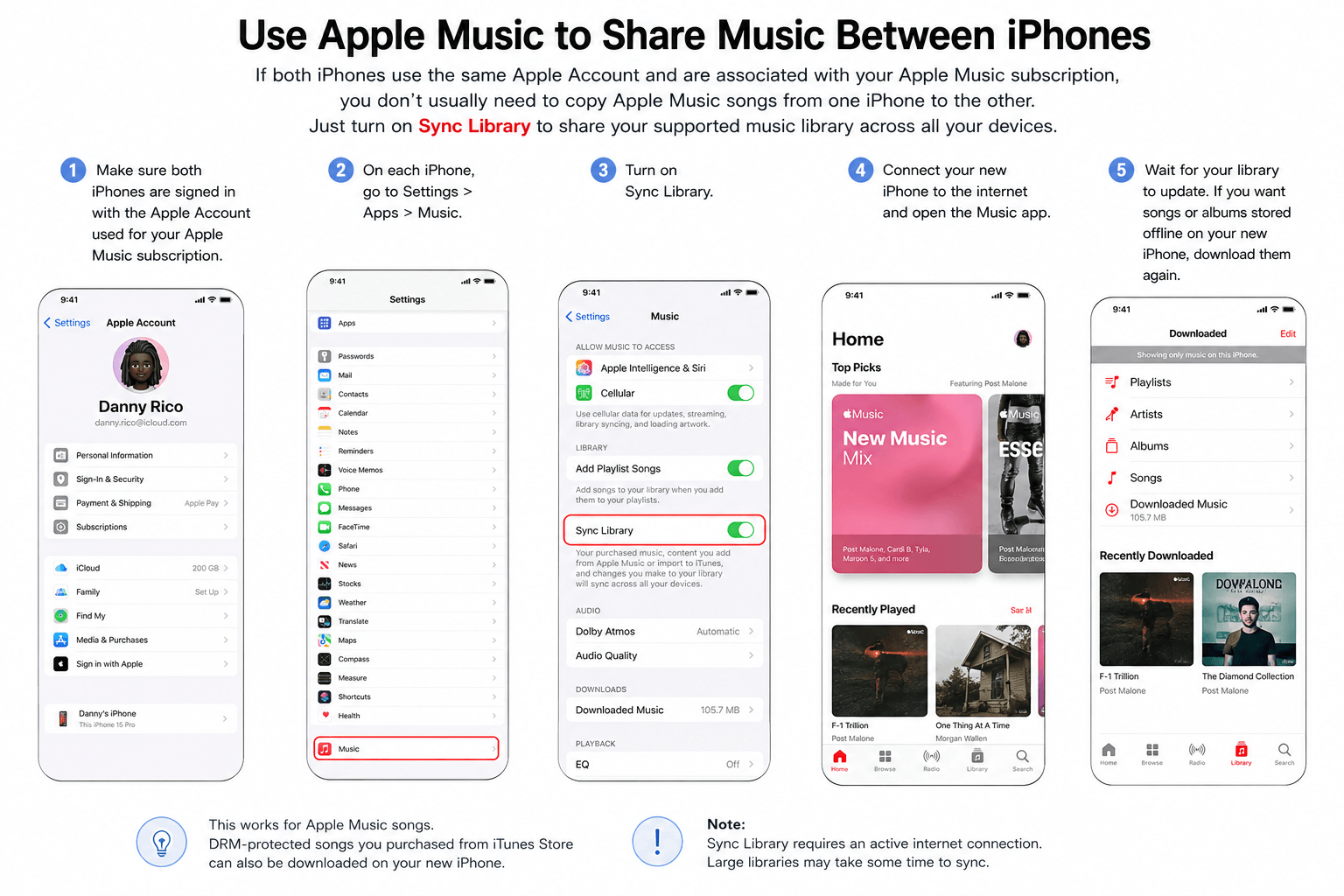
Note: Sync Library makes the cloud music library available across supported devices; it is not a direct file-copy operation from one iPhone to another.
How to Transfer Music from iPhone to iPhone without iTunes
Suitable for: Users who want to select local or non-purchased music from an old iPhone and transfer supported songs to another iPhone after setup.
If the music on the old iPhone is stored locally and is not available through Sync Library or a purchase-redownload workflow, a computer-based device manager can provide another option.
AnyTrans lets you browse supported music on a connected iPhone, select the songs you need, and transfer them to another compatible iPhone. This is most useful when you want a selective music transfer after the new iPhone has already been set up.
- Preview supported music on the source iPhone before transferring.
- Select individual songs instead of moving the entire phone.
- Transfer supported music between two connected iPhones.
- Manage supported music and other device content from a computer.
Step 1. Connect the Two iPhones
Launch AnyTrans on the computer and connect the source and target iPhones with USB cables. After both devices are recognized, select the source iPhone and open Device Manager.
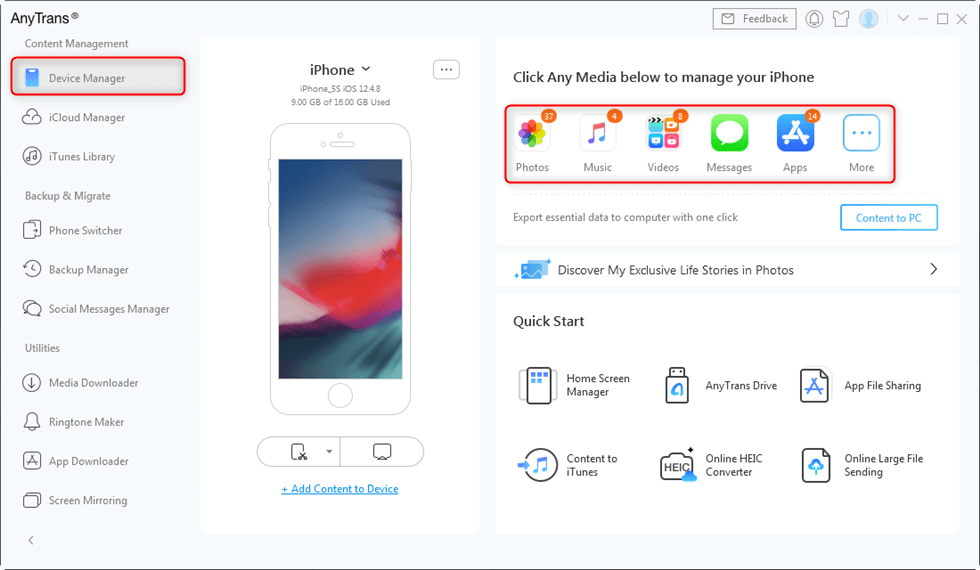
Open Device Manager for the source iPhone
Step 2. Select Music and Transfer It to the New iPhone
Open Music, select the supported songs you want to move, click To Device, and choose the target iPhone. Wait for the transfer to finish before disconnecting either device.
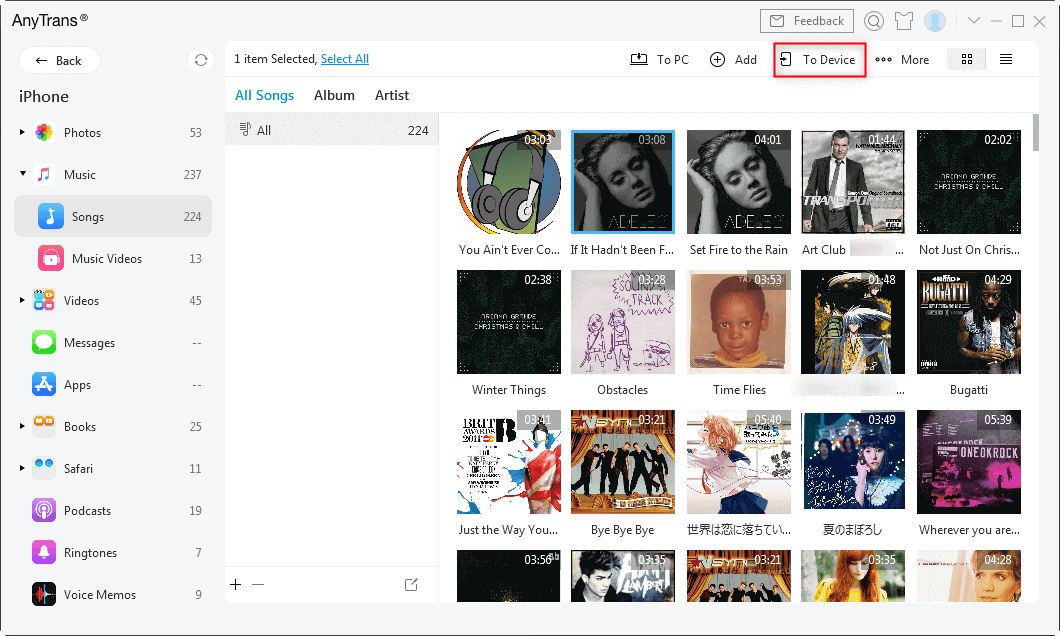
Select music and send it to the target iPhone
Afterward, check the new iPhone and confirm that the transferred music is available before removing the source copy.
Transfer More Than Music during a Device Move
If you are moving several supported data categories rather than selecting individual songs, AnyTrans also provides a broader device-switching workflow. For a brand-new iPhone that has not yet been set up, however, Apple’s Quick Start method below should normally be considered first.
Transfer Music from iPhone to iPhone with AirDrop
Suitable for: Sending one or a few ordinary audio files that you can access in the Files app or another app that exposes the actual audio file.
AirDrop can send files between nearby Apple devices. However, sharing a song from the Apple Music/Music app does not necessarily send the actual song file. For subscription or protected music, the share action may provide access to the song or a link rather than copying the audio file into the other iPhone’s Music library.
To AirDrop an ordinary MP3 or other accessible audio file:
- Turn on Wi-Fi and Bluetooth on both iPhones and make sure AirDrop receiving is available.
- On the source iPhone, open the Files app and locate the audio file.
- Touch and hold the file or open the Share menu.
- Choose AirDrop and select the target iPhone.
- Accept the transfer on the target iPhone.
Important: Receiving an MP3 through AirDrop gives you an audio file. It does not automatically add that file to the Apple Music library.
Send Music from Old iPhone to New iPhone with Home Sharing
Suitable for: Accessing and streaming a music library shared from a Mac or Windows PC on the same home network.
Home Sharing should not be treated as a direct iPhone-to-iPhone music transfer. Apple’s Home Sharing workflow is centered on a shared computer media library that other compatible devices can access on the same network.
If your music library already exists on a computer:
- Turn on Home Sharing for the computer music library.
- Make sure the computer and the iPhone are connected to the same home Wi-Fi network.
- Use the same Apple Account required by the Home Sharing setup.
- Open the available shared library on the iPhone and stream the music.
Limitation: Home Sharing gives the iPhone access to the shared library; it does not permanently copy the computer’s songs—or the old iPhone’s songs—into the new iPhone.
Transfer Music from iPhone to iPhone with iPhone Data Transfer
Suitable for: Moving to a brand-new iPhone, especially when you also need other apps, settings, and data.
Option 1. Use Quick Start When Setting Up a New iPhone
If the new iPhone has not been set up yet, Apple’s Quick Start should be considered before using a selective third-party transfer. Quick Start is designed to migrate data from an existing iPhone or iPad while setting up the new device.
- Turn on the new iPhone and place it near the old iPhone.
- Make sure Bluetooth and Wi-Fi are available on the old iPhone.
- Follow the Set Up New iPhone prompt.
- Authenticate the setup when requested.
- Choose the migration option offered during setup and keep both devices available until the process completes.
Best use: Quick Start is intended for new-device migration. If the new iPhone has already been set up and you only want to add selected songs, use a selective transfer method instead.
Option 2. Use PhoneTrans for a Supported Post-Setup Migration
If the target iPhone is already set up or you need another supported computer-based migration workflow, PhoneTrans provides a phone-to-phone transfer interface.
Before starting, confirm that both iPhones are recognized by the current software version and that the music/content you need is supported.
Step 1. Connect the Two iPhones
Open PhoneTrans on the computer, connect both iPhones, choose Phone to Phone, and open the available transfer mode.
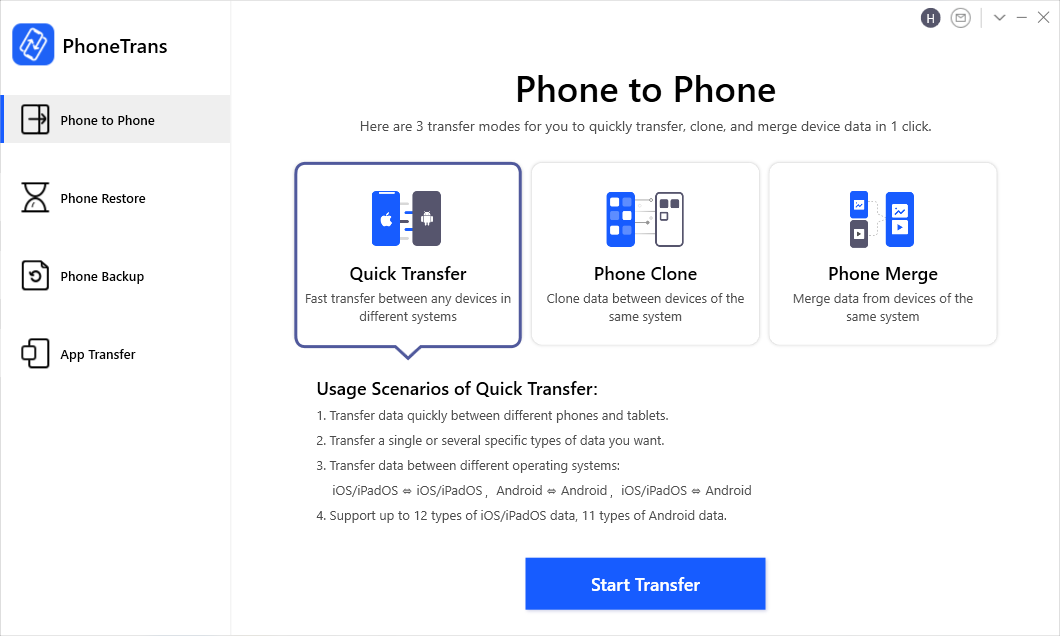
Open the phone-to-phone transfer workflow
Step 2. Confirm the Source and Target iPhones
Check which iPhone is the source and which one is the destination before continuing.
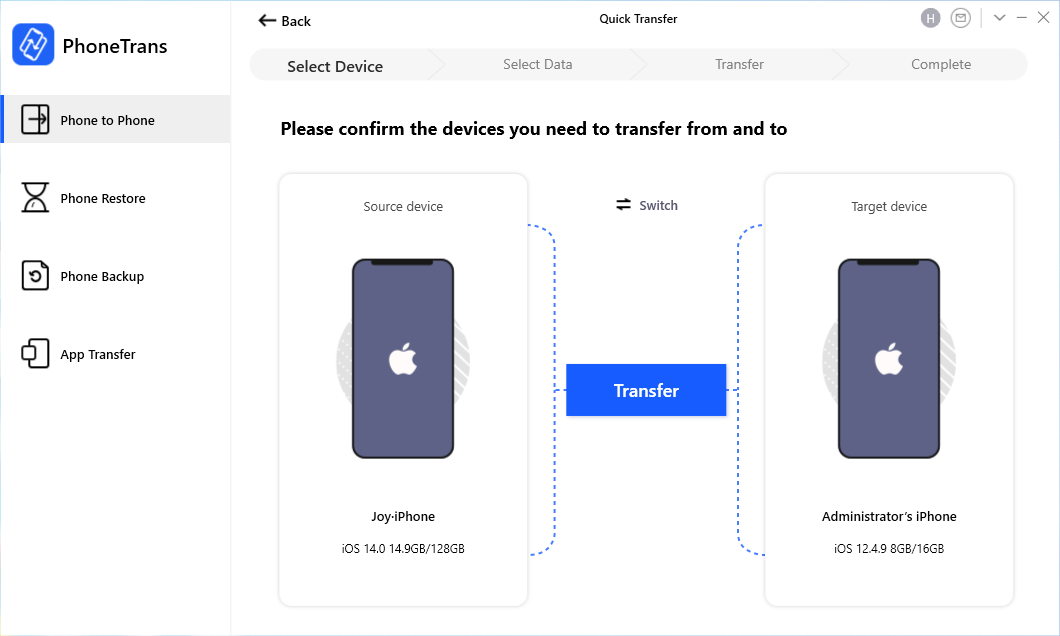
Confirm the source and target devices
Step 3. Select Music
Select Music from the supported data categories and start the transfer. Check the destination device after completion.
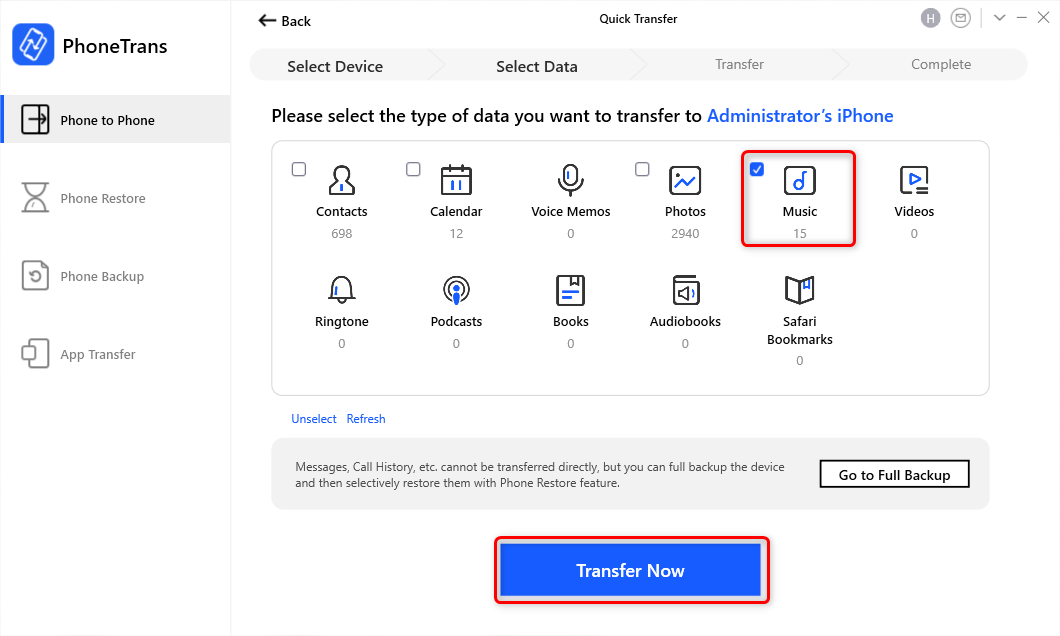
Select Music and start the transfer
Share Music to New iPhone via Email
Suitable for: Sending one or a few ordinary audio files that are available in Files or another app as actual file attachments.
Email is not a practical way to move an Apple Music library, but it can work for a small MP3 or other audio file that you can attach directly.
- On the source iPhone, locate the audio file in Files or another app that supports file sharing.
- Tap Share and choose Mail, or create a new email and add the audio file as an attachment.
- Send the message to an email account available on the target iPhone.
- Open the message on the target iPhone and download the attached file.
Limitation: Mail attachment limits vary, and receiving an audio attachment does not automatically import it into the Music library.
How to Transfer Music from iPhone to iPhone with iTunes
Suitable for: Eligible iTunes Store purchases or music that already exists in a computer-managed music library.
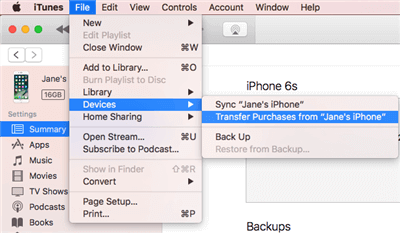
1. Transfer Eligible Purchases to the Computer
If the source iPhone contains music purchased from the iTunes Store, iTunes on an authorized Windows PC can transfer eligible purchases to the computer.
- Open iTunes on the Windows PC and authorize the computer with the Apple Account associated with the purchases.
- Connect the source iPhone.
- Choose File > Devices > Transfer Purchases from [your iPhone].
- Wait for eligible purchased content to be transferred to the computer library.
Limitation: Transfer Purchases is not a general reverse-sync feature for every MP3 or other locally stored song on an iPhone.
2. Sync Available Computer Music to the New iPhone
After the music you need is available in the computer library, connect the target iPhone and choose the songs, albums, artists, or playlists you want to sync.
Sync music from the computer to the target iPhone
If you use a current Windows setup with Apple’s newer device apps, the exact interface may differ from the traditional iTunes workflow.
3. Redownload iTunes Store Purchases on the New iPhone
If you only need music purchased from the iTunes Store, redownloading eligible purchases on the new iPhone may be simpler than transferring through a computer.
- Sign in to the target iPhone with the Apple Account associated with the music purchase.
- Open the iTunes Store and go to the purchased music section.
- Find the songs or albums that are not on the new iPhone.
- Tap the download button for the eligible purchases you want.
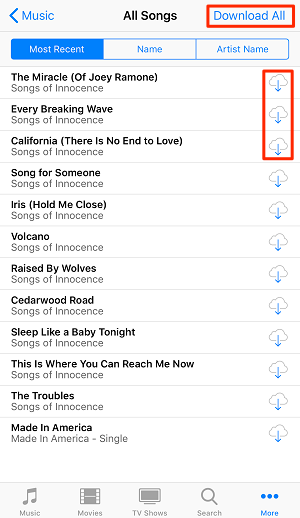
Download eligible purchased music on the new iPhone
Transfer Music via iCloud Drive (No iTunes Required)
Suitable for: Ordinary MP3, WAV, or other audio files that already exist in the Files app or can be saved there.
iCloud Drive can move an audio file between your Apple devices, but it does not copy protected Apple Music tracks out of the Music app.
On the Old iPhone
- Open the Files app and locate the audio file.
- If the file is stored locally under On My iPhone, move or copy it to iCloud Drive.
- Wait for the file to upload.
On the New iPhone
- Make sure iCloud Drive is enabled and you are signed in to the appropriate Apple Account.
- Open Files > iCloud Drive.
- Locate the audio file and download it if necessary.
- Open it with a compatible app.
Important: An MP3 stored in iCloud Drive remains a file. Moving it through Files does not automatically place the song into the Apple Music library.
What to Do If Music Still Doesn’t Appear on the New iPhone
| Problem | Check First | Recommended Action |
| Apple Music library is missing | Apple Account and Sync Library | Confirm both iPhones use the correct Apple Account and turn on Sync Library. |
| Only some downloaded songs are missing | Offline downloads | Open the Music library and download the required songs again for offline use. |
| Old MP3 files did not transfer | Original source of the files | Use the original computer/files or a supported local-music transfer workflow. |
| AirDropped song isn’t in Music | Whether you sent a file or a Music share link | Check Files or the receiving app; AirDrop does not automatically import ordinary files into Music. |
| Quick Start is unavailable | Whether the new iPhone is already set up | Use a post-setup selective transfer method or reset the new device only if a full migration is actually required. |
FAQs About How to Transfer Music from iPhone to iPhone
Can I transfer music from iPhone to iPhone without iTunes?
Yes. Apple Music users can use Sync Library, a new iPhone can use Quick Start during setup, and ordinary audio files in Files can be shared through AirDrop or iCloud Drive. For selected local songs after setup, a compatible computer-based music-transfer workflow is another option.
How do I transfer non-purchased music from an old iPhone to a new iPhone?
First identify where the music originally came from. If it exists as normal audio files, transfer the files directly or through a computer. If the songs were synced to the old iPhone from a computer that you no longer have, Apple’s normal purchased-content tools may not recover them, so a compatible local-music export or device-transfer workflow may be necessary.
Can I AirDrop music from iPhone to iPhone?
You can AirDrop ordinary audio files that are accessible in the Files app or another file-sharing app. Sharing a song from the Music app is different and may share access or a link rather than copying the actual audio file to the other iPhone.
How do I transfer Apple Music to a new iPhone?
Sign in to the new iPhone with the Apple Account associated with your Apple Music subscription and turn on Sync Library. Your library should become available on the new device, and you can download selected songs again for offline listening.
Why did my music not transfer to my new iPhone?
Common causes include using a different Apple Account, Sync Library being disabled, local MP3 files existing only on the old device or an old computer, insufficient storage, or confusing a share/stream method with a permanent music-library transfer.
Can I transfer music between iPhones with different Apple Accounts?
Apple Music libraries and purchased content are tied to Apple Account and licensing rules, so changing accounts can limit what is available. Ordinary DRM-free audio files that you legally control can be moved as files or through a compatible transfer workflow.
Can I transfer my whole music library with Quick Start?
Quick Start is designed for full new-device migration rather than music-only transfer. If the new iPhone has not been set up yet, it is a good first option for moving the overall device environment. Cloud-managed music may still be made available or downloaded again through the associated service after setup.
Does Home Sharing transfer music from one iPhone to another?
No. Home Sharing is mainly used to access or stream a shared computer media library on the same network. It should not be treated as a direct iPhone-to-iPhone file-copy method.
The Bottom Line
The best way to transfer music from iPhone to iPhone depends on the source of the songs. Apple Music subscribers should start with Sync Library, and users setting up a brand-new iPhone should consider Quick Start first. Purchased music can often be redownloaded, while ordinary MP3 or other audio files can be transferred through Files-based methods such as AirDrop or iCloud Drive.
If your old iPhone contains selected local or non-purchased music that is not available through Apple’s cloud or purchase workflows, a compatible computer-based transfer tool such as AnyTrans can provide another option after the new iPhone has already been set up.
Most importantly, do not treat every type of “music transfer” as the same operation. Syncing an Apple Music library, moving an MP3 file, sharing a song link, streaming through Home Sharing, and migrating a whole iPhone solve different problems. Choose the method based on the actual source of your music and whether you need access, a file copy, or a permanent Music-library migration.



Joy Taylor is a seasoned technical writer with over a decade of experience in mobile technology. At iMobie, she specializes in producing in-depth content on iOS data recovery, iPhone unlocking solutions, and iOS troubleshooting.
Product-related questions? Contact Our Support Team to Get Quick Solution >
